Crochet Needle for Braids: A Complete Buying Guide
Finding the perfect crochet needle for braids can feel overwhelming, especially if you’ve struggled with tangled extensions or hand fatigue. You’re not alone—many people want neat, secure braids without damaging their hair but don’t know where to start.
That’s why we’ve put together this complete buying guide to help you choose the right tool for flawless braiding every time.
You need the right crochet needle to create neat, secure braids without damaging your hair. Choose a needle size that matches your extension thickness—smaller for thin braids, larger for box braids.
Consider materials like aluminum for lightness or steel for durability, and pick a comfortable handle to reduce hand strain.
Keep your needle clean and stored safely to maintain performance. If you want to master braiding with ease, exploring these tips further will help you get the best results.
Key Takeaways
- Choose crochet needle size based on hair extension thickness, from 0.6mm for thin braids to 1.5mm for thicker styles.
- Select needle material considering durability and comfort: aluminum, steel, bamboo, plastic, or cotton options available.
- Master proper needle grip and technique to pull synthetic hair through natural strands without damage or tension issues.
- Maintain needles by cleaning after use, storing properly, and smoothing rough tips to ensure longevity and smooth braiding.
- Buy quality crochet needles at beauty supply stores, online marketplaces, craft shops, or manufacturer websites with user reviews.
Why Crochet Needles Are Essential for Braiding
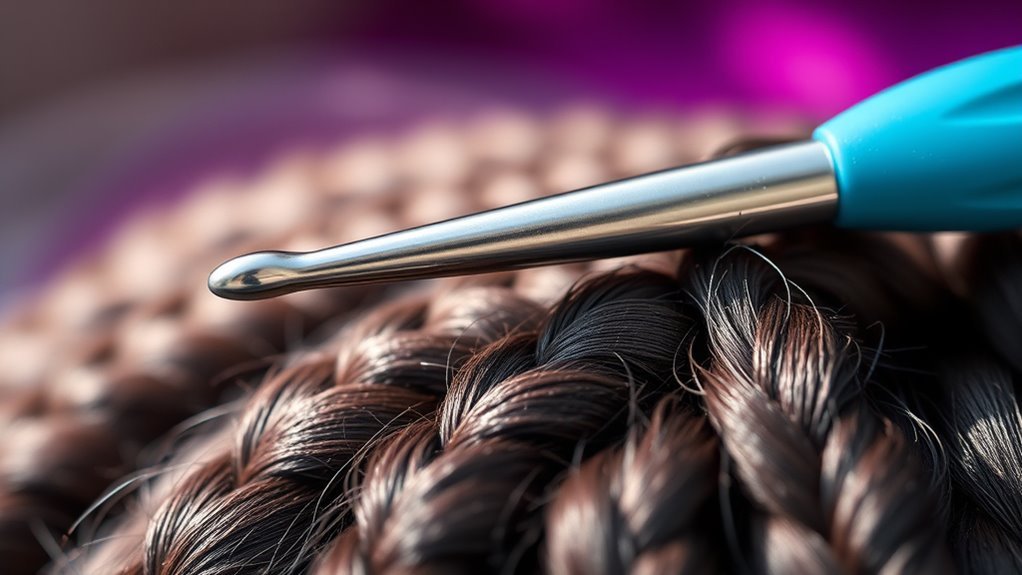
Although you might be tempted to braid without specialized tools, using a crochet needle makes the process much easier and more precise. When you master various braid techniques, you’ll find a crochet needle helps you create neat, tight, and long-lasting braids effortlessly.
It’s designed to pull hair strands through small loops without causing damage or tangling, something your fingers alone can’t always achieve. Crochet tips often emphasize the needle’s role in speeding up the braiding process while maintaining consistency.
It also reduces strain on your hands, making it ideal for beginners and professionals alike. Without this tool, you risk uneven braids or accidental hair breakage.
How to Use a Crochet Needle for Braids
Once you get the hang of it, using a crochet needle for braids becomes a straightforward process that saves you time and effort. Start by mastering your needle grip. Hold it comfortably between your thumb and index finger for better control.
Next, choose the braid technique you want to apply, such as feed-in or loop braids. Insert the needle under a small section of your natural hair, hook the synthetic hair onto the needle’s latch, then carefully pull it through. Repeat this to create neat, secure braids.
Here’s a quick guide to help you:
| Step | Action |
|---|---|
| 1 | Hold needle firmly with proper grip |
| 2 | Insert under small natural hair section |
| 3 | Hook synthetic hair on needle latch |
| 4 | Pull synthetic hair through gently |
| 5 | Continue with chosen braid technique |
Practice these steps, and your braiding will become quicker and more precise.
How to Choose the Right Crochet Needle Size
How do you know which crochet needle size suits your braiding needs best? Start by considering the thickness of the hair extensions you’ll work with. Thinner braids usually call for smaller needles, around 0.6mm to 0.8mm, while thicker or box braids might need larger sizes like 1.0mm to 1.5mm. Using the right size guarantees easier threading and less damage to your natural hair.
Next, examine different crochet needle types. Some have curved hooks for better control, while others offer straight hooks for precise looping. Your choice depends on your comfort and the braid style you prefer. Don’t forget to check various crochet needle brands, as some specialize in ergonomic designs or durable materials, which can make a big difference during long styling sessions.
Crochet Needle Materials: Pros and Cons
When you’re picking out a crochet needle for braids, the material really makes a difference in how things feel. You’ve got options like plastic, metal, and bamboo needles, and each comes with its own set of pros and cons. Knowing what makes each one unique can help you find the perfect fit for your style and comfort.
Common Crochet Needle Materials
Choosing the right material for your crochet needle can make a big difference in your braiding experience. You’ll find several common options, each with unique features to suit your style and comfort.
Aluminum crochet needles offer lightweight options and durability, making them easy to handle for long sessions. Bamboo crochet needles provide a natural feel and warmth, often included in ergonomic designs to reduce hand strain.
Plastic crochet needles are budget-friendly and versatile, though they may lack the durability of metal counterparts. Steel crochet needles are extremely durable and precise but can feel heavier and colder in your hands.
You might also come across cotton crochet needles, which combine softness with flexibility, enhancing your grip and control. Choose what fits your needs best!
Material Benefits And Drawbacks
Although each crochet needle material offers unique advantages, understanding their benefits and drawbacks will help you pick the best one for your braiding projects. You’ll want a needle with an ergonomic design to reduce hand strain. But also one that lasts through frequent use without durability concerns.
| Material | Benefits | Drawbacks |
|---|---|---|
| Aluminum | Lightweight, smooth glide | Can bend under pressure |
| Plastic | Affordable, ergonomic design | Less durable, may break |
| Steel | Extremely durable, sturdy | Heavier, less ergonomic |
| Bamboo | Comfortable grip, eco-friendly | Susceptible to wear and tear |
Consider your comfort and long-term use when choosing your crochet needle material.
Crochet Needle Handle Designs That Make Braiding Easier
Since you’ll be working with your hands for extended periods, a crochet needle handle designed for comfort can make all the difference in your braiding experience. Choosing a handle with an ergonomic design reduces hand fatigue, letting you braid longer without discomfort.
An ergonomic crochet needle handle helps reduce hand fatigue for longer, more comfortable braiding sessions.
You’ll also want to take into account handle grip and texture variations to prevent slipping, especially if your hands get sweaty. Material choices play a key role too. Some prefer lightweight plastic, while others like cushioned rubber for added comfort.
Handle length and style preferences matter as well, so pick one that fits your hand size and braiding technique. Plus, color options can add a fun personal touch to your tools.
Look for these features when selecting a crochet needle handle:
- Ergonomic design for natural hand positioning
- Non-slip handle grip with varied textures
- Comfortable handle length suited to your hand size
- Material choices balancing durability and comfort levels
These factors help guarantee your braiding is smooth and easy.
Best Crochet Needles for Different Braid Styles
Choosing the right crochet needle size can make a big difference depending on your braid style. You’ll also want to think about the needle’s material since it affects how smoothly your hair or extensions glide through. So, let’s take a closer look at which needles work best for different styles to help you get perfect results every time.
Needle Sizes For Styles
Different braid styles call for specific crochet needle sizes to guarantee a smooth installation and a natural finish. Choosing the right needle length and needle grip can make your braiding process easier and more comfortable.
Here’s a quick guide to help you pick the best size for your style:
- Micro Braids: Use a slim, longer needle (around 6-7 inches) for precise threading.
- Box Braids: Opt for a medium-length needle with a comfortable grip to handle thicker hair.
- Senegalese Twists: A shorter needle with a sturdy grip helps manage tighter twists.
- Goddess Braids: Choose a wider needle to easily maneuver the large braid sections.
Matching needle size to style guarantees your braids look flawless and last longer.
Material Impact On Braids
Although needle size plays an essential role, the material of your crochet needle can considerably affect both the ease of braiding and the final look of your style. Different materials offer varied yarn compatibility, impacting how smoothly the yarn slides during installation.
For instance, metal needles provide excellent tension control and glide effortlessly, making them ideal for tighter, more intricate braids. On the other hand, bamboo or plastic needles offer a bit more grip, which helps when working with slippery or synthetic yarns.
Choosing the right material guarantees you maintain consistent tension, preventing uneven braids or damage to your hair. So, consider your braid style and yarn type carefully. Selecting the appropriate needle material can make your braiding process smoother and your results more polished.
How to Clean and Maintain Your Crochet Needle
Keeping your crochet needle clean and well-maintained guarantees it performs smoothly and lasts longer. Practicing proper needle hygiene not only protects your tool but also assures your braiding sessions stay hassle-free.
Here are essential maintenance tips to keep your crochet needle in top shape:
- Wipe your needle with a soft, dry cloth after each use to remove lint and residue.
- Occasionally clean it with a mild soap solution and dry thoroughly to prevent rust or buildup.
- Store your needle in a protective case to avoid bending or damage.
- Check the hook tip regularly for any rough spots and smooth them gently with fine-grit sandpaper if needed.
Common Crochet Needle Mistakes to Avoid
When you’re picking a crochet needle for braids, choosing the wrong size can really slow you down or even damage your hair. It’s important not to settle for low-quality materials either, since those can bend or break easily. Plus, you want to make sure the handle feels comfortable in your hand so you don’t end up with any strain while you’re working.
Choosing The Wrong Size
If you pick the wrong crochet needle size, you’ll struggle with your braids from the start. Using a needle that’s too big or too small leads to wrong size implications that can ruin your hairstyle.
For example, the needle size directly affects braid tension issues, making your braids either too tight or dangerously loose.
Avoid these pitfalls by considering needle thickness that matches your braid size, comfort in hand grip to prevent fatigue, the hook shape for smooth hair looping, and compatibility with your hair type and style.
Choosing the right size guarantees your braids hold securely without damaging your scalp or hair strands. Don’t overlook this step. Getting the size right saves you time and frustration later on.
Using Low-Quality Materials
Choosing the right crochet needle size sets a solid foundation, but using low-quality materials can still derail your braid work. When you opt for needles made from cheap plastics or poorly treated metals, you risk compromising durability.
These needles may bend, break, or wear out quickly, forcing you to replace them often. Plus, poor material flexibility can make threading and looping your braids frustrating, slowing down your progress.
You want a needle that’s sturdy yet flexible enough to glide smoothly through hair without snagging or causing damage. Investing in quality materials guarantees your crochet needle lasts longer and performs consistently, giving you cleaner, neater braids every time.
Don’t let low-quality materials undermine the effort you put into styling.
Ignoring Handle Comfort
Although many focus on needle size and material, ignoring handle comfort can quickly turn your braid work into a painful experience. When you overlook crochet needle ergonomics, your hands tire faster and your grip slips. This slows down your progress and causes unnecessary strain.
To avoid this, pay close attention to the handle grip of your crochet needle. Look for ergonomic designs that fit naturally in your hand, soft non-slip materials for a secure hold, lightweight handles to reduce fatigue, and well-balanced needles to ease maneuvering.
Choosing a needle with a comfortable handle grip guarantees longer, pain-free braid sessions. Don’t sacrifice comfort for style or price. Prioritize crochet needle ergonomics to protect your hands and improve your crafting experience.
How to Troubleshoot Crochet Needle Issues
When your crochet needle doesn’t glide smoothly or feels uncomfortable, you’ll want to identify the problem quickly to keep your braiding process efficient. Start by examining the crochet needle tips. Sometimes rough edges or bends cause snagging.
Use fine sandpaper or a nail file to gently smooth any irregularities. Next, check if your needle’s size matches the braiding hair thickness. A mismatch can create tension, making the needle hard to maneuver.
Troubleshooting techniques also include ensuring your hands are dry and free of oils, which can affect grip and control. If the needle’s handle feels slippery or uncomfortable, wrap it with a bit of tape or a cushioned grip to improve comfort.
Finally, clean your needle regularly to remove residue buildup that hampers smooth movement. By following these simple troubleshooting steps, you’ll maintain a comfortable, efficient braiding experience without unnecessary frustration.
Where to Buy Quality Crochet Needles for Braiding
Wondering where to find crochet needles that won’t let you down during your braiding sessions? You’ve got plenty of options, but choosing the right place matters to guarantee quality and durability. Start by checking out stores and websites that specialize in hair braiding tools or craft supplies.
Don’t forget to read up on crochet needle reviews to see which crochet needle brands consistently deliver.
Here are some reliable places to buy quality crochet needles for braiding:
Specialty beauty supply stores: They often carry top-rated crochet needle brands tailored for braiding.
Online marketplaces: Amazon, Etsy, and eBay offer a wide range with user reviews to guide you.
Craft stores: Places like Michaels or Joann can surprise you with quality crochet needles suitable for braiding.
Manufacturer websites: Buying directly guarantees authenticity and access to the latest models.
Checking crochet needle reviews helps you pick needles that fit your style and budget perfectly.
Frequently Asked Questions
Can Crochet Needles Be Used for Braiding Synthetic Hair?
Yes, you can use crochet needles for braiding synthetic hair. They make braid techniques easier by helping you loop and secure synthetic strands quickly and neatly.
Crochet needles offer synthetic versatility since they’re designed to handle different hair textures without causing damage. With the right needle size, you’ll find braiding synthetic hair faster and more efficient, giving your styles a polished, long-lasting finish every time.
How Long Does It Take to Master Braiding With a Crochet Needle?
You can start mastering braiding with a crochet needle in a few weeks if you practice consistently. Focus on learning basic braid techniques first, then gradually incorporate more complex styles.
Using helpful crochet tips like keeping tension even and practicing smooth looping will speed up your progress. Don’t get discouraged if it feels tricky at first. With regular practice, your skills will improve, and you’ll braid confidently in no time.
Are Crochet Needles Safe for Sensitive Scalps?
Yes, crochet needles can be safe for sensitive scalps if you choose the right needle materials. You’ll want to pick needles made from smooth, lightweight materials like bamboo or plastic to guarantee scalp comfort and avoid irritation.
Metal needles might feel harsh or cause discomfort if your scalp is sensitive. Always test gently first, and avoid pulling too tight to keep your scalp happy and pain-free while braiding.
Can I Use a Crochet Needle for Other Hair Styling Techniques?
Think of a crochet needle like a magic wand, ready to transform your hair canvas. Yes, you can use it beyond braids! Its styling versatility shines with various hair textures, letting you create twists, locks, or even intricate updos.
Just like a painter chooses brushes, you’ll find this tool adapts to your hair’s unique needs, making your styling options almost endless. Welcome it, and let your creativity flow freely.
What Are Some Creative Braid Styles to Try With Crochet Needles?
You can create stunning bohemian braids with your crochet needle, giving you that effortless, free-spirited look. Try twisted pigtails for a playful, trendy style that stands out. Both styles are perfect for experimenting with texture and volume.
You’ll love how easy it is to add accessories like beads or ribbons while using your crochet needle, making each braid distinctly yours. Don’t hesitate to mix and match these creative braid styles!
Conclusion
Now that you know how a crochet needle transforms your braiding experience, imagine the ease and precision it brings with every loop and twist. Choosing the right size and material feels like finding the perfect key to access flawless styles.
With proper care and technique, your crochet needle becomes more than a tool; it’s your secret weapon for stunning braids. Immerse yourself confidently, and watch your creativity weave magic strand by strand with your crochet needle for braids.