Your Guide to Latch Hook Crochet Needle: Choosing With Confidence
Finding the perfect latch hook crochet needle can feel overwhelming, especially if you’ve struggled with uncomfortable tools or uneven stitches. You’re not alone—many crafters face the same frustrations when their needle doesn’t quite fit their hand or yarn. The good news? Choosing the right needle can make your projects more enjoyable and your results more polished.
Choosing the right latch hook crochet needle boosts your crafting comfort and project quality. Look for needles with ergonomic handles that fit your hand size, a smooth latch to prevent yarn snags, and a needle size that matches your yarn thickness.
Materials like plastic or wood offer lightweight options, while metal gives durability. Matching your needle to your project style makes your work faster and neater.
Keep exploring for tips on specialty needles and proper care to master your craft.
Key Takeaways
- Choose latch hook needles with smooth, ergonomic handles to reduce hand fatigue and improve grip during crafting.
- Select needle size based on yarn thickness and hand size to ensure ease of pulling and precision.
- Opt for materials like plastic for lightweight use, steel for durability, or wood for a warm, smooth feel.
- Use specialty needles like fine or jumbo hooks tailored to your project’s yarn type and design complexity.
- Maintain needles by cleaning the latch mechanism, wiping after use, and storing in protective cases to prolong lifespan.
What Is a Latch Hook Crochet Needle and How It Works
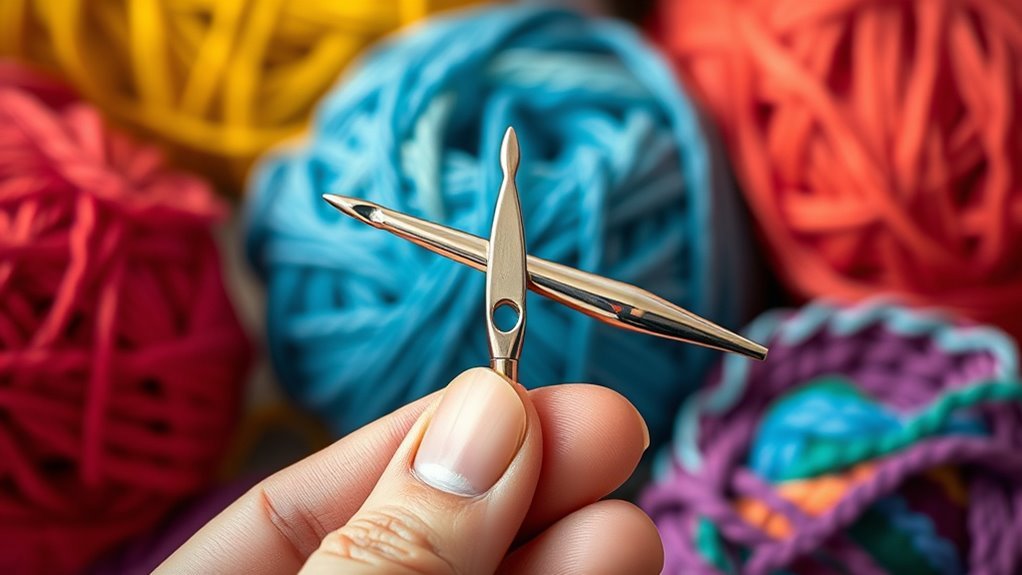
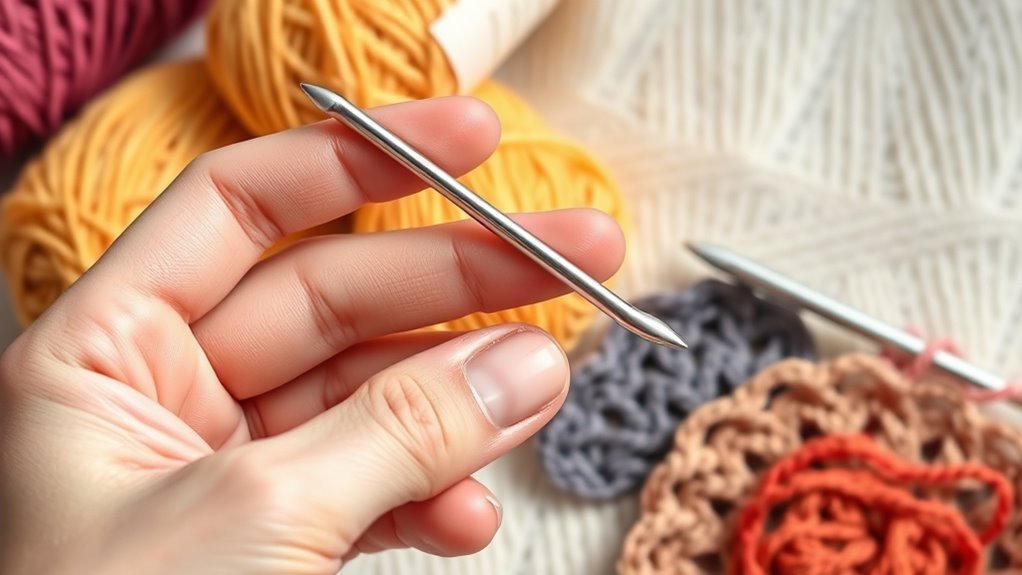
A latch hook crochet needle is a specialized tool designed to pull yarn through fabric or canvas with ease. Its design traces back to the latch hook history, revealing how this simple yet effective tool evolved to support various latch hook techniques.
When you use it, the needle’s small latch opens as you insert it into the canvas, catching the yarn. As you pull the needle back, the latch closes, securing the yarn and pulling it through the material. This mechanism allows you to create loops or knots quickly and neatly, which is essential for latch hook projects like rugs or wall hangings.
Understanding latch hook techniques helps you manipulate the needle efficiently. This ensures your yarn stays in place and your design looks polished. By mastering how a latch hook crochet needle works, you’ll find your crafting smoother, making your latch hook projects more enjoyable and precise.
Key Features That Make a Great Latch Hook Crochet Needle
When choosing a latch hook crochet needle, you’ll want to focus on features that improve control, comfort, and durability. A smooth, well-balanced handle lets you maintain a steady grip, which is essential when mastering latch hook techniques.
Selecting a latch hook needle with a smooth, balanced handle enhances control and comfort for mastering techniques.
Look for a needle with a secure latch mechanism that opens and closes effortlessly. This prevents yarn snags and keeps your project flowing smoothly. The needle’s size also matters; a medium-sized hook is ideal for beginners, giving you better control without overwhelming your fingers.
Ergonomic design reduces hand fatigue, allowing you to crochet longer with ease. Pay attention to the needle’s tip—it should be sharp enough to guide yarn through tight loops but not so pointed that it damages your canvas.
Incorporating these beginner tips helps you pick a needle that supports learning and improves your crafting experience. Choosing the right latch hook crochet needle sets a solid foundation for your projects and boosts your confidence from the start.
Materials Compared: Plastic, Metal, and Wood Needles
Although the choice of material may seem minor, it greatly impacts your latch hook crochet experience. Plastic needles offer several benefits: they’re lightweight, flexible, and gentle on your yarn, reducing snagging. You’ll also find that plastic needle benefits include affordability and a variety of colors and sizes, making them beginner-friendly and easy to spot in your craft bag.
Metal needles, while durable, come with notable drawbacks. Their rigidity can make handling tricky, especially if you’re working with delicate yarns. Plus, metal needle drawbacks include the potential to catch or split fibers and cause hand fatigue over long sessions.
Wood needles strike a nice balance. They’re smooth and warm to the touch, providing a comfortable grip and less static than plastic. While they can be pricier and less common, wood needles often improve your overall feel and control. Ultimately, your choice depends on your comfort and the types of yarn you prefer.
Choosing the Right Latch Hook Crochet Needle Size
Choosing the right size latch hook crochet needle can make a big difference in your comfort and the outcome of your project. You’ll want to think about how the needle’s size works with your yarn and how durable the material is. So, let’s take a closer look at how these factors can impact your crafting experience.
Needle Size Impact
Since the size of your latch hook crochet needle directly affects your grip and the ease of pulling yarn through the canvas, selecting the right size is essential for both comfort and project quality. A needle that’s too long or too short can strain your hand, so consider needle length carefully to match your hand size and project needs.
Moreover, grip texture plays a significant role in preventing slips and reducing fatigue during extended crafting sessions. Needles with a textured or rubberized grip offer better control, especially when working with thicker yarns or intricate patterns.
Material And Durability
The size and grip of your latch hook crochet needle set the foundation for comfort, but the material determines how long it lasts and how it feels in your hand. When choosing, consider materials like aluminum for lightweight durability, bamboo for a warm, natural feel, or plastic for affordability and bright aesthetic appeal.
Each material impacts your technique versatility. For example, aluminum needles glide smoothly, supporting faster, precise stitches, while bamboo offers a bit more grip, ideal for beginners. Durability also varies, so pick a needle that withstands your crafting pace without warping or breaking.
Ultimately, selecting the right material guarantees your needle complements both your style and technique, making every project enjoyable and long-lasting.
How Handle Design Affects Comfort and Control
Although latch hook crochet needles come in various sizes and styles, the handle design plays a big role in how comfortable and controlled you feel while working. When you pick up a needle with a well-thought-out grip and ergonomic design, your hand experiences less strain. This lets you work longer without fatigue.
A well-designed ergonomic handle reduces hand strain, letting you work longer with greater comfort and control.
You’ll notice better precision and smoother movements, which helps keep your stitches consistent.
Consider these aspects of handle design to improve your comfort and control:
- Material texture: Soft, non-slip surfaces prevent your hand from slipping and reduce discomfort.
- Shape and thickness: Contoured handles fit naturally in your hand, supporting a relaxed grip.
- Weight distribution: Balanced needles reduce wrist strain and improve maneuverability.
- Length of the handle: Longer handles offer more advantage and control, while shorter ones provide nimbleness.
Choosing a needle with a comfortable handle means you can focus on creativity, not discomfort.
Best Latch Hook Crochet Needles for Beginners
When you’re just starting out, picking the right needle size can really make a difference in how comfortable and in control you feel. It’s a good idea to look for latch hook needles that have ergonomic handles — ones that fit your hand nicely to help reduce strain. Plus, you’ll want to think about the materials they’re made from so your needle stays durable and lasts through lots of projects.
Needle Size Importance
Selecting the right needle size plays an essential role in your latch hook crochet experience, especially if you’re just starting out. Understanding how needle types and gauge differences affect your work will help you choose tools that match your project’s needs. Different sizes impact yarn tension, stitch definition, and overall ease of hooking. Smaller needles offer precision, while larger ones speed up your progress.
Consider these factors when selecting your needle size:
- Yarn thickness: Match needle size to yarn gauge for smooth hooking.
- Project complexity: Detailed patterns may require smaller needles.
- Speed preference: Larger needles let you work faster.
- Comfort level: Choose a size that feels manageable for your hands.
Handle Comfort Features
Comfort features in latch hook crochet needle handles can make a significant difference, especially if you’re new to the craft. Ergonomic grips reduce hand fatigue, letting you work longer without discomfort. Textured surfaces improve your hold, preventing slips and giving you better control.
When choosing a needle, prioritize these features to elevate your experience and maintain consistent tension.
| Feature | Benefit |
|---|---|
| Ergonomic grips | Reduces strain, supports long use |
| Textured surfaces | Prevents slipping, improves control |
| Handle shape | Fits naturally in your hand |
Material Durability Options
Choosing the right material for your latch hook crochet needle can greatly impact its durability and your crafting experience. When selecting a needle, consider material longevity to guarantee your tool withstands frequent use without warping or breaking. Proper needle maintenance also plays an essential role in preserving its life.
Here are some common material options:
- Aluminum: Lightweight and rust-resistant, offering excellent material longevity.
- Plastic: Affordable and colorful but less durable; requires gentle needle maintenance.
- Wood: Provides a natural grip and warmth, though it may need careful storage to avoid damage.
- Steel: Highly durable and strong, ideal if you want a needle that lasts with minimal upkeep.
Choosing wisely means you’ll enjoy a smoother, longer-lasting crafting journey.
Specialty Needles for Advanced Latch Hook Projects
When you move beyond basic latch hooking, specialty needles can make a huge difference in your projects. These tools are designed to support advanced techniques, making specialty projects easier and more precise.
Whether you’re working on intricate patterns or using unusual materials, choosing the right needle helps you maintain control and efficiency.
Here’s a quick look at popular specialty needles for advanced latch hook projects:
| Needle Type | Ideal Use | Key Feature |
|---|---|---|
| Fine Hook | Delicate yarns, detailed work | Slim hook for precision |
| Jumbo Hook | Thick yarn, large loops | Wide hook for bulky yarn |
| Ergonomic Handle | Long sessions, hand comfort | Soft grip reduces strain |
Selecting specialty needles tailored to your project needs can enhance your craft, letting you tackle complex designs confidently and comfortably.
How Needle Choice Affects Yarn and Rug Canvas
You’ll find that the size of your needle directly impacts how well your yarn fits through the rug canvas. Picking the right needle makes stitching smoother and helps avoid damage to both your yarn and the canvas. So, let’s take a closer look at how to match your needle with your materials for the best results.
Needle Size And Yarn
Although selecting the right needle size might seem straightforward, it directly influences how your yarn interacts with the rug canvas. Choosing a needle that matches your yarn thickness guarantees smooth looping and avoids damage to both yarn and canvas. Different project types, like detailed patterns or large, bold designs, also require specific needle sizes for ideal results.
Consider these factors when selecting your needle size:
- Thicker yarn needs a larger needle to pass through the canvas easily.
- Delicate yarn requires a smaller needle to prevent fraying or splitting.
- Complex designs benefit from finer needles for better control and precision.
- Larger needles speed up the process but might sacrifice detail in smaller projects.
Matching needle size to yarn thickness and project type helps you create durable, attractive latch hook rugs.
Canvas Compatibility Factors
Selecting the right needle size not only affects how your yarn moves but also impacts the compatibility between your needle and the rug canvas. If your needle is too large, it can damage the canvas texture, making it hard to maintain consistent tension.
Conversely, a needle that’s too small might struggle to pull yarn through the canvas holes, slowing your progress. You want a needle that matches the canvas hole size perfectly to guarantee smooth stitching and durability.
Furthermore, consider design compatibility; intricate patterns require finer needles to work within tighter canvas grids, while bold designs suit larger needles. By aligning your needle choice with both canvas texture and design compatibility, you’ll create a rug that’s both visually appealing and structurally sound.
Caring for Your Latch Hook Crochet Needle
Since your latch hook crochet needle is a tool you rely on for detailed work, caring for it properly guarantees it stays in good condition and lasts longer. Following basic needle maintenance tips and cleaning techniques will help you avoid damage and keep your projects smooth.
To care for your latch hook crochet needle effectively:
Wipe your needle after each use with a soft, dry cloth to remove any fiber residue. Occasionally clean the latch mechanism with a small brush to prevent lint buildup.
Store the needle in a protective case or pouch to avoid bending or dulling the hook. Avoid exposing the needle to moisture or extreme temperatures, which can cause rust or warping.
Where to Buy Quality Latch Hook Crochet Needles Online
Wondering where to find high-quality latch hook crochet needles online? Start by exploring well-known online retailers specializing in crafting supplies. Sites like Amazon, Etsy, and dedicated craft stores often offer a wide range of needle options, so you can compare features and prices easily. Check the product descriptions closely to guarantee the needles meet your specific needs.
Don’t forget to read customer reviews before making a purchase. These reviews provide valuable insights into needle durability, comfort, and overall quality, helping you avoid low-grade products. Pay attention to feedback about the needle’s hook strength and handle grip, as these affect your crafting experience.
Additionally, some niche online retailers focus solely on latch hook and crochet tools, which can offer more specialized selections. Signing up for newsletters or joining crafting forums can also alert you to exclusive deals and trusted sellers. By using these strategies, you’ll confidently find the best latch hook crochet needle online without hassle.
Frequently Asked Questions
Can Latch Hook Needles Be Used With Other Types of Yarn Crafts?
Yes, you can use latch hook needles with other yarn types, but their craft versatility is somewhat limited. They work best with thicker yarns or rug canvas, making them ideal for latch hooking and some tapestry projects.
However, for fine crochet or knitting, traditional hooks and needles are better. If you enjoy experimenting, latch hook needles can add texture in mixed-media crafts, but they’re not a one-size-fits-all tool for every yarn craft.
How Do I Fix a Broken Latch on My Crochet Needle?
To fix a broken latch on your crochet needle, first examine the damage carefully. You can try simple repair techniques like realigning or gently bending the latch back into place.
If that doesn’t work, consider swapping out the latch with replacement latch options available online or at craft stores. Sometimes, you might need to replace the entire needle for the best results.
Always handle the latch gently to avoid further damage.
Are There Eco-Friendly Latch Hook Needles Available?
Of course, you can find eco-friendly latch hook needles because saving the planet one stitch at a time is all the rage now! Look for needles made from sustainable materials like bamboo or recycled plastics.
If you’re feeling adventurous, try needle alternatives crafted from natural fibers or biodegradable components. These options help reduce waste without sacrificing your craft’s quality.
What Safety Tips Should I Follow When Using Latch Hook Needles?
When using latch hook needles, prioritize latch hook safety by always handling your needle carefully. Keep your fingers clear of the hook to avoid pokes or scratches.
Work in a well-lit area so you can see your stitches clearly, and store needles safely when not in use to prevent accidents. Never leave needles unattended around children or pets.
Can Children Safely Use Latch Hook Crochet Needles?
Yes, children can safely use latch hook crochet needles, but only with proper crafting supervision. You might wonder if the sharp hooks pose too much risk, but with guidance, kids learn to handle them carefully.
Prioritize child safety by choosing age-appropriate needles and teaching safe techniques. Always stay close during crafting sessions to prevent accidents and encourage good habits, making the experience fun and safe for your little ones.
Conclusion
Now that you know what to look for, choosing your perfect latch hook crochet needle will feel like a breeze. With the right size, material, and handle, you’ll glide through your projects faster than a bolt of lightning!
Remember, the needle you pick not only affects your comfort but also the quality of your work. So invest wisely, care for it well, and get ready to create stunning rugs that’ll wow everyone who sees them using your latch hook crochet needle!