Bonnet for Braids Guide: What to Know Before You Buy
Struggling to keep your braids looking fresh and healthy overnight? You’re not alone. Many people find it challenging to protect their braids from friction, frizz, and breakage while maintaining scalp moisture. That’s where the right bonnet comes in—a simple but essential tool that can make all the difference.
You need a properly fitted bonnet made from breathable silk or satin to protect your braids from friction, frizz, and breakage, while keeping your scalp moisturized and healthy.
Be sure to measure your head and choose a bonnet with adjustable features for comfort and security.
Regular care and timely replacement are key to maintaining your bonnet’s effectiveness.
Keep these essentials in mind to extend your braid’s lifespan and achieve a neat, polished look every day.
There’s plenty more to discover on choosing and caring for the perfect bonnet.
Key Takeaways
- Choose bonnets made from silk or satin to retain moisture and reduce frizz for longer-lasting braids.
- Measure your head and braid fullness accurately for a comfortable, protective fit with adjustable features.
- Replace bonnets when elastic stretches, holes appear, or odors persist to maintain braid protection.
- Use bonnets to minimize friction, prevent breakage, and keep braids neat overnight.
- Shop from reputable retailers and check reviews for quality, fit, and fabric softness before buying.
Why You Need a Bonnet for Braids
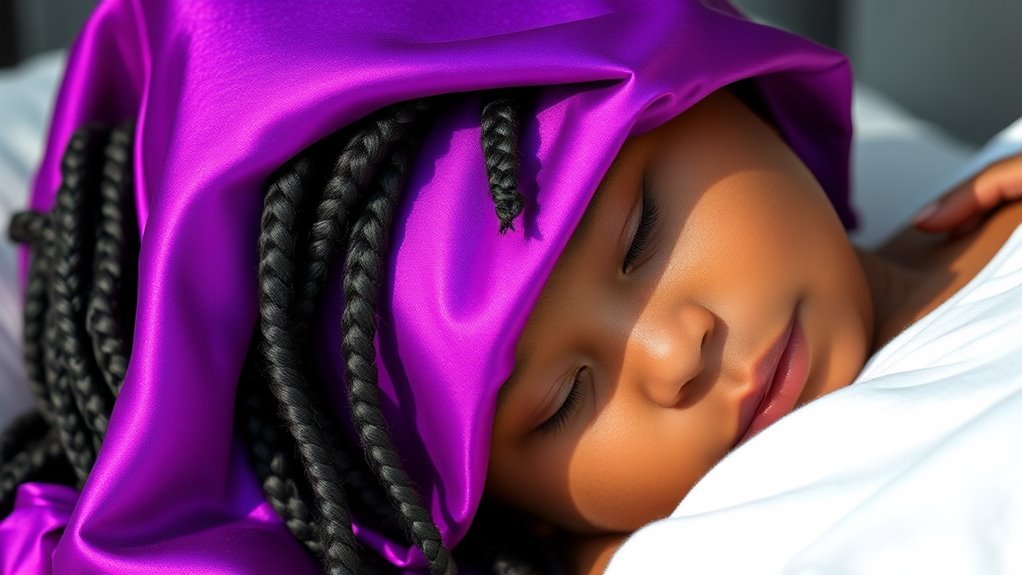
Many people underestimate how much a bonnet can protect their braids. When you incorporate a bonnet into your nighttime routine, you’re actively preserving your hairstyle’s freshness and longevity.
Without it, friction from your pillowcase can cause frizz, breakage, and even unravel your braids prematurely. Using a bonnet minimizes these risks by creating a smooth barrier between your hair and bedding.
Friction from pillowcases can cause frizz and breakage; a bonnet creates a smooth barrier to protect your braids.
This simple step in braid maintenance helps retain moisture, preventing dryness and scalp irritation. Plus, a bonnet keeps your braids neat, so you wake up looking polished without extra effort.
If you want your braids to last longer and stay healthy, adding a bonnet to your routine isn’t optional—it’s essential. By protecting your braids overnight, you save time on touch-ups and reduce hair damage, making your overall braid care more effective and less stressful.
Which Materials Work Best for Bonnets on Braids?
Choosing the right materials for your bonnet can make a huge difference in how well it protects your braids. When deciding between silk vs. satin, both are excellent at reducing friction and preventing frizz.
However, silk is a natural fiber, making it softer and more breathable, which is great if you want to avoid scalp sweat. Satin, often made from synthetic fibers, is still smooth but less breathable. Breathable fabrics help maintain scalp health by allowing airflow, which is essential for long-lasting braids.
Here’s a quick comparison:
| Material | Breathability | Best For |
|---|---|---|
| Silk | High | Sensitive scalp |
| Satin | Medium | Frizz control |
| Cotton | High | Comfort, not protection |
| Polyester | Low | Budget option |
| Nylon | Low | Durability |
Choose materials that balance protection and comfort to keep your braids looking fresh.
How to Choose the Right Bonnet Size for Your Braids
Since your braids vary in size and volume, picking a bonnet that fits well is crucial to keeping them protected overnight. Start by measuring the circumference of your head, including the fullness of your braids, to find a size that won’t feel too tight or slip off. Different bonnet styles offer varying amounts of stretch and room, so consider whether you want a snug fit or a looser feel.
Look for bonnets labeled with clear sizing options or adjustable features like drawstrings or elastic bands, which help accommodate different braid volumes comfortably. When shopping, use sizing tips like checking product reviews or sizing charts to verify the bonnet matches your head and braid size accurately. Remember, a bonnet that’s too small can cause discomfort, while one that’s too large may not protect your braids effectively.
Choosing the right size guarantees your braids stay intact and your scalp feels comfortable all night.
How Bonnets Protect Your Scalp and Prevent Frizz
Once you’ve found a bonnet that fits your braids comfortably, it’s important to understand how it works to protect your scalp and keep your hair smooth. A quality bonnet plays a key role in maintaining scalp health and frizz control by providing a gentle barrier that reduces friction and moisture loss.
Finding a well-fitting bonnet is essential for protecting your scalp and keeping hair smooth and healthy.
Here’s how bonnets help:
- Preserve Scalp Health: They shield your scalp from dust and environmental irritants, preventing dryness and itchiness. This keeps your scalp nourished and balanced.
- Minimize Frizz: The smooth fabric reduces friction between your braids and pillowcases, which helps prevent frizz and breakage.
- Retain Moisture: Bonnets trap natural oils and moisture close to your scalp and hair, avoiding dryness that causes frizz and damage.
Which Bonnet Styles Stay Secure on Braids?
How do you find a bonnet that stays put on your braids all night? The key lies in choosing bonnet styles designed with secure features. Look for bonnets with adjustable drawstrings or elastic bands; these adapt to different braid lengths and keep the bonnet snug without slipping.
Satin-lined bonnets with a wider band tend to grip better, especially if your braid lengths are long or thick. You might also consider bonnets with a slightly larger cap size if you have bulky braids, ensuring the bonnet covers all strands comfortably without sliding off.
Avoid bonnets made from slippery materials or with loose elastic, as they often shift during sleep. Ultimately, the bonnet style you pick should complement your braid lengths and thickness, providing a firm but gentle hold.
How Comfortable Is Sleeping With a Bonnet on Braids?
Wondering if sleeping with a bonnet on your braids feels comfortable? You might be surprised how much it can actually improve your sleep quality. Wearing a bonnet offers several benefits, especially when you want to protect your braids overnight without sacrificing comfort.
Here are three reasons why sleeping with a bonnet feels comfortable:
1. Soft, breathable fabric
Most bonnets use satin or silk, which glide smoothly over your hair and skin, reducing friction and irritation.
2. Adjustable fit
Many bonnets have elastic bands or drawstrings, so you can secure them snugly without feeling too tight or loose.
3. Temperature regulation
Unlike bulky head wraps, bonnets keep your head cool and prevent sweating, which helps you sleep more peacefully.
These bonnet benefits guarantee you can protect your braids while enjoying a restful, comfortable night’s sleep.
How to Wash and Care for Your Bonnet to Keep It Fresh
Keeping your bonnet clean plays a big role in maintaining the comfort and protection it provides for your braids. Different bonnet materials require specific washing techniques to keep them fresh and durable.
For example, silk and satin bonnets need gentle hand washing with mild detergent, while cotton bonnets can often handle machine washing on a delicate cycle.
Here’s a quick care guide:
| Bonnet Material | Washing Technique | Drying Method |
|---|---|---|
| Silk/Satin | Hand wash, mild detergent | Air dry flat |
| Cotton | Machine wash, delicate | Tumble dry low |
| Polyester | Hand or machine wash | Air dry or low heat |
Avoid harsh detergents and high heat to prevent damage. After washing, store your bonnet in a clean, dry place to keep it fresh. Following these steps guarantees your bonnet stays soft, comfortable, and protective for your braids every night.
When Should You Replace Your Braids Bonnet?
When should you replace your braids bonnet to guarantee it continues protecting your hair effectively? Maintaining your bonnet is key for proper braid maintenance, but even the best care won’t last forever.
To ensure bonnet longevity and keep your braids safe, watch for these signs:
To keep your bonnet lasting longer and your braids protected, be mindful of these key signs.
- Visible Wear and Tear: If you notice thinning fabric, holes, or stretched elastic, it’s time to switch. Damaged bonnets won’t hold your braids securely or prevent friction.
- Loss of Fit: When your bonnet slips off or feels loose, it can’t protect your braids. A snug fit is vital for overnight braid maintenance.
- Persistent Odors or Stains: Even after washing, if your bonnet smells musty or has stains, replace it to avoid transferring dirt or bacteria to your hair.
Replacing your bonnet at the right time supports braid maintenance and maximizes bonnet longevity, keeping your hair healthy and your style fresh.
Where to Buy the Best Bonnets for Braids
Where can you find the best bonnets for your braids that combine quality, comfort, and style? Start by exploring trusted online retailers and specialty beauty stores that focus on haircare products for textured hair. Websites like Amazon, Etsy, and dedicated natural hair boutiques offer a wide range of options.
Before buying, check bonnet reviews to see how others rate durability, fit, and fabric softness. These insights can save you from common pitfalls, ensuring you pick a bonnet that truly protects your braids.
Use these shopping tips: prioritize bonnets made from satin or silk for moisture retention, and pay attention to size and adjustable features. Don’t hesitate to compare prices and return policies for the best deal.
Local salons sometimes carry high-quality bonnets too, so ask your stylist for recommendations. With the right research and guidance, you’ll find a bonnet perfectly suited to maintain your braids overnight.
How to Protect Braids Overnight Without a Bonnet
If you don’t have a bonnet, no worries—you can still protect your braids overnight. Try using alternative hair coverings like silk scarves or even a silk pillowcase. These help reduce friction and keep your braids looking fresh.
You’ll want to use some protective sleep techniques to prevent frizz and keep your braids intact. Also, don’t forget to moisturize your braids before bed. It really helps maintain their health and shine while you sleep.
Alternative Hair Coverings
Although bonnets are a popular choice for protecting braids overnight, you don’t have to rely on them exclusively. There are plenty of alternative hair coverings that keep your braids safe while adding style and comfort. Here are some great options to explore:
- Scarf alternatives and headwrap options. Lightweight scarves or stretchy headwraps can be wrapped securely, preventing friction and moisture loss.
- Turban styles. Turbans offer a fashionable, snug fit that keeps your braids intact and protected throughout the night.
- Beanie choices and sleep caps. Soft, breathable beanies or specialized sleep caps provide gentle coverage, reducing braid frizz and breakage.
Try experimenting with these alternatives to find what works best for your hair care routine and personal style.
Protective Sleep Techniques
Exploring alternatives to bonnets is a great start, but protecting your braids overnight goes beyond just what you cover your hair with. One simple way to reduce friction and breakage is using pillowcase protection like silk or satin pillowcases. These materials minimize hair snagging compared to cotton, helping your braids stay neat longer.
Also, be mindful of your sleep position. Try to sleep on your back or side to avoid crushing your braids against the pillow. This helps maintain their shape and prevents frizz.
If you can’t wear a bonnet, combining pillowcase protection with a strategic sleep position gives your braids a better chance to stay intact overnight, keeping your style fresh without extra hair accessories.
Moisture Retention Methods
Two key methods help you retain moisture in your braids overnight without a bonnet: sealing and misting. These hydration techniques prevent dryness and keep your braids looking fresh.
Start by misting your braids lightly with water or a water-based leave-in conditioner to provide essential hydration. Then use moisture sealing products like natural oils or butter to lock in that moisture.
Here are three effective ways to protect your braids overnight without a bonnet:
- Use a satin or silk scarf: Wrap your braids securely to reduce friction and moisture loss.
- Apply a lightweight leave-in conditioner: This keeps braids hydrated without buildup.
- Moisture sealing with oils: Seal in hydration using oils like jojoba or argan oil.
These simple hydration techniques maintain your braids’ health and longevity.
Frequently Asked Questions
Can Bonnets for Braids Help Reduce Hair Breakage?
Yes, bonnets for braids can help reduce hair breakage by providing excellent hair protection during your nighttime routine. When you wear a bonnet, it minimizes friction between your hair and the pillowcase, preventing strands from snagging or breaking.
Plus, it helps maintain moisture and keeps your braids intact longer. Incorporating a bonnet into your nighttime routine is a simple, effective way to protect your hair and support healthy growth.
Are Bonnets Suitable for All Braid Sizes and Styles?
Yes, bonnets are suitable for all braid sizes and styles, as long as you choose one with enough room for your specific braids. You want a bonnet that offers proper braid protection without causing tension or discomfort.
Incorporating a bonnet into your nighttime routine helps keep your braids intact, reduces frizz, and minimizes breakage. It’s a smart choice no matter the braid type or size you rock.
How Do Bonnets Affect Scalp Moisture Levels?
You protect your braids, preserve your style, and promote scalp hydration when you wear a bonnet. Bonnets help lock in moisture by creating a barrier that prevents dryness and flaking, boosting moisture retention.
When you choose a satin or silk bonnet, you reduce friction, which helps your scalp stay hydrated longer. Wearing one regularly means you’re actively maintaining scalp health and supporting your hair’s overall moisture balance.
Can Men With Braids Benefit From Wearing Bonnets?
Yes, men with braids can definitely benefit from wearing bonnets. You’ll enjoy better braid protection, which helps prevent frizz and breakage while keeping your scalp moisturized.
Plus, bonnets improve the comfort factor by reducing friction against pillows, making your hair routine easier. Wearing one regularly helps maintain your braids’ neatness and health, so don’t hesitate to add a bonnet to your hair care essentials.
Do Bonnets Prevent Color Fading in Dyed Braids?
You know what they say, “A stitch in time saves nine.” Yes, bonnets do help prevent color fading in dyed braids by reducing friction and exposure to elements that cause fading.
When you wear one, you boost color retention and dye longevity, keeping your vibrant hues fresh longer. So, if you want your dyed braids to last, slipping on a bonnet at night is a smart move to protect your investment.
Conclusion
Just as your favorite bonnet perfectly hugs your braids, choosing the right one can feel like finding a long-lost friend who truly gets your hair’s needs. By picking the right material, size, and style, you’re not just protecting your braids—you’re preserving your confidence and style every night.
So don’t wait until frizz shows up uninvited. Grab a bonnet that works for you and wake up to flawless braids every day with the perfect bonnet for braids.