Your Guide to Brown Hair Dye: Choosing With Confidence
Struggling to find the perfect brown hair dye that truly complements your look? You’re not alone. Many people wrestle with choosing the right shade and formula that enhances their natural beauty without ending up with dull or uneven color.
You can confidently choose the perfect brown hair dye by matching your skin’s undertones with rich shades like chocolate, caramel, ash, or espresso.
Picking the right dye formula for your hair type and prepping your hair properly guarantees vibrant, healthy results.
Avoid common mistakes like over-processing or washing with hot water to maintain your color longer.
With the right care and technique, you’ll achieve a beautiful, lasting brown shade that improves your natural look.
Keep exploring for expert tips and tricks.
Key Takeaways
- Choose brown shades by matching undertones with your skin tone for a natural, flattering look. This helps the color blend seamlessly with your complexion.
- Select hair dye formulas based on your hair’s texture and condition. Doing this minimizes damage and makes the color look richer and last longer.
- Prepare your hair properly before dyeing by avoiding washing right before and using pre-dye treatments. These steps lead to better, more even results.
- Avoid common mistakes like overlapping dye or leaving it on too long. These can cause damage and patchiness, which nobody wants.
- Maintain vibrant brown hair by using color-safe products, limiting washes, and protecting your hair from sun and heat. This keeps your color fresh and healthy-looking.
Finding Your Perfect Brown Hair Shade
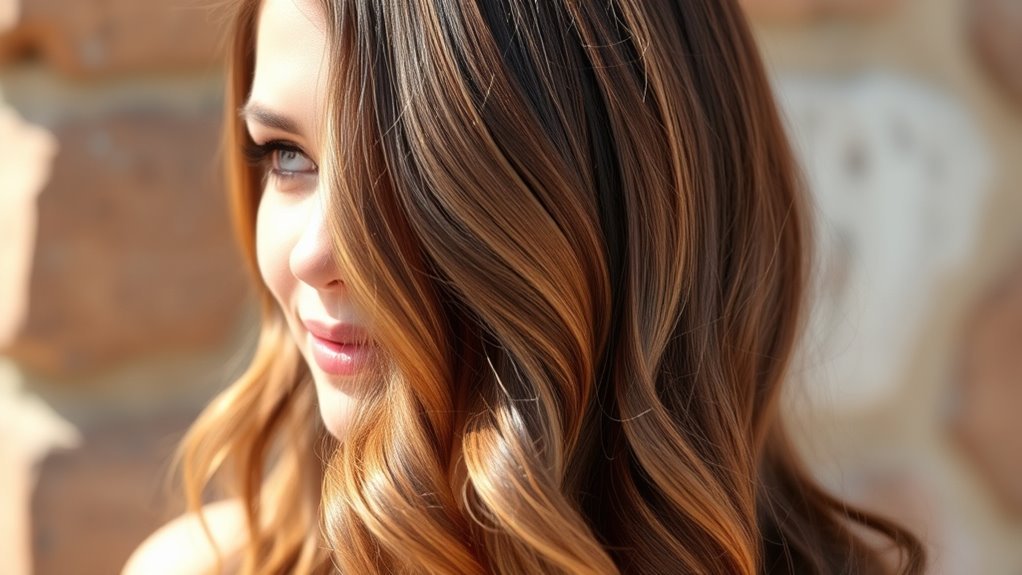
How do you find the perfect brown hair shade that suits you best? Start by consulting the color wheel to understand how different tones complement your skin. If you want a rich and warm look, chocolate brown and caramel highlights offer a luscious depth.
For a cooler vibe, ash brown provides a subtle, smoky effect that works well with lighter complexions. Espresso hues are perfect if you prefer a deep, intense shade that adds sophistication.
Don’t forget to reflect on seasonal shades. Warmer tones fit fall and winter, while cooler shades brighten spring and summer. Color psychology also plays a role; brown shades evoke warmth, stability, and elegance, influencing how others perceive you.
To add dimension and avoid flatness, balayage techniques blend shades seamlessly, creating a natural, sun-kissed finish. By balancing these factors, you’ll confidently select a brown hair shade that improves your features and matches your personal style.
How Brown Hair Dye Undertones Affect Your Look
When you’re picking out brown hair dye, it really helps to know the difference between warm and cool undertones. Matching these undertones with your skin tone can totally change how natural and flattering your hair looks. Plus, choosing the right undertone doesn’t just blend well—it can actually enhance your natural hair color and highlight your best features. It’s all about finding that perfect balance to make your look shine!
Warm vs Cool Undertones
Why does the undertone of your brown hair dye matter? It shapes how natural and vibrant your color looks. Warm tones, like golden and caramel, add richness and softness, while cool tones, such as ash and chocolate, create sleek, sophisticated vibes.
Understanding undertone matching helps you pick a shade that complements your personal style and improves your features. Using the color wheel and seasonal analysis can guide your dye selection, ensuring your brown hair harmonizes with your overall look.
Keep shade intensity in mind. Deeper shades often emphasize undertones more clearly. By choosing between warm vs cool undertones thoughtfully, you control whether your brown hair feels cozy or crisp, making your hair color an effortless extension of your style.
Matching Undertones With Skin
Although choosing the right brown hair dye can feel overwhelming, matching its undertones with your skin tone makes a huge difference in your overall look. Start with an undertone analysis to identify if your skin leans warm, cool, or neutral.
Warm undertones pair best with rich, golden browns, enhancing your skin’s natural glow. If you have cool undertones, opt for ash or chocolate browns to maintain balance and avoid clashing hues.
Neutral undertones give you flexibility, allowing you to experiment with various brown shades. Prioritizing skin compatibility guarantees your new hair color complements rather than conflicts with your complexion, boosting your confidence and style.
Enhancing Natural Hair Color
Since your natural hair color sets the foundation, choosing the right brown dye undertones can either improve or soften your existing shade. Accept natural highlights and lowlights technique to add color depth and texture contrast.
Balayage options offer subtle shine improvement while aligning with seasonal trends. Color layering creates dimension, making your hair look vibrant and alive.
Follow a tailored maintenance routine and use styling tips that complement your undertones to keep your look fresh.
| Emotion | Effect |
|---|---|
| Confidence | Improves natural beauty |
| Creativity | Balayage and layering options |
| Freshness | Seasonal trends, shine improvement |
With thoughtful choices, you’ll effortlessly improve your natural hair color.
Choosing Brown Hair Dye for Your Skin Tone
Finding the perfect brown hair dye starts with understanding how different shades complement your skin tone. Use the color wheel to identify whether your skin has warm, cool, or neutral undertones. This step guarantees skin harmony, making your new hair color look natural and flattering.
Next, consider seasonal tones. Warm autumn hues suit golden or olive skin, while cool winter browns improve fairer, pinkish complexions. Don’t forget to test shade swatches against your jawline in natural light before committing. This helps you see how the color interacts with your skin, avoiding mismatches.
Best Brown Hair Dye Formulas for Different Hair Types
After selecting a brown shade that complements your skin tone, the next step is choosing the right formula to match your hair type. If your hair is fine or damaged, opt for ammonia-free or semi-permanent dyes to minimize damage while still achieving rich color.
Choose ammonia-free or semi-permanent dyes for fine or damaged hair to protect and enhance your brown shade.
For thick or coarse hair, permanent dyes with conditioning agents work best to guarantee full coverage and long-lasting results. When you compare formulas, look at ingredients and how they interact with your hair’s texture and porosity.
Color selection tips suggest picking a formula that nourishes your hair as it colors, especially if you dye frequently. Cream formulas provide moisture, while gels offer precision, and mousse is great for even distribution.
Always weigh formula comparisons based on your hair’s needs, lifestyle, and desired maintenance. Choosing the right product assures your new brown shade looks vibrant and healthy, boosting your confidence with every wear.
How to Prepare Hair Before Applying Brown Hair Dye
Preparing your hair properly before applying brown hair dye guarantees the color takes evenly and lasts longer. Start by avoiding washing your hair right before dyeing; natural oils protect your scalp and improve dye absorption.
Next, consider a pre-dye treatment to nourish and strengthen your strands. Using a protein or moisture mask a few days prior helps improve hair health, making your color more vibrant and reducing damage.
Avoid heavy styling products on the day of coloring, as buildup can block the dye. If your hair is damaged or dry, trim split ends to guarantee an even application.
Finally, gently detangle your hair to prevent breakage during the dyeing process. Taking these steps assures your hair is in prime condition, allowing the brown dye to develop beautifully and last longer while maintaining your hair’s health.
Step-by-Step Guide to Applying Brown Hair Dye at Home
Start by gathering all your supplies: brown hair dye, gloves, a mixing bowl, applicator brush, and an old towel to keep your process smooth and mess-free. Next, use color mixing tips. Combine the dye and developer in the bowl according to package instructions, ensuring an even blend for consistent color results.
Put on your gloves, then divide your hair into sections to apply the dye evenly. Using the applicator brush, start dye application at the roots, where color tends to fade first, then work your way down to the ends. Make sure to saturate each section thoroughly but avoid overloading to prevent dripping.
After applying dye to all sections, massage your scalp gently to distribute the color evenly. Cover your hair with a shower cap or plastic wrap to maintain heat, allowing the dye to process for the recommended time. Finally, rinse with cool water until it runs clear, then condition to lock in your new brown shade.
Common Brown Hair Dye Mistakes and How to Avoid Them
While dyeing your hair brown can transform your look, common mistakes often lead to uneven color or damage. One major slip-up is ignoring proper color selection tips. Picking a shade too dark or too warm can clash with your skin tone or fade quickly.
Avoid rushing the process. Not performing a strand test or patch test can result in unexpected hues or allergic reactions. Another frequent dyeing mistake is applying dye on dirty or oily hair, which blocks color absorption.
Overlapping dye on previously colored hair causes patchiness and damage, so apply carefully. Also, leaving dye on longer than recommended won’t deepen color; it can harm your hair instead. Finally, skipping aftercare steps like using color-safe shampoos can cause premature fading.
Tips for Maintaining Your Brown Hair Dye Longer
To keep your brown hair dye looking fresh, it’s all about protecting it from fading. Try to minimize how much you’re out in the sun—UV rays can really dull your color.
Also, washing your hair with cool water instead of hot can make a big difference. Hot water tends to strip the color faster, so keeping it cool helps preserve that rich brown shade.
And don’t forget to use color-safe shampoos and conditioners. They’re specially made to be gentle on dyed hair, so your color stays vibrant for longer.
These simple little steps really add up when it comes to maintaining that beautiful brown hue.
Protect Color From Fading
Although brown hair dye offers rich, vibrant color, it can fade quickly without proper care. To guarantee color protection, avoid excessive heat styling, as high temperatures open your hair cuticles, causing dye to wash out faster.
When you wash your hair, use lukewarm water instead of hot. It helps lock in color and supports fading prevention. Limit washing your hair to two or three times a week to reduce color stripping from water and shampoo.
Also, protect your hair from UV rays by wearing a hat or using a UV protectant spray since sun exposure accelerates fading. Finally, avoid chlorine and saltwater when possible, as they can dull your brown shade.
Following these steps will keep your brown hair looking fresh and vibrant longer.
Use Color-Safe Products
Since brown hair dye can fade from harsh shampoos and styling products, you should choose color-safe formulas designed specifically to protect your shade. Look for sulfate-free shampoos and conditioners, as sulfates strip away natural oils and cause color to fade faster.
Using products labeled for color protection helps maintain your brown hue’s vibrancy longer. Moreover, avoid heavy styling products that build up and dull your color. Instead, opt for lightweight, nourishing options that support hair health while preserving your dye.
DIY vs. Professional Brown Hair Dye: When to Choose Each
Wondering whether you should dye your brown hair at home or seek a professional? DIY techniques offer flexibility and cost savings but require understanding product selection and application methods. Professionals bring skill level and advanced tools, ensuring color longevity and minimizing mistakes.
Consider your time commitment and budget when deciding.
| Aspect | DIY Dyeing | Professional Dyeing |
|---|---|---|
| Cost Comparison | Lower upfront cost | Higher, includes service fees |
| Skill Level | Requires learning and practice | Expert application |
| Time Commitment | Flexible but can be time-consuming | Efficient, saves your time |
| Color Longevity | Depends on product and technique | Longer-lasting with quality products |
If you’re confident and enjoy DIY, it’s a great option. For complex shades or lasting results, professional benefits outweigh the extra cost.
Choose what fits your lifestyle and hair goals best.
How to Transition Between Brown Shades Without Damage
Before you switch between brown shades, it’s important to check how your hair is doing first—this helps avoid any damage. You’ll want to pick gentle dye formulas that actually nourish your strands while adding color. Taking it slow and applying the color gradually not only keeps your hair healthy but also makes the transition nice and smooth.
Assess Hair Condition First
Your hair’s current condition plays an essential role when shifting between brown shades. Before you pick a new color, assess your hair health carefully.
If your hair feels dry, brittle, or damaged, it’s best to treat and nourish it first to avoid further harm during dyeing. Conducting a color test on a small, hidden strand helps you see how your hair reacts to the dye and whether the color will take evenly.
This step also reveals if your hair can handle the chemical process without breaking or fading too quickly. By prioritizing your hair’s condition and performing a color test, you set yourself up for a smoother, safer change between brown shades with minimal damage.
Choose Gentle Dye Formulas
Although switching between brown shades can be exciting, choosing gentle dye formulas is crucial to protect your hair’s health. Look for products that emphasize natural ingredients like plant extracts and essential oils, which nourish your strands while minimizing harsh chemical exposure.
These formulas help maintain your hair’s integrity and reduce the risk of dryness or breakage during color changes. Before applying any new dye, don’t skip allergy testing; it’s a quick step that can prevent unwanted reactions and keep your scalp safe.
Gradual Color Application
When you want to shift between brown shades without stressing your hair, applying color gradually is key. Start by evaluating your current color depth and choose shades that are close to it. This minimizes damage and keeps your hair healthy.
Use gentle application techniques like blending the new color with your existing shade, focusing on mid-lengths and ends first, then roots later. Avoid harsh, all-over dyeing in one session; instead, build up color intensity over several treatments.
This approach lets you control the shift and reduces the risk of over-processing. Remember to space out applications by at least two weeks and always nourish your hair between sessions. Gradual color application guarantees a natural, vibrant result while protecting your hair’s integrity.
Frequently Asked Questions
Can Brown Hair Dye Cause Allergic Reactions?
Yes, brown hair dye can cause allergic reactions, especially if you have sensitive skin. You might experience allergy symptoms like itching, redness, swelling, or even blistering.
To avoid this, you should always do a patch test 48 hours before applying the dye fully. This simple step helps you spot any adverse reactions early, so you can prevent more serious issues and dye your hair safely.
How Long Does Brown Hair Dye Typically Last on Hair?
You know what they say: “Good things take time.” Brown hair dye typically lasts about 4 to 6 weeks before you notice color fading.
To keep your color vibrant longer, follow maintenance tips like using sulfate-free shampoos, washing with cooler water, and avoiding excessive heat styling. These simple habits help slow fading, so your brown shade stays fresh and rich, letting you enjoy your look without constant touch-ups.
Is It Safe to Dye Hair Brown During Pregnancy?
Yes, it’s generally safe to dye your hair brown during pregnancy, but you should pay close attention to the hair dye ingredients. Many experts recommend avoiding dyes with ammonia, parabens, and certain chemicals to guarantee pregnancy safety.
You might want to choose products labeled as pregnancy-safe or consult your doctor. Also, consider doing the dye in a well-ventilated area to minimize inhaling fumes, keeping both you and your baby safe.
Can Brown Hair Dye Cover Gray Hair Effectively?
Can you really expect every brown hair dye to cover gray hair effectively? The answer depends on the dye formulation you choose. Some dyes are specially designed for superior gray coverage, lifting and depositing color evenly to hide those stubborn strands.
If you want reliable results, pick a dye with strong gray coverage claims and nourishing ingredients that protect your hair. That way, you’ll achieve a natural, vibrant look without patchiness.
What Are the Environmental Impacts of Brown Hair Dyes?
Brown hair dyes can have environmental impacts due to chemicals and plastic packaging. However, you can minimize this by choosing products with sustainable ingredients and eco-friendly options.
Look for brands that use biodegradable formulas, avoid harsh chemicals, and package with recyclable materials. By opting for these greener choices, you reduce pollution and support a healthier planet while still enjoying vibrant brown hair color. It’s a win-win for you and the environment.
Conclusion
Choosing the perfect brown hair dye is like finding the right rhythm in a song; it just feels right when everything clicks. By considering your skin tone, hair type, and undertones, you’ll confidently pick a shade that enhances your natural beauty.
Preparing properly and avoiding common mistakes will keep your color vibrant and healthy. Whether you DIY or go professional, you’re ready to rock your new brown shade with ease and style.
With the right approach, choosing brown hair dye becomes a fun and rewarding experience that highlights your best features.