Hair Bleach: A Complete Buying Guide
Struggling to find the right hair bleach that won’t damage your hair or leave you with uneven color? You’re not alone. Many people wrestle with choosing the perfect product that lightens hair safely while giving the vibrant results they want.
When choosing hair bleach, understand it lightens hair by breaking down pigment and requires careful handling to avoid damage.
Pick powder bleach for stronger lift or cream for easier use. Match developer strength to your hair type for safer results. 10 to 30 volume options adjust lift level.
Prepare your hair properly and follow safe application steps to protect it.
After bleaching, nourish and hydrate your hair to maintain health and color vibrancy. Keep going to explore detailed tips and product options.
Key Takeaways
- Hair bleach lightens hair by breaking down melanin within the hair shaft. It requires careful handling to minimize damage.
- Choose between powder bleach for stronger lift or cream bleach for easier, less messy application. It depends on your experience level.
- Match developer strength (10, 20, or 30 volume) to your hair type and desired lift. This helps avoid over-processing and damage.
- Prepare hair before bleaching with natural oils, strand tests, and proper tools. These steps ensure even application and scalp protection.
- Maintain bleached hair with sulfate-free shampoos, deep conditioning, limited heat styling, and protein treatments. These help repair damage.
What Is Hair Bleach and How Does It Work?
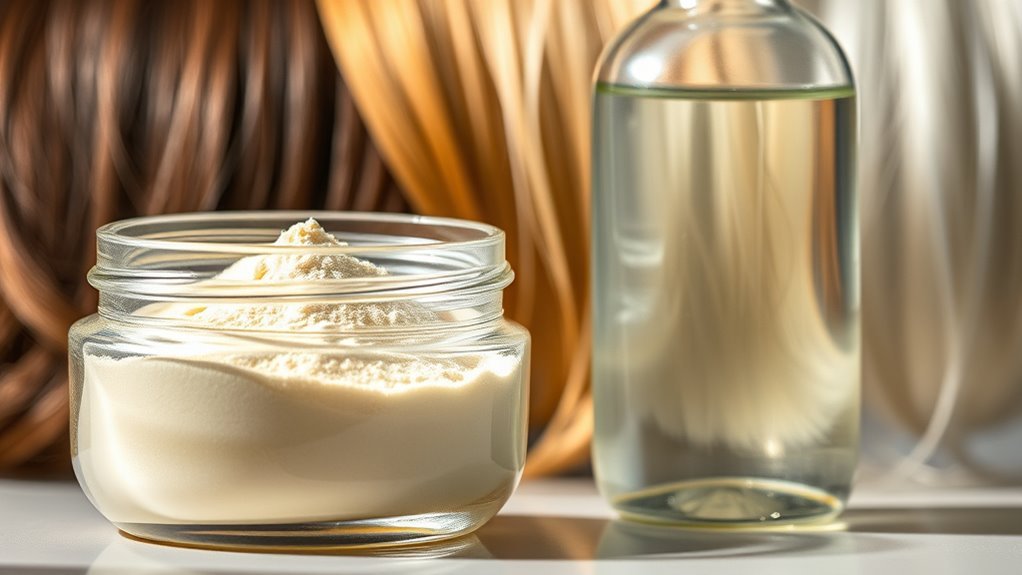
Hair bleach is a powerful chemical product designed to lighten your hair by breaking down its natural pigment. When you use bleach, it penetrates the hair shaft and breaks apart melanin, the pigment that gives your hair its color.
Understanding hair bleach basics helps you see why it’s essential to follow instructions carefully to avoid damage. One common bleaching myth is that bleach “removes” color instantly or evenly. In reality, the process takes time, and results can vary depending on your hair type and starting color.
Following hair bleach instructions is crucial; color removal is gradual and varies by hair type and starting shade.
Another myth is that bleaching always ruins your hair, but with proper care and the right products, you can minimize damage. Remember, bleach isn’t just a magic wand. It’s a chemical treatment that requires respect and caution.
Knowing how hair bleach works lets you set realistic expectations and make informed choices, so you get the lightened look you want without compromising hair health.
Types of Hair Bleach You Should Know
You’ll find that hair bleach mainly comes in two forms: powder and cream. Each one has its own pros and cons, so it’s good to know what works best for you. When it comes to developer strength, choosing the right one is really important—it helps you get the lift you want without causing too much damage to your hair. And if you’re looking for something gentler, there are even organic bleach alternatives you might want to try.
Powder vs. Cream
Although both powder and cream bleaches serve the same purpose of lightening hair, they differ markedly in composition and application. You’ll find powder offers advantages like stronger lightening power and longer shelf life.
Cream benefits include easier application and less mess, making it ideal for beginners or sensitive scalps. Choosing between them depends on your hair type, desired result, and comfort level.
| Aspect | Powder Bleach |
|---|---|
| Powder Advantages | Stronger lift, longer shelf life |
| Cream Benefits | Easier application, less mess |
| Application | Mix with developer to form paste |
Knowing these differences helps you pick the right bleach for your hair goals.
Developer Strength Options
Choosing the right developer strength is essential to achieving your desired level of lift without damaging your hair. Different developer brands offer varying developer ratios, which affect how much your hair lightens. You’ll want to match the developer strength to your hair type and bleaching goals.
Here are common developer strengths to know:
- 10 Volume (3%): Ideal for minimal lift or toning; gentle on hair.
- 20 Volume (6%): Provides moderate lift and is suitable for most bleaching needs.
- 30 Volume (9%): Offers stronger lift for darker hair but increases the risk of damage.
Be sure to check the developer ratios recommended by your chosen brands to mix bleach properly. Using the right strength helps you avoid over-processing while achieving the perfect lift.
Organic Bleach Alternatives
While traditional bleach products rely on strong chemicals, organic bleach alternatives offer a gentler way to lighten your hair without harsh additives. These options often use natural ingredients like chamomile, lemon juice, and honey, which can gradually brighten your hair while minimizing damage.
If you prefer eco friendly options, organic bleaches are a great choice since they reduce exposure to synthetic chemicals and lessen environmental impact. Keep in mind, though, that these alternatives may take longer to show results and might not lighten hair as dramatically as conventional bleach.
Still, if you want a safer, more natural approach to hair lightening, exploring organic bleach alternatives can protect your hair’s health while aligning with eco-conscious values.
Choosing Hair Bleach for Your Hair Type
When you’re picking out hair bleach, it’s super important to think about your hair texture. This way, you can avoid damage and get the best results possible.
Also, if your skin is sensitive, going for a gentler formula is a smart move—it helps keep irritation at bay.
Knowing these little details will really help you find the right product that suits your hair type perfectly.
Hair Texture Considerations
Because your hair’s texture affects how bleach penetrates and lifts color, you’ll want to pick a formula that suits your specific type. For instance, if you have fine hair, choose a gentle bleach to avoid over-processing. Curly hair and textured hair may need a more moisturizing formula to maintain elasticity during bleaching.
Coarse hair often requires a stronger product to lift color effectively, but always assess your hair’s health first.
Consider these tips:
- Straight hair and wavy hair usually bleach evenly, so standard formulas work well.
- Damaged hair demands extra care; opt for bleach with conditioning agents.
- Healthy hair can handle stronger formulations but monitor for signs of stress.
Matching bleach to your texture guarantees the best results with minimal damage.
Scalp Sensitivity Factors
If you have a sensitive scalp, choosing the right bleach becomes even more crucial to avoid irritation and discomfort. Prioritize products formulated with gentle ingredients that protect scalp health while effectively lightening your hair.
Before applying bleach, always perform sensitivity tests on a small skin patch to check for allergic reactions or adverse effects. This simple step can prevent painful burns or rashes.
Avoid bleach with high peroxide levels if your scalp tends to react easily, as they can cause excessive dryness or inflammation. Instead, opt for milder formulas designed for sensitive skin.
Taking these precautions helps maintain your scalp health and guarantees a safer bleaching experience, letting you achieve your desired look without compromising comfort or causing damage.
How to Choose the Right Developer Strength
Choosing the right developer strength is essential to achieving your desired hair lightening results without causing unnecessary damage. When choosing developer strength, consider your hair’s natural color, texture, and the level of lift you want. Picking the wrong strength can lead to uneven color or excessive damage.
Here’s a quick guide to help you select the best developer strength:
- 10 Volume (3%): Use for minimal lift or toning. It’s gentle and ideal if you want subtle lightening or just to refresh color.
- 20 Volume (6%): The most versatile, offering 1-2 levels of lift. Perfect for most users aiming for moderate lightening.
- 30 Volume (9%) and above: Provides stronger lift but increases damage risk. Choose this only if you need significant lightening and your hair is healthy.
How to Bleach Your Hair Safely
Before you start bleaching, make sure your hair is healthy and well-moisturized. This helps minimize damage and keeps your hair stronger. Once you’ve bleached your hair, it’s important to take it easy and give it some gentle care. Using nourishing treatments will help restore moisture and strength. If you follow these steps, your hair will stay safe and look its best.
Preparing Your Hair
Since bleaching can be harsh on your hair, you’ll want to prepare it properly to minimize damage. Focusing on your hair health before the process makes a huge difference in the outcome and reduces breakage. Start by giving your hair some TLC with proper pre bleach treatments that strengthen and hydrate strands.
Here’s how to prepare your hair effectively:
- Use deep conditioning masks or oils a week before bleaching to boost moisture and resilience.
- Avoid washing your hair right before bleaching; natural oils help protect your scalp and hair.
- Trim split ends to prevent further damage during bleaching.
Post-Bleach Care
Once you’ve finished bleaching, your hair will need extra care to stay healthy and vibrant. Start by using nourishing treatments designed specifically for bleached hair to repair damage and boost strength.
Focus on moisture retention because bleached hair tends to lose hydration quickly. Deep conditioners and leave-in moisturizers are essential for keeping your hair hydrated.
Avoid washing your hair too often to prevent stripping natural oils. When shampooing, opt for sulfate-free formulas to maintain moisture balance.
Also, limit heat styling and always apply heat protectants when you do. Regular trims help keep split ends at bay, promoting overall hair health.
Common Mistakes to Avoid When Bleaching Hair
Although bleaching your hair can create stunning results, many people make avoidable mistakes that damage their strands or lead to uneven color. To get the best outcome, you need to master proper bleach timing and application techniques.
Leaving bleach on too long or applying it unevenly can cause breakage or patchy lightening.
Here are common mistakes to avoid:
- Starting on dirty or oily hair, which can block the bleach from processing evenly.
- Applying bleach too close to the scalp initially, causing scalp irritation and uneven lift.
- Ignoring the recommended bleach timing, leading to either insufficient lightening or severe damage.
Stay attentive to your hair’s condition and follow instructions carefully. Avoid rushing the process, and always test a strand before full application. This way, you’ll protect your hair and achieve the color you want without unnecessary harm.
How to Fix Damage Caused by Hair Bleach
If you notice your hair feeling brittle or looking dull after bleaching, you’ll need to take immediate steps to repair the damage. Start by incorporating repair techniques like protein treatments, which help rebuild the hair’s structure and prevent breakage.
Using a deep conditioning mask once or twice a week can restore moisture and improve elasticity, making your hair softer and more manageable. Avoid heat styling tools to prevent further stress, and trim split ends regularly to maintain healthy hair.
Furthermore, use gentle shampoos and conditioners designed for damaged hair to support your repair routine. Remember, consistency with these repair techniques is key to bringing your hair back to life.
Protect Your Hair During and After Bleaching
While bleaching can dramatically change your look, protecting your hair during and after the process is essential to minimize damage. You want to maintain hair strength and shine, so taking proactive steps is key. Focus on these essentials to keep your hair healthy:
Use a heat protection spray before styling to shield your hair from further damage caused by heat tools. Prioritize moisture retention by applying deep conditioning treatments regularly; this helps restore hydration lost during bleaching.
Avoid washing your hair too frequently, as over-washing strips natural oils that protect your strands.
Top Hair Bleach Products Compared
Taking good care of your hair sets the stage for choosing the right bleach product that balances effectiveness with minimal damage. When exploring top hair bleach products, product reviews and brand comparisons are invaluable tools to narrow down your options.
Brands like L’Oréal, Wella, and Schwarzkopf consistently receive high marks for their reliable lifting power and gentle formulas. L’Oréal’s Quick Blue is praised for fast, even lightening, while Wella’s Blondor offers a creamy texture that’s easier to work with. Schwarzkopf’s Professional BlondMe stands out for advanced bond protection, reducing breakage.
Tips for Maintaining Color and Hair Health After Bleaching
After bleaching your hair, maintaining its color and health requires a consistent care routine tailored to its new sensitivity. To keep your color vibrant and your strands strong, you’ll need to adjust your habits and products. Focus on a solid hydration routine to combat dryness and prevent breakage.
Here are some essential tips for color maintenance and hair health after bleaching:
- Use sulfate-free shampoos and conditioners designed for color-treated hair to protect your tone and avoid stripping moisture.
- Incorporate deep conditioning treatments or hair masks weekly to replenish hydration and strengthen fragile strands.
- Limit heat styling and always apply a heat protectant to reduce further damage.
Frequently Asked Questions
Can I Bleach Hair That Has Been Previously Dyed?
Yes, you can bleach hair that’s been previously dyed, but you need to be cautious about previous dye reactions. Your hair might react differently because of the existing color and chemicals, so doing a strand test is essential.
Using gentle bleaching techniques helps minimize damage and uneven results. Always condition your hair well before and after bleaching.
Also, consider consulting a professional to avoid unexpected damage or poor color outcomes.
How Long Should I Wait Between Bleaching Sessions?
You should wait at least 2 to 4 weeks between bleaching sessions to minimize hair damage. Bleaching frequency plays a huge role in how healthy your hair stays, so rushing the process can cause breakage and dryness.
Use this time to nourish your hair with deep conditioning treatments. Listening to your hair’s condition before the next session helps prevent over-processing and keeps your locks stronger and shinier in the long run.
Does Bleaching Affect Hair Growth or Scalp Health?
Think of your scalp as garden soil. Bleaching can’t stunt the seeds—your hair follicles—from growing. But harsh chemicals might make the soil sensitive and dry.
You won’t stop hair growth, but scalp sensitivity and hair damage can slow things down or cause breakage. If you care for your scalp gently and avoid over-bleaching, your hair can stay healthy.
Just like a well-tended garden blooms strong and vibrant.
Can Men Safely Bleach Their Hair at Home?
Yes, you can safely bleach your hair at home if you follow men’s haircare tips closely. Make sure to do a patch test first to avoid allergic reactions and use a quality bleach product designed for home use.
Protect your scalp by not leaving the bleach on too long, and moisturize your hair afterward to prevent damage. Home bleaching safety is all about preparation and careful application to keep your hair healthy.
Are There Natural Alternatives to Chemical Hair Bleach?
Looking to lighten your hair without harsh chemicals? Yes, you can use natural lighteners like lemon juice, chamomile tea, or honey. These ingredients offer gentle DIY recipes that gradually brighten your locks under the sun’s glow.
While they won’t bleach as dramatically as chemicals, they’re kinder to your hair and scalp. So, if you want a subtle, sun-kissed effect, these natural methods might just be your new best friend.
Conclusion
Bleaching your hair is like stepping into a new chapter. Think of it as your own “Great Gatsby” transformation—bold and unforgettable.
With the right knowledge and care, you’ll avoid the pitfalls and shine bright like a star. Remember, choosing the right bleach and treating your hair gently turns this daring change into a stunning success.
Welcome the journey, protect your locks, and let your true colors sparkle with confidence every day. With the right hair bleach, your transformation will be amazing and long-lasting.