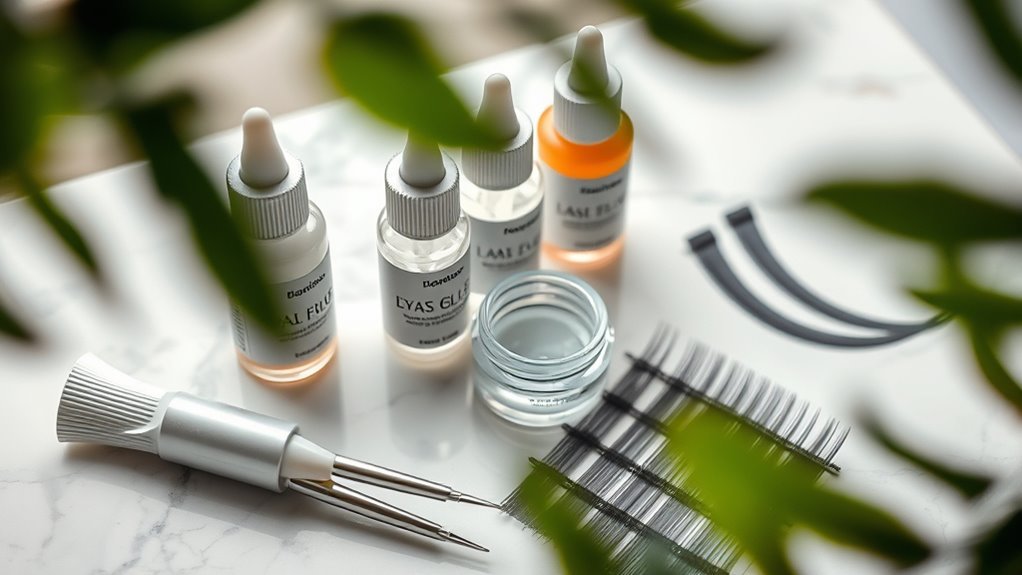
Your Guide to Lash Glue: Choosing With Confidence
Finding the right lash glue can feel overwhelming, especially when you want your lashes to stay put without irritating your skin. You’re not alone—many people struggle with finding a formula that’s both safe and effective.
Whether you’re a beginner or a pro, choosing the perfect glue can make all the difference in your lash game.
You can confidently choose lash glue by prioritizing safety. Look for hypoallergenic, latex-free formulas without harmful chemicals.
Consider drying time based on your skill level: faster for pros, slower for beginners or sensitive skin.
Always apply glue to clean lashes, wait for tackiness, and store it in a cool, airtight container to keep it fresh.
Replace glue every few months and watch for irritation, removing immediately if needed.
Keep exploring to find the perfect match for your lash style and needs.
Key Takeaways
- Prioritize lash glues free of harmful chemicals and allergens, especially formaldehyde and latex, for safe, sensitive-eye use.
- Choose drying times based on experience: 10-20 seconds for beginners, 5-10 for experts, and 20-30 for sensitive skin.
- Select hypoallergenic, fragrance-free formulas and perform patch tests to avoid irritation and allergic reactions.
- Use appropriate glue types: latex-based for flexibility, latex-free for allergies, dark tint for blending, and clear for subtle looks.
- Store glue in airtight containers at cool temperatures and replace every 3-6 months or if consistency or smell changes.
How to Spot Safe and Effective Lash Glue
When choosing lash glue, you’ll want to focus on safety and effectiveness to protect your eyes and achieve a long-lasting hold. First, prioritize brands that emphasize ingredient transparency. You should be able to see a clear list of what’s inside the glue, helping you avoid harmful chemicals or allergens.
This transparency lets you make an informed choice, minimizing irritation risks. For safe application, pick formulas designed for sensitive eyes and tested by dermatologists or ophthalmologists. Avoid glues with strong fumes or harsh ingredients like formaldehyde.
Also, check for hypoallergenic labels to guarantee the glue suits your skin type. Lastly, read reviews and product descriptions carefully. Reliable lash glue offers consistent bonding without causing redness or discomfort.
Choosing Lash Glue by Drying Time
How quickly your lash glue dries can make a big difference in your application experience and the final look. If you prefer a quick lash application, a fast-drying glue is essential. However, if you want more time to adjust your lashes, a slower-drying formula might suit you better.
Understanding drying techniques helps you achieve a flawless finish and prevents lashes from slipping or misaligning.
Here’s a quick guide to choosing lash glue by drying time:
| Drying Time | Best For | Tips for Application |
|---|---|---|
| 5-10 seconds | Experienced users | Work quickly, prepare lashes ahead |
| 10-20 seconds | Beginners & precision | Allows easy adjustment |
| 20-30 seconds | Sensitive skin | Avoids irritation, gentle setting |
| 30+ seconds | Dramatic or complex looks | Patience needed, more hold time |
| Variable drying | Customizable application | Test drying time before use |
Pick a drying time that fits your routine. Mastering drying techniques will enhance your lash application every time.
What Lash Glue Ingredients Mean for Sensitive Eyes
If you have sensitive eyes, some lash glue ingredients might cause irritation or allergic reactions. So, it’s a good idea to watch out for common irritants like formaldehyde and latex, as these often lead to discomfort.
Opting for a hypoallergenic formula can really make a difference. It helps protect your eyes while still keeping your lashes secure and looking great.
Common Irritants to Avoid
Several common ingredients in lash glue can trigger irritation, especially if you have sensitive eyes. Knowing which irritant ingredients to avoid helps reduce the risk of allergic reactions and discomfort. When choosing lash glue, watch out for these potential culprits:
- Formaldehyde or formaldehyde-releasing agents
- Latex, a common allergen
- Cyanoacrylate, which can cause stinging or redness
- Parabens, linked to skin sensitivity
- Fragrances or added dyes that may irritate
If you notice redness, itching, or swelling after application, these irritants might be to blame. Always check the ingredient list and do a patch test before full use. Steering clear of these substances helps protect your eyes and guarantees a more comfortable lash experience.
Hypoallergenic Formula Benefits
Avoiding common irritants in lash glue is a smart move, especially if your eyes tend to be sensitive. Choosing a hypoallergenic formula means you’re opting for glue designed to minimize allergic reactions and discomfort.
These formulas exclude harsh chemicals and fillers that often cause redness, itching, or watering. By focusing on hypoallergenic benefits, you reduce the risk of irritation, making your lash application experience much more comfortable.
You’ll find that such glues often contain gentle ingredients that secure lashes effectively without compromising eye health. If you’ve struggled with sensitivity before, switching to a hypoallergenic option can be a game changer, providing peace of mind and lasting wear.
Prioritizing irritation prevention helps you enjoy beautiful lashes without the hassle of adverse reactions.
Selecting Lash Glue Types for Beginners
Although lash glue comes in various formulas, beginners should focus on types that balance ease of use with strong hold. Choosing the right glue helps you master application techniques quickly while ensuring your lashes stay put throughout the day.
Look for adhesives that offer reliable adhesive longevity without requiring complicated steps.
Here are five beginner-friendly lash glue types to evaluate:
- Latex-based glue: Easy to work with, flexible, and dries quickly
- Latex-free glue: Ideal if you have sensitive eyes or allergies
- Dark tint glue: Helps blend lashes naturally and hides glue lines
- Clear glue: Dries invisibly, perfect for subtle looks
- Fast-dry glue: Speeds up application, suits quick styling
Start with a glue that matches your comfort level and desired wear time. By focusing on these factors, you’ll improve your application techniques and enjoy longer-lasting results without frustration.
Matching Lash Glue to Your Extension Style
To match your lash glue to your extension style, you’ll want to check out the different types of glue and how fast they dry. Drying time is pretty important because it can totally change how you apply your lashes. Plus, don’t forget to think about any sensitivities or allergies you might have — keeping your eyes comfortable and safe is a must.
Glue Types Overview
Choosing the right lash glue is essential for achieving a flawless extension look that lasts. Understanding glue types helps you pick one that matches your extension style perfectly.
Pay attention to glue consistency factors like thickness and viscosity, which affect application ease and bonding. Also, consider adhesive strength comparison to guarantee durability without damaging natural lashes.
Here’s a quick overview:
- Latex-based glue: Flexible, good for sensitive eyes but less durable
- Latex-free glue: Ideal for allergies, strong hold, slightly thicker
- Fast-drying glue: Best for volume lashes, quick set time
- Slow-drying glue: Easier placement, great for beginners
- Waterproof glue: Resists moisture, suits active lifestyles
Choosing based on these factors guarantees a secure, comfy, and long-lasting lash extension experience.
Drying Time Importance
Understanding the types of lash glue sets the stage for selecting one with the right drying time to match your extension style. If you prefer a quick, efficient routine, choose glue with a fast drying time to speed up your application strategies.
Conversely, slower drying glue gives you more flexibility, ideal for intricate designs or beginners mastering drying techniques. Matching drying time to your technique helps avoid clumping or premature bonding, ensuring each lash sits perfectly.
Pay attention to environmental factors like humidity too, as they affect drying speed and influence your application methods. By selecting glue with a compatible drying time, you’ll improve precision, comfort, and the overall durability of your lash extensions.
Tailoring your glue choice to your style sharpens your results every time.
Sensitivity and Allergies
Although lash glue can improve your look, it may also trigger sensitivity or allergic reactions if it doesn’t suit your skin type. To avoid discomfort, you should perform allergy testing before applying any new glue.
Watch for sensitivity symptoms like redness, itching, or swelling around your eyes. Matching the glue to your extension style and skin sensitivity is key to a safe, comfortable experience.
Here’s what to keep in mind:
- Always do a patch test 24-48 hours before full application
- Choose glues labeled hypoallergenic or formulated for sensitive skin
- Avoid glues with strong chemical odors or formaldehyde
- Monitor for any irritation during and after application
- Consult a dermatologist if sensitivity symptoms persist
Taking these steps helps you enjoy beautiful lashes without compromising your skin’s health.
Tips for Applying Lash Glue Correctly
Applying lash glue correctly can make all the difference between a flawless look and a frustrating experience. To start, make sure your lashes are clean and dry before applying glue.
Focus on mastering application techniques by using a thin, even layer of glue along the lash band. Avoid thick blobs, as they take longer to dry and can cause lashes to slip.
Apply a thin, even layer of lash glue to prevent slipping and ensure quick drying.
Pay attention to glue consistency. It should be tacky but not overly wet. Waiting about 30 seconds after applying glue lets it become tacky, helping lashes stick better and last longer.
Use tweezers or a lash applicator to place lashes as close to your natural lash line as possible without touching your skin. Press gently to secure them in place.
If you notice excess glue, carefully remove it with a cotton swab before it dries. Practicing these tips will save you time and frustration while making sure your lashes look natural and stay put all day.
Storing Lash Glue to Keep It Fresh
To keep your lash glue fresh, it’s best to store it at the ideal temperature, usually in a cool, dry place. You want to make sure it’s not too warm or humid, as that can affect the glue’s quality.
Also, always tightly seal the container after each use. This helps prevent air from getting in, which can dry out the glue or make it less effective. Using the right kind of container really makes a difference—it helps maintain the glue’s quality and can extend its shelf life. So, a little care goes a long way!
Ideal Storage Temperature
Keeping your lash glue fresh starts with storing it at the right temperature. The ideal temperature helps maintain the glue’s consistency and adhesive power. Too much heat or cold can ruin its effectiveness, so paying attention to storage conditions is vital.
Here’s how to keep your lash glue in top shape:
- Store at a cool, dry place between 60°F to 75°F (15°C to 24°C)
- Avoid direct sunlight or heat sources like radiators
- Keep away from extreme cold to prevent thickening or clumping
- Use a dedicated storage box or drawer to maintain stable conditions
- Check the glue’s label for any specific temperature recommendations
Following these simple steps guarantees your lash glue stays fresh and performs reliably every time you use it.
Avoiding Air Exposure
Although storing lash glue at the right temperature is important, preventing air exposure is just as essential to maintain its freshness. When lash glue is exposed to air, it can dry out quickly and lose its adhesive power.
To keep it effective, always store your glue in airtight containers that minimize contact with oxygen. This simple step helps preserve the formula’s consistency and extends its shelf life.
Furthermore, controlling humidity is imperative because excess moisture can alter the glue’s texture and weaken its hold. Keep your lash glue in a dry environment and avoid leaving the container open for long periods.
Proper Container Use
Sealing your lash glue properly goes hand in hand with choosing the right container. The materials used for your container play a big role in preserving the glue’s quality and preventing premature glue expiration.
To keep your lash glue fresh, use airtight containers made from non-reactive materials like glass or high-quality plastic. Store glue in a cool, dry place away from direct sunlight and heat.
Avoid frequent opening because exposure to air speeds up drying and expiration. Also, keep containers upright to prevent leakage and contamination.
Label containers with the opening date to track glue expiration easily.
When and How to Replace Your Lash Glue
Since lash glue can lose its effectiveness over time, you should replace it regularly to guarantee your lashes stay secure and your eyes remain safe. Generally, the recommended replacement frequency is every three to six months after opening.
Over time, exposure to air and bacteria can degrade the glue’s bonding power and increase the risk of eye infections. If your glue changes in color, consistency, or smell, it’s time to toss it.
When disposing of lash glue, avoid pouring it down the drain or throwing it loosely in the trash. Instead, seal the tube tightly and place it in a small plastic bag before discarding it. This prevents accidental contact and environmental contamination.
What to Do If Lash Glue Causes Irritation
If you notice redness, itching, or swelling after applying lash glue, you should remove your lashes immediately to prevent further irritation. Acting quickly helps minimize discomfort and potential damage to your eyes.
After removal, focus on irritation relief with gentle care. Here’s what you can do:
- Rinse your eyes with cool water to flush out any remaining glue.
- Apply a cold compress to reduce swelling and soothe the skin.
- Use over-the-counter soothing remedies like aloe vera gel or an eye-safe hydrocortisone cream.
- Avoid rubbing your eyes to prevent further aggravation.
- If irritation persists or worsens, seek advice from a healthcare professional.
Taking these steps promptly guarantees you manage the irritation effectively and protect your eye health. Remember, choosing lash glue with skin-friendly ingredients can help prevent future issues and keep your lash experience comfortable.
Comparing the Best Lash Glue Brands and Formulas
How do you choose the best lash glue when there are so many options available? Start by considering brand reputation. Trusted brands often prioritize ingredient sourcing and formula consistency, which guarantees safer, reliable results.
Check user reviews to see how real people rate the glue’s performance, longevity, and ease of use. Pay attention to application techniques recommended by the brand. Some formulas work better with specific methods.
Packaging design also matters. It should protect the product from drying out and allow precise application. Don’t overlook price comparison either. The most expensive glue isn’t always the best, and affordable options can deliver great performance.
Frequently Asked Questions
Can Lash Glue Be Used on Natural Lashes Without Extensions?
Yes, you can use lash glue on natural lashes without extensions, but it’s important to pick the right adhesive types to avoid irritation. Opt for a gentle, latex-free formula designed for sensitive skin.
When applying, use precise application techniques. Apply a thin line close to the lash line without soaking your lashes. This helps protect your natural lashes while giving you a subtle lift or hold for decorative purposes.
How Long Does Lash Glue Typically Last Once Applied?
Like Cinderella’s spell, lash glue’s application longevity usually lasts about 4 to 7 days before it starts to fade. Different adhesive types influence this timeline. Latex-based glues dry quickly but might not hold as long, while medical-grade or formaldehyde-free options can extend wear.
To keep your lashes looking flawless, choose the right adhesive type and avoid water or oil around your eyes after application for maximum staying power.
Is It Safe to Share Lash Glue With Others?
No, you shouldn’t share lash glue with others because it can compromise hygiene practices and increase risks like infections or allergic reactions. Lash glue comes into close contact with your eyes, so using your own guarantees you avoid bacteria or irritants from someone else’s product.
To stay safe, always use fresh glue, keep the applicator clean, and never double-dip. These steps help maintain proper hygiene and protect your eye health.
Can Lash Glue Cause Allergic Reactions After Long-Term Use?
Yes, lash glue can cause allergic reactions after long-term use. You might develop sensitivity symptoms like redness, itching, or swelling around your eyes over time. These long-term effects happen because your skin can become more reactive with repeated exposure.
To avoid problems, pay attention to any new irritation and consider switching to hypoallergenic formulas if you notice sensitivity symptoms emerging after using the same glue for a while.
What Is the Best Way to Remove Lash Glue Safely?
Regarding lash glue removal, remember: “Slow and steady wins the race.” You should always use gentle removal techniques tailored to the adhesive types you’ve used.
For water-based glue, a warm compress softens the bond, letting you peel lashes off carefully. For stronger adhesives, use a specialized lash adhesive remover to avoid irritation. Never pull lashes harshly; it risks damage. Taking your time guarantees safe, comfortable lash glue removal every time.
Conclusion
Now that you’ve got the lowdown on lash glue, you can pick with confidence and keep your eyes happy and safe. Remember, the right glue isn’t just about hold, it’s about comfort and care too.
Don’t let a bad batch rain on your parade; always store and replace your glue properly. With these tips, you’ll be ready to bat those lashes like a pro, turning heads without a hitch using the best lash glue.