Virgin Hair vs. Remy Hair: Which Is Better?
Choosing the right hair extensions can feel overwhelming, especially when you want something that looks natural, lasts long, and feels soft. You’re not alone—many people struggle to decide between virgin hair and Remy hair. Both have their perks, but understanding the differences can make your choice easier and more satisfying.
If you want hair extensions that look natural, last long, and feel soft, virgin hair is usually the better choice since it’s unprocessed and keeps its natural texture and strength.
Remy hair is still good quality but may undergo slight processing, making it more affordable but less durable. Virgin hair holds color and styles better too.
Depending on your care routine and budget, one might suit you more, and there’s more to reflect upon about sourcing, maintenance, and cost.
Key Takeaways
- Virgin hair is unprocessed, maintaining its natural texture and cuticle alignment. This ensures higher quality and a longer lifespan compared to Remy hair.
- Remy hair keeps the cuticle direction but may go through mild processing. This makes it more affordable but a bit less durable than virgin hair.
- Virgin hair offers superior shine, consistent curl patterns, and better color retention since it’s untreated.
- Both hair types need gentle maintenance, but virgin hair responds better to styling and holds color longer than Remy hair.
- When it comes to cost, virgin hair is pricier due to its premium quality. Remy hair strikes a balance between quality and affordability for everyday use.
How Is Virgin Hair Sourced?
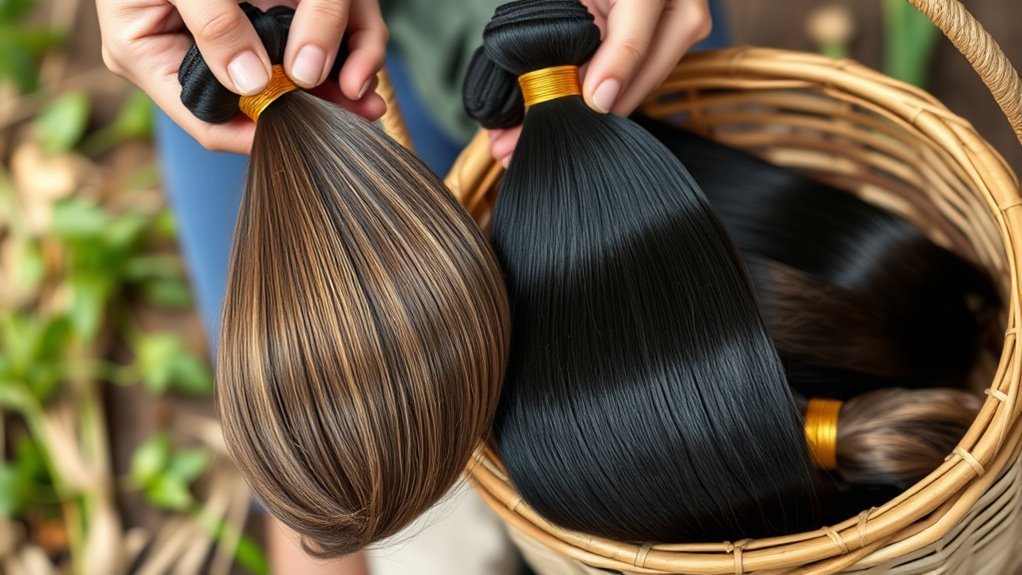
Although sourcing virgin hair requires careful attention, it guarantees you get the highest quality strands. When you look into sourcing regions, you’ll find that areas like India, Brazil, and Malaysia are popular due to the natural texture and strength of hair available there. Knowing the origin helps you understand the hair’s characteristics and guarantees consistency in quality.
You also need to reflect on ethical considerations. It’s important to verify that the hair is collected with consent and fair compensation to donors, avoiding exploitative practices. Many reputable suppliers provide transparency about their sourcing methods, so you can trust the origin and treatment of the hair.
How Is Remy Hair Collected?
Understanding how virgin hair is sourced gives you a foundation for comparing it to remy hair collection methods. Remy hair is gathered through specific collection methods that prioritize maintaining the hair’s natural cuticle alignment.
Usually, hair is collected from donors by carefully combing or cutting it in a way that guarantees all strands face the same direction, preventing tangling and damage.
Ethical sourcing plays an essential role in remy hair collection. You’ll want to choose suppliers who obtain hair with full consent, often from temples or salons where donors willingly offer their hair.
This transparency assures that the hair isn’t stolen or taken under exploitative circumstances. By focusing on these collection methods and ethical sourcing, you get remy hair that’s both high-quality and responsibly obtained, making it a reliable option for your hair needs without compromising your values.
How Do Virgin and Remy Hair Differ in Quality?
What sets virgin and remy hair apart in quality primarily lies in their source and processing. Virgin hair comes directly from a single donor without any chemical treatment, so its cuticles remain intact and aligned. This natural state means you get stronger, shinier strands that respond well to styling and hair care routines.
Virgin hair’s untouched cuticles offer stronger, shinier strands that excel in styling and care.
Remy hair, while also collected carefully to keep cuticles aligned, may undergo mild processing to remove impurities or adjust texture, which can slightly impact its natural quality.
Market trends show that virgin hair is often seen as the premium choice due to its untouched nature. This appeals to those seeking the highest quality and longevity. Remy hair remains popular because it balances quality with affordability, making it accessible for everyday wear.
Understanding these differences helps you choose the right type for your hair care goals and budget. That way, you get the best value and results from your hair investment.
Which Lasts Longer: Virgin or Remy Hair?
Choosing between virgin and remy hair often comes down to how long you want your hair extensions to last. When considering durability, virgin hair generally lasts longer because it hasn’t been processed or chemically treated. Its cuticles remain intact and aligned, which minimizes tangling and breakage.
However, the lifespan factors don’t rely solely on the hair type; how you care for your extensions plays a huge role too. Proper washing, conditioning, and gentle handling can extend the life of both virgin and remy hair.
Remy hair, while still high-quality with aligned cuticles, may have undergone mild processing, which can slightly reduce its longevity. If you’re looking for maximum durability and lifespan, virgin hair is typically the better choice.
But remember, consistent maintenance is key no matter which option you pick to guarantee your extensions stay beautiful for as long as possible.
How Do Virgin and Remy Hair Compare in Texture and Appearance?
You’ll notice that virgin hair tends to keep its natural texture and curl pattern more consistently compared to Remy hair. It usually looks smoother and shinier too, mainly because it hasn’t been processed or altered. So, knowing these differences can really help you choose the best option for your style and needs.
Natural Texture Differences
Although both virgin and Remy hair come from human sources, their natural textures and appearances can differ noticeably. When you choose virgin hair, you get strands that maintain their original hair type characteristics, untouched by chemical treatments.
This means the natural texture variations, whether straight, wavy, curly, or coily, remain intact, offering you an authentic look and feel. On the other hand, Remy hair may undergo some processing, even though the cuticle stays aligned, which can slightly alter its natural texture.
Shine and Smoothness Levels
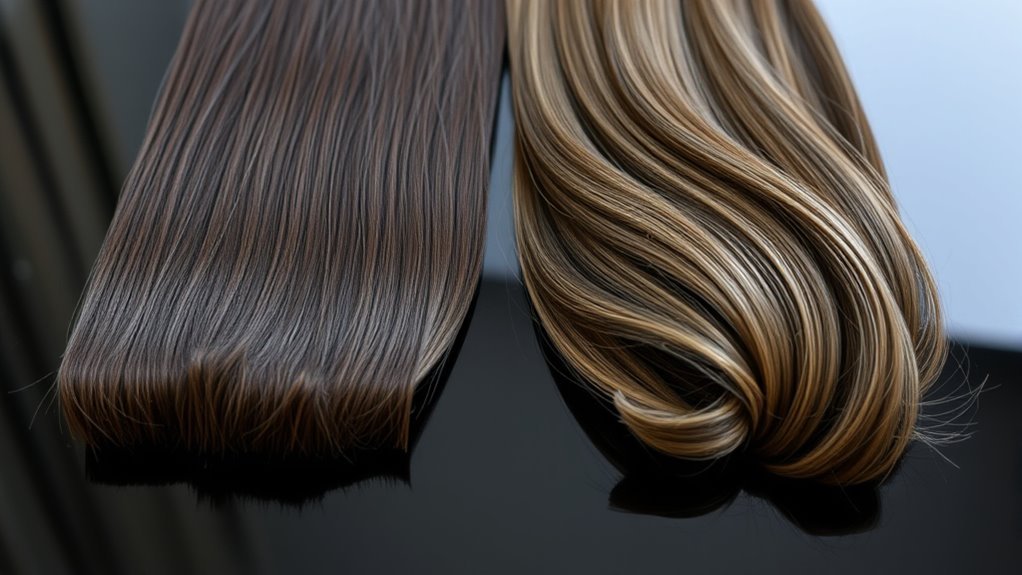
How do virgin and Remy hair differ regarding shine and smoothness? When you compare them, virgin hair generally offers superior shine improvement because it retains its natural cuticle alignment, reflecting light better.
Smoothness factors also favor virgin hair, as it hasn’t been chemically processed or exposed to harsh treatments, leaving the texture silky and soft. Remy hair, while still high-quality, may have slight variations in cuticle direction that affect its overall smoothness and shine.
Here’s what you can expect visually:
- Virgin hair glistens with a natural, healthy sheen.
- Remy hair shows a polished look but might lack the same level of luster.
- Virgin strands feel smoother to the touch, increasing manageability.
Choosing virgin hair gives you that extra boost in shine and smoothness for a flawless finish.
Curl Pattern Consistency
Why does curl pattern consistency matter when choosing between virgin and Remy hair? When you want your curls to look natural and uniform, consistent curl definition is key.
Virgin hair retains its original texture since it hasn’t been chemically treated or processed, so its curls stay true to their natural pattern. This means better curl preservation over time, giving you a consistent look without unwanted frizz or irregularities.
On the other hand, Remy hair, while high-quality, may have undergone slight processing or blending, which can affect how uniform the curl pattern remains.
If you prioritize well-defined curls that maintain their shape, virgin hair is often the better choice. It guarantees your textured style stays consistent, making your hair look fresh and flawless longer.
How Are Virgin and Remy Hair Treated Differently?
You’ll notice that virgin and Remy hair come from different sourcing and collection methods, which really affects their quality. Plus, the way they’re processed and treated with chemicals isn’t the same either, and that plays a big role in how long they last.
Knowing these differences can help you pick the best option that suits your needs perfectly.
Sourcing and Collection Methods
Though both virgin and Remy hair come from human sources, their collection methods set them apart in quality and integrity. When you look into sourcing techniques, virgin hair is usually collected directly from a single donor without prior chemical treatment, preserving its natural cuticle alignment.
In contrast, Remy hair can come from multiple donors but maintains the cuticle’s direction through meticulous sorting. Ethical considerations are crucial, especially with virgin hair, where you want to confirm the hair is willingly donated or sold without exploitation.
Envision this process:
- A single, careful ponytail cut from a donor’s head
- Multiple bundles sorted and aligned to keep cuticles intact
- Donors informed and consenting, guaranteeing fair treatment
Processing and Chemical Treatments
Once the hair is sourced, how it’s processed sets virgin and Remy hair apart even more. Virgin hair undergoes minimal processing methods to preserve its natural state, meaning it’s free from chemical residues. You’ll find it hasn’t been dyed, permed, or treated with harsh chemicals, which keeps the cuticles intact and aligned.
On the other hand, Remy hair may experience light processing to improve texture or color, but the cuticle remains intact and aligned to reduce tangling. However, some Remy hair might contain traces of chemical residues from mild treatments.
When you’re choosing between the two, understanding these differences helps you pick hair that fits your needs, whether you want completely untreated virgin hair or slightly processed Remy hair with manageable styling options.
Quality Preservation Techniques
Because preserving hair quality is essential, virgin and Remy hair undergo different treatments to maintain their integrity. You’ll notice that virgin hair receives stricter quality control, guaranteeing cuticles stay intact and aligned in one direction. This helps maintain its natural shine and durability.
Remy hair, while still carefully handled, may go through mild processing but retains preservation methods that prevent tangling and damage. When you choose between them, consider these preservation techniques:
Virgin hair is washed gently with sulfate-free products to protect cuticles.
Remy hair bundles undergo brushing and sorting to keep strands smooth.
Both types use natural oils or serums to lock in moisture and extend lifespan.
These quality control steps guarantee you get hair that lasts and looks great.
Which Hair Type Holds Styling and Color Better?
How well your hair holds styling and color can make all the difference in your look. Virgin hair typically outperforms Remy hair in color retention because it hasn’t been processed or exposed to harsh chemicals. This natural state means your color lasts longer and looks richer.
When you apply styling techniques, virgin hair tends to maintain curls, waves, or straight styles better due to its intact cuticle layer. Remy hair, while still high quality, may lose color vibrancy faster and respond less consistently to heat styling.
| Hair Type | Color Retention | Styling Techniques Durability |
|---|---|---|
| Virgin Hair | Excellent | Holds styles longer |
| Remy Hair | Good | Good, but varies by batch |
| Synthetic | Poor | Limited styling options |
| Processed | Moderate to Poor | Often less durable |
Choosing virgin hair gives you a longer-lasting, more versatile styling experience with better color hold.
What Maintenance Does Virgin vs. Remy Hair Require?
You’ll want to treat virgin and Remy hair a bit differently when it comes to washing and conditioning to keep them looking their best. It’s really about using the right products and techniques for each type. Plus, how you style your hair can make a big difference in how long it lasts. So, knowing the proper methods is super important. Let’s dive in and explore how to care for each type to get the most out of your investment.
Washing And Conditioning
Although both virgin and Remy hair require regular washing and conditioning to stay healthy, the techniques and products you choose can differ based on their unique qualities. Virgin hair, being untreated, benefits from gentle, sulfate-free shampoos and deep conditioning treatments to maintain its natural texture and strength.
Remy hair, while high-quality, may have slight processing, so you can use moisturizing shampoos that protect the cuticle alignment.
For effective hair care, consider these product recommendations and tips:
- Use lukewarm water to prevent drying out the strands
- Apply conditioner mainly to the mid-lengths and ends to avoid buildup at the roots
- Detangle gently with a wide-tooth comb while conditioning to minimize breakage
Tailoring your washing routine helps preserve the beauty and longevity of both hair types.
Styling And Longevity
When maintaining virgin and Remy hair, understanding their styling needs and lifespan is key to keeping them looking fresh. Virgin hair, untouched by chemicals, responds well to various styling techniques like curling or straightening, but you should use heat protectants to avoid damage.
Remy hair, while still high-quality, may have undergone minimal processing, so it requires gentler styling to preserve its cuticle alignment. Longevity factors for both types include regular moisturizing, avoiding harsh products, and limiting heat exposure.
Virgin hair generally lasts longer, up to a year or more with proper care, while Remy hair typically maintains its quality for about six to nine months. By tailoring your maintenance routine to these factors, you’ll extend the life and beauty of whichever hair you choose.
How Much Does Virgin Hair vs. Remy Hair Cost?
How much you pay for virgin hair versus Remy hair depends on several factors, including quality, source, and processing. When doing a cost comparison, you’ll notice virgin hair tends to be pricier because it’s unprocessed and maintains its natural cuticle alignment, offering better durability.
Remy hair, while still high-quality, undergoes slight processing, making it more affordable.
Keep budget considerations in mind as you weigh your options. Virgin hair suits those wanting premium longevity, while Remy hair balances quality with cost-efficiency.
Here’s a quick look to visualize price differences:
- Virgin hair: Higher cost, sourced directly from donors, minimal processing
- Remy hair: Moderate cost, cuticle-aligned but lightly processed
- Synthetic or non-Remy options: Lower cost, shorter lifespan
Understanding these distinctions helps you plan your purchase without compromising quality or overspending.
How to Choose Between Virgin and Remy Hair for Your Needs?
What factors should you consider to pick between virgin and Remy hair? First, assess your hair type and preferred styling techniques. Virgin hair offers unmatched quality standards and longevity, making it ideal if you want versatile, long-lasting hair extensions. On the other hand, Remy hair suits those who prioritize affordability while still expecting good quality.
Next, think about your maintenance routines. Virgin hair requires careful upkeep to preserve its natural texture, while Remy hair is generally easier to manage. Keep an eye on current market trends and consumer preferences, as they often reflect the best value and innovations in hair extensions.
Ethical sourcing is another key aspect. Virgin hair often comes with stricter ethical sourcing assurances, so if that matters to you, it could influence your choice. Ultimately, weigh your budget, lifestyle, and desired look to decide which hair type aligns best with your needs.
Frequently Asked Questions
Can Virgin or Remy Hair Be Used for Hair Extensions and Wigs?
Yes, you can use both virgin and Remy hair for hair extensions and wigs. You’ll find they work well with various application techniques, like sew-ins or clip-ins, giving you flexibility.
Both types handle styling options beautifully, so you can curl, straighten, or dye them without much worry. Choosing between them depends on your budget and desired hair texture, but either will give you a natural, polished look for your extensions or wigs.
Are There Ethical Concerns With Sourcing Virgin or Remy Hair?
Yes, you should consider ethical sourcing when choosing hair. Some virgin and Remy hair come from hair donation programs where people willingly contribute their hair, which supports ethical practices.
However, unethical sourcing can involve exploitation or lack of consent. You can protect yourself by researching brands that prioritize transparency and fair trade.
Always ask where the hair comes from to guarantee it’s ethically sourced and respects the donors’ rights and intentions.
How Do Weather Conditions Affect Virgin and Remy Hair Maintenance?
Ever wondered how weather affects your hair care? Humidity effects can cause frizz in both virgin and remy hair, so you’ll need to adjust your maintenance routines accordingly.
Temperature impact matters too. Cold weather may dry out strands, while heat can strip moisture. Seasonal care is key: use heavier conditioners in winter and lighter products in summer to keep your hair healthy.
Adapting your routine helps you manage both hair types effectively year-round.
Can Virgin or Remy Hair Cause Allergic Reactions?
Yes, both virgin and Remy hair can cause allergy symptoms if you’re sensitive to certain hair types or the chemicals used during processing. If you notice itching, redness, or swelling when wearing extensions, you might be having an allergic reaction.
Always test a small patch before fully committing. Choosing high-quality, untreated hair reduces risks, but everyone’s skin reacts differently, so stay alert to any discomfort or unusual irritation.
Is It Possible to Mix Virgin and Remy Hair Types in One Hairstyle?
Yes, you can mix virgin and Remy hair types in one hairstyle. About 65% of stylists use mixing techniques to blend textures seamlessly.
When you’re blending textures, focus on matching the hair’s natural feel and shine to avoid noticeable differences. Using proper mixing techniques guarantees your hairstyle looks natural and cohesive.
This gives you more versatile styling options without compromising quality or appearance.
Conclusion
Choosing between virgin and Remy hair is like picking between a classic novel and a well-edited bestseller. Both tell great stories, but your preference shapes the experience.
Virgin hair is untouched and pure, lasts longer, and holds color beautifully. Remy hair offers quality at a friendlier price.
Remember, just like a cherished book, the care you give your hair determines how long its beauty stays with you. Choose what fits your style and budget best when deciding between virgin hair and Remy hair.