Frontal vs. Closure: Which Is Better?
Finding the perfect hairpiece can feel overwhelming, especially when you’re trying to achieve that flawless, natural look. If you’ve struggled with choosing between frontals and closures, you’re not alone. Many people want a solution that balances style, ease, and budget without sacrificing quality.
Choosing between frontals and closures depends on your style and maintenance preferences. Frontals cover your entire hairline, giving you versatile styling and a natural look but need more care and cost more.
Closures cover smaller areas, are easier to install, and fit low-maintenance lifestyles but limit styling options.
If you want bold styles and flexible parts, go for frontals. For simplicity and budget-friendliness, closures work well. Keep exploring to find the best fit for your hair goals.
Key Takeaways
- Frontals cover the entire hairline, offering versatile styling and a natural look. Closures cover a smaller area, focusing on the crown.
- Frontals enable multiple parting options and intricate styles. Closures suit simple, low-maintenance everyday looks.
- Installation of frontals is more complex and time-consuming compared to the quicker, easier application of closures.
- Frontals require higher maintenance and care but provide longer-lasting versatility. Closures need less upkeep but have shorter durability.
- Frontals have a higher upfront cost and suit users seeking bold styles. Closures are budget-friendly and ideal for active lifestyles.
What Are Hair Frontals and Closures?
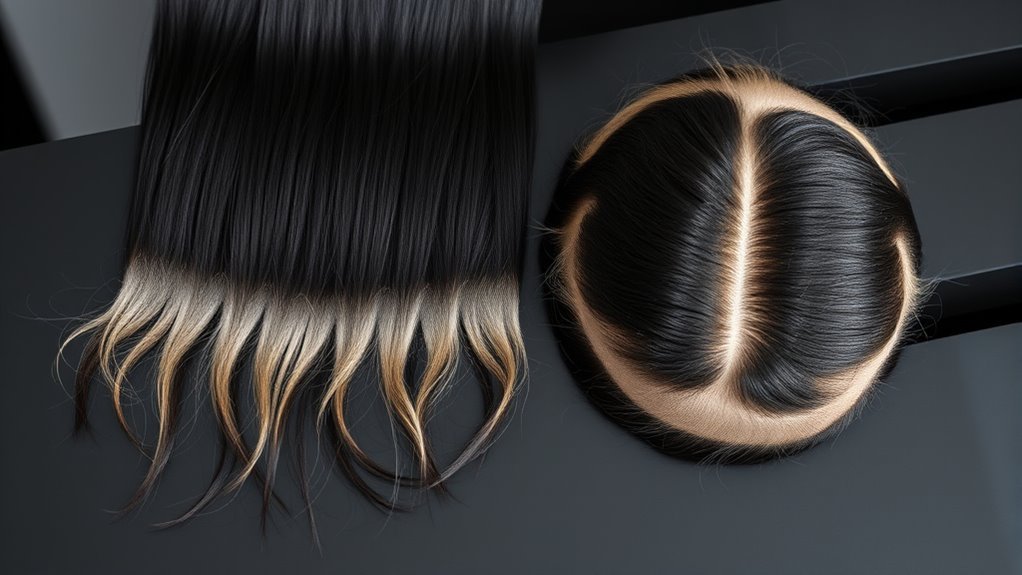
Hair frontals and closures are essential tools for anyone looking to achieve a natural hairline and protect their own hair. Both serve as bases to attach hair extensions, but they differ in coverage and versatility. You’ll find frontals cover your entire hairline from ear to ear, while closures typically cover a smaller area on the crown.
Understanding your hair types and desired styling techniques will help you choose the right option. For example, frontals offer more freedom to part your hair in various ways, supporting more intricate styles. Closures work well for simple, protective styles, especially if you prefer a single part.
Whether you have curly, straight, or wavy hair types, both frontals and closures can blend seamlessly when installed correctly. By selecting the right piece, you can experiment with different styling techniques without compromising your natural hair’s health or look.
Hair Coverage Differences: Frontals vs. Closures
Although both frontals and closures improve your hairstyle, they cover different areas of your scalp, affecting how much natural hair is exposed and styled. Frontals typically cover your entire hairline from ear to ear, giving you more flexibility in hairline designs and allowing you to style your hair away from your face.
This wider coverage reduces scalp visibility, making your hair look more natural and seamless. Closures, on the other hand, cover a smaller area, usually focusing on the crown or a specific section of your head. Because closures don’t extend to your full hairline, some of your natural hair remains visible around the edges, which can limit the complexity of your hairline designs.
If you want a hairstyle with a more natural-looking edge and less scalp visibility, frontals are the better option. However, closures can still provide a good amount of coverage while requiring less maintenance and offering a more straightforward installation process.
Pros and Cons of Using a Hair Frontal
When you choose a frontal, you gain the advantage of a full hairline that allows for versatile styling options, including the ability to part your hair in multiple ways. This flexibility suits various hair types and lets you experiment with different styling techniques, from sleek updos to voluminous curls.
With frontals, you can investigate diverse color options and texture choices, matching seasonal trends or drawing inspiration from celebrities. Application methods for frontals can be more complex, often requiring professional help to achieve a seamless look.
While frontals offer a natural appearance and more styling freedom, they may demand more maintenance and care compared to other options. Age considerations also matter; younger users might enjoy the bold styling opportunities, while older users should weigh upkeep against convenience.
Pros and Cons of Using a Hair Closure
When you choose a hair closure, you’re going to love how natural it looks and how well it blends with your scalp. It really makes your hairstyle appear seamless and polished. That said, closures do need some careful maintenance if you want them to stay fresh and last a long time. So, let’s take a closer look at the benefits and a few challenges you might run into with closures.
Natural Appearance Benefits
Because hair closures cover only a small section of your scalp, they offer a more natural look compared to full wigs or weaves. You’ll notice how closures maintain your hair’s natural texture, making it easier to blend the added hair seamlessly with your own.
This realistic blending means no obvious lines or gaps, so your hairstyle looks authentic from all angles. Closures also let you part your hair in different ways without revealing tracks or wefts, improving that natural appearance.
If you want a subtle improvement rather than a complete transformation, closures deliver that effortlessly. By matching your natural hair texture, closures help you achieve a polished, believable style that’s hard to detect, giving you confidence in your overall look.
Maintenance and Durability Challenges
Although hair closures offer a natural look, they require careful maintenance to keep them looking their best. You’ll need to use gentle cleaning products specifically designed for delicate lace or silk bases to avoid damage. Harsh shampoos or frequent washing can weaken the closure, so stick to mild formulas and wash less often.
Over time, closures may experience wear and tear, but you can extend their lifespan with proper repair techniques like reinforcing the lace or securing loose hairs. Keep in mind that closures aren’t as durable as frontals, so you’ll need to handle them with extra care during styling and removal. By staying on top of maintenance and repairs, you can enjoy a realistic appearance without sacrificing durability.
Natural Look and Styling Versatility of Frontals and Closures
If you want a hairstyle that blends seamlessly with your natural hairline, both frontals and closures offer impressive options. Frontals cover the entire hairline from ear to ear, giving you the freedom to experiment with various styling techniques like parting your hair in the middle or creating side sweeps.
Closures, while smaller, still provide a natural look but limit you to more traditional parting options. In terms of color options, frontals allow you to play with highlights and lowlights along the entire hairline, enhancing the realism of your style.
Closures work well with color but are best suited for simpler, more subtle color blending due to their limited coverage. Overall, frontals offer greater styling versatility, while closures are excellent for achieving a natural, low-maintenance look.
Your choice depends on how much styling freedom and color creativity you want with your hairstyle.
Installing Frontals vs. Closures: What to Expect
When you install frontals or closures, you’ll notice some key differences in the process and how they affect your styling options. They each have their own vibe, you know? And because of that, they also need different kinds of maintenance to keep them looking their best. So, let’s dive in and see what you can expect with both styles.
Installation Process Differences
Because frontals and closures cover different areas of your scalp, you’ll notice distinct steps during their installation. When installing a frontal, you’ll work with a larger surface area, which often requires careful tape installation or selecting the right adhesive options to guarantee a secure, natural look.
Frontals typically demand more precision to align the hairline perfectly. Closures, covering a smaller section, usually involve simpler application methods and less adhesive, making installation quicker and easier.
With closures, you might rely more on clips or glues suited for smaller patches. In both cases, you’ll want to prepare your scalp properly, clean and dry it before applying any tape or adhesive.
Understanding these differences helps you choose the best method for your desired style and comfort.
Styling Flexibility Options
Three key factors define the styling flexibility you’ll get from frontals versus closures: the size of the lace area, the hairline visibility, and the range of parting options. Frontals offer a larger lace area, allowing you to experiment with diverse parting styles and updo versatility.
Closures provide a smaller lace base, limiting some styling techniques but still suitable for everyday styles and simple looks.
Here’s what you can expect when choosing between the two:
- Frontals support varied hair textures and intricate parting styles.
- Closures work well with limited parting but excel in quick styling.
- Frontals allow more color options to match seasonal trends or occasion-based looks.
- Closures are ideal for low-maintenance, natural finishes.
Consider your desired styling flexibility before making a decision.
Maintenance Requirements Comparison
Although both frontals and closures require regular upkeep to stay fresh and natural-looking, frontals generally demand more attention due to their larger lace area and increased styling versatility. When maintaining frontals, you’ll want to follow specific care techniques like gentle washing and careful detangling to avoid damaging the lace.
Closures, with their smaller size, are easier to manage and typically need less frequent touch-ups. For both, using the right product recommendations, such as sulfate-free shampoos and lightweight leave-in conditioners, helps preserve hair quality and longevity.
Paying close attention to your maintenance routine guarantees your frontal or closure stays seamless and natural-looking longer, saving you time and frustration down the line. Overall, understanding these differences helps you choose what fits your lifestyle best.
Longevity and Care for Frontals and Closures
When you properly maintain frontals and closures, they can last for several months, saving you time and money in the long run. To maximize their longevity, focus on using the right care products and gentle washing techniques that prevent product buildup and preserve moisture retention. Avoid excessive heat by applying heat protection before using styling tools. This helps prevent damage and extends wear.
Here are essential tips to care for your frontals and closures:
- Use sulfate-free shampoos and conditioners to maintain moisture.
- Limit heat styling and always apply a heat protectant.
- Regularly detangle hair gently to avoid shedding.
- Employ protective styles to reduce daily manipulation and stress.
Additionally, knowing basic repair methods can help you fix minor issues early, preventing costly replacements. With consistent care, your frontals and closures will look fresh and natural longer.
Budget Considerations for Frontals and Closures
Caring well for your frontals and closures helps them last longer, but it’s also important to think about the upfront and ongoing costs before you invest. When you look at affordability, frontals usually have a higher price tag because they’re bigger and more complex to install. Closures, on the other hand, tend to be more budget-friendly upfront and need less maintenance, making them a popular choice if you’re watching your spending.
In a cost comparison, consider not just the initial purchase but also styling products, professional installation fees, and possible repairs. Frontals might need more styling versatility, which can add to your expenses over time. Closures usually require fewer tools and less frequent touch-ups, helping you save in the long run. Understanding these budget factors helps you make a smart, informed decision that fits your financial plan without compromising style.
Choosing Frontals or Closures for Your Lifestyle
How do you decide whether a frontal or a closure suits your lifestyle best? It comes down to your lifestyle preferences and personal style. You want something that fits seamlessly with how you live and express yourself daily.
Consider these factors to make the right choice:
- Activity Level: If you’re active or outdoors often, closures offer durability with less maintenance.
- Styling Versatility: Frontals allow more freedom for parting and styling, ideal if you love changing your look.
- Time Commitment: Closures generally require less styling time, perfect for a busy schedule.
- Desired Hairline Appearance: Frontals provide a more natural hairline, which suits those focused on flawless detail.
Final Thoughts: Making the Right Choice for Your Hair Goals
To make the right choice, you’ve got to think about how each option fits with your hair goals and daily routine. Consider how much maintenance you’re ready to handle and how long you want your style to last. Picking wisely will help you get the look you want without any extra hassle.
Hair Goals Alignment
While choosing between a frontal and a closure, you should consider how each option aligns with your specific hair goals. Your hair texture and styling routines play a significant role in this decision. Each option offers different benefits based on what you want to achieve with your look.
Think about these key points:
- Do you want versatility in styling, like parting and baby hairs? Frontals excel here.
- Is a natural scalp appearance your priority? Both can work, but frontals offer more realism.
- How does your hair texture blend with the piece? Matching texture guarantees seamless integration.
- What’s your daily styling routine? Closures often require simpler upkeep than frontals.
Maintenance And Longevity
Because maintenance and longevity directly impact your investment, you’ll want to choose a piece that fits your lifestyle and commitment level. Frontals often require more care techniques to maintain their natural appearance and prevent shedding. So if you prefer low-maintenance routines, closures might be a better fit.
Regardless of your choice, following specific product recommendations, like sulfate-free shampoos and lightweight conditioners, helps extend your hairpiece’s lifespan. Regularly moisturizing and gently detangling your frontal or closure prevents damage and keeps your hair looking fresh.
Ultimately, understanding the upkeep involved will save you time and money while ensuring your hair looks its best. By aligning your maintenance routine with your hair goals, you’ll make a confident, lasting choice that suits your daily life perfectly.
Frequently Asked Questions
Can Frontals or Closures Be Dyed Safely?
Yes, you can dye both frontals and closures safely if you use the right dye techniques. You’ll want to choose gentle, ammonia-free dyes to protect the lace and hair fibers.
Keep in mind, color longevity depends on how well you care for your hairpiece after dyeing. Always perform a strand test first and avoid excessive heat to maintain the integrity and appearance of your frontal or closure.
Do Frontals or Closures Cause Scalp Irritation?
You might experience scalp irritation with both frontals and closures, especially if you have scalp sensitivity. To prevent irritation, make sure the lace material is soft and breathable, and avoid tight installations that pull on your scalp.
Keeping your scalp clean and moisturized also helps with irritation prevention. If you notice discomfort, try switching to a different type or brand that suits your scalp better. Your comfort should always come first.
How Do Frontals and Closures Affect Hair Growth?
Imagine you’re styling your hair, switching between frontals and closures. Both can support your hair growth if you handle them gently.
Frontals offer more styling versatility, letting you part your hair in various ways without stressing your edges. Closures, being smaller, can reduce tension, which helps maintain hair health.
Either way, keeping your scalp clean and avoiding tight installations are key to encouraging healthy growth.
Are Frontals or Closures Suitable for Swimming?
Both frontals and closures can be suitable for swimming, but you’ll want to take into account their swimming durability and water resistance. Frontals usually cover a larger area, so they might offer more protection, but they can be less water-resistant if not secured properly.
Closures are smaller and often easier to manage in water. To keep your hairpiece intact, always use waterproof glue or tape and rinse thoroughly after swimming to maintain durability.
Can I Sleep With Frontals or Closures On?
Yes, you can sleep with frontals or closures on, but your comfort level matters most. If you feel uncomfortable or the lace irritates your skin, it’s better to remove them before bed. Incorporate this into your maintenance routine to keep your hair and lace in good condition.
Wearing a satin bonnet or scarf can help protect the lace and maintain your style overnight, making sleeping with them easier.
Conclusion
When deciding between frontals and closures, consider that 70% of people find frontals offer a more natural hairline and greater styling versatility. If you want seamless parting and the option to wear your hair pulled back, frontals might be your best bet.
However, closures are easier to install and maintain, making them perfect for low-maintenance routines. Ultimately, think about your lifestyle and hair goals to choose what fits you best. When it comes to frontals vs. closures, your personal needs will guide the best choice.