Makeup Brushes: A Complete Buying Guide
Finding the right makeup brushes can feel overwhelming, especially when you’re faced with endless options and confusing terms. You’re not alone—many people struggle to pick brushes that truly enhance their makeup routine without causing irritation or wasting money.
The good news? With a little guidance, you can find the perfect tools that work for your style and skin type.
You’ll want a variety of brushes like fluffy blending and flat shader for eyes, plus angled contour and tapered highlight for face sculpting.
Synthetic brushes work best for liquid or cream products and sensitive skin, while natural ones excel with powders. Choose brushes that suit your skin type to avoid irritation or dryness.
Regular cleaning keeps them effective, and watch for signs to replace them.
Keep exploring to uncover how to pick and care for brushes that fit your style perfectly.
Key Takeaways
- Choose brushes based on their function, such as blending, shading, contouring, or highlighting. This helps you achieve precise makeup application.
- Synthetic brushes work best for liquid and cream products. Natural brushes excel with powders and provide a soft finish.
- Select brush materials suited to your skin type. Use synthetic for oily or sensitive skin, and natural for dry skin and powder application.
- Clean foundation brushes daily and others weekly, using gentle cleansers. Dry them flat to maintain brush quality.
- Replace brushes when they shed excessively, lose shape, become stiff, discolor, or fail to apply makeup evenly.
What Makeup Brush Types Do You Need?
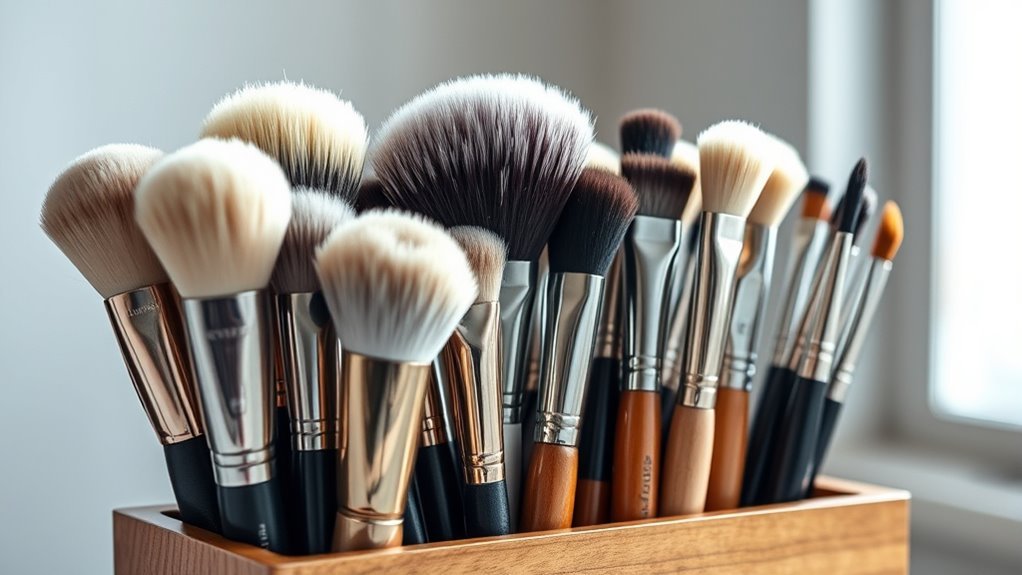
Wondering which makeup brushes you really need? Start by focusing on essential brush shapes that suit your daily routine. A fluffy blending brush is a must-have for seamless eyeshadow shifts and mastering blending techniques.
You’ll also want a flat shader brush for packing color onto your lids with precision. For face makeup, a rounded foundation brush helps you apply liquid or cream products evenly, while an angled contour brush allows you to sculpt with ease.
Don’t forget a tapered highlighting brush to accentuate your cheekbones and brow bones perfectly. Each brush shape serves a specific purpose, so choosing wisely means you’ll achieve professional-looking results without cluttering your kit.
How Do Synthetic and Natural Brush Materials Affect Your Makeup?
You’ll find that synthetic brushes are perfect for liquid and cream products since they don’t soak up much makeup. On the other hand, natural brushes have softer fibers that work wonders with powder products, helping you achieve a smooth, flawless finish.
When it comes down to choosing between the two, it really depends on your skin type and the kinds of formulas you like to use. So, think about what works best for you and your makeup routine!
Synthetic Brush Benefits
How do synthetic brushes change the way your makeup applies? Synthetic fibers offer remarkable application smoothness, allowing your foundation or concealer to glide on evenly without absorbing too much product. You’ll notice they work especially well with liquid and cream formulas.
Beyond performance, synthetic brushes shine in durability factors. They resist fraying and maintain shape longer than natural hair brushes. If you’re eco-conscious, synthetic options provide eco friendly choices since they don’t rely on animal hair.
Plus, they’re generally more cost effective, giving you quality without breaking the bank. Another benefit is allergen resistance; synthetic fibers are less likely to irritate sensitive skin or trigger allergies. Choosing synthetic brushes means you get reliable, smooth application with ethical and practical advantages that improve your makeup routine.
Natural Brush Characteristics
While synthetic brushes offer smooth application and durability, natural brushes bring their own unique qualities that can improve your makeup routine. Natural bristle advantages include excellent product pickup and blending, especially with powder formulas.
These brushes tend to hold pigment well, allowing for a more even and polished finish. When you consider brush softness comparison, natural bristles often feel softer and more luxurious against your skin, providing a gentle touch that many users appreciate.
However, they can be more delicate and require careful cleaning to maintain their quality. If you want a brush that offers superior blending and a soft feel, natural bristles might be your go-to.
Understanding these characteristics helps you make a more informed choice between synthetic and natural materials.
Choosing Based On Skin
Because your skin type affects how makeup applies and wears throughout the day, choosing the right brush material can make a noticeable difference. Synthetic brushes work best if you have oily or sensitive skin. They resist absorbing product, ensuring better makeup compatibility and less irritation. Natural brushes, made from animal hair, pick up powder products well and blend seamlessly on dry or normal skin.
Consider your skin type when selecting brushes:
- Synthetic brushes glide smoothly over oily skin without clogging pores
- Natural brushes trap and distribute powder evenly on dry skin
- Synthetic fibers are hypoallergenic, ideal for sensitive skin
- Natural bristles offer better texture for blending cream products
- Synthetic brushes clean easily, reducing bacteria buildup
Matching your skin type with the correct brush improves application and keeps your skin happy.
Best Brushes for Foundation, Concealer & Powder
You’ll want to choose the right foundation brush type to get a flawless base—whether it’s a flat, buffing, or stippling brush. Each one works a little differently, so it’s all about what feels best for your skin and the finish you want.
When it comes to concealer, a good brush makes all the difference. It helps you apply the product precisely and blend it out seamlessly, so no harsh lines or patches show through.
And for powder, knowing the different brush varieties can really change the game. Picking the right one helps you achieve a smooth, natural finish without looking cakey or heavy. It’s all about those little details!
Foundation Brush Types
Choosing the right foundation brush can transform your makeup routine by delivering a flawless, airbrushed finish. Understanding brush shapes and application techniques helps you pick the perfect tool for your desired look.
Product compatibility matters too. Some brushes work better with liquid, cream, or powder foundations. Brand differences and price ranges affect quality and durability, so consider your budget and user preferences carefully.
Don’t forget maintenance tips to extend tool longevity.
- Flat brushes for precise, full coverage
- Stippling brushes for light, airbrushed effects
- Buffing brushes to blend seamlessly
- Dense kabuki brushes for cream foundations
- Angled brushes to contour and define
Choose wisely, care often, and your foundation brush will enhance your makeup game.
Concealer Brush Benefits
Although concealer brushes may seem like a small detail, they play an essential role in achieving a flawless finish by precisely targeting imperfections and blending product seamlessly. Using the right concealer brush allows you to apply product accurately to blemishes, under-eye circles, and redness without wasting any product.
Mastering concealer techniques with a quality brush helps you build coverage naturally and avoid cakiness. Plus, these brushes often have dense, firm bristles that make blending effortless and smooth.
To keep your concealer brush performing well, regular brush maintenance is crucial. Clean it gently after each use to prevent product buildup and bacteria, which can affect your skin and makeup results. With proper care, your concealer brush will stay effective and last longer, ensuring flawless makeup every time.
Powder Brush Varieties
Three main types of powder brushes can dramatically improve how you apply foundation, concealer, and setting powder. Choosing the right powder brush shapes and sizes helps you achieve flawless coverage and blend seamlessly.
Larger, fluffy brushes cover broad areas quickly, while smaller, dense brushes offer precision for delicate spots.
Consider these powder brush varieties:
- Large dome-shaped brush for all-over powder
- Flat-top kabuki brush for buffing foundation
- Tapered brush for contouring and setting under eyes
- Angled powder brush for sculpting cheekbones
- Small round brush for spot concealing
Choosing Brushes for Eye Makeup and Brows
How do you pick the right brushes to achieve flawless eye makeup and perfectly shaped brows? Focus on brush shapes designed for precision application and effective pigment application.
For eye shadow, you need tools that support layering techniques and blending techniques to deliver smooth color payoff. Regarding brow shaping, choose brushes that aid in brow grooming with angled bristles for sharp definition.
Here’s a quick guide to help you visualize:
| Brush Type | Purpose | Key Feature |
|---|---|---|
| Flat Shader Brush | Eye shadow application | Dense, flat for pigment application |
| Blending Brush | Smooth shifts | Fluffy, tapered for blending techniques |
| Angled Brow Brush | Brow shaping | Firm, angled for precision application |
| Spoolie Brush | Brow grooming | Spiral for grooming and blending |
| Pencil Brush | Detail work | Small, pointed for layering techniques |
How to Pick Brushes for Contouring and Highlighting
Mastering contouring and highlighting starts with choosing the right brushes that deliver precise application and seamless blending. When you pick brushes for contouring techniques, look for ones that help sculpt without harsh lines. For highlighting tips, select brushes that apply product softly and blend it naturally.
Here’s what to keep in mind:
- Angled contour brush: Fits perfectly under cheekbones for sharp definition.
- Tapered blending brush: Blends contour lines smoothly into your skin.
- Fan brush: Applies highlighter lightly on cheekbones and brow bones.
- Small detail brush: Targets precise areas like the nose or cupid’s bow.
- Dense buffing brush: Buffs contour and highlight for a flawless finish.
Choosing these brushes guarantees you control your contouring techniques and highlighting tips with ease, creating a sculpted, radiant look every time.
Synthetic vs. Natural Makeup Brushes: Which to Buy?
Wondering whether synthetic or natural makeup brushes suit your routine best? It really depends on your preferences and needs. Synthetic brushes offer excellent durability, resisting shedding and maintaining their shape longer.
They’re ideal for liquid and cream products since they don’t absorb makeup. On the other hand, natural brushes are prized for their softness, perfect for blending powders and creating a flawless finish.
They tend to be gentler on the skin but require more care.
| Feature | Synthetic Brushes | Natural Brushes |
|---|---|---|
| Material | Man-made fibers | Animal hair |
| Best for | Liquids, creams | Powders |
| Durability | High (synthetic durability) | Moderate |
| Texture | Smooth, firm | Soft, fluffy (natural softness) |
| Maintenance | Easy to clean | Needs gentle care |
Choose synthetic for longevity and versatility, natural for softness and powder blending.
Tips for Selecting Makeup Brushes for Your Skin Type
When you’re picking out makeup brushes, it’s a good idea to think about how the materials might affect your skin, especially if it’s sensitive. Synthetic fibers usually work better for sensitive skin because they’re gentler.
You’ll also want to keep an eye on the brush density. Denser brushes can give you fuller coverage, while lighter ones tend to create a softer, more natural finish. Finding the right mix of brushes means your makeup will go on smoothly without irritating your skin.
Brush Materials and Sensitivity
Choosing the right brush material can make a big difference in how comfortable your makeup application feels, especially if you have sensitive skin. When you think about brush sensitivity, opt for soft, natural fibers like sable or goat hair. They’re gentle and provide excellent blending.
However, synthetic brushes have improved greatly in material durability and are often better for allergy-prone skin since they resist bacteria buildup. Remember, the right material prevents irritation and guarantees a smooth finish.
Here are materials to keep in mind:
- Natural hair: soft, ideal for powder products
- Synthetic fibers: hypoallergenic, great for creams
- Taklon: cruelty-free, smooth texture
- Pony hair: soft yet durable
- Bamboo handles: eco-friendly and sturdy
Choose wisely for comfort and lasting use.
Brush Density and Application
Brush density plays an essential role in how makeup applies to your skin, affecting both coverage and finish. When choosing brushes, consider brush firmness: denser brushes offer fuller coverage and are perfect for liquid or cream products. Less dense, softer brushes work well with powders and provide a lighter finish.
Your skin type also matters. If you have sensitive skin, opt for softer, less firm brushes to avoid irritation. Mastering application techniques helps too. Use gentle, circular motions with dense brushes for even foundation, and light, sweeping strokes with fluffy brushes for blending.
How to Clean and Care for Your Makeup Brushes
Keep your makeup tools in top shape by regularly cleaning and caring for them. Proper brush care extends their life and guarantees flawless application every time. You should clean your brushes based on the cleaning frequency suited to your use. Clean foundation brushes daily and others weekly.
After washing, dry them flat with bristles hanging over the edge of a counter to keep their shape and avoid bacteria buildup. Proper brush storage also plays an essential role. Store them upright in a clean holder or in a brush roll to maintain bristle integrity.
Here’s how to care for your brushes effectively:
- Rinse bristles under lukewarm water, avoiding the handle.
- Use a gentle brush cleanser or mild soap.
- Massage bristles gently to remove makeup residue.
- Rinse thoroughly until water runs clear.
- Lay them flat to dry completely before storing.
Following these steps keeps your brushes hygienic and in excellent condition.
Signs You Need to Replace Your Makeup Brushes
Knowing when to replace your makeup brushes is just as important as cleaning them regularly. Even with proper maintenance tips, brushes don’t last forever. Pay attention to the brush lifespan, which varies depending on quality and usage.
If your brushes start shedding excessively, lose their shape, or feel stiff despite regular cleaning, it’s time to part ways. Another clear sign is if the bristles become discolored or develop an unpleasant odor, indicating buildup that can’t be fully cleaned.
Ignoring these signs can affect your makeup application and even cause skin irritation. Remember, maintaining your brushes prolongs their life, but once wear and tear appear, replacement is necessary for peak performance and hygiene.
Trust your judgment. If a brush no longer feels soft or applies makeup evenly, it’s time to invest in a new one to keep your routine flawless.
Finding Makeup Brushes That Fit Your Budget and Needs
Although quality makeup brushes can sometimes come with a higher price tag, you don’t have to break the bank to find tools that suit your needs. Start by identifying your priorities, whether it’s foundation, eyeshadow, or contouring. This helps you focus on essential brush features like bristle softness, durability, and handle comfort.
Look for budget-friendly options that balance quality with cost, ensuring you get value without sacrificing performance.
When shopping, picture brushes that:
- Blend foundation flawlessly with soft, dense bristles
- Apply eyeshadow with precision and minimal fallout
- Contour cheeks using angled, firm brushes
- Include easy-to-clean synthetic fibers
- Have sturdy handles that feel comfortable in your hand
Frequently Asked Questions
How Often Should I Replace My Makeup Brushes?
You should replace your makeup brushes every 1 to 3 years, depending on their condition and how well you practice brush care. Regular brush maintenance, like washing them weekly and drying them properly, helps keep bristles in good shape and prevents bacteria buildup.
If you notice shedding, fraying, or a persistent odor despite cleaning, it’s time to get new brushes to guarantee your makeup applies smoothly and stays hygienic.
Can Makeup Brushes Cause Skin Irritation or Allergies?
Yes, makeup brushes can cause skin irritation or allergies, especially if you have sensitive skin types. Certain brush materials, like animal hair or synthetic fibers treated with chemicals, might trigger reactions.
You’ll want to choose brushes made from hypoallergenic materials and clean them regularly to avoid bacteria buildup. If you notice redness or itching, switch to brushes designed for sensitive skin and avoid harsh cleaning products that can worsen irritation.
Are Cruelty-Free Makeup Brushes as Effective as Traditional Ones?
You might be surprised, but cruelty-free makeup brushes can be just as effective as traditional ones. Synthetic vs natural fibers both have their perks; synthetic brushes often offer smoother application and are easier to clean.
If you keep up with regular brush maintenance, cruelty-free options won’t let you down in performance. So, when you choose cruelty-free, you’re not sacrificing quality. You’re making a kinder, smarter choice.
How Do I Travel With My Makeup Brushes Safely?
To travel with your makeup brushes safely, you should invest in sturdy brush storage or travel cases designed to protect bristles from damage and dirt. Choose cases with individual slots or compartments to keep brushes separated and maintain their shape.
You can also wrap brushes in a soft cloth or brush roll before placing them in your luggage. This way, your brushes stay clean, organized, and ready to use wherever you go.
Can I Use the Same Brush for Multiple Makeup Products?
Of course, you can use the same brush for multiple products if you enjoy muddy colors and patchy makeup! Seriously though, it’s best to evaluate product compatibility and do thorough brush cleaning between uses.
For example, using one brush for both cream and powder can ruin the finish and your brush. Clean your brushes regularly to keep them effective and avoid cross-contamination.
Your makeup will thank you!
Conclusion
Now that you know the essentials, you’re ready to choose the perfect makeup brushes for your routine. Did you know that using clean brushes can reduce skin breakouts by up to 70%? Taking care of your brushes not only improves your makeup application but also protects your skin.
So, invest wisely, clean regularly, and replace when needed to keep your look flawless and your skin healthy. Your brushes are your beauty tools, so treat them right to get the best results with your makeup brushes!