Texturizer for Black Hair Guide: What to Know Before You Buy
Struggling to find the perfect way to loosen your natural curls without causing damage? You’re not alone. Many people with black hair want softer, more manageable curls but worry about irritation or over-processing.
Choosing the right texturizer can make all the difference, so let’s dive into what you need to know before you buy.
If you’re looking to loosen your natural curls safely, choose a texturizer that matches your hair texture and scalp sensitivity to avoid damage or irritation.
Prepare your hair with cleansing and deep conditioning, then apply carefully, avoiding the scalp and timing it precisely.
Expect softer, more manageable hair but stay mindful of moisture and protective care afterward.
With the right know-how, you’ll control your curls without harsh damage. Keep exploring to get all the details for best results.
Key Takeaways
- Texturizers loosen natural curls without fully straightening, offering easier styling and reduced shrinkage.
- Choose a texturizer that matches your hair texture and desired curl pattern to achieve the best results.
- Patch test and consider scalp sensitivity to avoid irritation or burns during application.
- Proper preparation includes cleansing, deep conditioning, gentle detangling, and applying light oil to protect the scalp.
- Post-application care involves moisturizing, protective styling, regular trims, and adjusting routines to maintain hair health.
Understanding Texturizers for Black Hair
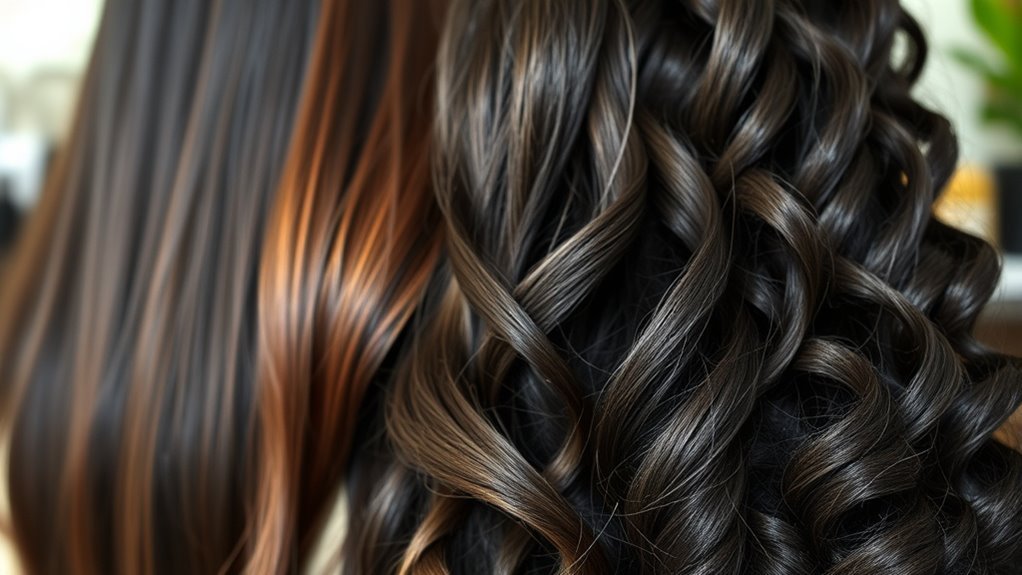
Although texturizers are often confused with relaxers, they work differently by loosening your natural curl pattern rather than completely straightening your hair. Understanding this distinction helps you avoid common misconceptions about texturizers.
Unlike relaxers, texturizers give you more control over your hair’s texture, offering benefits like easier styling and reduced shrinkage while maintaining some of your natural curl. You might hear people say texturizers damage hair more than relaxers, but that’s not necessarily true. It all depends on how you apply and care for your hair afterward.
Using a texturizer can actually improve manageability without stripping your hair of its unique pattern. When you know what to expect, you can make informed choices that protect your hair’s health. Getting familiar with how texturizers affect your hair lets you enjoy the benefits while steering clear of myths that might hold you back.
Choosing the Right Texturizer for Your Hair Type
You’ll want to pick a texturizer that matches your hair texture to get the best results without damage. It’s also important to consider how sensitive your scalp is so you can avoid any irritation during the process. Plus, think about the curl pattern you want to achieve—this way, your hair will look exactly how you envision it.
Hair Texture Compatibility
When selecting a texturizer, understanding your hair’s natural texture is essential to achieving the best results. Your hair type directly impacts how well the texturizer will work, influencing curl definition and overall appearance.
If your hair is tightly coiled, a milder formula may help loosen curls without sacrificing moisture retention. On the other hand, looser curls might need a stronger texturizer for noticeable change.
Keep in mind that product buildup can occur if you don’t adjust your maintenance routine to include regular clarifying treatments. Also, consider your preferred styling techniques; some texturizers make hair easier to style while others may require extra care.
Matching the right texturizer to your hair texture guarantees healthier, manageable hair and peak results.
Scalp Sensitivity Considerations
How does your scalp react to chemical treatments? If you notice scalp irritation or have a history of allergic reactions, you need to be extra cautious when choosing a texturizer.
Start by checking the product ingredients carefully to avoid known irritants. Always perform patch testing or skin testing on a small area before applying the texturizer fully. This helps prevent severe reactions and guarantees your scalp can tolerate the product.
Consider scalp exfoliation before treatment to remove buildup and improve product absorption, but avoid over-exfoliating to prevent sensitivity. Consulting a professional for advice can guide you in selecting the right formula for your scalp’s needs.
After applying the texturizer, use moisturizing treatments to soothe and protect your scalp, promoting healthy hair and preventing dryness or discomfort.
Desired Curl Pattern
Although selecting a texturizer might seem straightforward, choosing one that aligns with your desired curl pattern is essential for achieving the look you want. You need to evaluate how loose or tight you want your curls to be because texturizers vary in how much they relax your natural curl.
If you prefer soft, defined curls, opt for a mild formula that lightly loosens your hair without completely straightening it. For looser textured styles, a stronger texturizer might be necessary, but remember, this can increase your curl maintenance routine.
Keep in mind that your hair’s natural texture and porosity affect how the product works. Choosing the right texturizer helps you maintain healthy curls while enjoying the textured styles you love with manageable curl maintenance.
What to Know Before You Texturize (Risks and Side Effects)
Before you texturize, it’s really important to understand the risks involved, like potential hair damage and scalp sensitivity. You want to know how these treatments might affect your hair in the long run.
Taking some precautions can go a long way in protecting your hair’s health and helping you avoid any unwanted side effects. So, it’s definitely worth being informed before you decide to go ahead.
Potential Hair Damage
Texturizing your hair can give you the look you want, but it also comes with risks you should understand. Chemicals in texturizers can weaken your strands, leading to breakage if you don’t prioritize hair health and damage prevention.
Over-processing or improper application increases this risk, so it’s essential to follow instructions closely and avoid frequent treatments.
| Potential Damage | Description |
|---|---|
| Breakage | Hair becomes brittle and snaps easily. |
| Dryness | Strands lose moisture, causing frizz. |
| Thinning | Excessive damage results in less volume. |
| Split Ends | Hair tips split, affecting appearance. |
Taking care of your hair post-texturizing with deep conditioning helps maintain strength and prevents damage.
Scalp Sensitivity Risks
While protecting your hair from damage is important, you also need to pay close attention to how your scalp reacts during the texturizing process. Scalp sensitivity risks can cause discomfort, itching, redness, or even burns if you’re not careful.
Before you apply a texturizer, always perform sensitivity testing on a small skin patch to check for allergic reactions. This step is essential for scalp care and helps prevent severe irritation. If you notice any swelling or burning during the test, avoid using the product altogether.
During application, avoid leaving the texturizer on too long, and rinse thoroughly to minimize scalp exposure. Prioritizing scalp care guarantees a safer experience and reduces the chances of painful side effects when you texturize your hair.
Long-Term Hair Effects
Although texturizers can improve your hair’s manageability and style, they may also cause long-term effects that you should consider carefully. Over time, repeated use can weaken your hair’s structure, leading to dryness, breakage, and thinning.
These long-term effects can compromise your overall hair health, making it more prone to damage from heat and environmental stressors. You might notice increased fragility or uneven texture, which can be frustrating to manage.
To protect your hair health, it’s essential to space out treatments and use deep conditioning regularly. Listening to your hair’s condition and avoiding over-processing will help minimize these risks.
Understanding these potential long-term effects guarantees you make informed decisions about texturizing and maintain the strength and beauty of your hair.
Preparing Your Hair for a Texturizer
Before applying a texturizer, you’ll want to verify your hair is clean and well-moisturized. This step is essential for moisture retention, which helps reduce damage and breakage during the chemical process. Start with a gentle shampoo to remove buildup, then follow with a deep conditioner to strengthen your strands. Also, avoid heat styling for at least 48 hours before application to maintain your hair’s natural strength and guarantee heat protection isn’t compromised.
Here’s a quick guide to prepping your hair:
| Step | Purpose |
|---|---|
| Shampoo | Cleanse and remove buildup |
| Deep Condition | Improve moisture retention |
| Air Dry | Prevent heat damage |
| Avoid Heat Styling | Maintain heat protection |
| Detangle Gently | Minimize breakage |
Proper prep sets the foundation for a smooth texturizing experience and healthier results.
Safe Step-by-Step Texturizer Application
Now that you’ve prepped your hair properly, it’s really important to apply the texturizer safely to avoid any damage. You’ll want to follow each step carefully, making sure to pay close attention to the timing and how evenly you distribute the product.
Preparing Hair Properly
Applying a texturizer safely involves following a clear, step-by-step process to prepare your hair properly. Start by thoroughly cleansing your hair to remove product buildup and dirt, guaranteeing an even application.
Next, focus on moisture retention. Deep condition your hair to keep it hydrated and resilient against the chemical process. Avoid dry, brittle strands because they’re more prone to damage.
After conditioning, detangle gently and section your hair for easier handling. Protective styling before application, like braids or twists, can minimize breakage and help maintain hair integrity.
Preparing your scalp with a light oil can also reduce irritation. Taking these steps guarantees your hair is in its best condition, setting a solid foundation for the texturizer to work effectively and safely.
Applying Texturizer Safely
How do you guarantee a safe texturizer application? Start by mastering proper application techniques and following essential safety precautions. Always perform a patch test 48 hours before applying to avoid allergic reactions.
Section your hair evenly to guarantee uniform product distribution. Apply the texturizer quickly but precisely, avoiding the scalp to prevent irritation. Keep an eye on the processing time and rinse thoroughly with cool water once done.
| Step | Safety Tip |
|---|---|
| Patch Test | Avoid allergic reactions |
| Section Hair | Guarantee even application |
| Apply Carefully | Prevent scalp burns |
| Rinse Thoroughly | Stop chemical action promptly |
Sticking to these steps helps you achieve relaxed, healthy hair without damage.
Mistakes to Avoid With Texturizers
Although texturizers can improve your hair’s manageability and style, you’ll want to steer clear of common mistakes that can cause damage or uneven results. One major pitfall is falling for common misconceptions, like thinking a texturizer is the same as a relaxer. This misunderstanding can lead you to leave the product on too long, harming your hair’s health. Always follow the ideal application time recommended for your hair type to avoid overprocessing.
Another mistake is not doing a strand test beforehand. This simple step helps you gauge how your hair will react and prevents surprises. Also, avoid applying texturizer on already damaged or fragile hair, as it can worsen breakage.
Ultimately, don’t skip moisturizing after treatment. Texturizers can dry out your hair, so proper hydration keeps your strands healthy and strong. By avoiding these errors, you’ll maintain your hair’s integrity and enjoy the benefits of your texturizer.
What to Expect During and After Texturizer Use
Expect a noticeable change in your hair’s texture as the texturizer works to loosen tight curls and coils. During application, proper techniques are essential. You’ll want to apply the product evenly and avoid overlapping on previously treated hair to prevent damage. The process usually takes about 10 to 20 minutes, but timing depends on your hair’s texture and the product used.
After the treatment, your hair may feel softer and more manageable, but it might also be a bit dry or fragile at first. That’s where maintenance tips come in. Regularly moisturize, deep condition, and use gentle shampoos to keep your hair healthy. Avoid excessive heat styling to protect your newly texturized strands. With consistent care and the right application techniques, you’ll maintain the look and health of your hair, enjoying improved texture without sacrificing strength or shine.
How Often Should You Texturize Black Hair?
Maintaining the softness and manageability of your texturized hair depends largely on how often you treat it. The maintenance frequency varies based on your hair health and personal preferences.
Generally, re-texturizing every 6 to 8 weeks helps keep your hair looking fresh without causing excessive damage. However, if you prefer looser texture or want to switch up your styling options more frequently, you might opt for shorter intervals. Timing considerations are essential; avoid overlapping treatments to prevent weakening your hair strands.
Your product selection also plays a role. Using gentle, nourishing texturizers can extend the time between treatments. Ultimately, listen to your hair’s responses and adjust your routine accordingly.
Caring for Your Texturized Hair
Caring for your texturized hair involves a few key steps that keep it healthy and looking its best. Since texturizing alters your curl pattern, adopting a consistent maintenance routine is essential.
Focus on hydration by incorporating moisturizing products and deep conditioning treatments regularly. These will restore moisture and prevent breakage.
To maintain your hair’s integrity and style, remember to use gentle detangling techniques with hair oils to minimize damage and define curls. Also, opt for protective styles that shield your strands from heat styling and environmental stress.
Schedule regular trims and scalp treatments to promote healthy growth and remove damaged ends.
Alternatives to Texturizers: Other Ways to Loosen Curls
If you want to loosen your curls without using texturizers, several effective alternatives can help you achieve softer, more manageable hair. Using curl creams combined with moisturizing routines hydrates and defines curls while gently loosening them.
Protective styles like braid outs and roller sets stretch curls naturally without harsh chemicals. Heat styling offers temporary curl loosening but should be used sparingly to avoid damage. Incorporating natural oils nourishes your hair, maintaining softness and shine.
| Method | Benefits |
|---|---|
| Curl Creams | Chemical free, improves curls |
| Braid Outs | Natural stretch, protective |
| Roller Sets | Softens curls, adds volume |
| Heat Styling | Quick curl loosening, temporary |
These alternatives focus on maintaining healthy hair while giving you flexibility in styling. Choose methods that fit your lifestyle and hair needs to keep your curls looking their best.
Frequently Asked Questions
Can Texturizers Be Used on Color-Treated Black Hair?
Yes, you can use texturizers on color-treated black hair, but you need to prioritize texturizer safety and color preservation. Choose a gentle formula designed for color-treated hair to minimize damage and prevent color fading.
Always do a strand test first to see how your hair reacts. Avoid overlapping applications and deep condition afterward to keep your hair healthy and your color vibrant.
Taking these steps helps you maintain both texture and color.
What Are the Best Products to Use After Texturizing?
Imagine you just texturized your hair and want it soft and manageable. The best products to use after texturizing are moisturizing products like shea butter or leave-in conditioners. These help prevent dryness and breakage.
You should also update your hair care routines to include deep conditioning treatments weekly. By focusing on hydration and gentle care, you’ll keep your hair healthy, shiny, and strong after texturizing.
How Long Does a Texturizer Treatment Typically Last?
A texturizer treatment typically lasts about 6 to 8 weeks before new hair growth starts showing your natural texture. To keep your style fresh, follow texturizer maintenance tips like regular moisturizing and gentle cleansing.
Also, using proper texturizer application techniques guarantees even results and reduces damage, helping your hair stay healthy longer. Stick to a consistent care routine, and you’ll enjoy smooth, manageable hair well beyond the initial treatment.
Can Men Use Texturizers on Black Hair?
Absolutely, you can use texturizers on Black hair, no matter your gender. Take Marcus, who wanted easier styling and less shrinkage. He found texturizer benefits like softer curls and manageable hair.
When you do texturizer application, it’s essential to follow instructions carefully to avoid damage. Men often appreciate how it reduces tangles and speeds up their grooming routine.
Are There Any Age Restrictions for Using Texturizers?
There aren’t strict age restrictions for using texturizers, but you should consider safety carefully, especially for younger hair. If you’re under 12, it’s generally best to avoid chemical treatments to protect hair health.
For teens and adults, always do a patch test and follow instructions to prevent damage. Consulting a professional can help you maintain healthy hair while safely achieving your desired texture.
Conclusion
Embracing a texturizer is like weaving a new thread into your hair’s natural tapestry, transformative yet delicate. By choosing wisely and caring deeply, you’ll reveal softer, more manageable curls without losing your hair’s unique spirit.
Remember, patience and gentle love are your allies in this journey. Whether you texturize or investigate alternatives, treat your hair as the crown it is, shining with health and confidence every step of the way.
When considering a texturizer for black hair, keep in mind that proper care is key to maintaining its beauty and strength.