Shampoo and Conditioner for Natural Hair Guide: What to Know Before You Buy
Finding the right shampoo and conditioner for natural hair can feel like an endless challenge. You’re not alone if you’ve struggled with dry curls, frizz, or products that just don’t seem to work. Many people with natural hair face these frustrations, but choosing the right products can make all the difference.
You need shampoo and conditioner that match your natural hair type and porosity to keep curls healthy and defined. Look for sulfate-free, hydrating formulas with ingredients like aloe vera, shea butter, and vitamin E that avoid harsh chemicals.
Maintaining your hair’s natural pH (4.5 to 5.5) protects cuticles and prevents frizz. Proper cleansing, conditioning, and product layering improve moisture and curl bounce.
Keep exploring to uncover expert tips and trusted product choices for your curls.
Key Takeaways
- Identify your natural hair type and porosity to select shampoo and conditioner that suit your curl pattern and moisture needs.
- Choose sulfate-free, alcohol-free, and silicone-free shampoos with gentle, organic cleansing agents. This helps preserve natural oils and keeps your scalp healthy.
- Opt for conditioners rich in hydrating ingredients like aloe vera and shea butter. Avoid heavy silicones to maintain curl bounce.
- Use products with a pH level between 4.5 and 5.5 to protect hair cuticles. This reduces frizz and enhances curl definition.
- Apply products on damp hair in layers: start with leave-in conditioner, then cream or butter, and finish with oil or gel. This maximizes moisture retention and curl enhancement.
How To Identify Your Natural Hair Type And Needs
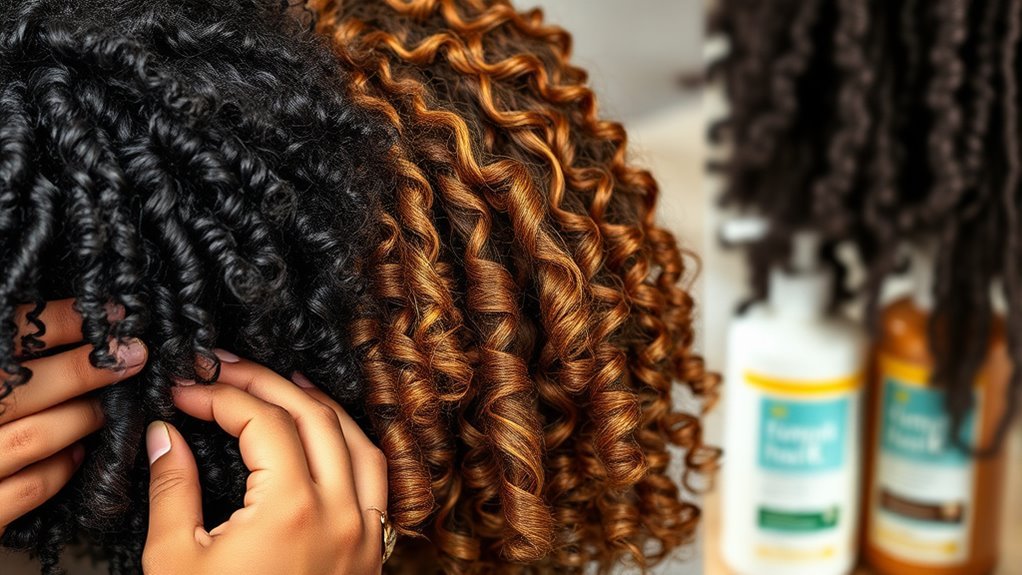
How do you determine your natural hair type and its specific needs? Start by understanding your curl classification. This system ranges from straight (Type 1) to coily (Type 4), helping you identify your curl pattern’s unique characteristics.
Knowing whether you have loose waves, tight curls, or coils guides you in selecting the right products and care routine. Next, perform a porosity assessment to gauge how well your hair absorbs and retains moisture. You can do this by placing a strand of clean hair in water.
If it sinks quickly, you have high porosity; if it floats, low porosity; and if it stays in the middle, normal porosity. This insight tells you how much hydration your hair needs and what ingredients work best.
Why The Right Shampoo Matters For Natural Hair
Choosing the right shampoo is super important because it helps you lock in moisture and keep your natural hair healthy. Plus, it supports your scalp by preventing dryness and irritation, which can be a real pain. When you pay attention to the ingredients, you make sure to avoid harmful chemicals that could damage your curls. So, picking the right shampoo really makes a big difference!
Moisture Retention Importance
Because natural hair tends to be drier and more fragile, you need a shampoo that helps lock in moisture rather than strip it away. Choosing products with gentle cleansing agents supports moisture retention techniques that keep your hair hydrated and resilient.
When you focus on hydration strategies, like using shampoos enriched with humectants or natural oils, you help your hair maintain its essential moisture balance. This prevents breakage and promotes softness and elasticity.
Avoid shampoos with harsh sulfates or drying alcohols, as they can disrupt your hair’s natural moisture barrier. By selecting the right shampoo, you set the foundation for effective moisture retention techniques that protect your curls and coils, ensuring your natural hair stays healthy, manageable, and vibrant every day.
Scalp Health Benefits
Maintaining moisture is just one part of keeping your natural hair healthy; caring for your scalp plays a big role too. The right shampoo helps remove buildup and dead skin through gentle scalp exfoliation techniques. This promotes better hair growth and reduces itchiness.
When you choose a shampoo with natural ingredients, like those containing essential oils, you tap into their benefits such as soothing irritation, balancing oil production, and improving circulation. These oils also provide antimicrobial properties that keep your scalp clean and healthy.
Ingredient Impact Analysis
When you select a shampoo tailored for natural hair, you directly affect how your strands respond to cleansing and hydration. Choosing products with carefully considered ingredient sourcing guarantees your hair gets nourishing elements without harmful chemicals.
Plus, shampoos that prioritize product sustainability reduce environmental impact, aligning your hair care routine with eco-friendly values.
Here’s why ingredient impact matters for natural hair:
- Gentle cleansing agents protect your hair’s natural oils
- Hydrating ingredients prevent dryness and breakage
- Sustainable sourcing supports ethical production and healthier ecosystems
What Ingredients To Look For In Natural Hair Shampoo
Although choosing the right shampoo can feel overwhelming, focusing on key ingredients will help you care for your natural hair effectively. Start by looking for shampoos with organic cleansing agents. These gently remove dirt and buildup without stripping your hair’s natural oils, keeping your scalp healthy and your curls defined.
Avoid harsh sulfates and instead opt for natural surfactants derived from plants. Next, prioritize hydrating agents like aloe vera, glycerin, and shea butter. These ingredients lock in moisture, combat dryness, and improve elasticity, which is essential for natural hair’s strength and shine.
Antioxidants and vitamins, such as vitamin E, also support scalp health and hair growth. Choosing shampoos with organic cleansing and hydrating agents guarantees your natural hair stays clean, moisturized, and resilient. This approach sets the foundation for maintaining your hair’s natural texture and vibrancy without compromising its health.
How To Avoid Ingredients That Can Dry Or Damage Natural Hair
Since natural hair thrives on moisture and gentle care, steering clear of damaging ingredients is essential for its health. You want to avoid drying agents that strip your hair’s moisture balance because that can lead to brittleness and breakage. Harmful preservatives may irritate scalp sensitivity, so always check for ingredient transparency before purchasing. Understanding your hair porosity helps you choose products that won’t cause product buildup or dryness.
To protect your natural hair, focus on:
- Avoiding sulfates, alcohols, and silicones that disrupt moisture and cause dryness
- Opting for products with nourishing oils and natural alternatives like shea butter or coconut oil
- Reading labels carefully to spot harmful preservatives and unnecessary fillers
Why PH Balance Matters For Your Natural Hair
Because your hair’s natural pH level usually falls between 4.5 and 5.5, choosing shampoos and conditioners that respect this balance helps maintain your hair’s strength and shine. When you use products with the right pH, you protect your hair’s cuticle layer, preventing dryness and breakage.
pH testing can be a helpful tool when selecting products, as it reveals whether a shampoo or conditioner aligns with your hair’s natural acidity. Using products with incompatible pH levels can lift the cuticle too much, leaving your hair vulnerable to damage and frizz.
Ensuring product compatibility with your hair’s pH means your natural moisture stays locked in, and your strands remain smooth and manageable. So, before you buy, consider checking product labels or doing simple pH testing at home.
This way, you’ll avoid disrupting your hair’s delicate balance and keep your natural hair healthy, vibrant, and resilient.
How To Pick A Conditioner For Natural Hair Moisture And Definition
Choosing the right conditioner for your natural hair starts with understanding your hair’s unique moisture needs and curl pattern. You want a product that balances moisture levels without weighing your curls down. Consider your hair porosity and texture variations to pick a formula that nourishes effectively and improves curl definition.
Selecting a conditioner begins with knowing your hair’s moisture needs and curl pattern for balanced hydration.
Focus on ingredient sourcing to guarantee your conditioner contains natural oils and humectants that hydrate without causing buildup. Also, think about how the conditioner fits into your product layering routine so it complements other styling products.
Here’s what to keep in mind:
- Match the conditioner’s hydration power to your hair’s porosity. Low porosity hair needs lighter formulas, while high porosity benefits from richer creams.
- Look for ingredients like shea butter or aloe vera to boost moisture and define curls.
- Avoid heavy silicones if you want to maintain natural bounce and avoid buildup.
When And How Often To Wash Natural Hair With Shampoo And Conditioner
How often should you wash your natural hair to keep it healthy and vibrant? Typically, washing once a week or every two weeks works well, but it depends on your lifestyle and hair needs. Overwashing can strip natural oils, causing dryness and breakage, so balance is key.
Consider incorporating co washing benefits into your routine. Using conditioner to cleanse gently helps maintain moisture without harsh stripping.
When you shampoo, focus on water temperature. Lukewarm water opens the cuticle for effective cleansing, while cool water seals it, locking in moisture afterward. Avoid hot water as it can dry out your hair.
After shampooing, always follow with conditioner to replenish hydration.
Pay attention to your hair’s response and adjust frequency accordingly. If your scalp feels itchy or product buildup appears, it might be time to wash more often. Conversely, if your hair feels dry, extend the time between washes and take advantage of co washing benefits to keep your strands nourished.
Tips To Enhance Natural Hair Curl Patterns With Shampoo And Conditioner
If you want to really bring out your natural curl pattern, start by choosing shampoos and conditioners packed with moisture-rich ingredients that nourish your hair. It makes a big difference! Also, keep an eye on the pH balance because that helps keep your curls defined and healthy. And here’s a good tip: go for sulfate-free formulas. They’re great because they won’t strip your hair of its natural oils. Your curls will thank you!
Moisture-Rich Ingredients
While enhancing your natural hair’s curl pattern, incorporating moisture-rich ingredients in your shampoo and conditioner plays a crucial role. These ingredients help improve hydration techniques that keep your curls defined and healthy.
Look for products enriched with natural emollients and essential oils that provide deep moisture without weighing your hair down. Here are key moisture-rich ingredients to take into account:
- Shea butter: deeply nourishes and seals moisture into your curls
- Coconut oil: penetrates hair strands to prevent dryness and breakage
- Aloe vera: soothes the scalp while adding lightweight hydration
Using products with these ingredients supports your hair’s natural elasticity and curl formation, making your routine more effective. Don’t skip this step if you want bouncy, soft curls that last all day.
pH Balance Importance
Maintaining the right pH balance in your shampoo and conditioner is essential for enhancing your natural hair curls. When you use hair products with the proper pH, typically between 4.5 and 5.5, your hair cuticles stay smooth and sealed. This keeps moisture locked in, reducing frizz and defining curls better.
You can perform pH testing at home with simple strips to verify your products won’t disrupt your hair’s natural acidity.
| pH Level | Effect on Hair |
|---|---|
| Below 4.5 | Overly acidic, can dry |
| 4.5 – 5.5 | Ideal, maintains curls |
| 5.5 – 7.0 | Slightly alkaline, frizz |
| Above 7.0 | Damaging, cuticles open |
Choose shampoos and conditioners with balanced pH to keep your curls healthy and vibrant.
Sulfate-Free Formulas
Because sulfates can strip your hair of its natural oils, choosing sulfate-free shampoos and conditioners helps preserve moisture and definition in your curls. These formulas use sulfate alternatives like natural surfactants that cleanse gently without causing dryness or frizz.
When you switch to sulfate-free products, your curls retain their bounce and shine more effectively. To get the best results, look for:
- Natural surfactants such as decyl glucoside or coco glucoside for mild cleansing
- Ingredients that maintain hydration and reduce irritation
- Products free from harsh chemicals that compromise curl integrity
How To Layer Products For The Best Natural Hair Results
Layering products correctly can transform your natural hair routine and boost your results. Product layering helps you maximize moisture, definition, and hold by applying products in the right order and quantity.
Start with a leave-in conditioner to hydrate and prepare your strands. Next, apply a cream or butter for sealing moisture and adding softness. Finish with an oil or gel to lock everything in and provide shine or hold.
Begin with leave-in conditioner, follow with cream or butter, then seal with oil or gel for lasting moisture and shine.
Use proper application techniques by working products into damp hair section by section, ensuring even distribution. Avoid piling too much product at the roots to prevent buildup. Remember, less is often more.
Pay attention to how your hair responds and adjust layering based on your hair’s needs and porosity. Mastering these steps will help you get the most from your natural hair products, keeping your hair healthy, defined, and moisturized every day.
Where To Find Trusted Natural Hair Products
Where can you find natural hair products you can truly trust? Finding the right shampoo and conditioner for your natural hair starts with choosing products from trusted brands. You want to avoid guesswork and rely on sources that offer genuine product reviews and transparent ingredient lists.
Here are three reliable places to start your search:
- Specialty beauty stores: Shops focused on natural hair care often stock trusted brands vetted by experts.
- Online marketplaces: Websites like Amazon or dedicated natural hair platforms feature verified product reviews to guide your choices.
- Community forums and social media groups: Real users share honest feedback and recommend brands that worked for their hair type.
Frequently Asked Questions
Can Shampoo and Conditioner Prevent Natural Hair Breakage?
Yes, shampoo and conditioner can help prevent natural hair breakage when you choose formulas that support moisture retention and protein balance. You’ll want products that hydrate your hair without stripping its natural oils, keeping it strong and flexible.
Conditioning regularly restores moisture, while protein treatments rebuild your hair’s structure. By maintaining this balance, you reduce brittleness and breakage, making your natural hair healthier and more resilient over time.
Are Sulfate-Free Shampoos Safe for All Natural Hair Types?
Yes, sulfate-free shampoos are generally safe for all natural hair types because they use gentler sulfate alternatives that cleanse without stripping natural oils. However, you should consider your hair type compatibility when choosing one, as some formulations work better for thicker, coarser hair, while others suit fine or low-porosity hair.
Always pick a product that matches your hair’s unique needs to keep it healthy and hydrated without harsh irritation.
How Do I Transition From Chemically Treated to Natural Hair Products?
To shift from chemically treated to natural hair products, start with gentle strategies like gradually introducing sulfate-free shampoos and moisturizing conditioners. You’ll want to avoid harsh ingredients while your hair adjusts.
Consider product recommendations like hydrating leave-in conditioners and natural oils to restore moisture. Patience is key. Switching completely can take time, so slowly phase out old products while embracing new ones that nourish your natural texture and promote healthy growth.
Can Natural Hair Products Help With Scalp Issues Like Dandruff?
Yes, natural hair products can help with scalp issues like dandruff if you choose ones with the right product ingredients. Look for soothing components like tea tree oil, aloe vera, or peppermint, which promote scalp health and reduce flakiness.
You’ll want to avoid harsh sulfates and synthetic fragrances that can irritate your scalp. By picking products designed to nourish your scalp, you’ll often see improvement in dandruff and overall scalp comfort.
Should I Use Different Conditioners for Summer and Winter?
You should consider using different conditioners for summer and winter because seasonal hydration needs change with climate effects. In summer, lighter conditioners help avoid buildup from humidity, while in winter, richer formulas lock in moisture to combat dryness from cold air.
Adjusting your conditioner based on the season helps maintain your natural hair’s health and prevents damage caused by fluctuating moisture levels. So, switching conditioners seasonally really makes a difference.
Conclusion
Your natural hair is a living canvas, ready to shine with the right care. Choosing the perfect shampoo and conditioner is like planting seeds in fertile soil. They nurture, protect, and reveal your hair’s true beauty.
Listen to your strands and respect their needs. Watch your curls bloom with life and vibrancy.
With thoughtful choices and gentle care, your natural hair will flourish. Choosing the right shampoo and conditioner for natural hair is key to becoming the radiant crown you’re proud to wear every day.