Your Guide to Protein Treatment for Hair: Choosing With Confidence
Struggling to find the right protein treatment for your hair? You’re not alone. Many people face the challenge of choosing a product that truly strengthens their strands without causing stiffness or damage.
Whether your hair feels weak, frizzy, or lifeless, understanding how to pick the perfect protein treatment can make all the difference.
You can confidently strengthen your hair by choosing a protein treatment suited to your hair type and damage level. Look for signs like weak strands, frizz, or limpness to know when you need protein.
Pick treatments with keratin, collagen, or silk proteins based on your hair’s texture and porosity.
Apply treatments carefully and avoid overuse to prevent stiffness. Balancing protein with moisture keeps hair healthy and flexible.
Investigate how to tailor protein care for your best results.
Key Takeaways
- Protein treatments strengthen and repair hair by replenishing lost protein and improving elasticity.
- Identify your hair type and damage level to pick the right protein treatment intensity and type.
- Choose treatments based on protein sources like keratin, collagen, silk, or wheat for specific benefits.
- Follow application guidelines carefully, avoid overuse to prevent stiffness, and balance with moisturizing treatments.
- Keep an eye on your hair after treatment for signs of improved strength, elasticity, shine, and less frizz.
What Is a Protein Treatment and How Does It Work
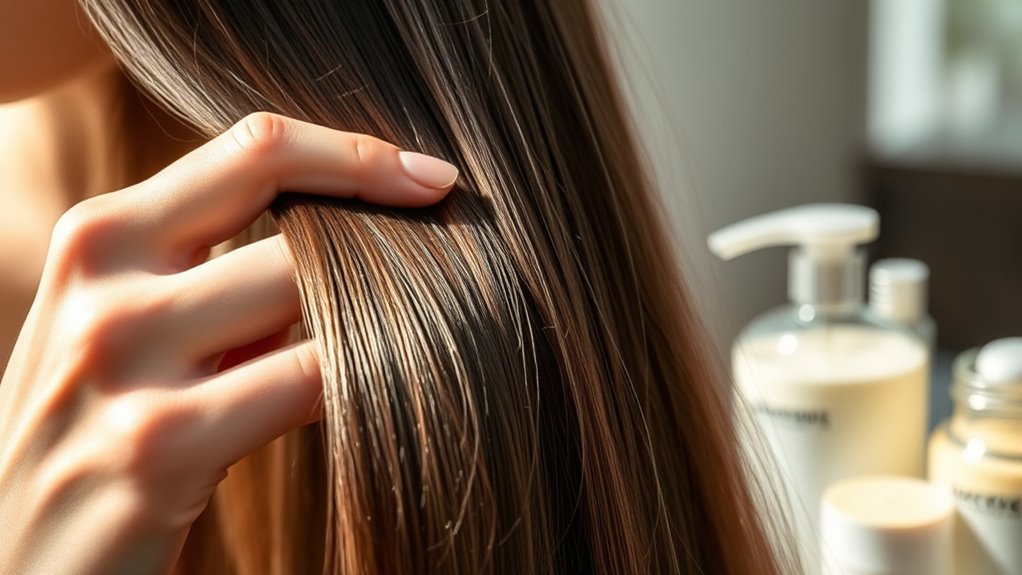
A protein treatment is a specialized hair care process designed to strengthen and repair your hair by replenishing lost protein. When your hair is damaged from heat, chemicals, or environmental factors, it loses essential proteins, weakening its structure. Protein treatments work by filling in gaps and reinforcing the hair shaft using various protein sources like keratin, collagen, or silk amino acids.
These proteins bond to your hair, improving elasticity and reducing breakage. You’ll find that treatment duration varies depending on the product and your hair’s condition, typically ranging from 10 to 30 minutes. It’s vital to follow the instructions carefully to avoid over-proteinizing, which can make hair stiff and brittle.
Incorporating protein treatments into your routine can restore your hair’s strength and resilience, especially if you understand the right protein sources for your hair type and the ideal treatment duration to maximize benefits without causing damage.
Signs Your Hair Needs a Protein Treatment
If your hair feels unusually weak or breaks easily, it might be time for a protein treatment. Protein treatments restore strength by replenishing the keratin in your hair. This helps improve damaged hair texture and restore moisture balance.
You might also notice excessive frizz, limp strands, or a mushy feel when wet. These are signals your hair’s protein structure is compromised.
Here’s a quick guide to help you identify if your hair needs protein:
| Sign | What It Means | Why Protein Helps |
|---|---|---|
| Breakage | Weak hair strands | Strengthens and rebuilds |
| Limp, lifeless hair | Lack of structure | Restores firmness |
| Excessive frizz | Damaged cuticle layers | Repairs and smooths |
| Mushy when wet | Over-moisturized hair | Balances moisture & protein |
If you spot these signs, adding protein can rebalance your hair texture and moisture for healthier strands.
Types of Protein Treatments and How They Work
Since different hair types and damage levels require specific care, knowing the types of protein treatments available helps you choose the best one for your needs. Protein treatments come from various protein sources like keratin, collagen, silk, and wheat proteins. Each type works differently: keratin treatments smooth and strengthen hair by filling in damage, while collagen boosts elasticity. Silk and wheat proteins improve moisture retention and shine.
Treatment duration varies depending on the protein source and your hair’s condition. Some treatments last just 10-20 minutes, perfect for quick strengthening, while others, like keratin treatments, may require up to an hour for deeper repair. You’ll also find leave-in protein conditioners for ongoing support.
Understanding these differences guarantees you pick a treatment that matches your hair’s damage level and texture. By selecting the right protein source and treatment duration, you’ll effectively restore strength and resilience without overloading your hair.
How to Choose the Best Protein Treatment for Your Hair Type
To choose the best protein treatment, first figure out your hair type and what it really needs. Once you understand that, it’s easier to pick a treatment that will actually strengthen and nourish your hair.
Also, think about how often you should use the treatment—too much or too little can make a difference. And don’t forget to follow the right application steps to get the best results. It’s all about finding the perfect balance for your hair!
Identify Your Hair Type
How do you know which protein treatment suits your hair best? Start by identifying your hair type: curly hair, straight hair, or wavy hair. Also consider your hair texture, whether it’s coarse, fine, or thick.
Think about whether your hair is color treated or heat damaged. These factors affect your protein needs.
Next, assess your hair’s porosity. Low porosity hair resists moisture, while high porosity hair absorbs it quickly. This influences the treatment you should choose.
Don’t forget about scalp health and product buildup, which can impact how effective a treatment is.
Keep in mind seasonal changes and styling habits that stress your hair and affect how much protein it needs.
Understanding these details helps you pick a protein treatment that supports hair growth and restores strength. It also prevents buildup or damage, so your hair stays healthy and resilient.
Protein Treatment Benefits
Protein treatments restore strength and energy by replenishing the essential proteins your hair loses through styling, environmental exposure, and chemical processes. To choose the best protein treatment for your hair type, consider these benefits:
- Strengthens hair shaft. Protein sources like keratin and collagen reinforce weak strands.
- Reduces breakage. Proper application techniques help proteins penetrate deeply, minimizing split ends.
- Enhances elasticity. Treatments restore your hair’s natural bounce and prevent brittleness.
- Improves moisture retention. Some protein formulas lock in hydration, balancing dryness and damage.
Frequency And Application Tips
Finding the right balance for treatment frequency is key to maximizing benefits without overloading your hair. Generally, follow frequency guidelines that match your hair type: fine or low-porosity hair might need protein treatments every 4-6 weeks, while thicker or highly damaged hair can handle treatments every 2-3 weeks.
Regarding application methods, apply the protein treatment evenly from roots to tips, focusing on damaged areas. Use a wide-tooth comb to distribute the product and guarantee full coverage.
Avoid applying protein treatments too often, as this can cause stiffness or breakage. Always follow the instructions on your chosen product, and adjust based on how your hair responds. Listening to your hair’s needs will help you maintain strength and elasticity without overdoing it.
How Often to Use Protein Treatments for Healthy Hair
Regularly incorporating protein treatments into your hair care routine can make a significant difference in maintaining strong, healthy strands. How often you use these treatments depends on your hair’s unique needs and protein sensitivity. Overdoing it can cause stiffness or breakage, so balance is key.
Consider these guidelines:
- Assess your hair’s condition. If your hair feels weak or brittle, a weekly treatment may help. Otherwise, every 3-4 weeks usually suffices.
- Note your treatment duration. Follow product instructions closely; leaving protein treatments on too long can cause protein overload.
- Monitor protein sensitivity. Pay attention to how your hair reacts. If it becomes dry or stiff, reduce frequency.
- Adjust seasonally and with styling. More frequent heat styling or chemical processing might require slightly more protein treatments.
How to Apply Protein Treatments at Home: A Step-by-Step Guide
Before you start, gather all the necessary supplies and choose a protein treatment suited to your hair type. Begin by washing your hair with a gentle shampoo to remove buildup. Towel-dry your hair until it’s damp but not dripping.
Section your hair into manageable parts to guarantee even application. Using your fingers or a wide-tooth comb, apply the protein treatment from roots to ends, focusing on areas that need the most repair. This method guarantees thorough coverage and maximizes results.
Divide hair into sections and apply protein treatment evenly from roots to tips for optimal repair and coverage.
Next, cover your hair with a plastic cap to retain heat, which helps the treatment penetrate better. Follow the recommended treatment duration on the product label, typically between 10 to 30 minutes. Avoid exceeding this time to prevent over-proteinizing.
Finally, rinse your hair thoroughly with cool water to close the cuticles and lock in the treatment. Use these application techniques consistently for stronger, healthier hair.
Common Mistakes to Avoid When Using Protein Treatments
You might be tempted to use protein treatments all the time, but using them too often can actually make your hair stiff and brittle. It’s a bit like overfeeding your hair—too much protein isn’t always a good thing. Also, picking the wrong product for your hair type can do more harm than good. So, let’s chat about how to avoid these common mistakes and get the best results for your hair.
Overuse Risks
Although protein treatments can strengthen your hair, overusing them can cause more harm than good. When you apply protein too often, you might notice overuse symptoms like stiffness, dryness, and breakage. These signs indicate your hair isn’t absorbing protein properly, leading to damage instead of repair.
To avoid long term effects, follow these key tips:
- Limit protein treatments to once every 4-6 weeks.
- Monitor your hair’s reaction closely. Stop if it feels brittle.
- Balance protein with moisture treatments to maintain elasticity.
- Adjust frequency based on your hair type and damage level.
Incorrect Product Selection
Choosing the wrong protein treatment can undermine your hair care efforts and cause more damage than repair. When selecting a product, you need to prioritize ingredient safety to avoid harsh chemicals that might weaken your hair.
Not all protein treatments suit every hair type, so understanding product compatibility is essential. Using a formula too strong for your hair can lead to stiffness or breakage, while a weak one might not provide benefits.
Always check if the protein type aligns with your hair’s needs. Keratin, collagen, or silk proteins each serve different purposes. Avoid mixing protein treatments with incompatible products, as this can cause buildup or irritation.
Balancing Protein Treatments With Moisture for Strong, Healthy Hair
When you add protein treatments to your hair care routine, balancing them with proper moisture is essential to prevent dryness and brittleness. Protein strengthens your hair, but too much can cause protein overload, leaving strands stiff and prone to breakage. Achieving the right moisture balance keeps your hair flexible and healthy.
Here’s how to maintain that balance:
- Alternate protein treatments with deep moisturizing masks to restore hydration.
- Use leave-in conditioners or oils daily to lock in moisture.
- Pay attention to how your hair feels. If it’s dry or straw-like, increase moisture.
- Avoid overusing protein products; once every 4 to 6 weeks is usually enough for most hair types.
Best Protein Treatments for Damaged, Curly, and Fine Hair Types
You’ll find that different hair types have unique protein needs, especially when dealing with damage or specific textures like curls or fine strands. It’s important to pick treatments with safe, effective ingredients that help restore strength without causing buildup or dryness.
Let’s dive into which protein treatments work best for your hair type and how they can boost your overall hair health. Whether your curls need extra moisture or your fine hair needs a gentle protein boost, there’s something out there for you!
Protein Needs by Hair Type
Although every hair type benefits from protein, your specific needs depend on factors like damage level, curl pattern, and hair thickness. Understanding hair type characteristics and protein absorption differences can help you choose the right treatment. Here’s how protein needs vary:
- Damaged Hair: Needs stronger protein treatments to rebuild weakened strands.
- Curly Hair: Benefits from moderate protein to maintain elasticity without stiffness.
- Fine Hair: Requires lighter protein treatments to avoid weighing hair down.
- Thick Hair: Can handle intensive protein treatments due to denser strands.
Treatment Benefits for Damage
Since different hair types respond distinctly to protein treatments, choosing the right formula can transform your hair’s health and appearance. For damaged hair, protein treatments offer critical damage repair by replenishing lost keratin, strengthening weak strands, and preventing breakage.
Curly hair benefits from protein’s ability to improve hair resilience, helping curls maintain their shape and bounce while reducing frizz. If you have fine hair, lighter protein treatments can provide reinforcement without weighing your strands down, enhancing overall texture and shine.
Choosing Safe Ingredients
Understanding how different hair types respond to protein treatments sets the stage for selecting products with safe, effective ingredients. When choosing a protein treatment, focus on these key points:
- Safe Sourcing: Opt for brands that prioritize ethically and sustainably sourced ingredients. This helps protect both your hair and the environment.
- Ingredient Labels: Read labels carefully to identify proteins compatible with your hair type. Avoid harmful chemicals to keep your hair healthy.
- Natural Options: Favor treatments with natural protein sources like keratin or silk amino acids. These provide gentler care for your hair.
- Allergen Awareness & pH Balance: Be mindful of potential allergens. Also, select products with a balanced pH to maintain scalp health and prevent irritation.
Signs Your Protein Treatment Is Working
When you start a protein treatment, you’ll notice certain changes that show it’s benefiting your hair. Protein treatment results often reveal themselves through improved hair strength indicators and overall texture. You might feel less breakage, reduced frizz, and a smoother, shinier appearance.
These signs confirm your hair is absorbing the protein and rebuilding its structure.
Here’s a quick guide to recognizing effective protein treatment results:
| Sign | What It Means | How to Check |
|---|---|---|
| Reduced Breakage | Stronger hair strands | Less hair on brush |
| Improved Elasticity | More flexible hair | Stretch hair gently |
| Smoother Texture | Healthier cuticles | Run fingers through hair |
| Increased Shine | Moisture retention | Observe hair under light |
| Less Frizz | Balanced moisture-protein | Notice daily hair look |
Watch for these hair strength indicators to confirm your protein treatment is working.
Frequently Asked Questions
Can Protein Treatments Cause Hair Color to Fade?
Protein treatments don’t usually cause hair color to fade, but their effects can vary depending on your hair type and product ingredients. To protect your color, follow color preservation tips like using sulfate-free shampoos and avoiding excessive heat.
Protein treatments can actually strengthen your hair, helping your color last longer by reducing breakage. Just make sure you choose the right protein treatment and don’t overdo it, so your color stays vibrant and fresh.
Are Protein Treatments Safe for Chemically Treated Hair?
Yes, protein treatments are safe for chemically treated hair when used correctly. They offer benefits like strengthening fragile strands and reducing breakage.
To get the best results, follow application tips such as using treatments designed for your hair type and avoiding overuse, which can cause stiffness. Always do a patch test first and pair protein treatments with moisturizing products to maintain a healthy balance and keep your chemically treated hair looking its best.
Do Protein Treatments Help With Hair Growth?
Protein treatments don’t directly boost hair growth, but they do strengthen strands, reduce breakage, and improve your hair’s overall health. When you use protein benefits wisely, you help rebuild damaged hair, making it less prone to snapping and shedding.
That means your hair stays longer and looks thicker, supporting healthier growth over time. So, while protein treatments don’t speed up growth, they create the perfect environment for healthier, stronger hair.
Can I Use Protein Treatments on Oily Scalp?
Yes, you can use protein treatments on an oily scalp, but you need to choose the right type to avoid weighing your hair down. Protein treatment benefits include strengthening and repairing hair, which helps reduce breakage.
However, oily scalp effects like excess sebum might make heavy protein treatments feel greasy or uncomfortable. Opt for lightweight, balanced formulas and apply them mainly to your hair ends, steering clear of your scalp to keep things fresh.
How Long Do the Effects of a Protein Treatment Last?
The protein treatment duration typically lasts about 4 to 6 weeks, depending on your hair type and lifestyle. To extend the results, you’ll want to follow maintenance tips like using sulfate-free shampoos, avoiding excessive heat, and moisturizing regularly.
Keep protein treatments consistent but not too frequent, as overdoing them can cause stiffness. By sticking to these tips, you’ll enjoy stronger, healthier hair for a longer time.
Conclusion
Now that you know how protein treatments work and how to choose the right one, the real question is: are you ready to see your hair transform? Picture stronger strands, less breakage, and that healthy bounce you’ve been craving.
But remember, it’s all about balance and consistency. Stick with it, avoid common pitfalls, and watch closely because the moment your hair starts thanking you, you’ll know you made the right choice with protein treatment for hair.