How Much Braiding Hair for Knotless Braids? The Complete Answer
Finding the right amount of braiding hair for knotless braids can feel tricky, and you’re definitely not alone in this. Many people struggle with choosing how much hair to buy, often ending up with too little or way too much. It’s a common frustration that can lead to uneven braids or wasted product.
But don’t worry, we’ve got you covered with all the info you need to get it just right.
For knotless braids, you’ll typically need 3 to 4 packs of braiding hair for medium-length styles, and more if your braids are longer or thicker. Measure your natural hair carefully and consider its density, length, and texture to avoid bulkiness or gaps.
Matching hair texture and color helps guarantee a natural look, while adding extra hair can boost braid durability. Keep these tips in mind, and you’ll be better prepared to achieve the perfect knotless braid style.
Key Takeaways
- Use 3 to 4 packs of braiding hair for medium-length knotless braids and 5 or more packs for longer or thicker styles.
- Measure natural hair length accurately and consider hair density to determine the appropriate amount of braiding hair.
- Longer natural hair requires less added hair, while shorter or thicker hair needs more for fullness and seamless blending.
- Match braiding hair texture and length to natural hair for a natural look and optimal manageability.
- Increase hair quantity slightly for smaller, tighter braids to improve durability and blend colors strategically for realism.
How Much Braiding Hair Do You Need for Knotless Braids?
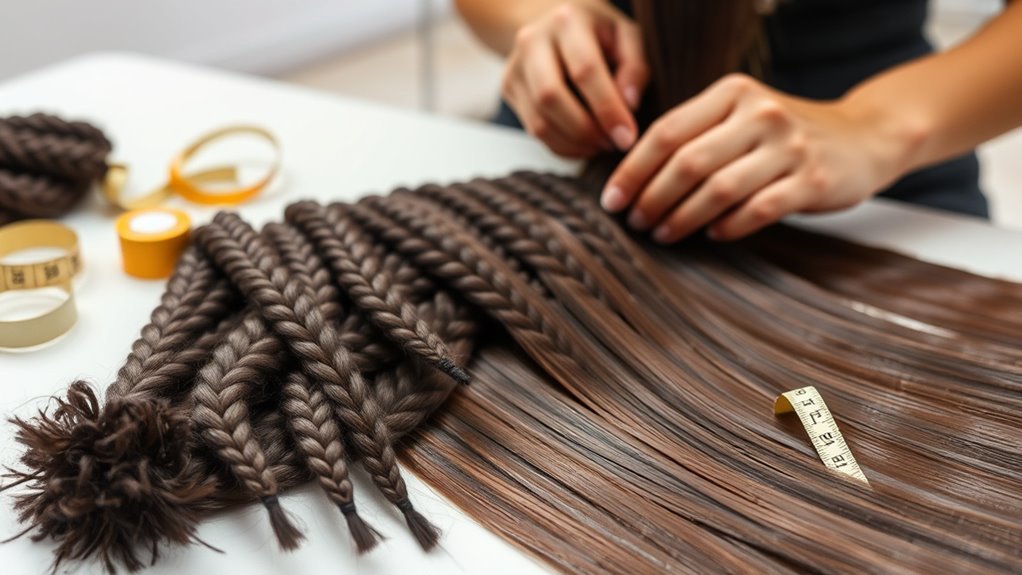
Wondering how much braiding hair you’ll need for knotless braids? The amount depends on several factors, including your natural hair length, desired braid length, thickness, and the specific braid styles you want.
Generally, for medium-length knotless braids, you’ll need about 3 to 4 packs of braiding hair. If you want longer or thicker braids, grab 5 or more packs to avoid running short.
For medium-length knotless braids, plan on 3 to 4 packs; longer or thicker styles need 5 or more.
Choosing the right hair color is essential since it can either blend seamlessly with your natural hair or make a bold statement. Matching the braiding hair color to your hair or selecting complementary shades improves the overall look.
Different braid styles also influence the quantity needed; smaller, more intricate braids require more hair, while larger, chunkier braids use less. Planning ahead based on your preferred braid styles and hair color will help you buy the right amount of braiding hair, ensuring a flawless knotless braid installation.
How to Measure Your Natural Hair for Braiding Hair Estimates
To get a good estimate for braiding hair, you’ll want to measure both the length and thickness of your natural hair. First, take a strand and stretch it out to see how long it really is. Then, feel the overall density of your hair to get an idea of how thick it is.
These two things—length and thickness—are key to figuring out how much extra hair you’ll need for those flawless knotless braids. It makes the whole process way easier when you have a clear idea of what you’re working with!
Measuring Hair Length
Before purchasing braiding hair, you’ll need to accurately measure your natural hair to determine how much extension will be required. Start by identifying the longest section of your hair since this will dictate the length of braiding hair you need.
Use a flexible measuring tape or a piece of string to follow your hair’s curve if it’s curly or wavy. Straighten your hair gently if possible to get a more precise measurement. Note the measurement from your scalp to the tip of your longest strand. This is your hair length.
These measuring techniques help you avoid buying too much or too little braiding hair, ensuring your knotless braids look natural and last longer. Keep the measurements handy when shopping for extensions.
Assessing Hair Thickness
How much braiding hair you’ll need depends heavily on your hair’s thickness. To get an accurate estimate, you need to assess your natural hair carefully. Proper hair care before braiding guarantees your strands stay healthy and ready for styling.
Here’s how to measure your hair thickness for braiding hair estimates:
- Part your hair into sections to see how dense each area is.
- Use a clip or elastic to gather a small section, then visually compare it to a standard braiding strand.
- Note your scalp visibility. If you can see your scalp easily, your hair is thin. Less visibility means thicker hair.
- Discuss with your stylist about your hair’s texture and preferred braiding techniques to adjust hair quantity.
This approach helps you choose the right amount of braiding hair without waste.
How Hair Length Affects the Amount of Braiding Hair Needed
When you measure your hair length, it directly influences how much braiding hair you’ll need. See, if your hair is longer, you usually need less added hair because you already have more natural length and volume. So, knowing this can really help you buy the right amount and avoid wasting any.
Hair Length Measurement Guide
Understanding your hair length is key to figuring out how much braiding hair you’ll need for knotless braids. Measuring your hair accurately helps you estimate the right amount of extensions and plan your hairstyle effectively. Here’s a quick guide:
- Use a flexible measuring tape: Measure from your scalp to the tip of your longest strand.
- Check hair growth patterns: Note uneven growth that may affect braid length.
- Account for stretch: Hair can shrink when dry, so measure it stretched for accuracy.
- Consider maintenance tips: Regular trims and moisturizing support healthy hair growth, influencing your braid’s final look.
Impact On Hair Quantity
Measuring your hair length accurately sets the stage for determining the right amount of braiding hair you’ll need. If your natural hair is longer, you’ll require less added braiding hair since your strands provide more bulk and length.
Conversely, shorter hair demands more braiding hair to achieve fullness and desired length. Keep in mind, if you’re dealing with hair loss, you might want to adjust the quantity to guarantee your scalp isn’t overly stressed during styling.
Also, your styling options influence how much braiding hair to buy; thicker, more voluminous styles need extra hair, while sleek, minimal looks require less. By considering these factors, you can avoid waste, protect your natural hair, and enjoy knotless braids that look seamless and last longer.
How Hair Thickness and Volume Impact Braiding Hair Amounts
Hair thickness and volume play an essential role in determining how much braiding hair you’ll need for knotless braids. Different hair types demand varying amounts of added hair to achieve fullness and length. If your natural hair is thick or has high volume, you’ll need more braiding hair to blend seamlessly and maintain the style’s integrity.
Hair thickness influences how much braiding hair is needed for seamless, full knotless braids.
Consider these key volume considerations:
- Thicker hair requires extra braiding hair to prevent gaps and maintain uniform thickness.
- Fine or low-volume hair needs less added hair but may require strategic placement for natural-looking fullness.
- The desired braid thickness influences your hair quantity; chunkier braids need more extensions.
- Longer braids demand more hair regardless of your natural volume to avoid thin ends.
How to Choose Braiding Hair Based on Your Hair Texture
When picking out braiding hair, the first thing to do is check out your natural hair texture and how thick it is. You’ll want the braiding hair to have a similar thickness to your own so everything blends together smoothly.
Also, think about how long you want your braids to be and what kind of maintenance you’re comfortable with. That way, you can choose a hair length that fits your style and routine perfectly.
Assessing Hair Texture Types
Since your natural hair texture affects how braiding hair blends and holds, you’ll want to choose strands that complement it well. Evaluating your hair texture and curl pattern helps guarantee your knotless braids look natural and last longer. Here’s how to assess your hair texture:
- Identify your curl pattern, whether it’s straight, wavy, curly, or coily, to match braiding hair that mimics your natural look.
- Feel your hair’s thickness; fine or coarse strands require different braiding hair types for better hold.
- Observe your hair’s porosity. High porosity hair absorbs moisture faster, so it needs softer synthetic or human hair blends.
- Note your hair’s elasticity to pick braiding hair that won’t strain or damage your natural strands during installation.
Choosing braiding hair based on these texture traits makes your knotless braids seamless and durable.
Matching Hair Density Levels
Understanding your hair texture sets a solid foundation, but gauging your hair density will help you pick the right amount and type of braiding hair for knotless braids.
If you have thick hair density, you’ll need more braiding hair to guarantee your braid styles look full and last longer. Conversely, if your hair density is thin or medium, you can use less braiding hair to avoid overly bulky braids, which can strain your scalp.
Matching braiding hair with your natural hair density also helps achieve a seamless blend, making your knotless braids look natural and lightweight. Pay attention to how your hair holds braids and adjust the amount of braiding hair accordingly for the best results in braid styles.
Selecting Suitable Hair Length
How long should your braiding hair be to complement your natural texture? Choosing the right hair length is essential for knotless braids. It affects the overall look and manageability. Consider your hair texture and style preferences before picking the length.
Here’s how to select the best hair length for your braids:
- Fine or thin hair: Opt for shorter braiding hair to avoid extra weight and tension.
- Thick or coarse hair: Longer hair can blend better and create a fuller appearance.
- Curly or wavy textures: Choose hair length that matches your natural curl pattern for seamless integration.
- Style preferences: Think about whether you want long, flowing braids or a shorter, more practical look.
Matching hair length to texture guarantees your braids look natural and feel comfortable.
How Many Braiding Hair Packs Are Needed for Knotless Braids?
Wondering how many packs of braiding hair you’ll need for knotless braids? The answer depends mainly on your hair type and braid size. If you have thick or coarse hair, you’ll likely need more packs since each braid requires more hair to blend seamlessly.
The amount of braiding hair needed for knotless braids depends on your hair type and braid size.
Conversely, fine or thin hair usually demands fewer packs. Braid size plays a significant role too. Smaller, thinner braids consume less hair per braid, allowing you to stretch your supplies further, while larger braids use more hair, meaning you’ll need additional packs.
On average, for medium-sized knotless braids on shoulder-length hair, 3 to 4 packs are usually sufficient. If you’re going for longer lengths or thicker braids, consider buying 5 or more packs to avoid running out mid-style.
Always buy an extra pack for backup, as it’s better to have a little more than not enough during your braiding session.
Adjust Braiding Hair Amounts for Braids That Last Longer
When you want your knotless braids to last longer, you’ll need to adjust the amount of braiding hair accordingly. Using too little can cause quicker unraveling, while too much may weigh down your scalp and lead to breakage. Balancing the right amount guarantees durability and comfort.
Here are four tips to help you optimize braiding hair for lasting styles:
- Increase hair amount slightly for smaller, tighter braids. They hold better and last longer.
- Use quality hair that withstands washing and styling techniques without fraying.
- Distribute the hair evenly along each braid to avoid weak spots prone to unraveling.
- Incorporate proper hair care by moisturizing and protecting your scalp, which supports braid longevity.
Save Money When Buying Braiding Hair for Knotless Braids
Balancing the right amount of braiding hair not only extends the life of your knotless braids but also impacts how much you spend. To save money, focus on budget-friendly options that don’t compromise quality.
Look for synthetic hair brands known for durability at reasonable prices. You can also cut costs by opting for bulk purchasing. Buying multiple packs at once often reduces the price per pack. This approach guarantees you have enough hair for your entire style without running back to the store last minute.
Furthermore, check for online deals or discounts, especially from wholesalers who specialize in braiding hair. Avoid buying excessive amounts that lead to waste, but don’t skimp either. Having just the right quantity means fewer touch-ups and replacements.
How to Blend Braiding Hair Colors for a Natural Look
How can you achieve a seamless, natural look with braiding hair colors? Mastering color blending is key to creating a natural appearance that complements your skin tone and style. Here’s how to blend braiding hair colors effectively:
- Choose Shades Wisely: Select colors within the same family or complementary tones to avoid harsh contrasts. This helps everything look smooth and cohesive.
- Mix Before Braiding: Combine strands of different colors evenly to create a gradual shift. It’s all about blending those shades so no one color stands out too much.
- Focus on Roots and Ends: Use darker shades near the roots and lighter ones toward the ends to mimic natural hair growth. This trick makes your braids appear more realistic.
- Test Under Natural Light: Check your color blend in daylight to guarantee it looks authentic and smooth. Natural light shows the true colors better than indoor lighting.
Tips for Storing and Using Leftover Braiding Hair
Blending braiding hair colors perfectly can make your style stand out, but it often leaves you with leftover strands. Proper hair storage and organization are key to keeping these extras fresh and ready for your next style. Store leftover braiding hair in airtight bags or containers to prevent tangling and dust buildup. Label each package with color and length for easy access. Don’t toss scraps; use them for small accent braids or to reinforce weak sections in future styles.
Here’s a quick guide to help you organize and use leftover hair:
| Storage Method | Usage Tip | Benefit |
|---|---|---|
| Airtight Zip Bags | Label by color/length | Prevents tangling |
| Plastic Containers | Use scraps for accents | Minimizes waste |
| Hanging Organizer | Separate by texture/type | Easy access & sorting |
Efficient hair organization saves time and money, letting you get creative while maintaining your hair’s quality.
Frequently Asked Questions
What Are the Best Hair Care Products for Knotless Braids?
You’ll want to choose hair care products that boost moisture retention and promote scalp care to keep your knotless braids looking fresh. Use a lightweight leave-in conditioner or braid spray to hydrate without buildup.
Scalp oils with tea tree or peppermint help soothe and prevent itching. Avoid heavy creams that can cause residue. Regularly cleansing with a gentle, sulfate-free shampoo also maintains scalp health and prolongs your style’s lifespan.
How Long Do Knotless Braids Typically Last?
Knotless braids can last between 4 to 8 weeks if you treat them right. Think of them like a garden. You need consistent knotless braid maintenance to keep them fresh and neat.
To boost braid longevity, moisturize your scalp, wrap your hair at night, and avoid heavy products that cause buildup. Stick to these braid longevity tips, and you’ll enjoy your stylish look without worrying about early frizz or unraveling.
Can Knotless Braids Cause Hair Damage?
Yes, knotless braids can cause hair breakage if they’re installed too tightly or left in for too long. While knotless braids are considered protective styles that reduce daily manipulation, improper care or excessive tension can still damage your hair.
You should keep your scalp moisturized, avoid heavy extensions, and give your hair breaks between styles. That way, you’ll protect your strands and enjoy the benefits of knotless braids without damage.
How Do You Properly Wash Knotless Braids?
To properly wash knotless braids, focus on scalp care by gently massaging your scalp with diluted shampoo using your fingertips. Avoid rough rubbing to keep the braids intact.
Use washing techniques like applying shampoo directly to the scalp, then rinsing thoroughly with lukewarm water. Follow with a lightweight conditioner on the braids, avoiding buildup.
Pat dry with a microfiber towel, and let your hair air dry to maintain your knotless braids healthy and fresh.
What Styles Can You Create With Knotless Braids?
You can create tons of knotless braid variations, from classic straight-back styles to side-swept or half-up, half-down looks. You’ll love how versatile they are for adding curls or waves at the ends.
Don’t forget to use styling accessories like beads, cuffs, or colorful threads to personalize your braids and make them pop. Knotless braids let you switch up your look easily while keeping your hair healthy and lightweight.
Conclusion
When planning your knotless braids, keep in mind that on average, you’ll need about 3 to 5 packs of braiding hair for medium-length styles. This varies with your hair’s length and thickness, so measuring carefully matters.
Choosing the right amount not only saves you money but also guarantees your braids last longer without excess waste. With these tips, you’ll achieve a flawless, natural look while being smart about your hair investment.
In conclusion, knowing how much braiding hair for knotless braids is essential to get the best results. It ensures your style looks great and lasts just as long as you want.