Your Guide to Bronzer: Choosing With Confidence
Finding the perfect bronzer can feel tricky, and you’re not alone if you’ve struggled to get that natural, sun-kissed glow just right. Many people wrestle with choosing the right shade and formula that complements their skin tone without looking too harsh or unnatural.
But don’t worry—we’re here to help you navigate the options and find the bronzer that works best for you.
You can easily achieve a natural sun-kissed glow by choosing a bronzer suited to your skin tone and undertones: light peaches for fair skin, caramel for medium, and deep bronze for darker tones.
Pick matte for contouring, shimmer for glow, or satin for balance. Match formulas to your skin type: powder for oily, cream for dry.
Use the right brushes and blend well to avoid harsh lines. Keep going to uncover tips for flawless application and top product picks.
Key Takeaways
- Choose bronzer shades based on your skin tone and undertones for a natural, sun-kissed look. This helps you avoid colors that might look too harsh or unnatural.
- Select bronzer finishes and formulas suited to your skin type. For example, matte powders work well for oily skin, while cream bronzers are great if your skin is dry.
- Apply bronzer using fluffy brushes with circular motions. Blending evenly is key to avoiding harsh lines and patchiness.
- Layer bronzer gradually and blend down the neck. This creates seamless definition and helps you avoid any unnatural color contrasts.
- Test bronzers in natural light on the jawline or wrist. That way, you can make sure the color matches your undertones perfectly before committing.
Why You Need Bronzer for a Sun-Kissed Glow

Although natural sunlight gives you a genuine glow, bronzer lets you achieve that sun-kissed look anytime, anywhere. You don’t have to wait for summer or spend hours in the sun to get that warm radiance.
Bronzer benefits go beyond just adding color. It enhances your facial features by creating natural-looking shadows and definition. Plus, using bronzer can be a safer alternative to prolonged sun exposure, which helps reduce your risk of skin damage.
While bronzers don’t replace sunscreen or offer sun protection, they encourage you to avoid harmful UV rays by letting you skip tanning sessions. You can enjoy a healthy, glowing complexion without compromising your skin’s health.
How to Find the Right Bronzer Shade for Your Skin Tone
How do you pick the perfect bronzer shade that complements your skin tone? Start by identifying whether your skin tone is fair, medium, or deep. Once you know this, you can focus on finding bronzer shade swatches that match your natural color without looking orange or muddy.
For fair skin tones, choose light bronzers with subtle warmth, like soft peaches or light golden browns. Medium skin tones pair well with bronzers that have richer, warm hues such as caramel or honey. If you have a deep skin tone, go for bronzers with deeper, rich shades like bronze or mahogany to create a natural glow.
Always test bronzer shade swatches on your jawline or wrist to see how they blend with your skin tone in natural light. This helps you avoid shades that look too dark or too ashy. By carefully checking shade swatches and matching them to your skin tone, you’ll confidently find the bronzer that improves your sun-kissed look perfectly.
Matching Bronzer Undertones to Your Skin Tone
To get the most natural look, you’ll want to match your bronzer’s undertone with your skin’s undertone. So, if you have warm undertones, bronzers with golden or peachy hues work best. On the other hand, cool undertones pair really well with bronzers that have pink or red hints.
And if your undertones are neutral, you have a bit more freedom—you can experiment with a balance of both warm and cool shades to find your perfect match. It’s all about what feels right and looks natural on you!
Warm Undertones Explained
When you have warm undertones, your skin usually shows hints of yellow, gold, or peach. These warm undertone characteristics mean your complexion naturally glows with a sunny warmth.
To complement this, choose bronzers with warm undertone colors like rich golden browns, terracotta, or copper shades. These hues improve your skin’s natural radiance without looking ashy or dull.
Avoid bronzers that are too cool or pink-based, as they can clash with your warm undertones and appear unnatural. Instead, opt for products that emphasize warmth, giving your face a sun-kissed, healthy finish.
Cool Undertones Guide
Cool undertones bring a subtle hint of blue, pink, or red to your skin, creating a crisp and revitalizing complexion. When choosing bronzer for cool undertones makeup, you want shades that complement rather than clash.
Opt for bronzers with ashy or neutral brown hues instead of orange or overly warm tones. Cool undertones colors like taupe, soft mocha, or muted bronze work best, adding definition without looking unnatural.
Avoid bronzers with red or golden shimmer, which can make your skin appear flushed or uneven. Applying the right bronzer improves your natural cool undertones, giving you a balanced, radiant look.
Neutral Undertones Tips
While cool undertones benefit from ashy and muted bronzers, neutral undertones give you more flexibility in your bronzer choices. Understanding neutral undertones basics means recognizing that your skin has a balanced mix of warm and cool tones. This balance allows you to experiment with a wider range of bronzer shades without worrying about clashing undertones.
When making a neutral undertones comparison, look for bronzers that aren’t too orange or too pink. Shades like soft caramel, golden beige, or light bronze work well because they improve your natural glow without overpowering your complexion. You can confidently switch between warm and cool-toned bronzers, so pick what complements your overall look.
How to Choose Matte, Shimmer, or Satin Bronzer
How do you decide between matte, shimmer, or satin bronzer? Start by considering your needs and skin type. Matte bronzer benefits include a natural, shine-free finish, making it perfect for bronzer for contouring and everyday wear.
Choosing matte, shimmer, or satin bronzer starts with your skin type and desired finish for flawless contouring and daily wear.
If you’re a beginner, matte formulas offer easy bronzer application techniques without emphasizing texture. Shimmer bronzer tips suggest using it sparingly for special occasions to add glow without overpowering your look.
Satin bronzer advantages lie in their subtle, radiant finish, blending the best of matte and shimmer. It’s ideal for seasonal bronzer choices when you want a healthy glow. Understanding bronzer color theory helps you pick shades that complement your undertones, enhancing your natural warmth.
To guarantee bronzer longevity strategies, apply with a light hand and build gradually. Whether you’re after bronzer for special occasions or daily use, choosing the right finish will boost your confidence and perfect your makeup routine.
Best Bronzer Formulas for Different Skin Types
When picking a bronzer, your skin type plays a big role in what formula will work best. Powder bronzers suit oily skin, while cream formulas are perfect if your skin tends to be dry.
So, why do these differences matter? Well, powder bronzers help absorb excess oil, keeping your skin looking fresh all day. On the other hand, cream bronzers provide a hydrating finish that won’t cling to dry patches.
Knowing this makes it easier to choose the right one for you. Just think about how your skin behaves and pick a formula that complements it perfectly.
Powder vs. Cream
Because your skin type affects how bronzers wear and blend, choosing between powder and cream formulas is key to achieving a natural look. Powder bronzers offer excellent powder longevity, making them ideal if you want your bronzer to stay put throughout the day without frequent touch-ups. They work well on oily or combination skin, as they help absorb excess shine.
On the other hand, cream bronzers excel in cream blendability, allowing you to seamlessly melt the product into your skin for a dewy, fresh finish. They’re perfect if you prefer a more hydrating formula that moves with your skin.
Best Formulas For Dry Skin
Many dry skin types benefit most from hydrating bronzer formulas that nourish while adding color. You’ll want to choose cream bronzers or tinted moisturizers, as their moisturizing ingredients improve skin compatibility and prevent flakiness.
These hydrating formulas often contain emollients like shea butter or hyaluronic acid, which lock in moisture and promote a dewy finish. When applying, use gentle application techniques like tapping with your fingers or a damp sponge to blend seamlessly without disturbing dry patches.
Avoid powders, which can cling to dryness and emphasize texture. By selecting bronzers with ingredient benefits tailored for hydration and using proper techniques, you’ll achieve a natural, radiant glow that elevates your complexion without compromising your skin’s moisture balance.
Tips for Applying Bronzer to Enhance Facial Features
Although applying bronzer might seem straightforward, mastering the technique can dramatically elevate your facial features by adding warmth and dimension. Start by choosing the right shade based on seasonal bronzer adjustments. Opt for a lighter, more subtle tone in winter and a richer hue during summer for a natural glow.
Use a fluffy brush to apply bronzer where the sun naturally hits: your forehead, cheekbones, and jawline. Focus on bronzer blending techniques to avoid harsh lines and achieve a seamless finish. Blend in circular motions, gradually building color to suit your desired intensity.
Don’t forget to blend down your neck for a cohesive look. For contouring, apply bronzer slightly beneath your cheekbones to sculpt and define. Remember, less is more. Build slowly to elevate your features without overdoing it. With practice, these tips will help you confidently highlight your best angles using bronzer.
Avoid These Common Bronzer Mistakes
Mastering bronzer application takes practice, but even small mistakes can undo all your hard work. To avoid looking unnatural, don’t apply bronzer with a heavy hand or in harsh lines. Instead, focus on gentle bronzer blending techniques to achieve a seamless glow.
Another common mistake is choosing the wrong shade. Too dark or too orange can make your skin look muddy. Also, skipping setting powder can cause your bronzer to fade quickly.
Here’s a quick reference table with key bronzer application tips to avoid these pitfalls:
| Common Mistake | Why It Happens | How to Fix It |
|---|---|---|
| Harsh Lines | Using too much product | Use light layers and blend well |
| Wrong Shade | Picking too dark/orange | Test shades in natural light |
| Uneven Application | Skipping blending steps | Use circular motions for blending |
| Fading Bronzer | No setting powder | Apply translucent powder lightly |
Use these bronzer application tips to keep your bronzer looking natural and fresh all day.
Top Bronzer Brushes and Tools for Flawless Application
To get a flawless bronzer finish, you’ll want the right brush shape that fits your face and application style. It really makes a difference in how natural your bronzer looks. And hey, knowing when to choose synthetic or natural bristles can totally change how the product blends on your skin.
Plus, some tools are multi-use, which is a total game-changer. They save you time and space in your makeup bag—always a win, right?
Best Brush Shapes
When applying bronzer, choosing the right brush shape can make all the difference in achieving a natural, sun-kissed glow. Among bronzer brush types, a large, fluffy brush with a rounded or slightly angled shape works best for blending and diffusing color evenly. This shape follows your face’s contours, helping you avoid harsh lines.
For more precision, a smaller tapered brush lets you target specific areas like the hollows of your cheeks or the sides of your nose. Ideal brush sizes balance coverage and control. Too big can apply too much product, while too small might make blending tricky.
Synthetic Vs. Natural Bristles
Choosing the right brush shape sets the foundation, but the type of bristles you pick can dramatically affect how your bronzer applies and blends. Synthetic benefits include easier brush maintenance, greater bristle durability, and they’re excellent for cream or liquid bronzers.
Natural advantages lie in their softness levels and superior pickup of powder bronzer, offering a smooth, diffused finish. Consider these factors:
- Application techniques: Synthetic brushes deliver precise, buildable coverage; natural brushes blend seamlessly.
- Bristle durability: Synthetic bristles last longer and resist shedding.
- Price comparison: Natural bristles tend to be pricier but offer luxurious softness.
- Eco friendly options: Synthetic brushes are often cruelty-free and vegan-friendly.
Choose based on your bronzer formula and personal preference for feel and performance.
Multi-Use Bronzing Tools
Although bronzers come in various formulas, having versatile tools can simplify your routine and improve your application. Multi-use palettes and bronzer duos offer great convenience, combining shades and finishes in one compact. These options let you customize your glow effortlessly.
Versatile applicators, like all-in-one tools, work well with powders, creams, and cream sticks, making them ideal for blending and contouring. If you’re often on the go, travel-friendly options with dual-ended brushes or compact designs keep your bronzer routine quick and mess-free.
Choosing tools that suit multiple products saves space and time while ensuring a flawless finish. Embracing these multi-use bronzing tools lets you achieve a natural, sun-kissed look with ease, no matter your style or schedule.
How to Layer Bronzer for a Natural Makeup Look
Since layering bronzer properly can make all the difference, you’ll want to build your glow gradually to avoid looking overly made-up. Start with good skin prep to guarantee smooth application and longevity. Then, follow these steps for a natural finish:
- Choose seasonal shades that complement your skin tone and the current season for a fresh look.
- Focus on bronzer placement by applying lightly to areas where the sun naturally hits, like your forehead, cheekbones, and jawline.
- Use gentle application techniques, layering products in thin layers to control intensity without patchiness.
- Blend tips are essential. Softly diffuse edges with a clean brush or sponge for seamless shifts and natural finish options.
Don’t forget touch-up strategies during the day. A light dusting can refresh your glow without buildup. Layering bronzer this way improves your complexion naturally and beautifully every time.
Top Bronzer Picks for Every Budget and Preference
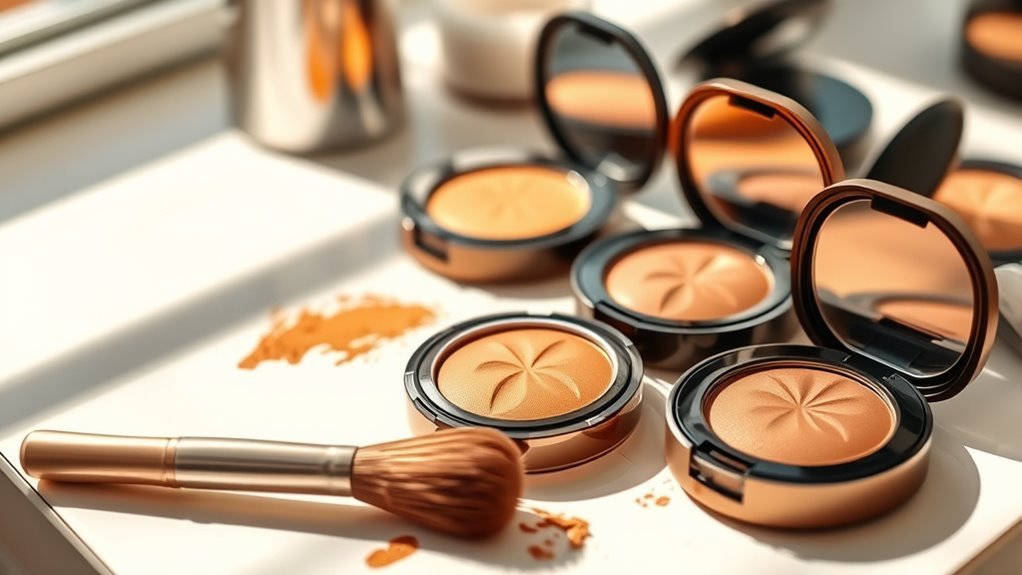
Wondering which bronzer suits your style and budget best? Start by exploring budget friendly options like the e.l.f. Cosmetics Bronzer, which offers great pigment without breaking the bank.
If you’re ready for luxury splurges, brands like Charlotte Tilbury and NARS provide velvety textures and rich finish variations that celebrities swear by.
When deciding between cream versus powder, consider your skin type: creams blend seamlessly on dry skin, while powders work well for oily complexions.
Don’t overlook travel sized bronzers. They’re perfect for on-the-go touch-ups and testing new shades.
Brand comparisons reveal that some excel in lasting power, while others shine in natural-looking hues. Seasonal favorites often feature warmer tones in summer and cooler bronzes in winter, so adjust accordingly.
Whether you prefer a matte, shimmer, or satin finish, there’s a bronzer tailored for your preference. With these top picks, you’ll confidently find the perfect bronzer no matter your budget or style.
Frequently Asked Questions
Can Bronzer Help With Contouring or Only Add Color?
Bronzer can definitely help with contouring, not just add color. When you use bronzer techniques like applying it to the hollows of your cheeks, along your jawline, and the sides of your nose, you create natural shadows that define your face shape.
For effective contouring tips, blend well to avoid harsh lines and choose a bronzer shade slightly darker than your skin tone. This way, bronzer improves your features while adding warmth.
How Long Does Bronzer Typically Last on the Skin?
Bronzer typically lasts about 4 to 8 hours on your skin, but this depends on your skin type and application techniques. If you have oily skin, it might fade faster, so using a primer and setting spray can help.
For dry skin, moisturizing beforehand guarantees smoother application and longer wear. Applying bronzer with a light hand and building up gradually also helps it stay put throughout the day without looking cakey or patchy.
Is Bronzer Safe to Use on Sensitive or Acne-Prone Skin?
Yes, bronzer can be safe for sensitive or acne-prone skin if you choose the right product and follow proper application techniques. Look for bronzers labeled non-comedogenic and free of irritants like fragrances or alcohol.
Use a clean brush or sponge to apply lightly, avoiding heavy layering that can clog pores. Always patch test new bronzers to spot any reactions before full application, and prioritize gentle ingredient considerations to protect your skin.
Can Bronzer Be Used on the Body as Well as the Face?
You might be surprised, but yes, you can definitely use bronzer on your body! Body bronzer benefits include adding warmth and a sun-kissed glow to areas like your shoulders, collarbones, and legs.
To get a natural look, use a large, fluffy brush and apply bronzer in light, sweeping motions, blending well. This application technique helps avoid streaks and guarantees your glow looks seamless from head to toe.
What Are the Differences Between Bronzer and Self-Tanner?
Bronzer and self-tanner differ mainly in purpose and duration. Bronzer application techniques focus on instantly adding warmth and glow, usually washed off by the end of the day.
Self tanner types, like lotions and sprays, gradually build a longer-lasting tan over hours or days. While bronzers give immediate color you can control, self-tanners provide a deeper, more natural-looking tan that requires careful, even application to avoid streaks.
Conclusion
Now that you’ve got the bronzer basics down, you’re ready to glow like a million suns! Choosing the right shade and formula can transform your look from blah to breathtaking in seconds.
Remember, a little goes a long way. Avoid overdoing it to keep that natural, sun-kissed vibe. With the right tools and tips, bronzing becomes your secret weapon for radiant skin every day.
Go ahead and shine confidently with bronzer!