Nail Files Guide: What to Know Before You Buy
Finding the perfect nail file can feel overwhelming, especially when you want smooth, polished nails without damage. You’re not alone—many people struggle to find the right tool that works for their nail type and lifestyle.
Whether you’re dealing with delicate nails or tough, artificial ones, choosing the best nail file is key to achieving salon-quality results at home.
When choosing a nail file, consider your nail type, grit level, and material for the best care. Softer nails need finer grits like 180 or above, while tougher or artificial nails handle coarser grits (80-180).
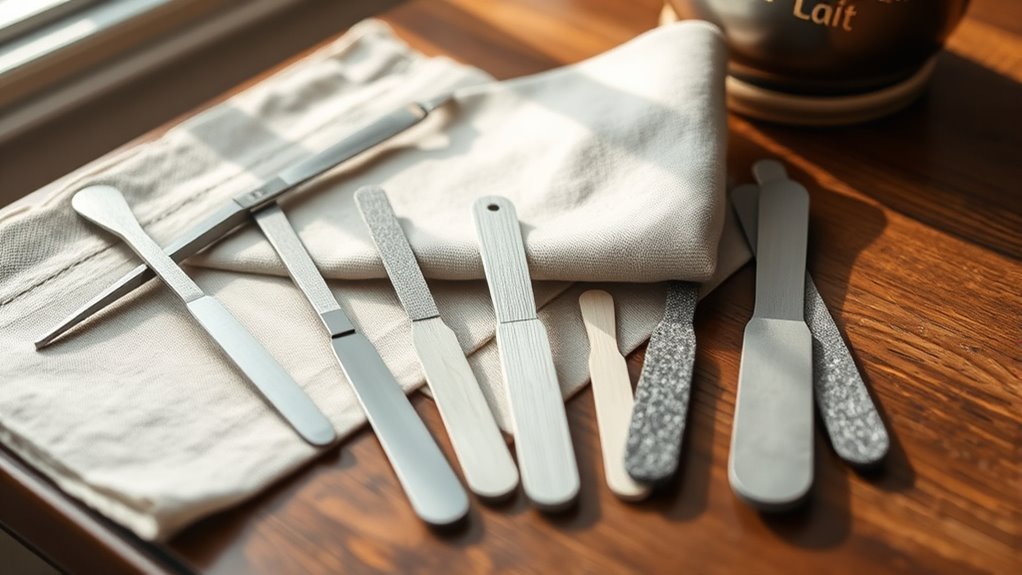
Glass files offer smooth, gentle shaping, emery boards are affordable but less durable, and metal files work for strong nails but require a gentle touch.
Using the right shape and proper techniques, along with cleaning and timely replacement, keeps nails healthy and polished—you’ll find plenty more tips to perfect your routine ahead.
Key Takeaways
- Choose nail files based on your nail type, using gentler files for soft nails and coarser files for tougher nails to prevent damage.
- Understand grit levels: lower grit (80-100) is for heavy shaping, medium (150-180) works well for balanced use, and higher (240+) is best for smoothing.
- Select finer grit files (180+) for natural nails and coarser grit (100-180) for artificial nails to keep your nails healthy and durable.
- Pick nail file shapes like rectangular for precision, oval for rounded edges, and pointed for stylish looks depending on the finish you want.
- Maintain nail files by cleaning them regularly, filing nails gently in one direction, and replacing files when they get worn to ensure effective and hygienic use.
How to Choose the Right Nail File for Your Nail Type
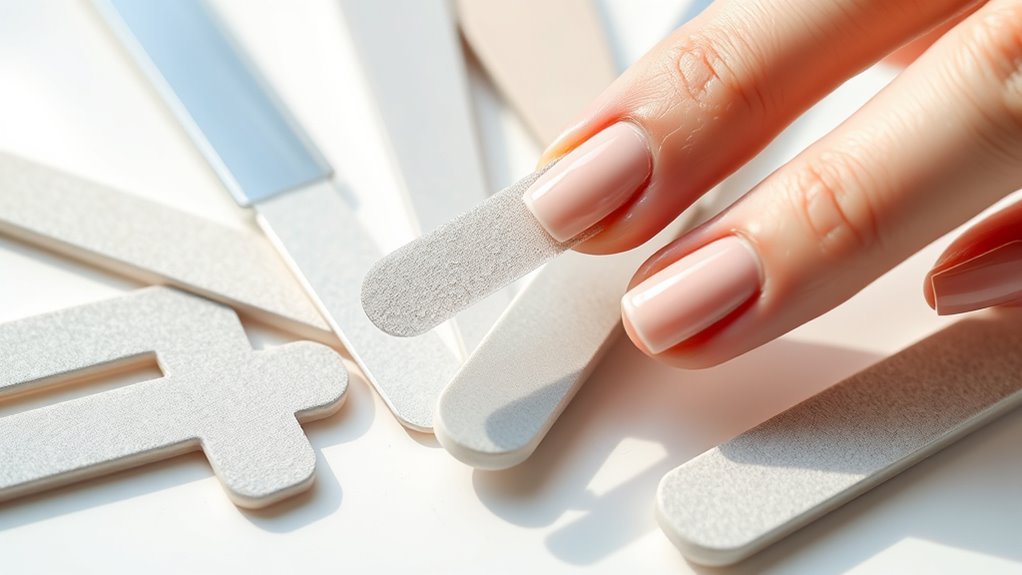
Although it might seem simple, choosing the right nail file for your nail type can make all the difference in maintaining healthy nails. You need to take nail type compatibility into account first. Whether your nails are soft, brittle, or strong will affect which file suits you best.
For example, softer nails benefit from gentler files to prevent splitting, while tougher nails handle more abrasive options. File material selection is just as crucial. Emery boards are great for everyday use and softer nails, while glass or crystal files offer smoother edges and are gentler on delicate nails.
Metal files can be too harsh unless you have very strong nails. By matching your nail type with the right file material, you’ll avoid damage and promote healthier growth. Taking these factors into consideration guarantees your manicure lasts longer and your nails stay in top condition.
Nail File Grit Levels Explained
When you choose a nail file, understanding grit levels is crucial because they determine how much nail material you’ll remove and how smooth the finish will be. Grit numbers indicate the coarseness of the nail file textures: lower grit numbers (like 80-100) mean a rougher surface, perfect for heavy filing or shaping.
Higher grit numbers (such as 240 and above) offer a finer texture ideal for smoothing and finishing. Medium grit files (around 150-180) strike a balance, suitable for everyday shaping without causing damage.
Knowing these grit numbers helps you pick the right file for your needs, whether you want to reshape nails quickly or just refine the edges. Using the correct grit level guarantees you don’t over-file or leave your nails rough.
Why Grit Matters for Natural vs. Artificial Nails
Since natural and artificial nails have different strengths and vulnerabilities, choosing the right grit is essential to avoid damage. For natural nails, you want a finer grit file, usually 180 or higher, to gently shape without thinning or weakening them. This supports nail health and encourages steady nail growth. Coarser grits can cause splits or peeling if used too often.
Artificial nails, like acrylics or gels, need a sturdier file with a lower grit, around 100-180, to efficiently shape and smooth their tougher surfaces. Using the right grit also affects file durability, as coarse files can wear out quickly on natural nails.
Your filing techniques and filing frequency play a big role in nail care too. Filing too aggressively or too often can harm both natural and artificial nails. So, pick the appropriate grit and file with gentle, controlled strokes to maintain healthy nails and extend your file’s life.
Common Nail File Shapes and Their Uses
You’ll find nail files come in all sorts of shapes, each made for a particular purpose. Picking the right one can really make shaping and smoothing your nails a breeze. So, let’s take a look at the most popular shapes and see how they can help your nails.
Popular Nail File Shapes
Nail file shapes play an essential role in achieving the look and strength you want for your nails. Choosing the right file shape style can protect your nails from splitting and improve their natural beauty.
Popular file shape styles include the classic rectangular, which offers precision and control, and the oval, perfect for a natural, rounded finish. You might also consider the pointed or almond shapes for a trendy, elegant look.
Each shape has file shape benefits tailored to different nail types and personal preferences, helping you maintain healthy edges and prevent damage. By understanding these file shape benefits, you can pick the ideal shape that suits your lifestyle and nail care routine, ensuring your nails look polished and stay strong.
Best Files For Nails
Choosing the best file for your nails depends on the shape you want and the condition of your nail edges. For smooth, rounded edges, a fine-grit file works best, while coarser grits handle rough or thick nails.
Popular nail file brands offer a variety of shapes like emery boards, glass files, and metal files to suit different needs. Emery boards are affordable and versatile but wear out quickly.
Glass files provide a smooth finish and are gentle on nails, making them ideal if you want eco friendly options that last longer. Metal files are durable but can be harsh, so use them carefully.
When selecting, consider not just the shape and grit but also sustainable choices from brands committed to eco friendly options to reduce waste.
Shape Benefits Explained
Shapes play an essential role in how effectively a nail file works for your needs. Different file shapes offer unique advantages, so understanding file shape advantages helps you pick the right one.
For example, a straight file is great for shaping square nails, while a curved or oval file suits rounded or almond nails better. The pointed or tapered shape allows you to reach tight spots around your cuticles, offering precision and control.
Considering nail shape compatibility guarantees you maintain your desired nail style without damaging your nails. Choosing a file that matches your nail shape minimizes splitting and breakage.
Comparing Nail File Materials: Glass, Emery, Metal, and More
When you’re picking out a nail file, you might notice that glass and emery give you pretty different vibes. Glass files feel gentle on your nails and tend to last a long time. On the other hand, emery boards are easy on the wallet but don’t stick around forever—they wear out pretty quickly.
Then, there are metal files, which come with their own perks. They’re super durable and great for shaping tougher nails that might need a bit more muscle. So, when you’re deciding which one to go for, think about what matters most to you—whether it’s gentleness, cost, or durability. That way, you can pick the perfect file for your needs.
Glass Vs. Emery
Nail files come in various materials, each offering different benefits and drawbacks. When choosing between glass and emery, you’ll want to take into account what suits your nail care routine best.
Glass files offer smooth, gentle filing that helps prevent nail splitting. Their glass benefits include easy cleaning and long-lasting sharpness. Emery boards, on the other hand, provide excellent durability and a rougher texture for faster shaping but can wear out quickly.
| Feature | Glass File |
|---|---|
| Texture | Smooth and gentle |
| Durability | Long-lasting |
| Cleaning | Easy to sanitize |
| Nail Impact | Prevents splitting |
| Feature | Emery File |
| Texture | Rough and coarse |
| Durability | Less durable, wears out |
| Cleaning | Harder to sanitize |
| Nail Impact | Faster shaping but rougher |
Metal File Benefits
While glass and emery files each have their strengths, metal files bring a unique set of benefits that you might find appealing. One of the biggest metal file advantages is their exceptional durability. Unlike glass or emery, metal files won’t chip or break easily, so you can count on them to last through countless manicures.
They’re also great for quickly shaping tougher nails because their coarse surface removes material efficiently without wearing down fast. If you’re looking for a file that combines longevity with strong performance, metal files fit the bill.
Just keep in mind they tend to be a bit rougher, so use a gentle touch to avoid over-filing. Overall, metal file durability and effectiveness make them a dependable tool in your nail care kit.
How to Use a Nail File Without Damaging Your Nails
Although filing your nails might seem straightforward, using the wrong technique can lead to splitting or weakening them. To protect your nails, use gentle nail filing techniques: always file in one direction instead of a back-and-forth motion. Avoid filing when nails are wet, as they’re more prone to damage.
Also, avoid common mistakes like pressing too hard or using a rough file that can cause peeling.
Here’s a quick guide to safe nail filing:
| Nail Filing Technique | What to Avoid | Result of Mistakes |
|---|---|---|
| File in one direction | Sawing back and forth | Nail splitting or peeling |
| Use gentle pressure | Pressing too hard | Nail weakening |
| File dry nails | Filing wet nails | Nail softening |
Following these simple steps helps keep your nails strong and healthy while shaping them nicely.
When to Replace Your Nail File for Best Results
You should replace your nail file as soon as you notice signs of wear, like when it starts to smooth out or gets clogged. How often you use it also plays a big role in knowing when it’s time for a new one. So, keeping an eye on these things will help you get the best results every time.
Signs Of Wear
A worn-out nail file won’t shape your nails effectively and can even cause damage. To maintain healthy nails, you need to recognize signs of wear and replace your file accordingly.
The nail file lifespan varies depending on the type and usage, but common signs of damage include a smooth or clogged surface, uneven edges, and reduced abrasive quality. If your file no longer shapes nails smoothly or feels rough in some spots, it’s time for a new one.
Using a damaged file can lead to nail splitting or breakage. Keep an eye out for chips or cracks, especially in glass or crystal files. Replacing your nail file at the right time guarantees safer, cleaner, and more precise nail care every time.
Frequency Of Use
Regularly evaluating how often you use your nail file helps determine when it’s time to replace it for the best results. Your filing frequency directly impacts the file’s effectiveness and hygiene.
If you file your nails daily, you’ll notice the grit wearing down faster, making it less efficient over time. For occasional users, replacement might only be necessary every few months.
Paying attention to performance during nail care is key. Once the file feels smooth or doesn’t shape your nails as easily, it’s time to switch it out.
Using a worn file can lead to uneven edges or nail damage. By tracking your filing frequency and replacing your nail file when needed, you guarantee consistent, healthy nail care results every time.
Travel-Friendly Nail Files: Features to Look For
What makes a nail file truly travel-friendly? It starts with a compact design that fits easily into your bag without adding bulk. You’ll want lightweight materials so it’s easy to carry, whether you’re hopping on a plane or maneuvering through a busy day.
Look for dual-sided options to handle shaping and smoothing in one tool, saving space. An ergonomic grip guarantees comfort during use, even on the go. A protective case or travel pouch is essential to keep your file clean and prevent damage.
Quick dry options are a plus if you use polish or treatments while traveling because they speed up your routine. If sustainability matters to you, consider eco-friendly choices made from biodegradable or recyclable materials.
When you combine these features, your travel nail file becomes an efficient, reliable companion that keeps your nails looking sharp wherever you are.
How to Clean and Sanitize Nail Files Safely
Keep your nail files clean and safe by following simple sanitizing steps. To maintain proper nail care hygiene, start by brushing off any nail dust or debris from the file’s surface. Then, soak your nail file in warm, soapy water for a few minutes to loosen grime. After that, rinse it thoroughly under running water.
For effective sanitizing, use a disinfectant spray or soak the file in a solution of isopropyl alcohol for at least 10 minutes. This kills bacteria and prevents infections. Avoid soaking wooden or emery boards too long, as excess moisture can damage them. Instead, wipe them down with alcohol-soaked cotton.
Finally, let your nail files air dry completely before storing them. Regularly cleaning and sanitizing your files guarantees they remain safe for use and supports good nail care hygiene, keeping your nails healthy and your tools effective.
Best Nail Files for Different Nail Care Styles
Choosing the right nail file can make all the difference in achieving your desired nail care style. Whether you prefer natural nails, gel manicures, or eco-friendly options, selecting the proper file guarantees smooth results and nail health.
Gel nail files, for instance, are perfect for shaping gel nails without causing damage, while sustainable nail files offer an eco-conscious choice without sacrificing performance.
Here’s a quick guide to help you pick the best nail file for your style:
| Nail Care Style | Recommended File Type | Key Benefit |
|---|---|---|
| Natural Nails | Glass or Sustainable Nail Files | Gentle on nails, eco-friendly |
| Gel Nails | Gel Nail Files | Smooth finish, prevents chipping |
| Acrylic or Artificial | Emery Board or Coarse Grit Files | Effective shaping, durable |
Frequently Asked Questions
Can Nail Files Cause Allergic Reactions?
Yes, nail files can cause allergic reactions, especially if you’re sensitive to certain nail file materials like metal or fiberglass. If your skin reacts with redness, itching, or swelling after using a nail file, it’s likely an allergy.
You should avoid files made from materials that irritate you and switch to hypoallergenic options like glass or ceramic. Always test new nail files on a small area first to prevent allergic reactions.
Are Electric Nail Files Safe for Home Use?
You might wonder if electric nail files are safe for home use. Here’s the truth: yes, if you use them right.
Electric file benefits include precision and speed, making your nail care routine easier. But you must follow nail care tips like starting on low speed and avoiding over-filing to prevent damage.
With care and caution, these tools can improve your nail game safely and effectively at home.
How Do Nail Files Affect Nail Polish Longevity?
Nail files affect nail polish longevity by influencing nail polish adhesion. When you use gentle nail file materials like glass or fine-grit emery boards, you create a smooth surface that helps polish stick better.
Rough or harsh files can damage your nail’s surface, causing polish to chip faster. So, choosing the right nail file materials and filing carefully will help your nail polish last longer and look fresh.
Can Nail Files Help With Nail Fungus?
Nail files can’t wave a magic wand to cure nail fungus, but they play a supporting role in fungus treatment. When you gently file away thickened or damaged nail areas, you help improve nail health and allow antifungal treatments to penetrate better.
Just be sure to use a clean file for infected nails to avoid spreading the fungus. So, while files aren’t a cure, they’re a handy tool in your nail health toolkit.
What Is the Environmental Impact of Disposable Nail Files?
Disposable nail files contribute to landfill waste and often use non-biodegradable materials, harming the environment. If you want to reduce your impact, look for sustainable alternatives like reusable glass or metal files.
Biodegradable options made from natural materials, such as bamboo or cardboard, break down more easily and lessen pollution. Choosing these options helps you care for your nails and the planet simultaneously, making your beauty routine eco-friendlier without sacrificing effectiveness.
Conclusion
Choosing the right nail file is like picking the perfect brush for a masterpiece. You want the right texture, shape, and strength to bring out your nails’ best look. Just as an artist replaces worn brushes, you’ll know when to swap your file for peak performance.
Treat your nail file like a trusted tool. Clean it well, and it’ll help you sculpt your nails beautifully, whether at home or on the go. Knowing how to choose and care for your nail file is key to keeping your nails looking their best.