Your Guide to Body Oil: Choosing With Confidence
Finding the perfect body oil can feel overwhelming, especially with so many options promising radiant skin. If you’ve ever struggled to pick one that actually works for your skin type and lifestyle, you’re not alone. Many people face this challenge, wanting hydration without the greasy feel or irritation.
Choosing the right body oil starts with knowing your skin type. Lightweight oils like jojoba suit oily skin, while richer options like avocado nourish dry skin deeply.
Apply on damp skin using gentle, upward strokes to lock in hydration and elevate glow without feeling greasy.
Consider your lifestyle and seasons when picking formulas, opting for quick-absorbing oils if you’re active or soothing ones for relaxation.
Keep exploring to confidently find the perfect oil that improves your skin’s natural beauty.
Key Takeaways
- Choose body oils based on your skin type, like lightweight oils for oily skin and richer ones for dry skin. It really helps to match the oil to what your skin needs.
- Apply body oil on damp skin using upward strokes. This technique maximizes hydration and helps your skin absorb the oil better.
- Opt for natural, cold-pressed oils from reputable brands. Make sure they’re free of synthetic additives and artificial fragrances for the best results.
- Adjust the type of oil and how often you apply it depending on seasonal changes and your lifestyle. Your skin’s needs can change, so stay flexible.
- Avoid overapplication and harsh rubbing to keep your skin from getting greasy. This way, you maintain a natural, healthy glow without any fuss.
What Is Body Oil and Why Use It

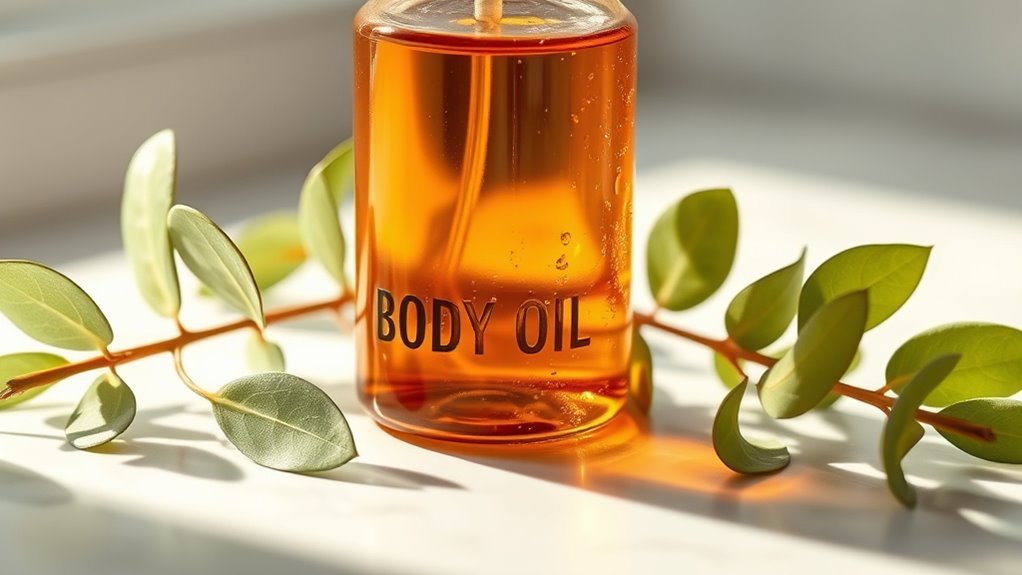
Body oil is a moisturizing product designed to nourish and hydrate your skin by locking in moisture. When you use body oil, you tap into a benefits overview that includes softer skin, improved elasticity, and a natural glow. It’s especially great if you want a lightweight, non-greasy option that absorbs quickly.
To get the most out of body oil, follow these application tips: apply it right after you shower or bathe while your skin is still damp. This helps seal in hydration. Use gentle, circular motions to massage the oil evenly over your body, focusing on dry areas like elbows and knees. You don’t need a lot—a few drops usually do the trick.
Regular use can improve your skin’s texture and keep it feeling supple. Overall, body oil offers a simple way to boost your skincare routine without much effort.
How Body Oil Hydrates and Nourishes Your Skin
Although your skin naturally produces oils to stay hydrated, using body oil improves this process by forming a protective barrier that locks in moisture and prevents dryness. When you apply body oil, you elevate your skin’s hydration benefits, ensuring it feels soft and supple all day.
The nourishing ingredients in these oils penetrate deeply, delivering essential nutrients that support your skin’s health and repair.
Here’s how body oil hydrates and nourishes your skin:
- Creates a moisture seal to prevent water loss
- Supplies antioxidants and vitamins to boost skin vitality
- Softens rough patches and smooths texture
- Supports the skin’s natural barrier function
How to Choose Body Oil for Your Skin Type
How do you find the right oil that suits your skin’s unique needs? Start by considering your skin type and fragrance preferences. You want an oil that not only nourishes but also feels pleasant without overwhelming your senses.
Pay attention to ingredient sourcing, choosing oils made from high-quality, natural components for the best results.
Here’s a quick guide to help you decide:
| Skin Type | Key Considerations |
|---|---|
| Dry | Choose rich, deeply hydrating oils |
| Oily | Opt for lightweight, non-comedogenic oils |
| Sensitive | Pick fragrance-free, gentle oils |
| All Types | Look for sustainably sourced, pure ingredients |
The Best Body Oils for Dry, Oily, and Sensitive Skin
You’ll want to choose body oils that match your skin’s unique needs. If you have dry skin, rich oils like jojoba or almond are great because they lock in moisture. On the other hand, sensitive skin tends to do better with gentle options, such as chamomile or calendula-infused oils. So, let’s take a closer look at which oils work best for each skin type.
Ideal Oils for Dryness
When your skin feels tight and flaky, choosing the right body oil can make all the difference in restoring moisture and comfort. For dry skin, you want oils that excel in moisture retention and support healthy oil absorption without feeling greasy. Here are some ideal options:
Jojoba oil: Mimics your skin’s natural oils for balanced hydration.
Argan oil: Rich in antioxidants, it nourishes deeply and locks in moisture.
Sweet almond oil: Lightweight yet effective at sealing moisture.
Avocado oil: Packed with fatty acids, it soothes and replenishes dry patches.
Using these oils regularly helps maintain your skin’s softness and prevents further dryness by enhancing your skin’s natural barrier.
Oils Suitable for Sensitivity
Which body oils work best if your skin tends to react easily or feels irritated? If you have sensitive skin, you’ll want oils that soothe without causing redness or breakouts.
Look for gentle options like jojoba, calendula, or chamomile oil, as they deliver essential nutrients while calming inflammation. These oils help restore your skin’s natural barrier and reduce irritation.
Avoid heavy or fragranced oils, which might trigger sensitivity. Instead, opt for lightweight, hypoallergenic formulations to keep your skin balanced and comfortable.
Applying these oils after a shower locks in moisture and supports healing. By choosing the right oils, you can nourish sensitive skin safely and confidently, maintaining a healthy, glowing complexion every day.
Natural vs. Synthetic Body Oils: What’s the Difference?
How do natural and synthetic body oils really differ? When choosing between them, you’ll notice key contrasts that matter for your skin and values. Natural oils offer benefits like rich nutrients and eco-friendly ingredient sourcing. On the other hand, synthetic oils often raise concerns, such as potential irritation or less environmental care.
Natural and synthetic body oils differ in nutrients, skin impact, and environmental considerations.
Here’s what to evaluate:
- Natural benefits: Packed with vitamins and antioxidants, promoting skin health.
- Synthetic concerns: May contain chemicals that irritate sensitive skin or disrupt the environment.
- Application differences: Natural oils usually absorb faster; synthetics might leave a heavier feel.
- Price comparison: Natural oils often cost more due to sourcing, while synthetics are generally cheaper but less eco-conscious.
Also, scent profiles vary. Natural oils smell earthy or floral, while synthetics may have artificial fragrances. Understanding these factors helps you pick the body oil that fits your preferences and lifestyle perfectly.
When and How to Apply Body Oil for Maximum Glow
You’ll get the best glow by applying body oil right after your shower, while your skin is still damp. This helps lock in moisture and makes your skin feel super soft. Just use gentle, upward strokes to spread the oil evenly—it also helps boost circulation, which is a nice bonus. Let’s take a closer look at the perfect timing and techniques to really make your skin shine.
Best Time To Apply
The best time to apply body oil is right after you step out of the shower when your skin is still damp. This helps lock in moisture and gives your skin that radiant glow.
To get the most out of your body oil, consider these best application times and seasonal considerations:
- Apply in the morning for a fresh, glowing start to your day
- Use right before bed to nourish and repair overnight
- Adjust frequency in winter to combat dryness with more applications
- In summer, opt for lighter oils and apply post-sun to soothe skin
Timing matters. By matching your routine with your skin’s needs and the season, you’ll maximize hydration and glow effortlessly.
Application Techniques For Glow
Everyone wants that radiant, dewy glow, and applying body oil the right way can make all the difference. For maximum glow improvement, apply body oil immediately after showering, while your skin is still damp. This locks in moisture and boosts the application benefits.
Warm a small amount of oil between your palms before gently massaging it into your skin using upward, circular motions. Focus on areas like your arms, legs, and shoulders for an even, luminous finish.
Avoid over-applying. Too much oil can leave a greasy feel rather than a healthy glow. Regular, mindful application not only nourishes your skin but also improves circulation, contributing to that natural radiance you want.
Follow these techniques consistently to enjoy the full benefits of your body oil.
Tips for Layering Body Oil With Other Skincare Products
Although layering body oil with other skincare products might seem tricky, doing it correctly can boost your skin’s hydration and glow. The key is understanding layering techniques and ensuring product compatibility so each product works harmoniously. Start with lighter, water-based products like serums or lotions, then apply your body oil to seal in moisture. Here are some tips to get it right:
Apply body oil on damp skin to lock in hydration effectively. Use oils compatible with your moisturizer to prevent pilling or clogging pores. Avoid mixing multiple heavy oils at once; stick to one nourishing oil per routine. And give each product time to absorb before layering the next to maximize benefits.
Common Mistakes to Avoid When Using Body Oil
When you misuse body oil, it can lead to clogged pores, greasy skin, or wasted product. One common mistake is overdoing the application frequency. Applying body oil too often doesn’t mean better results; your skin needs time to absorb the oil properly. Too frequent use can overwhelm your skin’s natural balance and leave a heavy residue.
Another error is ignoring your skin’s oil absorption rate. If your skin feels sticky or slick after applying oil, you might be using too much or applying it to damp skin not ready for oil. Always apply body oil to slightly damp skin to improve absorption without excess residue.
Lastly, avoid rubbing the oil in too harshly. Patting or gently massaging helps the oil penetrate without irritating your skin. Stick to moderate application frequency and pay attention to how your skin responds for the best results.
Picking Body Oils for Your Lifestyle and Skin
You’ll want to choose body oils that match your skin type to keep your skin balanced and healthy. Also, think about how active you are and what fits best into your daily routine. Finding the right oil means it works with both your skin and lifestyle seamlessly.
Skin Type Compatibility
How do you choose the right body oil that suits both your skin and lifestyle? Start by understanding your skin type to guarantee ideal oil absorption and delivery of essential nutrients.
Oily Skin: Look for lightweight, non-comedogenic oils like grapeseed or jojoba that won’t clog pores.
Dry Skin: Opt for richer oils like avocado or almond to deeply nourish and lock in moisture.
Sensitive Skin: Choose hypoallergenic oils such as calendula or chamomile-infused oils to soothe irritation.
Normal Skin: Versatile oils like argan or rosehip provide balanced hydration and essential nutrients without feeling heavy.
Lifestyle Needs Consideration
Although choosing body oil based on skin type is essential, considering your lifestyle guarantees you get the most out of your product. Think about your daily routine: if you’re active or spend a lot of time outdoors, you’ll want a lightweight, non-greasy oil that absorbs quickly.
If you enjoy relaxing baths or evening self-care, richer oils with calming scents like lavender or chamomile might suit you better. Also, account for seasonal changes; during colder months, thicker oils protect and nourish dry skin.
Lighter formulas work well in warmer weather to avoid feeling heavy. Matching your body oil to both your lifestyle and skin needs assures you stay comfortable and confident, making your skincare routine enjoyable and effective every day.
Where to Buy Quality Body Oils and What to Look For
Finding quality body oils starts with knowing where to shop and what ingredients to prioritize. To guarantee you pick the best, focus on quality brands known for transparency and natural ingredients. Don’t hesitate to check customer reviews and certifications to confirm product authenticity.
Here are some key shopping tips to help you select the right body oil:
- Choose oils that list pure plant-based ingredients without synthetic additives.
- Look for cold-pressed or organic certifications to ensure potency.
- Buy from reputable retailers or official brand websites to avoid counterfeit products.
- Avoid oils with artificial fragrances, parabens, or mineral oils that can irritate your skin.
Frequently Asked Questions
Can Body Oils Help Reduce the Appearance of Stretch Marks?
Yes, body oils can help reduce the appearance of stretch marks by improving skin hydration and elasticity. When you apply them regularly, they keep your skin moisturized, which supports stretch mark prevention by making your skin more resilient to stretching.
Look for oils rich in vitamins and antioxidants to boost your skin’s healing process. Consistency is key, so make body oil a part of your daily skincare routine to see the best results.
Are Body Oils Safe to Use During Pregnancy?
You can safely enjoy body oils during pregnancy if you choose wisely. Think of your skin as a delicate garden needing gentle care. Opt for pregnancy skincare products free from harsh chemicals.
Always check essential oil safety, avoiding those known to cause irritation or contractions. Stick to oils like sweet almond or jojoba, which nourish without risk.
When in doubt, consult your healthcare provider to keep your glowing skin and baby’s well-being in harmony.
How Long Does Body Oil Typically Last on the Skin?
Body oil typically lasts on your skin for about 4 to 8 hours, depending on its absorption rate and the oil’s formulation. Oils with a faster absorption rate might feel dry sooner but still leave a subtle scent.
If you want longer scent longevity, opt for thicker oils or those infused with essential oils. Keep in mind, your skin type and environment also affect how long both the moisture and fragrance stay with you.
Can Body Oil Be Used as a Massage Oil?
Yes, you can use body oil as a massage oil. About 60% of massage therapists recommend oils for better glide during massage techniques.
Body oils absorb into your skin smoothly, allowing for deeper nourishment without feeling greasy. When you massage, the oil helps reduce friction, letting your hands move effortlessly.
Plus, it improves skin absorption of moisturizing ingredients, leaving your skin soft and hydrated long after your massage ends.
Do Body Oils Have Any Fragrance Allergy Risks?
Yes, body oils can pose fragrance allergy risks if you have fragrance sensitivity. Some oils contain added scents that might trigger irritation or allergic reactions.
To stay safe, you should always check the ingredient list and perform allergy testing by applying a small amount on your skin before full use. This helps you identify any potential reactions early and guarantees you choose a body oil that suits your skin without causing discomfort.
Conclusion
Choosing the perfect body oil is like finding a secret garden for your skin, nourishing, hydrating, and glowing with life. Trust your instincts, match your oil to your skin’s unique rhythm, and layer wisely to let your natural beauty bloom.
Avoid common pitfalls and let quality guide your choices. With the right body oil, you’re not just caring for your skin—you’re crafting a radiant, confident you every single day. Choosing the perfect body oil helps you embrace your natural glow with confidence.