Foundation for Dark Skin Guide: What to Know Before You Buy
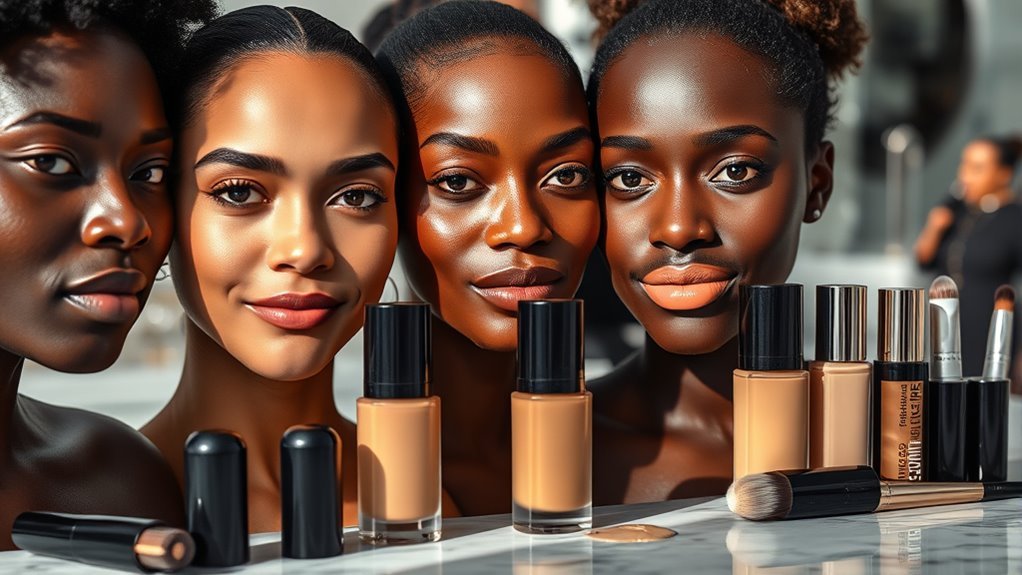
Finding the perfect foundation for dark skin can feel like a never-ending challenge. If you’ve ever struggled with shades that don’t match or formulas that don’t last, you’re not alone. Many people face these frustrations, but with the right guidance, you can finally discover a foundation that enhances your natural beauty and feels like it was made just for you.
To find the perfect foundation for your dark skin, start by identifying your undertone, whether cool, warm, or neutral, using vein color or jewelry tests.
Choose a formula that matches your skin type, whether oily, dry, or combination, and pick shades by swatching along your jawline in natural light.
Opt for finishes that suit your skin’s needs, like dewy or matte, and avoid ashy tones.
Mastering application and adjusting for lighting guarantees a flawless, lasting look. Keep exploring to get all the tips.
Key Takeaways
- Identify your undertone (cool, warm, neutral) using wrist vein color and jewelry tests. This helps ensure a perfect foundation match for dark skin.
- Choose foundation formulas based on your skin type. Matte works well for oily skin, hydrating formulas suit dry skin, and lightweight or mixed options are great for combination skin.
- Test foundation shades along your jawline in natural light. Also, check how the foundation wears throughout the day to find the best match for deeper complexions.
- Opt for foundations with rich pigments and hydrating ingredients. Pick finishes like matte, dewy, or satin to avoid any ashy or dull appearances.
- Apply foundation with a damp sponge or brush, blend well, and set with powder or spray. Be mindful to avoid oxidation and seasonal mismatches.
How to Identify Your Undertone for Dark Skin
How can you tell what undertone suits your dark skin best? Start by consulting an undertone chart, which breaks down tones into cool, warm, and neutral categories. Understanding color theory helps here. Cool undertones have hints of blue or pink, while warm undertones lean toward yellow, gold, or peach. Neutral undertones are a balanced mix of both.
To identify your undertone, observe the veins on your wrist. If they appear blue or purple, you likely have cool undertones. Greenish veins suggest warm undertones. And if you can’t clearly tell, you might have neutral undertones. Another quick test is to see how your skin reacts to gold and silver jewelry. Gold tends to complement warm undertones, while silver suits cool undertones better.
Using the undertone chart alongside these simple tests guarantees you pick foundation shades that improve your natural complexion without clashing. It’s a straightforward way to master your unique undertone before you shop.
How to Choose the Best Foundation Formula for Your Skin Type
Once you’ve pinpointed your undertone, the next step is matching your foundation formula to your skin type. Choosing formulas tailored to your skin type guarantees your foundation looks natural and lasts longer. Here’s how to pick the best one:
Identifying your undertone is key before selecting a foundation formula that complements your skin type perfectly.
- Oily Skin: Opt for oil-free, matte foundations that control shine and prevent breakouts. Powder or liquid formulas with a matte finish work best.
- Dry Skin: Choose hydrating, dewy formulas with moisturizing ingredients like hyaluronic acid. Cream or liquid foundations will help your skin look fresh and smooth.
- Combination Skin: Use a formula that balances hydration and oil control, such as a lightweight liquid foundation. You can also mix formulas or use different foundations on varied areas.
How to Find the Perfect Shade Match for Deeper Complexions
Finding the perfect foundation shade for deeper complexions can feel challenging, but you’re not alone in this. Start by doing a shade comparison with several options that match your undertone, whether it’s warm, cool, or neutral. Don’t hesitate to test multiple brands because formulas can vary widely in color and finish.
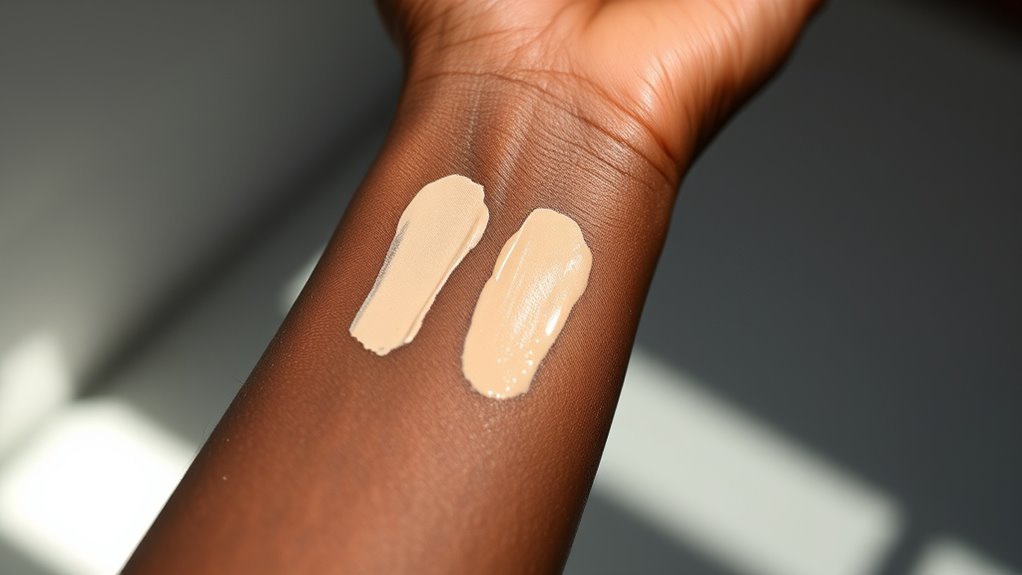
When you’re ready, swatch testing is key. Apply small swatches along your jawline and blend them in. The right shade should disappear seamlessly into your skin without leaving an obvious line.
Check your swatches in natural light because store lighting can be misleading. Also, consider how the foundation wears throughout the day. A shade that oxidizes or changes color might not be ideal.
Which Foundation Finishes Look Best on Dark Skin
When you’re picking a foundation finish for dark skin, think about how each one can enhance your natural glow. Dewy finishes give you that radiant, fresh vibe that really makes your skin pop. On the other hand, matte finishes are great for controlling shine and creating a smooth, flawless canvas.
Then, there are satin finishes, which are kind of the best of both worlds. They offer a subtle, healthy glow without being too shiny. So, whether you want a glowing look or a shine-free finish, there’s something that can work perfectly for you.
Dewy Finish Benefits
A dewy finish can instantly brighten your complexion and add a natural radiance that complements dark skin beautifully. When you choose a foundation with a dewy glow, you’re not just enhancing your look. You’re also promoting skin hydration, which keeps your skin healthy and luminous throughout the day.
Here are three key benefits you’ll notice:
- Enhanced Radiance: A dewy finish reflects light, giving your skin a fresh, glowing appearance.
- Hydrated Look: It helps maintain moisture, preventing your skin from looking dull or dry.
- Youthful Effect: The subtle shine adds dimension and softness, making your skin look more vibrant and youthful.
Opting for a dewy foundation finish can make your dark skin look naturally glowing and well-nourished.
Matte Finish Advantages
Matte foundations offer a smooth, shine-free finish that works especially well if you have oily or combination dark skin. You’ll appreciate matte longevity, as it keeps your skin looking fresh for hours without needing touch-ups.
Shine control is a key benefit, preventing unwanted oiliness and maintaining a flawless look throughout the day. Matte finishes also help minimize the appearance of pores and imperfections, giving your skin a polished look.
| Advantage | Benefit | Ideal For |
|---|---|---|
| Matte Longevity | Lasts long without fading | Oily/Combination Skin |
| Shine Control | Prevents oily shine | Dark Skin Tones |
| Smooth Texture | Minimizes pores, smooths skin | All Skin Types |
Choose matte for a reliable, shine-free foundation experience.
Satin Finish Appeal
Although oily skin benefits from a matte finish, you might prefer a satin foundation if you want a subtle glow without excess shine. A satin finish accentuates dark skin beautifully by balancing luminosity and natural texture. It smooths uneven skin texture without looking cakey or greasy.
Here’s why satin finish works well on dark skin:
- It reflects light softly, adding dimension and a healthy radiance.
- It blurs imperfections while preserving your natural skin texture.
- It offers versatility, suitable for both everyday wear and special occasions.
Choosing a satin finish foundation helps you achieve a fresh, dewy look that doesn’t compromise on coverage. It’s perfect if you want your skin to look alive and natural without the flatness of matte or the shine of dewy finishes.
What Ingredients Work Best in Foundations for Dark Skin
When choosing a foundation for dark skin, you’ll want ingredients that elevate your natural glow while providing lasting coverage. Look for rich color pigments that match your undertones perfectly, guaranteeing your skin looks vibrant without appearing ashy.
Hydrating agents like hyaluronic acid or glycerin keep your skin moisturized, preventing dryness and improving comfort throughout the day. Skin protection ingredients such as SPF or antioxidants guard against environmental damage, which is especially important for darker skin tones.
Opt for lightweight formulas that won’t feel heavy or cakey, and pay attention to blendability factors. These help the foundation meld seamlessly into your skin for a natural finish.
Nourishing ingredients like vitamins E and C support skin health over time, making your foundation more than just makeup. Finally, consider the coverage options available, from sheer to full, so you can choose what fits your style and skin needs best. This approach guarantees your foundation complements and improves your beautiful dark skin.
Best Foundation Brands With Shades for Dark Skin
If you’re searching for foundations that truly cater to dark skin tones, several brands stand out for their diverse shade ranges and quality formulations. Whether you prefer luxury brands or drugstore options, you’ll find something that matches your needs. Consider these top picks:
- Fenty Beauty: Known for its extensive shade range and popular shades, this brand offers excellent texture variations and celebrity recommendations. It’s a go-to for many seeking inclusivity.
- Maybelline Fit Me: This drugstore option balances affordability and quality, with shades designed for deeper tones and a natural finish.
- ILIA Beauty: If you want vegan foundations and eco-friendly choices, ILIA offers clean ingredients and sustainable packaging without compromising on performance.
These brands cover a wide spectrum of price ranges, textures, and ethical considerations, making it easier for you to explore a foundation that complements your dark skin perfectly.
How to Apply Foundation for Flawless Dark Skin
To achieve a flawless foundation application on dark skin, you need the right tools and techniques that boost your natural glow. Start by selecting application tools like a damp beauty sponge or a dense foundation brush. These help distribute the product evenly without streaks. Use small amounts of foundation to build coverage gradually, avoiding a cakey finish.
Mastering blending techniques is essential. Gently pat and blend the foundation into your skin, focusing on seamless shifts around the jawline and hairline. Don’t forget to blend down your neck for a natural look. Using circular motions with your brush or dabbing motions with your sponge guarantees an even, natural finish.
Finally, set your foundation with a lightweight powder or setting spray to lock everything in place and maintain a radiant look throughout the day. With the right application tools and blending techniques, your foundation will improve your beautiful dark skin flawlessly every time.
Common Foundation Mistakes to Avoid on Dark Skin
You’ll want to avoid foundation that leaves your skin looking ashy or dull. So, make sure to test how the product oxidizes on your skin throughout the day. Getting these right will really help your foundation look natural and flawless.
Avoid Ashy Undertones
One of the most common foundation mistakes on dark skin is ending up with ashy undertones that dull your natural radiance. To avoid this, focus on color correcting and undertone balancing before applying foundation. Here’s how you can prevent that ashy look:
- Choose the right undertone: Look for foundations labeled with warm, golden, or red undertones that complement your skin.
- Use color correctors: Apply orange or peach correctors to neutralize any gray or ashy patches, especially around dark circles or uneven areas.
- Test in natural light: Always swatch foundation on your jawline in natural light to guarantee it blends seamlessly without gray cast.
Match Oxidation Effects
Although foundation can initially match your skin tone perfectly, it often changes color after application due to oxidation. Oxidation factors like your skin’s natural oils, sweat, and exposure to air can cause color shifts, making your foundation look darker or orange over time.
To avoid this, test foundations by wearing them for several hours before buying to see how they react with your skin. Also, opt for formulas labeled as “oxidation-resistant” or those with a matte finish to reduce unwanted color changes.
How to Adjust Foundation for Different Lighting and Seasons
When lighting changes or the seasons shift, your foundation needs to adapt to keep your skin looking natural and radiant. Lighting adjustments and seasonal changes can affect how your foundation appears, so you want to stay ahead of these shifts.
Foundation must evolve with lighting and seasons to maintain a natural, radiant complexion.
Here’s how to adjust your foundation for different lighting and seasons:
- Evaluate Your Light Source: Natural daylight shows your true foundation color, while indoor or artificial lighting can make it look warmer or cooler. Test your foundation in various lights before committing.
- Switch Shades Seasonally: Your skin tone may darken with sun exposure in summer, requiring a slightly deeper shade. Conversely, in winter, opt for a foundation with a cooler or lighter undertone to match your skin.
- Adjust Formula for Climate: Humidity in summer demands lightweight, long-wear formulas to prevent melting. In colder months, choose moisturizing foundations to avoid dryness and flakiness.
How to Build a Long-Lasting Foundation Routine for Dark Skin
Adjusting your foundation to suit lighting and seasons sets a solid base, but maintaining its wear throughout the day requires a thoughtful routine. To build a routine that guarantees long-lasting wear, start with thorough skin prep: cleanse, moisturize, and apply a primer suited for your skin type.
Use color correcting to balance uneven tones before foundation application. Choose coverage levels that match your needs, layering products lightly to avoid cakiness. Apply foundation with the right tools like damp sponges or brushes for an even finish.
Setting techniques such as translucent powder or setting spray lock your look in place, adapting to seasonal changes like humidity or dryness. Throughout the day, follow touch-up tips like blotting excess oil and reapplying minimal product to maintain a fresh appearance.
Frequently Asked Questions
Can Foundation Help With Hyperpigmentation on Dark Skin?
Yes, foundation can help with hyperpigmentation treatment on dark skin by evening out your complexion and minimizing dark spots. When you choose foundation shades that perfectly match your skin tone, you create a natural, flawless look that camouflages discoloration.
Look for foundations with buildable coverage and a smooth finish to blend hyperpigmentation seamlessly. Remember, foundation isn’t a cure but a great cosmetic tool to improve your skin’s appearance.
How Do I Remove Foundation Without Irritating Dark Skin?
To remove foundation without irritating your dark skin, choose gentle makeup removers designed for sensitive skin. Avoid harsh scrubbing. Instead, use a soft cotton pad soaked in a soothing, oil-based remover or micellar water to dissolve makeup effectively.
Pat your skin dry rather than rubbing to minimize irritation. Finish with a hydrating cleanser and moisturizer to keep your skin calm and nourished after makeup removal.
Are There Foundations That Protect Dark Skin From Pollution?
Yes, you can find foundations that offer pollution protection specifically formulated for dark skin. These products often include antioxidants and SPF to shield your skin from harmful environmental aggressors like pollution.
When choosing, look for labels mentioning pollution defense or anti-pollution ingredients. This way, you not only improve your complexion but also protect your skin from damage caused by urban pollutants, keeping your dark skin healthier and glowing throughout the day.
Can Foundation Prevent Dark Spots From Forming on Dark Skin?
Can foundation alone prevent dark spots from forming on your skin? Not exactly, but choosing the right foundation with excellent color matching and formulas that suit your skin undertones can help protect and even out your complexion.
Some foundations contain ingredients like SPF and antioxidants that shield your skin from damage, reducing dark spot formation. So, while foundation isn’t a cure, it plays an essential role in your skin’s defense and appearance.
How Often Should I Replace Foundation for Dark Skin?
You should replace your foundation for dark skin every 6 to 12 months to guarantee the product stays fresh and effective. Pay attention to the foundation shelf life printed on the packaging, as product expiration can affect texture, scent, and performance.
Using expired foundation can cause breakouts or irritation, especially on sensitive or darker skin tones. Always store your foundation in a cool, dry place to extend its usability.
Conclusion
Choosing the right foundation for your dark skin is like planting a garden. You need to understand the soil (your undertone), pick the right seeds (formulas and shades), and nurture it carefully (application and routine). When you do, your natural beauty blooms effortlessly, glowing with confidence.
Remember, just as every garden is unique, your foundation journey is personal. Embrace it with patience and care and watch your true colors shine through every day. Choosing the right foundation for dark skin helps you celebrate and enhance your natural beauty like never before.