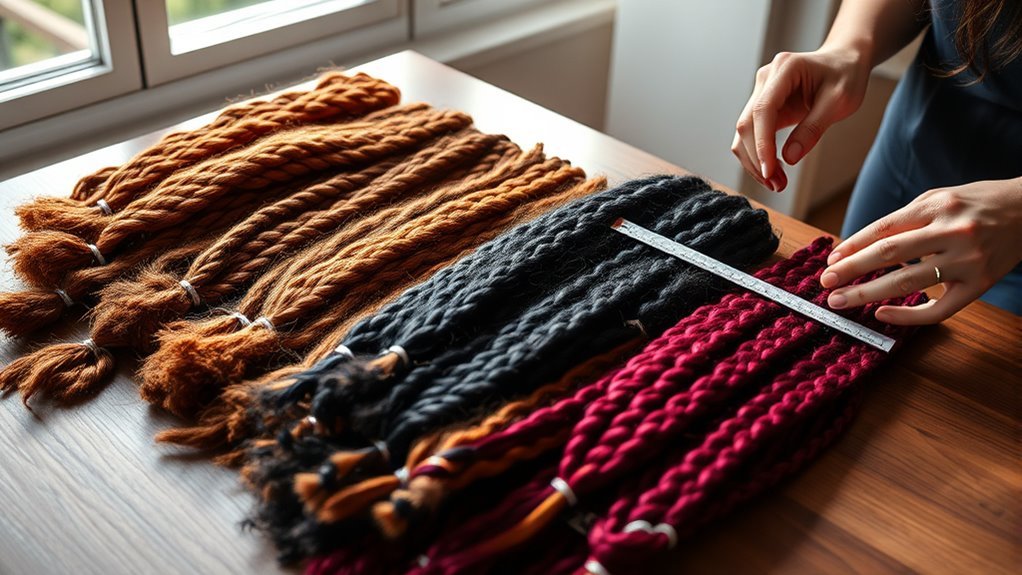
How Many Packs of Braiding Hair for Box Braids? The Complete Answer
If you’ve ever tried to figure out how many packs of braiding hair you need for box braids, you’re not alone. Many people struggle with buying just the right amount—too little means multiple trips to the store, and too much can feel like wasted money.
Getting the perfect amount helps your braids look full and fabulous without the hassle.
You’ll generally need between 4 to 8 packs of braiding hair for box braids, depending on your hair length, braid size, and how full you want your braids to look. Thinner, smaller braids require more packs, while larger, chunkier braids need fewer.
Your hair texture also matters—coarser textures usually need more packs for volume. Keep in mind how you plan to style and maintain your braids—you might want to adjust your purchase accordingly.
There’s plenty more to reflect on to get the perfect look.
Key Takeaways
- Typically, 4 to 8 packs of braiding hair are needed for box braids, depending on braid size and fullness.
- Smaller, tighter braids require more packs, while larger, chunkier braids need fewer packs.
- Hair texture influences pack quantity; coily hair usually needs more packs for volume than fine or straight hair.
- Weight per pack and natural hair length affect how many packs are necessary for complete coverage.
- Proper storage and preparation can stretch braiding hair, potentially reducing the number of packs required.
How Many Packs of Braiding Hair Do You Need for Box Braids?
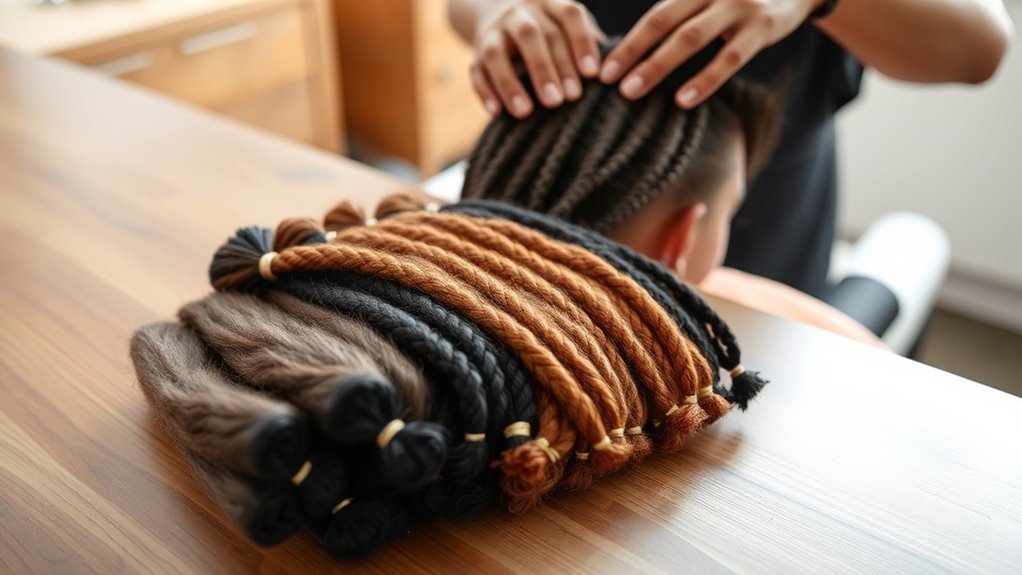
How many packs of braiding hair do you actually need for box braids? The answer depends on a few factors, but generally, most people use between 4 to 8 packs.
If you want thicker braids or a fuller look, you’ll lean toward the higher end. Using the right braiding techniques can make a difference too. Tighter, smaller braids require more hair, while larger, chunkier braids need less.
How Hair Length Affects Packs Needed for Box Braids
Your hair length plays an essential role in determining how many packs of braiding hair you’ll need for box braids. If your natural hair is shorter, you might need fewer packs because the braiding hair will add the desired length and thickness.
Conversely, longer hair often requires more packs to fully cover and blend with your natural strands. Keep in mind, as your hair growth progresses, you might need to adjust the number of packs to maintain your style’s fullness and neatness.
Different styling techniques also affect how much braiding hair you’ll need. For example, when incorporating your natural hair into the braids for a seamless look, you might use less synthetic hair.
However, if you prefer extra length or volume, adding more packs will help you achieve that. Ultimately, factoring in your hair length and styling preferences guarantees you buy the right amount, avoiding waste or shortage during your box braid installation.
How Braid Size Changes the Amount of Braiding Hair You Need
When you go for smaller braids, you’ll need less hair for each one, but since you’ll be doing more braids overall, it can add up quickly. On the other hand, bigger braids use more hair each, so you’ll have fewer braids to do, which might mean you need fewer packs of hair. Knowing how this works helps you figure out just the right amount of braiding hair to get for your style.
Small Versus Large Braids
The size of your braids directly impacts the amount of braiding hair you’ll need to complete your style. If you choose small braids, you’ll use less hair per braid but need many more braids overall. This can increase the total amount of hair required.
On the other hand, large braids use more hair per braid but fewer braids overall, often balancing out the total hair needed. When deciding between small versus large braids, consider how each affects braid maintenance.
Smaller braids can be more time-consuming to care for but offer more versatile braid styles. Larger braids are easier to maintain but might limit styling options. Knowing these trade-offs helps you pick the right hair quantity and style that fits your lifestyle and preferences.
Hair Quantity Per Braid
Choosing the right braid size directly affects how much braiding hair you’ll need for each strand. The thickness of your hair and the desired braid durability play key roles in determining the quantity per braid. Here’s how braid size influences hair quantity:
- Thin Braids: Use less hair per braid, perfect for delicate hair thickness. They create lightweight styles but may sacrifice some braid durability.
- Medium Braids: Require a moderate amount of hair, balancing thickness and durability well for most hair types.
- Large Braids: Demand more hair to guarantee fullness and long-lasting braid durability, especially if your natural hair is thick.
Adjust your packs accordingly to match your braid size and desired look. That way, your style stays secure and fresh for weeks.
How Full Do You Want Your Box Braids to Look?
Think about how thick you want each braid to be and how big you’ll make the parts in between. These choices really affect how full your box braids will look, and they also determine how much hair you’ll need. Also, think about how much coverage you want across your entire head—that way, you can get the perfect style for you.
Desired Braid Thickness
How full do you want your box braids to look? Your desired braid thickness plays a big role in how many packs of braiding hair you’ll need. Different braid styles and hair types also affect this choice. Here’s how to decide:
- Thin Braids: If you prefer smaller, more delicate braids, you’ll need less hair per braid but more packs overall for volume. This style suits finer hair types well.
- Medium Braids: A balanced thickness offers a natural, versatile look and usually requires a moderate amount of hair, fitting most hair types.
- Thick Braids: For bold, chunky braids that stand out, plan on using more hair per braid, which means needing more packs, especially if you have thicker hair types.
Choosing your braid thickness helps you estimate how much hair to buy accurately.
Hair Parting Size
Your hair parting size directly impacts the overall fullness and style of your box braids. If you want a fuller look, choose smaller partings to create more braids, which adds volume and density. Conversely, larger partings mean fewer braids, resulting in a more spaced-out, airy appearance.
Mastering hair parting techniques is crucial for achieving the look you desire. Using ideal sectioning helps guarantee each braid is neat and uniform, enhancing the braid’s overall aesthetic.
Before you start, decide how full you want your braids to appear, then adjust the size of your partings accordingly. Remember, precise parting not only improves the style but also helps in estimating how many packs of braiding hair you’ll need for your project.
Overall Head Coverage
Deciding on overall head coverage plays a major role in determining the final look of your box braids. You’ll want to reflect on how full or light you prefer your braids, as this affects both the hair coverage and braid distribution across your scalp. Here’s what to keep in mind:
- Full Coverage: For thick, voluminous braids, opt for tighter braid distribution with smaller parts. This requires more packs of hair to maintain consistent coverage.
- Medium Coverage: If you want a balanced look, space your braids moderately. This uses fewer packs but still offers good hair coverage.
- Light Coverage: Larger parts and wider braid distribution create a lighter appearance. This needs the least hair but may expose more scalp.
Choose your style based on the hair coverage and braid distribution that best fits your desired fullness.
Calculating Packs Based on Your Hair Length and Thickness
To determine the right number of braiding hair packs, start by evaluating both the length and thickness of your natural hair. Hair density plays a major role here; thicker hair requires more packs to achieve full coverage. If your hair is dense, you’ll likely need 1-2 extra packs compared to someone with finer hair.
Also, consider your installation techniques. Some styles like single braids or crochet require more hair per braid, increasing pack usage. For longer hair, you’ll need more braiding hair to match the length and maintain a natural look. Shorter hair generally uses fewer packs since the braids are smaller.
To get an accurate estimate, measure your hair length and assess how thick your hair is. Then, adjust the number of packs based on these factors and the style you plan to install. This approach guarantees you buy enough hair without overspending or running short during your installation.
How Hair Brands and Pack Sizes Affect How Many Packs You Need
Because different hair brands offer varying pack sizes and hair weights, you might need to adjust how many packs you buy accordingly. When doing a hair brand comparison, you’ll notice some brands provide thicker bundles or longer strands, meaning fewer packs might be necessary. Pack size variations can greatly impact your total purchase.
Different brands offer varying pack sizes and weights, so adjust your purchase accordingly for the best value.
Here’s what to keep in mind:
- Weight per pack: Some brands sell 100g packs, others 120g or more. Heavier packs mean less bulk to buy.
- Length of hair in each pack: Longer braiding hair might cover more area, reducing the number of packs needed.
- Texture and density: Brands may vary in how full their hair feels. Denser packs can mean you need fewer overall.
Does Your Hair Texture Change How Many Packs You Should Buy?
Your hair texture really affects how many packs of braiding hair you’ll need. Since different textures have different volumes, you might have to adjust the amount you buy. Knowing your hair type is super helpful—it makes sure you don’t end up with too much or too little.
Hair Texture Types
Although braiding hair packs are often sold with general guidelines, the texture of your natural hair plays a crucial role in determining how many you’ll actually need. Your hair texture influences your protective styles, styling options, and maintenance routines, all affecting how much braiding hair to buy. Consider these points:
- Fine or Straight Hair: You might need fewer packs since your natural textures blend easily. But choose product recommendations that improve braid longevity and reduce slippage.
- Wavy or Curly Hair: Medium amounts work well, offering a balance between volume and manageability. Plus, they complement your color choices nicely.
- Coily or Kinky Hair: You’ll likely require more packs because of thick hair care needs and fuller protective styles.
Tailoring your purchase to your hair texture guarantees better braid longevity and smoother styling experiences.
Impact On Hair Volume
Hair texture directly influences your hair’s overall volume, which in turn affects how many packs of braiding hair you’ll need. If you have thick, coarse hair, you’ll require more packs to guarantee full coverage and proper volume maintenance.
On the other hand, fine or thinner hair might need fewer packs since your natural volume contributes to the braid’s fullness. Understanding your hair texture helps you choose the right amount, avoiding excess or shortage.
Also, consider your desired styling options. If you want fuller, chunkier braids, you might opt for extra packs regardless of texture. By tailoring the pack quantity to your hair volume and style goals, you guarantee a flawless finish without wasting products or compromising your look.
Adjusting Pack Quantity
Determining the right number of braiding hair packs depends largely on your hair texture, as it directly impacts how much synthetic hair you’ll need to achieve your desired style. Thicker, coarser hair usually requires more packs to blend seamlessly and provide enough volume. In contrast, finer hair may need fewer packs to avoid overwhelming your natural strands.
Here’s how to adjust your pack quantity:
- Assess Hair Texture: Coarser hair demands more packs for fullness; finer hair needs less.
- Consider Braid Style: Larger, chunkier braids use more hair; smaller, thinner braids use less.
- Match Hair Color: Choose a hair color that blends well, as mismatched shades may require extra packs to achieve uniformity.
Tips to Stretch Your Braiding Hair and Use Fewer Packs
When you want to make your braiding hair last longer, applying a few smart techniques can help you use fewer packs without compromising your style. Start with proper hair maintenance by keeping your scalp clean and moisturized; this prevents frizz and breakage, making your braids look fresh for weeks.
Next, use styling techniques like smaller, tighter braids, which require less hair per braid and stretch your supplies further. You can also try combining two thinner strands of hair to create fuller-looking braids without adding extra packs.
Another tip is to braid closer to the scalp to maximize hair length and volume, reducing the need for more hair. Finally, avoid excessive manipulation and rough handling, as this can cause shedding and shorten your braids’ lifespan.
How to Decide When to Buy Extra Packs of Braiding Hair
Knowing how to stretch your braiding hair can save you money, but sometimes you’ll still need extra packs to achieve your desired look. Deciding when to buy extra packs depends on a few key factors. Using smart hair buying tips will help you avoid running short mid-style.
Stretching braiding hair saves money, but knowing when to buy extra packs ensures your style stays flawless.
Here’s how to decide if you need extra packs:
- Length and thickness of braids: Longer or thicker braids require more hair. If you want a fuller look or longer braids, plan to purchase extra packs.
- Braiding style: Some styles, like jumbo or knotless box braids, need more hair due to their size or technique.
- Hair texture and shrinkage: If your natural hair shrinks or is very thick, you’ll use more braiding hair to cover it properly.
How to Store Unused Braiding Hair for Your Next Installation
Storing unused braiding hair properly can save you time and money for your next installation. To keep your braiding hair fresh, start by gently detangling it with your fingers or a wide-tooth comb. Avoid harsh brushing to prevent frizz and damage.
Next, use airtight packaging solutions like resealable plastic bags or vacuum-sealed pouches to protect the hair from moisture and dust. Label each package with the hair type and color for easy identification.
When storing, keep the hair in a cool, dry place away from direct sunlight to prevent fading and brittleness. You can also wrap the hair bundles in silk or satin scarves, which are excellent hair preservation techniques that reduce friction and static.
Frequently Asked Questions
What Tools Do I Need for Installing Box Braids?
You’ll need a rat-tail comb, hair clips, and moisturizing spray for installing box braids. Depending on your hair type, using a detangler can help manage knots.
Choose the right installation techniques, like braid size and tension, to protect your scalp and natural hair. Don’t forget edge control for a sleek finish and a mirror for checking your progress.
These tools and methods make your box braid installation smooth and long-lasting.
How Long Does It Take to Install Box Braids?
The installation time for box braids usually takes between 4 to 8 hours, depending on your hair length and braid size. To speed things up, follow preparation tips like detangling and sectioning your hair beforehand.
Having all your tools ready and enlisting a skilled stylist can also help. Remember, patience is key. Rushing can affect the braid quality and durability, so take your time for the best results.
Can I Wash My Box Braids Immediately After Installation?
You shouldn’t wash your box braids immediately after installation because your scalp needs time to adjust, and the braids need to set properly. For good braid hygiene, wait at least 48 hours before washing to avoid loosening or frizzing.
Follow installation tips like gently cleansing your scalp with a diluted shampoo or braid spray. Always dry your braids thoroughly to keep them fresh and prevent buildup or itching.
How Do I Maintain and Care for Box Braids?
Think of your box braids as a garden needing regular care. To maintain them, you’ll want to focus on moisture retention by applying a light leave-in conditioner or braid spray every few days.
Keep your scalp health in check by gently cleansing with a diluted shampoo and massaging your scalp to boost circulation. Cover your braids at night with a silk scarf to prevent frizz and dryness, ensuring your style stays fresh longer.
Are There Any Scalp Treatments Recommended During Box Braiding?
Yes, you should definitely include scalp care during your box braids. Using natural oils like tea tree or peppermint oil helps soothe your scalp and provides itch relief.
You can also try a light, moisturizing scalp spray to keep your skin hydrated without disturbing the braids. Don’t scratch; instead, gently massage your scalp to boost circulation.
Keeping your scalp clean and moisturized is key to healthy hair growth while wearing box braids.
Conclusion
When planning your box braids, keep in mind that most people use between 5 to 12 packs of braiding hair, depending on length and thickness. Curiously, those opting for longer braids often need up to 50% more hair!
Knowing your hair type and desired fullness helps you avoid running out mid-installation. Always buy an extra pack just in case, and store unused hair properly to save for next time.
This way, you’ll get flawless braids every time! Remember, understanding how many packs of braiding hair for box braids you need makes all the difference in achieving the perfect look.