How Much Hair Do I Need for a Sew In? the Complete Answer
Struggling to figure out how much hair you need for a sew-in? You’re not alone. Many people find it tricky to determine the right amount of hair to achieve a flawless look without overspending or falling short.
Getting the perfect fit can be confusing, especially with so many variables to consider.
You’ll generally need 2 to 3 bundles of hair for a basic sew-in, but factors like hair length, texture, and style impact the exact amount. Longer hair covers more area and usually means fewer bundles, while finer or shorter hair might need extra for fullness.
Thick or curly hair often requires less, whereas straight hair may need more. If you want to get the perfect fit and locate quality bundles, there’s plenty more to uncover.
Key Takeaways
- Typically, 2-3 bundles of hair are needed for a basic sew-in for natural coverage and fullness.
- Longer hair lengths require fewer bundles, while shorter hair needs more for the desired volume.
- Hair texture affects bundle quantity. Finer or straight hair needs more bundles than thicker or tightly curled hair.
- Sew-in style complexity impacts hair amount. Simple styles need fewer bundles than layered or voluminous looks.
- Measure natural hair length accurately and choose quality bundles from trusted vendors for the best sew-in results.
How Much Hair Do You Need for a Basic Sew-In?
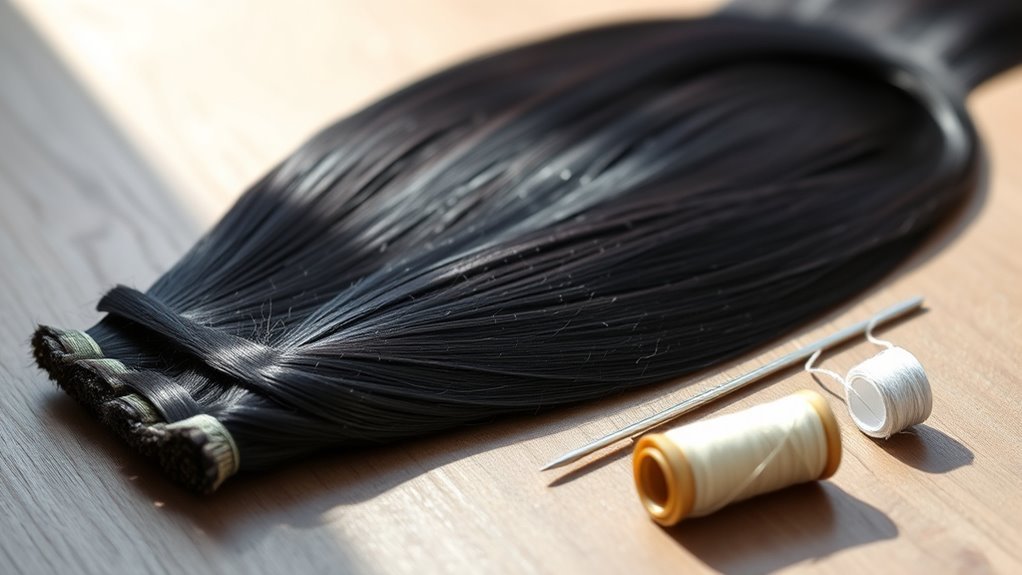
For a basic sew-in, you’ll typically need about two to three bundles of hair. The exact amount depends mainly on your hair density and the sew-in techniques you choose. If you have thick or dense hair, you might lean toward three bundles to guarantee full coverage and volume.
For thinner hair, two bundles often suffice, especially if you want a natural look without excessive bulk. Sew-in techniques also play a role in determining how much hair you need. For example, a basic sew-in with straight tracks may require fewer bundles than more intricate patterns or styles that add volume and length.
It’s important to take into account your desired final look and how your natural hair’s density will blend with the extensions. By matching your hair density with the right sew-in techniques, you’ll achieve a seamless, natural finish without using too much or too little hair.
How Does Hair Length Affect Hair Quantity?
When you go for longer hair in your sew-in, you’ll actually need less since it covers more area. It’s pretty simple—longer strands spread out more, so fewer bundles do the job.
Now, if you’re thinking about shorter hair, you’ll need more bundles to get that full, voluminous look you want. So, knowing this little trick helps you pick just the right amount without spending too much.
Longer Hair Uses Less
Longer hair requires less quantity for a sew-in because each bundle covers more surface area. When you choose longer hair, the hair weight is distributed more efficiently, meaning you won’t need as many bundles to achieve fullness. This not only saves money but also reduces the bulk on your scalp, enhancing comfort.
The style impact of longer hair is significant too. It creates a sleek, flowing look with fewer bundles.
Consider these points about longer hair for your sew-in:
- Each bundle extends further, covering more of your head
- Hair weight feels lighter due to fewer bundles needed
- Style impact is amplified with longer lengths
- Less hair quantity means quicker installation and easier maintenance
Opting for longer hair gives you a fuller style with less effort.
Shorter Hair Requires More
Although shorter hair may seem easier to manage, you’ll actually need more bundles for a sew-in to achieve the same fullness as longer hair. Because shorter strands cover less surface area, you require extra bundles to create volume and length that matches your desired look.
When planning your hair styling, factor in this need to avoid running short mid-installation. Using more bundles guarantees a seamless, natural finish without gaps or thin spots.
Moreover, keep in mind maintenance tips specific to shorter sew-ins, like frequent moisturizing and gentle handling, to maintain the style’s integrity. By understanding how hair length affects quantity, you can better plan your sew-in, saving time and money while achieving the perfect, full-bodied result you want.
Does Hair Texture Affect How Much Hair You Need?
How does your hair texture influence the amount of hair you’ll need for a sew-in? Your hair’s natural texture plays a significant role because hair density factors and curl pattern impact how much extension hair you require.
For example, thicker, denser hair means you might need less added volume, while finer hair could need more to achieve fullness. In the same way, tighter curls can create a fuller look with fewer bundles, whereas straighter textures might require extra bundles for volume and coverage.
Consider these texture-related points when planning your sew-in:
- Coarser hair may need fewer bundles due to natural volume.
- Loose curls or waves often demand more hair for a balanced look.
- High-density hair provides a natural base, reducing extension needs.
- Curl pattern impact affects how many bundles blend seamlessly.
Understanding your hair texture helps you avoid overbuying or underestimating the amount of hair needed.
How to Measure Your Natural Hair for a Sew-In
Before you start your sew-in, you’ll want to measure your natural hair to determine how much extension hair you’ll need. Accurate length determination guarantees your sew-in looks seamless and natural.
Begin by choosing your hair measurement techniques carefully. Use a flexible measuring tape or a ruler, and work with clean, detangled hair for the best results.
Start measuring from the root to the tip of your longest hair strand. Take multiple measurements in different sections, like the crown, sides, and nape, to get an average length. This helps account for any variations in hair growth. Record these numbers precisely.
How Many Bundles Do Different Sew-In Styles Require?
Once you’ve measured your natural hair accurately, the next step is figuring out how many bundles you’ll need for your desired sew-in style. The number of bundles depends on the look you want and the installation techniques you plan to use. Proper hair care during and after installation also affects how your sew-in holds up.
Here’s a quick guide to help you decide:
- Natural, everyday style: 2-3 bundles usually suffice for a full, natural look.
- Longer lengths (16”+): 3-4 bundles provide enough volume without looking thin.
- Thick, voluminous styles: You might need 4 or more bundles to achieve fullness.
- Creative or layered styles: Varies depending on layers and parting; 3-4 bundles are typical.
Which Hair Types Are Best for Volume vs. Length?
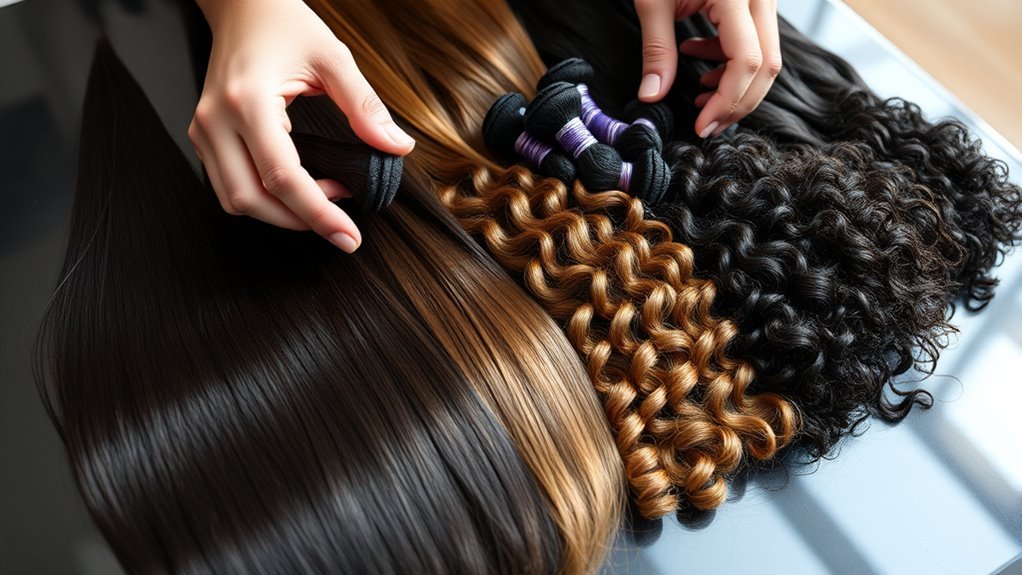
You’ll want to choose your hair type based on whether you’re aiming for volume or length. Thicker, textured hair gives you more fullness. On the other hand, straighter, finer strands are better if you’re going for longer looks. Knowing these differences makes it easier to pick the right bundles for your sew-in.
Hair Texture for Volume
Although choosing the right hair texture may seem straightforward, it plays an essential role in achieving the volume or length you want with a sew-in. The texture impact on your sew-in determines how natural volume appears and influences the overall look. Some hair types naturally offer more fullness, while others focus on sleek length.
Consider these hair textures for volume:
- Curly and coily textures deliver maximum natural volume with minimal effort.
- Wavy textures balance volume and length, creating a soft, full appearance.
- Straight textures emphasize length but may require teasing for extra volume.
- Fine textures can gain volume through layering and styling techniques.
Understanding your desired volume helps you pick the best texture for a fuller, more natural sew-in.
Length Preferences for Sew-Ins
How do you decide between prioritizing length or volume when choosing hair for your sew-in? If you want long, flowing locks, opt for straight or body wave hair types. They offer sleek styling options and a polished look.
On the other hand, if volume is your goal, curly or kinky textures provide natural fullness and bounce. Keep in mind that longer hair requires more maintenance, so consider your hair care routine to keep your sew-in looking fresh.
Curly textures might need more moisturizing products, while straight hair demands regular detangling. Ultimately, your choice depends on your lifestyle and desired style.
Match your hair type to the styling options you prefer, and make sure your hair care routine supports the health and longevity of your sew-in.
How to Adjust Hair Quantity for Thick vs. Thin Hair
Since hair density varies widely, adjusting the amount of hair for a sew-in is crucial to achieve a natural look. If you have thick hair, you’ll likely need less hair than someone with thin hair because your natural volume adds fullness. Conversely, thin hair requires more wefts to create the appearance of thickness without exposing your scalp.
Here’s how to adjust hair quantity based on your hair type:
For thick hair, use 2-3 bundles to avoid bulkiness and maintain comfort. For thin hair, opt for 3-4 bundles to guarantee full coverage and a seamless blend. Also, consider your desired style length; longer styles might need extra bundles regardless of density. And don’t forget to communicate your hair texture with your stylist to match extensions for a natural finish.
Where to Find Quality Hair for Your Sew-In
You’ll want to start by checking out trusted hair vendors known for quality and consistency. Online hair marketplaces are great because they offer a wide range of options, so it’s easy to compare prices and read reviews.
And don’t forget to swing by local beauty supply stores, too. There, you can actually see and feel the hair before making a purchase, which can be a big help.
Trusted Hair Vendors
Finding trusted hair vendors is essential when aiming for a flawless sew-in that lasts. You want to choose suppliers who offer premium quality hair with ethical sourcing to guarantee both beauty and integrity. Reliable vendors provide consistent texture, minimal shedding, and natural shine, making your sew-in look seamless and feel comfortable.
Consider these trusted hair vendors:
- Vendors with transparent sourcing practices
- Brands specializing in virgin or Remy hair
- Sellers offering detailed product information and reviews
- Vendors providing excellent customer service and return policies
Online Hair Marketplaces
Many online hair marketplaces offer a wide selection of quality hair for your sew-in, making it easier to compare prices, textures, and vendors all in one place. You can quickly find great bundle deals that suit your style and budget.
These platforms often provide customer reviews, helping you assess hair quality before buying. Plus, you save time by shopping from home.
| Marketplace | Highlights |
|---|---|
| AliExpress | Affordable bundle deals |
| Luxy Hair | Premium hair quality |
| HairVivi | Wide texture variety |
When choosing, focus on seller ratings and product descriptions to guarantee you get the best hair quality. Online marketplaces simplify your search for perfect sew-in bundles without compromising on quality or price.
Local Beauty Supply
Three key benefits make local beauty supply stores a great option for sourcing quality hair for your sew-in. First, you get immediate product availability, so there’s no waiting for shipping. Second, you can physically inspect the hair to verify it meets your standards. Third, local beauty supply stores often stock hair that aligns with local trends, so you’re more likely to find styles and textures that suit your vibe.
When shopping at your local beauty supply, consider asking staff for recommendations based on current local trends. Also, check for authentic, high-quality hair brands. Comparing bundles in person helps you get a feel for texture and thickness. Don’t forget to explore exclusive in-store promotions or bundles.
This hands-on approach saves time and helps you secure the perfect hair for your sew-in.
How to Buy the Right Amount of Hair
Selecting the right amount of hair for your sew-in depends on several factors, including the desired volume, length, and the thickness of your natural hair. You’ll want to balance hair quality and bundle pricing to get the best value without compromising look or feel.
Higher quality hair might cost more per bundle but often requires fewer bundles overall.
Use this quick guide to estimate your hair needs:
| Hair Length | Hair Thickness | Bundles Needed | Notes |
|---|---|---|---|
| 10-14 inches | Thin to Medium | 2-3 bundles | Shorter styles, less volume |
| 10-14 inches | Thick | 3-4 bundles | Extra volume required |
| 16-22 inches | Thin to Medium | 3 bundles | Medium length styles |
| 16-22 inches | Thick | 4 bundles | For fuller, longer styles |
Tips to Stretch Your Hair Supply Without Losing Style
If you want to make your hair bundles last longer without sacrificing your look, you can adopt a few smart techniques. Stretching your hair supply not only saves money but also keeps your sew-in looking fresh. Incorporate these hair maintenance tips to maximize your investment while exploring budget-friendly options.
Alternate between different hairstyles to reduce constant wear on the same sections. Use gentle cleansing and conditioning methods to prevent damage and tangling. Avoid excessive heat styling; when you do, apply heat protectants to preserve hair integrity.
Store unused bundles properly in a cool, dry place to maintain their quality.
Frequently Asked Questions
How Long Does a Sew-In Typically Last Before Needing a Redo?
A sew-in typically lasts about 6 to 8 weeks before needing an extension refresh. You’ll notice the sew-in longevity depends on how well you care for your hair and scalp.
If you keep your natural hair clean and moisturized, your sew-in can stay fresh longer. However, after those weeks, it’s best to redo the sew-in to avoid tension on your scalp and maintain a natural look.
What Are the Best Maintenance Practices for Sew-In Extensions?
Think of your sew-in extensions as a delicate garden you’ve got to nurture daily. You should wash your hair gently every 1-2 weeks to keep buildup away without loosening the tracks.
When it comes to styling, avoid heavy products or too much heat to prevent damage. Always detangle carefully from ends to roots, and wrap your hair at night to keep it fresh.
These simple habits will help your sew-in look flawless for longer.
Can Sew-Ins Cause Damage to Natural Hair?
Yes, sew-ins can cause damage to your natural hair if you’re not careful. Tight braiding or leaving them in too long can lead to breakage and tension on your scalp, harming your hair health.
However, when done properly and maintained well, sew-ins act as a great protective styling option. They help to shield your natural hair from daily wear and tear. Always listen to your hair and give it breaks to stay healthy.
How Do I Care for My Scalp With a Sew-In?
To care for your scalp with a sew-in, prioritize scalp hygiene by gently cleansing your scalp every few days using a diluted shampoo or a scalp cleanser. This helps avoid buildup.
Use a lightweight, soothing oil or spray to keep your scalp moisturized and prevent itchiness. If you experience itch relief issues, try a cooling scalp treatment or anti-itch spray.
Avoid scratching to protect your natural hair and maintain a healthy scalp throughout your sew-in.
Are Sew-Ins Suitable for All Hair Types and Conditions?
Oh, sure, sew-ins magically suit every hair type if you enjoy constant tugging and breakage! In reality, hair type compatibility matters a ton. Some textures handle installation techniques better than others.
If your hair’s fragile or fine, a sew-in might stress it out unless done carefully. So before jumping in, consider your hair’s strength and consult a pro to choose installation methods that keep your locks healthy and fabulous.
Conclusion
Now that you know how much hair you need for a sew-in, you can shop smarter and avoid waste. Most people use about 2 to 3 bundles for a full sew-in, but if your hair is thick or you want a longer style, you might need more.
Remember, measuring your natural hair and considering texture helps you get the perfect look without overspending. With these tips, you’re ready to rock your sew-in confidently and achieve the hairstyle you desire. Understanding how much hair you need for a sew-in makes all the difference!