Deodorant Guide: What to Know Before You Buy
Struggling to find a deodorant that actually works without irritating your skin? You’re not alone. Many people wrestle with unpleasant odor, sensitivity, and choosing the right product for their lifestyle.
Finding a deodorant that fits your needs can feel overwhelming, but we’ve got you covered with tips to make the process easier.
You’ll want a deodorant that controls odor by targeting bacteria while suiting your skin type and lifestyle. Consider if you prefer sprays, sticks, or gels, and pick scents that match your taste without irritating your skin.
Look out for ingredients like aluminum or fragrances that might cause sensitivity. Applying on clean, dry skin boosts effectiveness and helps avoid stains.
Keep an eye on how your skin reacts to switch smoothly, and you’ll find tips to make the best choice for lasting freshness.
Key Takeaways
- Deodorants target odor-causing bacteria, not sweat, to prevent unpleasant smells and boost confidence.
- Choose between sprays, sticks, and gels based on how you like to apply them and what fits your lifestyle.
- Consider your skin type and sensitivity. Hypoallergenic and gentle ingredient options can help prevent irritation.
- Test small amounts first, and always apply deodorant to clean, dry skin for the best results and comfort.
- Replace deodorants after 12 to 24 months or if you notice changes in texture, smell, or if your skin reacts differently.
How Deodorants Work to Stop Odor and Sweat
Although sweat itself doesn’t cause odor, deodorants work by targeting the bacteria that break down sweat and produce unpleasant smells. When sweat glands release moisture, odor-causing bacteria feed on it, breaking down sweat into odoriferous compounds.
You might not realize it, but those bacteria are the real culprits behind body odor. Deodorants contain ingredients that either kill or inhibit these bacteria, preventing them from thriving on your skin. This stops the formation of bad smells before they start.
Some deodorants also contain compounds that mask odors with pleasant fragrances, giving you an added freshness boost. By applying deodorant to areas with active sweat glands, you reduce the environment where odor-causing bacteria multiply. This helps you stay confident and odor-free throughout the day.
Understanding how deodorants work can help you choose the right product and apply it effectively to keep odor-causing bacteria in check.
Types of Deodorants: Sprays, Sticks, and Gels
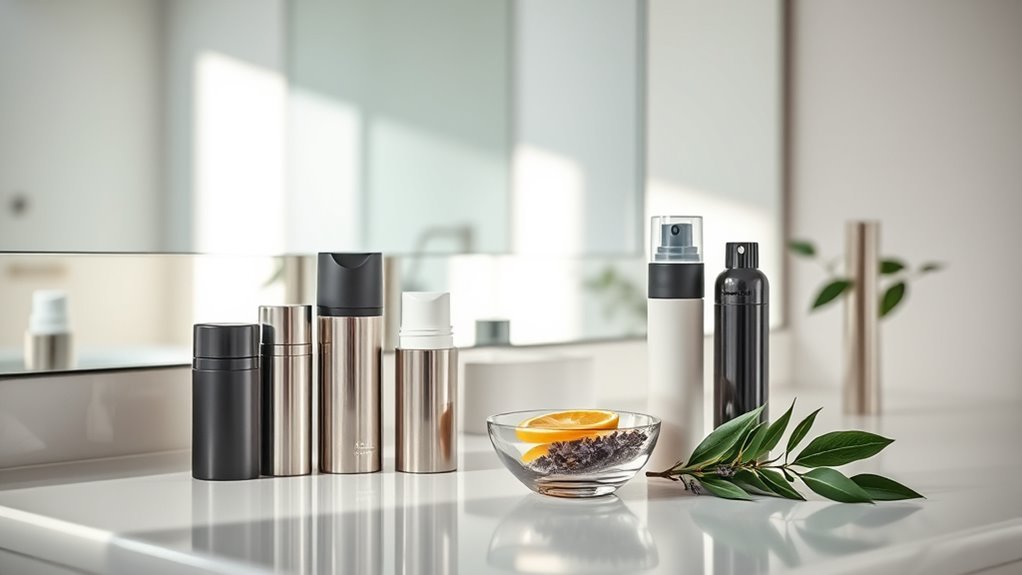
You’ll find three main types of deodorants on the market: sprays, sticks, and gels. Each has formulation differences that affect how they work and feel on your skin. Spray deodorants dry quickly and often come in travel sizes, making them perfect for on-the-go use.
The three main deodorant types—sprays, sticks, and gels—offer unique formulas for different skin-feel and convenience.
Sticks provide solid coverage and are easy to apply without residue, with many roll-on options available for those who prefer a smoother feel. Gels offer a cooling sensation and usually have clear application, which helps avoid white marks.
When comparing price, sprays tend to be affordable, while some eco-friendly choices come at a premium. Scented varieties abound in all types, so you can find your perfect match. Your usage frequency might influence which type suits you best, as gels may require less frequent application.
Consider brand recommendations for formulation quality. Look for travel sizes for convenience. Try eco-friendly choices to reduce waste. Test different scented varieties to find your favorite.
Choosing the Right Deodorant for Your Needs
How do you pick the right deodorant when options vary so much? Start by considering your scent preferences. Do you want something fresh and subtle or bold and long-lasting? A scent you love will boost your confidence throughout the day.
Next, think about your skin type. If you have sensitive skin, look for deodorants labeled hypoallergenic or formulated without harsh chemicals to avoid irritation. For oily skin, a lightweight, non-greasy formula works best, while dry skin may benefit from moisturizing ingredients.
Also, factor in your daily activities. If you’re active, choose a deodorant with strong sweat protection. Testing small amounts can help you determine how well it suits your body chemistry and comfort.
Ultimately, choosing the right deodorant means balancing your scent preferences with what best supports your skin type and lifestyle. That way, you stay fresh and comfortable all day.
Essential and Harmful Ingredients in Deodorants
Understanding the ingredients in your deodorant is key to making a safe and effective choice. You want to maximize ingredient benefits while minimizing chemical risks. Some components actively fight odor and bacteria, while others may irritate your skin or cause unwanted side effects.
Knowing deodorant ingredients helps balance effectiveness with safety for healthy, odor-free skin.
Here are essential and harmful ingredients to know:
- Aluminum Compounds: Control sweat by blocking pores but may pose chemical risks for sensitive users.
- Antimicrobial Agents: Ingredients like triclosan reduce bacteria, helping control odor effectively.
- Fragrances and Parabens: Common for scent and preservation but can cause irritation or allergic reactions.
- Natural Moisturizers: Ingredients such as aloe vera soothe skin and offer ingredient benefits beyond odor control.
Natural vs. Clinical-Strength Deodorants: Which Is Best?
Choosing the right deodorant often comes down to balancing ingredient benefits with your personal needs. Natural deodorants offer natural benefits like gentler formulas and fewer synthetic chemicals, appealing if you prefer plant-based or fragrance-free options. On the other hand, clinical-strength deodorants provide superior clinical effectiveness, especially if you struggle with heavy sweating or odor.
When you compare ingredients, natural versions rely on baking soda, essential oils, or plant extracts, while clinical options often use aluminum compounds to block sweat glands. Your user preferences play a big role here. If you prioritize ingredient transparency and mildness, natural deodorants may suit you better. But if you need strong odor and sweat control, clinical-strength might be your go-to.
Application techniques also differ. Natural deodorants may require more frequent reapplication, while clinical formulas often work longer. While scent longevity varies, clinical products typically last longer, though this depends on your activity level and skin chemistry. Ultimately, weigh these factors to decide which deodorant fits your lifestyle best.
Picking a Long-Lasting Deodorant Scent
What makes a deodorant scent truly last all day? It’s a mix of fragrance intensity and how well the scent suits your personal preferences. When picking a long-lasting deodorant scent, you want something that stays noticeable without being overpowering.
Consider how the fragrance interacts with your natural body chemistry, as this affects how it develops and fades.
Here’s how to choose a lasting scent:
Look for deodorants labeled with “long-lasting” or “24-hour protection.” Choose fragrance intensity that matches your style, subtle for everyday or stronger for special occasions.
Test scents on your skin before buying to see how they hold up throughout the day. Keep your personal preferences front and center; a scent you love will make you feel confident all day.
How to Apply Deodorant for Best Results
Once you’ve found a deodorant scent that lasts, applying it correctly helps maximize its effectiveness throughout the day. Many deodorant myths suggest you should apply it after showering, but timing and technique matter more. For best results, apply deodorant to clean, dry skin to facilitate better absorption and odor control.
Here’s a quick guide to effective application techniques:
| Step | What to Do | Why It Helps |
|---|---|---|
| 1. Clean Skin | Apply after shower or wash | Removes sweat and bacteria |
| 2. Dry Skin | Make sure the skin is fully dry | Prevents dilution and irritation |
| 3. Even Apply | Use smooth, even strokes | Covers all sweat-prone areas |
| 4. Allow Dry | Let it dry before dressing | Avoids stains and improves hold |
Avoid over-applying; more isn’t always better. Stick to these application techniques to get the most from your deodorant without falling for common deodorant myths.
How to Avoid Deodorant Irritation
To avoid deodorant irritation, first figure out what’s causing your skin to react. It could be a specific ingredient or formula. Then, try looking for products with gentle ingredients that won’t make your skin red or itchy. Picking the right kind of deodorant can really help keep your skin feeling comfortable all day long.
Identify Irritation Triggers
Although deodorants are designed to keep you fresh, certain ingredients can irritate your skin. To avoid discomfort, you need to identify your personal irritation triggers. Start by practicing ingredient awareness. Check labels carefully for common irritants.
Pay attention to your scent sensitivity, as fragrances often cause reactions. Keep a simple record of products you use and any skin issues that follow.
Watch out for these common triggers:
- Alcohol, which can dry and sting your skin
- Artificial fragrances that may provoke allergies
- Aluminum compounds linked to irritation in some users
- Propylene glycol, often causing redness or itchiness
Choose Gentle Ingredients
Knowing which ingredients irritate your skin helps you pick deodorants that won’t cause discomfort. If you have sensitive skin, avoid harsh chemicals like alcohol or synthetic fragrances. These often cause redness or itching.
Instead, look for gentle ingredients that soothe and protect your skin while providing odor control. Understanding ingredient benefits helps you select products that keep you fresh without irritation.
| Ingredient | Benefit |
|---|---|
| Aloe Vera | Soothes and hydrates |
| Coconut Oil | Moisturizes and fights bacteria |
| Shea Butter | Softens skin |
| Baking Soda* | Neutralizes odor (use cautiously) |
| Chamomile Extract | Calms inflammation |
*Baking soda may irritate very sensitive skin. Test before regular use.
Switching Deodorants Without Skin Problems
When you’re switching deodorants, it’s best to take it slow. Try using the new product every other day at first—this gives your skin time to adjust.
Keep an eye on how your skin reacts, especially if it’s sensitive. This gradual approach really helps you avoid irritation and makes it easier to find the best fit for your needs.
Gradual Product Transition
Since your skin may react differently to new ingredients, you should switch deodorants gradually to avoid irritation. Adapting slowly helps your skin adjust to new product formulations and scent preferences without causing discomfort. Here’s how to do it effectively:
Start by using your new deodorant every other day while continuing your old one on alternate days. Pay attention to how your skin responds, especially to different ingredient blends. Mix small amounts of the new deodorant with the old to ease the change. Avoid switching abruptly, which can shock your skin and lead to irritation or rashes.
Skin Sensitivity Awareness
Adjusting to a new deodorant means paying close attention to how your skin reacts, especially if you have sensitive skin. Start with sensitivity testing by applying a small amount on your wrist or behind your ear.
Check ingredient labels for potential irritants or fragrance allergies. Patch testing helps identify if the product suits your skin type. Opt for hypoallergenic options if you experience irritation.
Here’s a quick guide to help you switch safely:
| Step | Action | Tip |
|---|---|---|
| 1 | Read ingredient labels | Avoid known allergens |
| 2 | Conduct patch testing | Apply on small skin area |
| 3 | Observe for irritation | Wait 24-48 hours |
| 4 | Try hypoallergenic products | Reduce risk of reactions |
| 5 | Adjust based on skin type | Dry, oily, or sensitive skin |
When to Toss Your Old Deodorant for Freshness
Knowing the right time to toss your old deodorant can save you from unpleasant odors and skin irritation. Deodorants don’t last forever; each has a product shelf life, usually around 12 to 24 months. Using a deodorant past its prime can cause it to lose effectiveness or even irritate your skin.
Watch for expiration signs like changes in smell, texture, or color. If your deodorant smells off or feels gritty, it’s time to part ways.
Keep these tips in mind to know when to replace your deodorant:
- Check the packaging for an expiration date or period-after-opening symbol.
- Notice any unusual odor or texture changes.
- Replace deodorant if it causes itching, redness, or discomfort.
- Avoid using deodorants that have been stored in extreme heat or moisture.
Frequently Asked Questions
Can Deodorant Affect Clothing Colors or Fabrics?
Yes, deodorant can affect clothing colors and fabrics. You’ll want to focus on stain prevention by choosing formulas that don’t leave white marks or yellow stains. To protect your clothes, apply deodorant sparingly and let it dry before dressing.
Paying attention to fabric care also helps; some delicate materials react poorly to certain ingredients. By being mindful, you can keep your clothes looking fresh without compromising your deodorant’s effectiveness.
Are Deodorants Safe to Use During Pregnancy?
Yes, deodorants are generally safe to use during pregnancy, but you should check ingredients carefully. Some chemicals may raise concerns, so choosing natural alternatives can give you peace of mind about pregnancy safety.
Look for products free of parabens, phthalates, and aluminum compounds. If you’re unsure, consult your healthcare provider to find deodorants that protect you and your baby without risking irritation or harmful exposure.
How Should Deodorant Be Stored to Maintain Effectiveness?
You should store deodorant in a cool, dry place to maintain its effectiveness. Avoid exposing it to extreme storage temperatures, like excessive heat or freezing cold, as this can degrade the formula.
Keep it away from direct sunlight and humidity, which also shorten its shelf life. By doing this, you’ll guarantee the deodorant stays fresh and works well throughout its intended use period.
Can Deodorant Cause Allergic Reactions Beyond Skin Irritation?
Deodorant can be like a hidden storm inside a calm sky. It might trigger more than just skin irritation.
If you have fragrance sensitivity or ingredient allergies, you could experience sneezing, watery eyes, or even respiratory issues. Your body’s reaction goes beyond a simple rash, signaling a deeper disturbance.
Always check labels carefully. If you notice unusual symptoms, it’s best to stop using the product and consult a healthcare professional.
Is It Necessary to Use Deodorant Every Day?
You don’t have to use deodorant every day. It really depends on your daily habits and personal preferences.
If you sweat a lot or want to feel fresh, applying it daily can help. But if you stay indoors or don’t sweat much, skipping a day might be fine.
Listen to your body and adjust based on how you feel and your comfort level. It’s all about what works best for you.
Conclusion
Now that you’ve got the lowdown on deodorants, you can make a choice that really sticks. Whether you lean toward natural options or need clinical strength, picking the right one will keep you fresh and confident all day.
Just remember, switching brands isn’t always easy, so ease into it to avoid irritation. Toss out old deodorants when they lose their punch, and you’ll be ready to face the day without breaking a sweat.
Choosing the right deodorant is key to feeling your best, so keep these tips in mind when making your next purchase.