Hair Dye Guide: What to Know Before You Buy
Struggling to find the perfect hair dye that suits you can feel overwhelming, and you’re not alone. Many people want vibrant, long-lasting color but worry about choosing the right shade or damaging their hair in the process.
If you’ve ever felt unsure about which product to pick or how to care for your dyed hair, this guide is here to help.
Before buying hair dye, identify your skin undertone to pick a flattering color and choose between semi-permanent or permanent dye based on your commitment level.
Prepare your hair with deep conditioning and avoid heat styling to protect it. Always perform a patch test to avoid allergic reactions.
Use color-safe products and avoid common mistakes like overprocessing to keep your color vibrant longer.
Learn how to fix color errors and when to seek professional help to get the best results.
Key Takeaways
- Choose between semi-permanent and permanent dyes based on how long you want the color to last and how it might affect your hair’s health.
- Match your hair color to your skin undertone to make sure the look is flattering and natural.
- Always do a patch test 24 to 48 hours before dyeing to avoid any allergic reactions.
- Prepare your hair by deep conditioning and skip heat styling to keep it protected before dyeing.
- Use color-safe shampoo and conditioners, and protect your hair from UV exposure to keep the color vibrant.
Types of Hair Dye: What You Need to Know
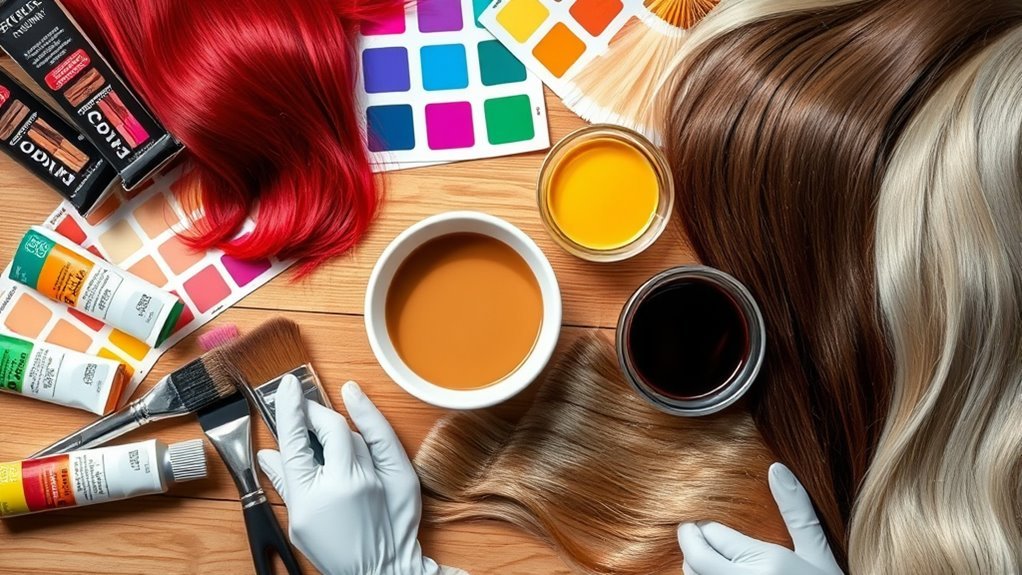
Choosing the right type of hair dye can make all the difference in achieving the look you want. You’ll find several options, but semi-permanent choices are perfect if you want to try out different looks without long-term commitment. These dyes gradually wash out and don’t penetrate the hair shaft deeply, so they’re gentler and less damaging.
If you prefer a more lasting change, permanent dyes alter your hair’s natural pigment but require careful upkeep.
Color mixing is another aspect you might enjoy, especially with semi-permanent choices. You can blend different shades to create a custom hue tailored to your style. This flexibility lets you investigate unique colors without locking yourself into one tone.
Whether you want subtle improvement or bold transformation, understanding these types helps you pick the best dye for your needs. Keep in mind that each choice comes with its own maintenance routine and results, so consider what fits your lifestyle.
How to Choose the Right Hair Color for Your Skin Tone
How can you find a hair color that truly complements your skin tone? Start by identifying your skin undertones, whether cool, warm, or neutral. Cool undertones usually have hints of blue or pink, while warm undertones lean towards yellow or golden hues.
Once you know this, you can select seasonal shades that improve your natural complexion. For cool undertones, think icy blondes, ash browns, or jewel-toned reds. Warm undertones pair beautifully with golden blondes, rich chestnuts, or coppery reds.
If you have neutral undertones, you’re lucky. You can experiment with a broader range of colors. Avoid shades that clash with your undertones because they can make your skin look dull or washed out.
Must-Have Supplies for Dyeing Your Hair at Home
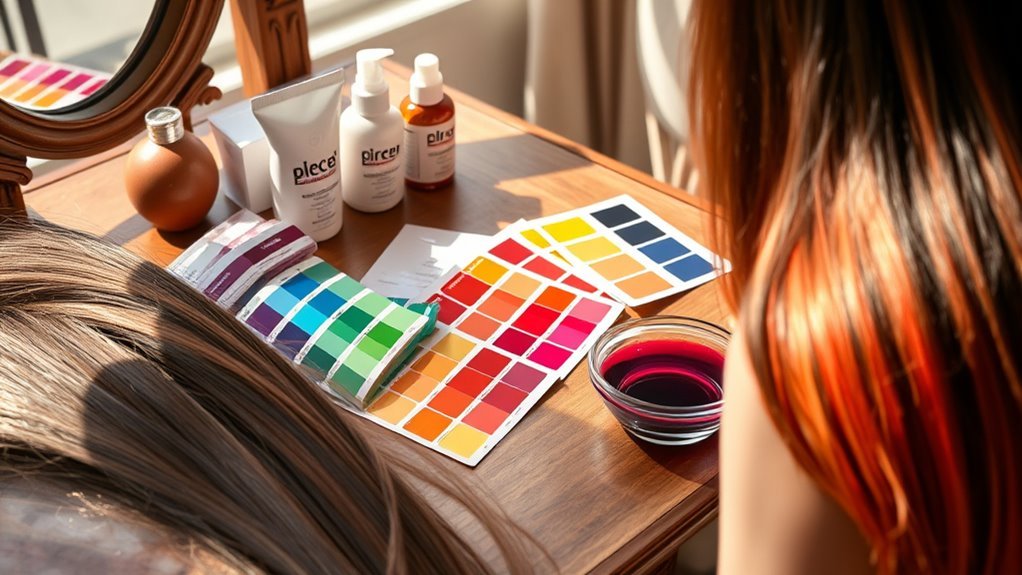
Before you start coloring, make sure you have the essential tools like a mixing bowl, an applicator brush, and some clips to section your hair. Oh, and don’t forget protective gear, like gloves and an old towel, to keep your skin and clothes safe. Having all these supplies ready will make the whole process a lot smoother and cleaner.
Essential Hair Dye Tools
A few key tools can make dyeing your hair at home much easier and more effective. First, you’ll want a dye brush for precise dye application, helping you avoid uneven color and ensuring every strand is covered.
A mixing bowl is essential for blending your color and developer thoroughly. Don’t forget a wide-tooth comb to distribute the dye evenly through your hair.
For hair dye safety, use plastic gloves to protect your hands from stains and irritation. Clips will keep sections of your hair separated, making the process smoother and more manageable.
Ultimately, having an old towel or cape ready will help protect your clothes and surfaces. With these essential tools, you’ll set yourself up for a safe, neat, and successful home dye job.
Protective Gear Basics
Along with gathering the right tools, you’ll want to equip yourself with protective gear to keep your skin, clothes, and workspace safe from stains and irritation. Start by wearing protective gloves to shield your hands from harsh chemicals during color application. These gloves prevent staining and reduce the risk of skin irritation.
Next, put on a dyeing apron to protect your clothes from unexpected drips or spills. Choose one that’s easy to clean or disposable. Applying a skin barrier cream around your hairline helps prevent dye from staining your skin and soothes any sensitivity.
How to Prepare Your Hair for Dyeing to Prevent Damage
Before you dye your hair, it’s a good idea to check its current condition so you don’t cause extra damage. Try treating your hair with a deep conditioning mask a few days before—you’ll keep it strong and hydrated that way.
Also, skip heat styling if you can. This helps minimize stress on your hair and gets it ready for the color process.
Assess Hair Condition
Understanding your hair’s current condition plays an essential role in preventing damage during the dyeing process. Before you pick a color, evaluate your hair type, whether it’s fine, coarse, curly, or straight. This affects how dye absorbs and how long it lasts.
If your hair is already dry or brittle, you’ll want to be extra cautious since dye can worsen damage. Healthy hair holds color better, improving dye longevity, while compromised hair may fade faster and become more fragile.
Check for split ends, breakage, or recent chemical treatments, as these can impact results. Taking time to assess your hair now helps you choose the right dye and technique, ensuring vibrant color without sacrificing hair health.
Deep Conditioning Treatment
Once you’ve assessed your hair’s condition, treating it with a deep conditioning treatment can strengthen and hydrate your strands, making them more resilient to dyeing. Deep conditioning benefits include repairing damage, improving elasticity, and reducing breakage, which all help your hair better withstand the chemical process.
For best results, aim for a deep conditioning frequency of once a week in the weeks leading up to dyeing. This consistent care replenishes moisture and fortifies your hair’s cuticle, minimizing potential damage. Avoid skipping this step, especially if your hair feels dry or brittle.
A well-conditioned base guarantees your new color looks vibrant and lasts longer, while keeping your hair healthy throughout the transformation.
Avoid Heat Styling
Although it might be tempting to style your hair with heat, steering clear of tools like flat irons and curling wands in the days leading up to dyeing can greatly reduce damage. Heat damage weakens your hair, making it more prone to breakage during the dyeing process.
Instead, try these styling alternatives to keep your hair healthy:
- Air dry your hair naturally to avoid extra stress.
- Use soft hair ties or clips to create loose styles without tension.
- Experiment with braids or twists to add natural waves.
- Apply a lightweight leave-in conditioner to keep strands hydrated and smooth.
How to Do a Patch Test to Avoid Allergic Reactions
Before you apply any hair dye, you should always perform a patch test to check for allergic reactions. Start by mixing a small amount of the dye according to the instructions.
Apply a tiny drop to a discreet area of your skin, like behind your ear or on your inner elbow. Keep the area uncovered and avoid washing it.
Follow the testing timeline specified in the product instructions, usually 24 to 48 hours, to monitor for any allergy symptoms such as redness, itching, swelling, or blistering.
If you notice any of these signs, do not use the dye. Even if you’ve used hair dye before, allergies can develop over time, so this step is essential every time.
Taking these precautions helps you avoid uncomfortable or dangerous reactions and guarantees your hair dye experience is safe. Remember, a patch test is a quick and simple step that protects your skin and health.
Step-by-Step Guide to Applying Hair Dye Safely
After confirming you don’t have an allergic reaction from the patch test, you can move forward with applying the dye. Follow these steps to guarantee a safe and effective process:
- Prepare your workspace and hair: Wear old clothes and gloves. Detangle your hair and section it for even application. Use clips to separate strands.
- Mix the dye according to instructions: Proper mixing guarantees consistent color and prevents uneven results. Use a non-metal bowl and applicator brush for precision.
- Apply the dye carefully: Start at the roots, then work through the lengths using your chosen application techniques. Be thorough but gentle to avoid scalp irritation.
- Follow the recommended processing time and rinse: Rinse with lukewarm water until water runs clear. Finish with the aftercare routine, including a color-safe conditioner, to maintain hair health and color longevity.
Tips to Keep Your Hair Color Vibrant Longer
To keep your hair color vibrant longer, you need to adopt a few simple habits that protect your dye from fading. Start by using sulfate-free shampoos and color-safe products designed to preserve your color’s intensity.
Pay attention to water temperature. Washing with lukewarm or cool water helps prevent color from washing out quickly. Incorporate conditioning masks into your routine to boost moisture retention, keeping your hair hydrated and glossy.
Don’t forget UV protection. Wear hats or apply hair products with UV filters to shield your color from sun damage. Regular trims are essential too; they remove split ends and keep your hair looking fresh, preventing dullness.
Common Hair Dye Mistakes and How to Avoid Them
Before you start coloring, it’s a good idea to do a patch test first. This way, you can avoid any allergic reactions. Also, don’t leave the dye on too long because that can lead to overprocessing and damage your hair. If you keep these common mistakes in mind, you’ll be able to get better results safely and enjoy your new color!
Patch Test Importance
One essential step many people overlook when dyeing their hair is performing a patch test. Skipping this can lead to unexpected allergic reactions or increased skin sensitivity. To protect yourself, follow these steps:
- Apply a small amount of dye behind your ear or on your inner elbow.
- Leave it on for 24-48 hours without washing.
- Check the area for redness, itching, swelling, or irritation.
- If you notice any discomfort, don’t use the product and consult a professional.
Overprocessing Hair Risks
Although dyeing your hair can transform your look, overprocessing poses serious risks that can damage your strands and scalp. Overprocessing symptoms include excessive dryness, brittleness, breakage, and scalp irritation.
You might notice your hair becoming limp, frizzy, or prone to split ends. To prevent these issues, prioritize hair damage prevention by spacing out dye sessions and following product instructions carefully.
Avoid overlapping bleach or dye on already processed hair, and don’t leave chemicals on longer than recommended. Using deep conditioners and protein treatments can help restore moisture and strength.
If you spot any overprocessing symptoms early, give your hair time to recover before applying more chemicals. Taking these precautions guarantees your hair stays healthy and vibrant while you enjoy your new color.
How to Fix Hair Color Mistakes Without Starting Over
If you’ve ended up with a shade that’s too dark, too brassy, or uneven, don’t panic. You can fix many hair color mistakes without starting over. Using the right color correction techniques and temporary solutions can save your look. Here’s what to do:
If your hair color feels off, don’t worry—there are effective fixes to restore your perfect shade.
- Use color removal products: These help strip unwanted pigment gently, especially if the color is too dark or patchy.
- Try temporary toners or glosses: They neutralize brassiness or uneven tones without long-term commitment.
- Apply a color-correcting shampoo or mask: These maintain your hair’s health while gradually improving color balance.
- Seek professional advice if unsure: A stylist can guide you on safe correction methods tailored to your hair type.
When to Consult a Professional Before Dyeing Your Hair
When should you consult a professional before dyeing your hair? If you’re considering a dramatic color change or using bleach, a professional consultation is essential. Experts can assess your hair health and recommend the safest approach, minimizing damage and ensuring better results.
If your hair is already damaged, brittle, or chemically treated, a pro can tailor treatments to protect and strengthen it during the dyeing process.
You should also seek professional guidance if you want complex color techniques like balayage, highlights, or color correction. These require skill and precision to avoid uneven tones or unwanted hues.
Moreover, if you have allergies or sensitive skin, a professional can conduct patch tests and suggest hypoallergenic products to prevent irritation.
In short, consulting a professional helps you achieve your desired look safely and maintains your hair health. Don’t hesitate to ask for expert advice before you pick up that dye kit.
Frequently Asked Questions
How Long Does Hair Dye Typically Last on Different Hair Types?
Temporary color usually lasts a few days to two weeks, depending on your hair type and how often you wash it. If you have porous or damaged hair, the color may fade faster.
With darker, healthier hair, it can hold longer. You’ll need consistent hair maintenance like using sulfate-free shampoos and avoiding heat to prolong the color.
Can Hair Dye Cause Scalp Irritation Beyond Allergic Reactions?
Your scalp can feel like a stormy sea when irritation strikes beyond allergic reactions. Yes, hair dye can cause scalp sensitivity due to irritation triggers like harsh chemicals, prolonged exposure, or improper application.
If you notice itching, burning, or redness, your scalp’s warning bells are ringing. To calm the waves, always do a patch test, choose gentle formulas, and avoid leaving dye on too long to protect your skin’s delicate balance.
Are Natural or Organic Hair Dyes Safer Than Chemical Ones?
Natural or organic hair dyes aren’t always safer than chemical ones, even though they use natural ingredients. You should know that dye formulations vary, and some natural dyes can still cause irritation or allergic reactions.
Both types must meet safety standards, so it’s important to check labels carefully. Consumer perceptions often assume natural means safer, but you should always do a patch test to protect your scalp and skin.
How Does Hair Dye Affect Hair Texture Over Time?
Did you know 60% of people notice texture changes after just a few dye sessions? When you dye your hair repeatedly, its texture can become dry and brittle because the chemicals strip natural oils.
While color retention improves with quality dyes, your hair might lose softness and gain roughness over time. To maintain healthy texture, you’ll want to use nourishing treatments and avoid over-processing. This way, you keep your hair vibrant without sacrificing feel.
What Are the Environmental Impacts of Hair Dye Products?
You should know that conventional hair dye products can harm the environment through chemical runoff and non-recyclable packaging. To reduce your impact, look for sustainable alternatives that use natural ingredients and avoid harsh chemicals.
Choosing brands that offer biodegradable packaging helps minimize waste. By switching to eco-friendly options, you protect water sources and reduce landfill buildup, making your hair dye routine kinder to the planet without sacrificing style.
Conclusion
Dyeing your hair can feel like stepping into a whole new world, and with the right knowledge, you’ll avoid hair disasters that seem worse than a tornado in a hair salon! Remember, choosing the right color, prepping properly, and avoiding common mistakes will keep your locks vibrant and healthy.
If you’re ever unsure, don’t hesitate to consult a professional. Your hair deserves the best care, so go ahead, transform confidently and shine like never before with the right hair dye!