Your Guide to Biotin for Hair Growth: Choosing With Confidence
Struggling with thinning hair or slow growth? You’re not alone. Many people wish they could find a reliable way to boost their hair health and regain confidence.
Choosing the right biotin supplement can feel overwhelming with so many options out there. But don’t worry—we’ve got you covered.
You can confidently choose biotin for hair growth by understanding its types, proper dosage, and effective combinations. Look for synthetic D-biotin in capsules for best absorption, and stick to 30–100 micrograms daily with meals.
Watch for signs like excessive hair loss or brittle nails that suggest you might need supplementation.
Pair biotin with nutrients like zinc and vitamin E, plus healthy hair care habits, to maximize results.
Keep going to uncover how to pick the perfect supplement and boost your hair health further.
Key Takeaways
- Choose biotin supplements with synthetic D-biotin for better absorption. Also, consider those combined with zinc, vitamin E, and protein for enhanced hair growth.
- Look for signs of deficiency like excessive hair loss or brittle nails to determine if biotin supplementation is needed.
- Follow recommended dosages of 30 to 100 micrograms daily. Take supplements with meals to maximize absorption and avoid excess intake.
- Monitor hair growth progress over 4 to 6 weeks. Keep consistent supplement use and scalp care for the best results.
- Select products with third-party certifications like USP, NSF, or GMP, along with clear labeling. This helps ensure quality, safety, and effectiveness.
What Is Biotin And How Does It Support Hair Growth?
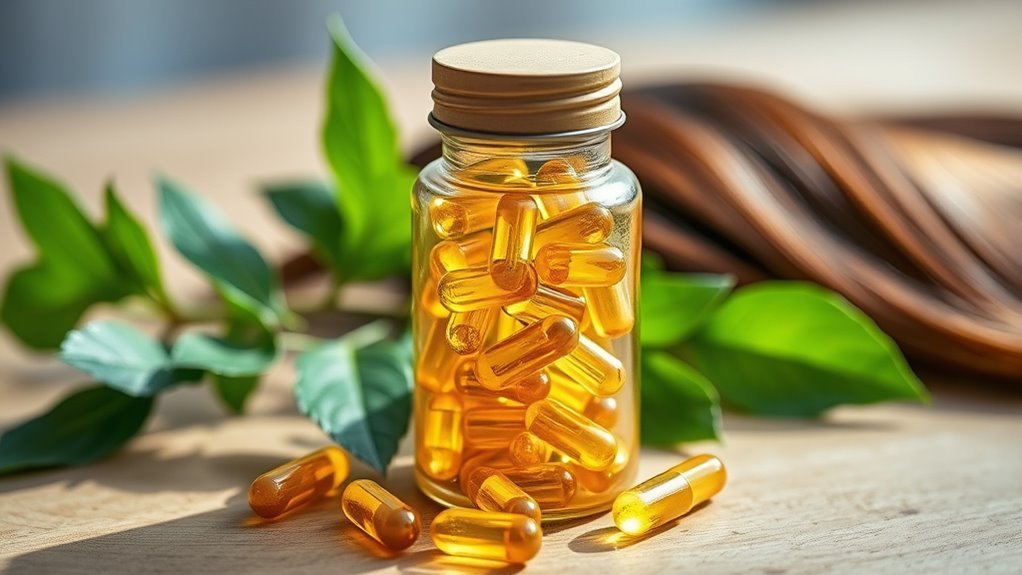
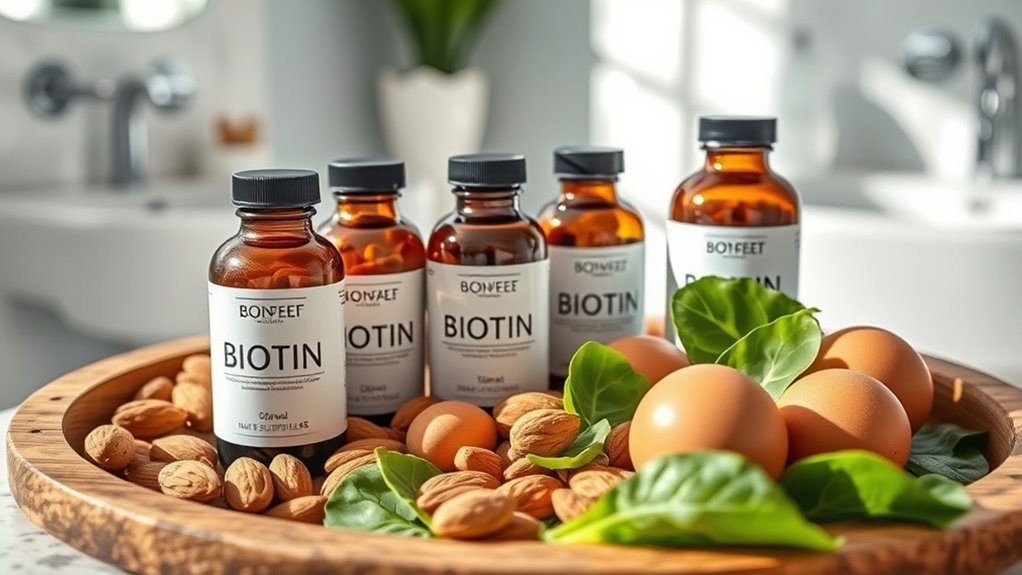
Biotin, also known as vitamin B7, plays an essential role in maintaining healthy hair. It’s a water-soluble vitamin that helps your body convert food into energy and supports the production of keratin, a protein that strengthens hair strands. When you prioritize biotin sources like eggs, nuts, and leafy greens in your diet, you’re giving your hair the nutrients it needs to stay strong and resilient.
Biotin supports hair health by improving the infrastructure of keratin, which can reduce hair breakage and promote shine. Without enough biotin, you might notice your hair becoming brittle or thinning. While your body produces some biotin naturally, getting adequate amounts from your diet guarantees your hair follicles function effectively. So, focusing on biotin sources not only benefits your overall health but also helps maintain the liveliness and appearance of your hair.
Do You Need Biotin For Hair Growth? Signs To Watch For
How can you tell if your hair needs extra support from biotin? Watch for biotin deficiency symptoms like brittle nails, dry skin, and noticeable hair thinning. Hair thinning causes are often linked to a lack of essential nutrients, including biotin.
If you see more hair shedding than usual or your strands feel weak, biotin might help restore strength and growth.
Here’s a quick guide to signs that suggest you could benefit from biotin:
| Sign | Description | Possible Cause |
|---|---|---|
| Excessive Hair Loss | More hair falls during washing | Biotin deficiency symptoms |
| Brittle Nails | Nails break or split easily | Nutrient deficiency |
| Dry, Flaky Skin | Persistent dryness or irritation | Biotin shortage |
| Slow Hair Growth | Hair takes longer to grow | Hair thinning causes |
If these signs sound familiar, consider evaluating your biotin intake to support hair health.
Which Biotin Type Works Best For Hair?
When choosing a biotin supplement for hair growth, you’ll want to focus on the form and dosage that your body can absorb most effectively. Biotin sources vary, but synthetic biotin (D-biotin) is the most common and bioavailable in supplements. Your body absorbs this form well, making it a reliable choice for supporting hair health.
Natural biotin sources like eggs, nuts, and certain vegetables provide benefits but may not offer consistent absorption levels compared to supplements.
Additionally, some products combine biotin with other vitamins and minerals to improve biotin absorption and overall effectiveness. You should look for supplements with proven delivery methods, such as capsules or tablets formulated for ideal uptake.
Keep in mind that quality matters. Choosing reputable brands guarantees you get pure biotin that your body can use efficiently. By focusing on the right biotin type and source, you set yourself up for better hair growth results.
What Is The Best Biotin Dosage For Hair Health?
You might be wondering how much biotin you should take for the best hair health. Well, the right dosage really depends on a few things like your age, what you eat, and if you have any health conditions. It’s all about finding a balance that works for you—something effective but without unwanted side effects.
Recommended Daily Intake
Although biotin is essential for healthy hair, determining the right dosage can be confusing. Most adults benefit from a daily intake of 30 to 100 micrograms, but your exact needs might vary.
You can get biotin from natural sources like eggs, nuts, and leafy greens, but supplements often provide a more consistent dose. When taking supplements, pay attention to dosage timing. It’s usually best to take biotin with a meal to improve absorption.
Avoid exceeding recommended amounts, as higher doses don’t necessarily speed up hair growth and could cause imbalance. Sticking to the suggested daily intake helps you support your hair health safely and effectively without guesswork or risk.
Factors Affecting Dosage
Since individual needs vary, the best biotin dosage for hair health depends on several factors. Your dietary influences play a key role. If your diet already includes biotin-rich foods, you may need a lower supplement dose.
Individual metabolism also affects how your body processes biotin. So, what works for someone else might not be ideal for you. Age factors matter too. Younger individuals and older adults might require different amounts due to varying absorption rates and hair growth needs.
Furthermore, your hair type influences dosage decisions. Fine or thinning hair could benefit from tailored biotin levels compared to thicker hair. Considering these elements helps guarantee you choose the most effective biotin dosage for your unique hair health goals.
Potential Side Effects
While biotin is generally safe, taking too much can lead to potential side effects that might affect your overall health. If you have biotin allergies, you could experience skin rashes, itching, or swelling. It’s essential to recognize any unusual reactions early and stop use immediately.
Some people also experience dosage sensitivity, meaning even a slight increase beyond the recommended amount can cause digestive upset, acne, or fatigue. To avoid these issues, stick to the suggested dosage and consult a healthcare professional before starting supplements.
Monitoring your response helps you adjust safely and prevent problems. Remember, more biotin doesn’t always mean better results. Finding the right balance is key to supporting hair health effectively and safely.
How Long Does It Take To See Hair Growth Results?
How quickly can you expect to see results from biotin for hair growth? The hair growth timeline varies widely because of individual variability. Some people notice improvements in as little as 4 to 6 weeks, while others may need 3 to 6 months to see visible changes. Your body’s response depends on factors like your overall health, diet, and the severity of hair thinning.
Biotin supports the keratin infrastructure, but hair grows slowly, about half an inch per month, so patience is key. Consistency in taking biotin supplements or using biotin-enriched products is essential to maximize benefits. Remember, biotin works best if a deficiency is present; if your levels are already adequate, results may be subtle or take longer.
Tracking your progress every few weeks helps you stay realistic and motivated. Ultimately, understanding your unique hair growth timeline helps you set achievable expectations while using biotin confidently.
How To Read Biotin Labels Like A Pro
To get the best results, you’ve got to know how to read biotin labels like a pro. Start by focusing on the dosage to make sure you’re getting enough.
Next, check for any added ingredients that support hair health. These extras can really boost the benefits.
And don’t forget to look for quality certifications. They guarantee the supplement’s safety and effectiveness.
Understanding Biotin Dosage
Because biotin supplements come in various strengths, knowing how to read their labels helps you choose the right dosage for your hair growth needs. Start by checking the amount of biotin per serving, usually listed in micrograms (mcg) or milligrams (mg).
Keep in mind, your body’s ability to absorb biotin can vary due to factors like gut health and interactions with other nutrients. Don’t rely solely on supplements. Incorporate biotin food sources such as eggs, nuts, and leafy greens into your diet for balanced intake.
The recommended daily dose often ranges from 30 to 100 mcg, but higher doses may be suggested for certain conditions. Understanding these details guarantees you pick an effective, safe biotin supplement tailored to your hair growth goals.
Identifying Additional Ingredients
Once you understand the right biotin dosage for your needs, it’s important to look beyond the main ingredient. Check the label for additional components like essential oils, herbal supplements, and protein sources that support hair growth.
These natural alternatives can improve your results when combined with dietary influences and lifestyle changes such as scalp massages and stress management.
| Ingredient Type | Benefits | Examples |
|---|---|---|
| Essential Oils | Stimulate scalp, nourish | Rosemary, Peppermint |
| Protein Sources | Strengthen hair structure | Collagen, Keratin |
| Herbal Supplements | Promote growth, reduce shedding | Saw Palmetto, Ginseng |
Identifying these extras helps you choose a product that complements your hair care routine effectively.
Recognizing Quality Certifications
When you pick up a biotin supplement, knowing how to read the label can make all the difference in choosing a quality product. Recognizing quality certifications guarantees the product meets strict certification standards and offers reliable quality assurance. Here’s how to spot them:
- Look for third-party seals like USP, NSF, or GMP, which confirm independent testing.
- Check if the label states compliance with Good Manufacturing Practices (GMP).
- Verify certifications related to purity and potency to avoid fillers or contaminants.
- Identify organic or non-GMO certifications if you prefer natural ingredients.
These certifications reflect a brand’s commitment to transparency and safety, helping you pick biotin supplements with confidence and peace of mind.
What Mistakes Should You Avoid When Buying Biotin?
Although biotin supplements seem straightforward, many people make avoidable mistakes when choosing the right product. One common error is falling for exaggerated marketing claims that promise miraculous hair growth results. Remember, no supplement works overnight, and these claims often lack scientific backing.
Instead, focus on the product’s ingredient sourcing. Poor sourcing can lead to ineffective or contaminated supplements, so choose brands that transparently share where and how they obtain their biotin.
Prioritize brands that openly disclose their biotin sourcing to ensure supplement safety and effectiveness.
Another mistake is ignoring dosage details. More isn’t always better; taking excessive biotin can cause side effects or interfere with lab tests. Don’t buy biotin just because it’s cheap. Low-cost options might compromise quality.
Finally, avoid products without clear labeling or third-party testing. These certifications guarantee you’re getting what the label promises. By steering clear of these pitfalls, you’ll confidently select a biotin supplement that supports healthy hair growth safely and effectively.
Which Ingredients Actually Help Your Hair Grow?
Choosing the right biotin supplement is just one part of supporting hair growth. Several ingredients and practices work together to help your hair thrive. Here are four key elements to focus on:
- Biotin is essential for keratin production. It strengthens hair from the inside out.
- Vitamin E is an antioxidant that improves scalp circulation. You can boost this further with regular scalp massage.
- Zinc is important for hair tissue growth and repair. A deficiency in zinc can lead to hair loss.
- Protein and Omega-3 Fatty Acids are found in dietary sources like fish, nuts, and eggs. These nutrients nourish hair follicles and promote healthy strands.
How To Choose Biotin Supplements For Your Hair Goals
Since biotin supplements come in various forms and dosages, you’ll want to select one that aligns with your specific hair goals and lifestyle. First, consider the biotin sources. Look for supplements derived from reputable manufacturers that use pure, high-quality biotin to guarantee effectiveness.
Biotin often comes in supplement forms like capsules, tablets, gummies, or liquid drops. Choose a form that fits your routine. For example, gummies can be easier to remember, while capsules might offer higher biotin concentrations.
Next, check the dosage. Most people benefit from 30 to 100 mcg daily, but if you have more intense hair growth goals, some supplements offer higher doses. Avoid mega-doses unless advised by a healthcare provider.
Most benefit from 30-100 mcg daily; higher doses are for intense goals and require medical advice.
Also, review the ingredient list for added nutrients supporting hair health, but avoid unnecessary fillers. Finally, verify third-party testing or certifications to confirm safety and potency. Selecting the right biotin supplement helps you confidently support your hair growth journey.
How To Combine Biotin With Other Hair Care Practices
To boost biotin’s effects, try pairing it with other key nutrients like zinc and vitamin E. These work together to support healthier hair from the inside out. You’ll also want to focus on scalp care techniques that promote healthy follicles. For example, gentle massages can increase blood flow and encourage growth. Plus, keeping a consistent hair washing routine helps maintain a clean environment for growth, so your hair has the best chance to thrive.
Complementary Nutrient Pairings
Although biotin plays a key role in supporting hair growth, combining it with other nutrients and healthy hair care habits can amplify your results. Achieving nutrient synergy guarantees your body gets the full benefit of biotin and other essentials, promoting peak absorption. Here’s how you can pair biotin effectively:
- Include vitamin C-rich foods to improve iron absorption, which supports hair follicle health.
- Add zinc to your routine; it helps repair hair damage and complements biotin’s effects.
- Don’t forget omega-3 fatty acids. They nourish your scalp and strengthen hair strands.
- Maintain a balanced diet with protein, since hair is primarily made of keratin, a protein that benefits from biotin.
Combining these nutrients with biotin creates a powerful formula for healthier, thicker hair.
Scalp Care Techniques
Pairing biotin with complementary nutrients lays a strong foundation, but supporting your scalp directly can make a significant difference in hair growth. Incorporate scalp exfoliation techniques to remove dead skin cells and unclog hair follicles, creating a cleaner environment for new hair to thrive.
You can use gentle scrubs or brush-based exfoliation tools designed specifically for the scalp. Furthermore, harness essential oil benefits by massaging oils like rosemary or peppermint into your scalp. These oils improve circulation and stimulate hair follicles, enhancing biotin’s effectiveness.
Consistent Hair Washing Routine
A consistent hair washing routine plays an essential role in supporting biotin’s impact on hair growth. Maintaining scalp hygiene helps prevent buildup that can block follicles and reduce biotin’s effectiveness.
To combine biotin with other hair care practices, follow these steps:
- Wash your hair 2-3 times a week to balance cleanliness and natural oil retention.
- Use a gentle shampoo that doesn’t strip natural hair oils, preserving moisture.
- Massage your scalp during washing to stimulate blood flow and improve biotin absorption.
- Avoid harsh chemicals or overwashing, which can irritate the scalp and hinder growth.
Frequently Asked Questions
Can Biotin Cause Any Side Effects or Allergic Reactions?
Yes, biotin can cause side effects or allergic reactions, especially if you take a high biotin dosage. You might experience skin rashes, digestive upset, or even mild allergic responses.
To avoid this, stick to recommended dosages and consider natural biotin sources like eggs, nuts, and leafy greens instead of supplements. If you notice any adverse effects, stop using biotin and consult your healthcare provider to guarantee your safety.
Is Biotin Safe to Take During Pregnancy or Breastfeeding?
You’d have to eat a mountain of biotin to worry, but yes, biotin is generally safe during pregnancy and breastfeeding if you stick to the recommended biotin dosage. It supports healthy hair and skin, which can be a real pregnancy benefit when your body’s changing so much.
Still, it’s smart to chat with your doctor before starting any supplement, ensuring both you and your baby stay safe and healthy.
How Does Biotin Interact With Other Medications or Supplements?
Biotin can affect how your body absorbs certain medications, leading to medication interactions you should watch for. It may interfere with lab test results, especially thyroid or hormone tests, so always tell your doctor if you’re taking biotin.
Some supplements or medications could reduce biotin absorption, making it less effective. To avoid problems, you should discuss all your medications and supplements with your healthcare provider before starting biotin.
Can Biotin Improve Nail and Skin Health Too?
Yes, biotin can improve nail and skin health too. You’ll notice biotin benefits like stronger nails and smoother skin because it supports keratin production.
To boost these benefits, include biotin-rich sources in your diet, such as eggs, nuts, and leafy greens. Just remember, while biotin helps, it’s best combined with a balanced diet and proper skincare for ideal results.
Are There Any Foods Rich in Biotin to Include in My Diet?
Sure, you could live on candy and expect miracles, but if you want real biotin benefits, try actual biotin sources like eggs, nuts, and sweet potatoes. These foods pack a punch to boost hair, nail, and skin health.
Don’t just wish for better locks, eat them! Incorporate these into your diet, and you’ll see why nature’s biotin sources beat any fad pill. Your body will thank you without the sugar crash.
Conclusion
Now that you’ve got the lowdown on biotin for hair growth, you’re ready to pick the perfect supplement confidently. Remember, biotin isn’t a magic wand; it’s a helpful tool in your hair care toolkit.
Combine it wisely with good habits, and you’ll see your hair bloom like spring after a long winter. Stay patient, avoid common mistakes, and watch your hair goals come to life, one strand at a time with the power of biotin for hair growth.