Box Braids vs. Knotless Braids: Which Is Better?
Finding the perfect protective hairstyle can be tricky, especially when you want something that looks great but also cares for your hair and scalp.
If you’ve ever felt overwhelmed by all the braid options or worried about damage and discomfort, you’re not alone. Many people struggle to choose between styles that offer both beauty and hair health.
If you want a protective style that’s quicker to install with a bold, uniform look, box braids are a great choice.
But if you’re after a softer, lighter feel that’s gentler on your scalp and promotes healthier hair, knotless braids are better. They take longer and cost more but reduce tension and discomfort.
Each style has its perks, and exploring how they differ can help you find the perfect fit for your hair and lifestyle.
Key Takeaways
- Box braids offer a bold, uniform style with quicker installation but can cause more scalp tension and discomfort.
- Knotless braids provide a softer, natural look with less scalp tension, promoting better scalp health and reduced breakage.
- Box braids typically last longer (6-8 weeks) because of their firm knots. On the other hand, knotless braids last 4-6 weeks and may need touch-ups.
- Knotless braids require more skill and time to install, which means higher costs. However, they offer gentler care for your hair and scalp.
- Choosing between them depends on your desired style, scalp sensitivity, maintenance preference, and budget considerations.
What Are Box Braids?
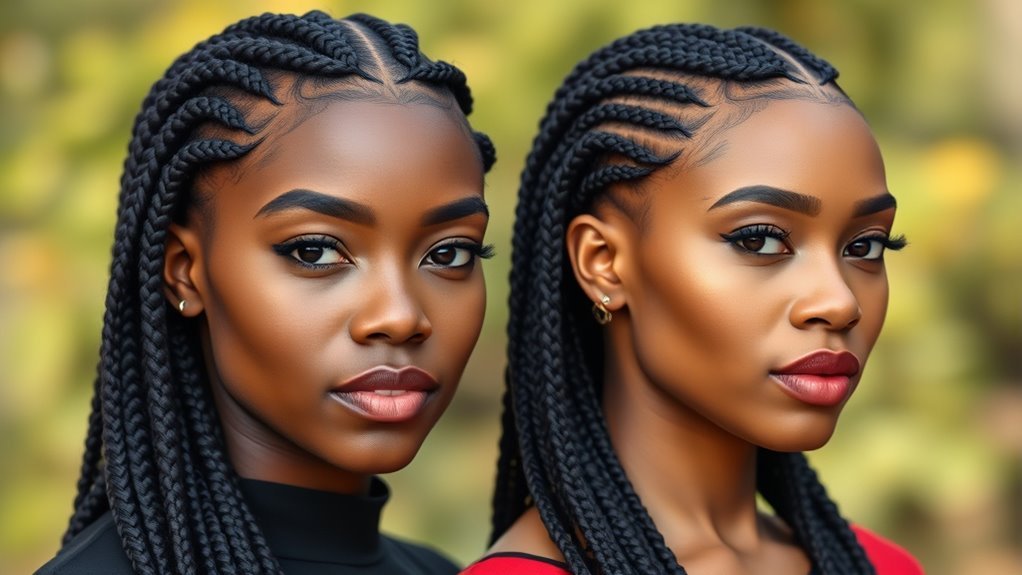
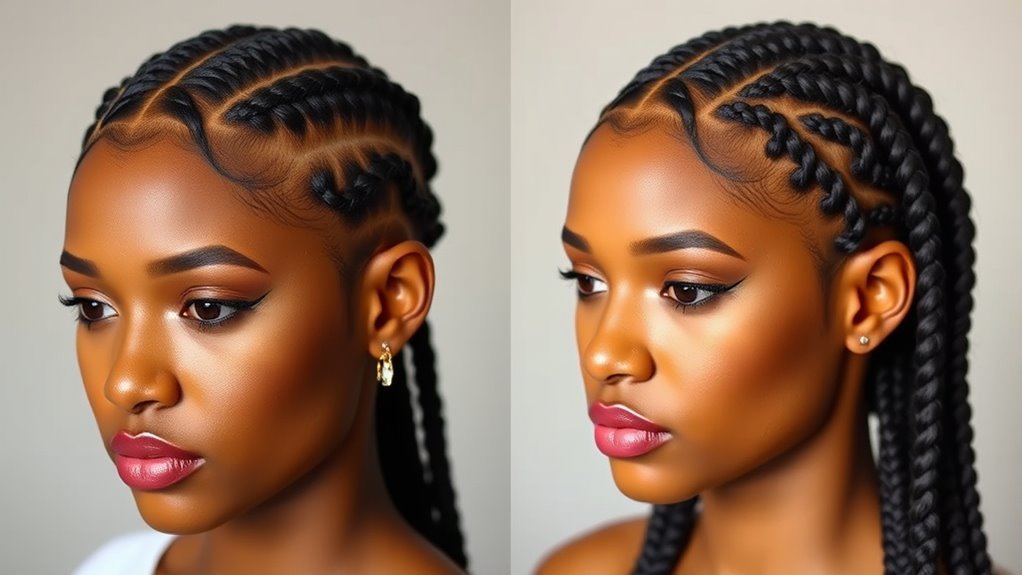
Box braids are a popular protective hairstyle where your hair is sectioned into small square-shaped parts and braided all the way down. When you wear box braids, you’re embracing a style with deep roots in braid history.
This look dates back thousands of years across African cultures, where braiding wasn’t just about fashion but also carried cultural significance, symbolizing identity, age, status, and even tribe. By choosing box braids, you connect with this rich heritage while protecting your natural hair from damage.
The braids shield your strands from daily wear and tear, making it easier for your hair to grow. Plus, they offer versatility—you can style them in various ways to suit your mood or occasion. So, when you opt for box braids, you’re not only rocking a timeless, practical look but also honoring a tradition that’s been passed down through generations.
What Are Knotless Braids?
If you’re looking for a braid style that feels lighter and puts less tension on your scalp, knotless braids might be just what you need. They start by gradually adding hair, which makes them way gentler and more flexible than traditional box braids.
And the best part? Knotless braids work well with all kinds of hair types. So, you get a natural look without having to sacrifice protection. Sounds pretty great, right?
Definition And Technique
Knotless braids start with your natural hair, gradually adding extensions as the braid grows, which prevents the tight knots found in traditional braids. This technique offers a gentler approach rooted in braid history, evolving from styles that honor the cultural significance of protective hairstyles.
Instead of starting with a bulky knot at the scalp, you begin with small, natural braids and seamlessly feed in the extensions. This method not only reduces tension but also creates a more natural look and feel.
Benefits Of Knotless
Though traditional braids can sometimes cause discomfort, opting for this gentler method reduces scalp tension and promotes healthier hair growth. Knotless braids offer several advantages that make them a popular choice.
You’ll find they’re lighter on your scalp and less likely to cause breakage. Plus, knotless braids open up more styling options, allowing you to easily adjust braid size and length.
| Benefit | Explanation |
|---|---|
| Reduced Scalp Tension | No tight knots mean less pain |
| Versatile Styling | You can style your braids easily |
| Healthier Hair Growth | Less stress promotes stronger hair |
Choosing knotless braids means embracing comfort and creativity while protecting your natural hair.
Hair Types Suitable
Beyond the benefits of comfort and styling, understanding which hair types work best with knotless braids can help you make the right choice for your look. Knotless braids suit a wide range of hair types, especially if you have curly textures or fine strands.
Because knotless braids start with your natural hair, they reduce tension and protect delicate edges, making them ideal for fine strands that might break easily. If your hair has curly textures, knotless braids blend seamlessly, offering a natural appearance without excessive pulling.
Whether your curls are loose or tight, knotless braids provide flexibility and less scalp stress. So, if you want a protective style that respects your hair’s unique texture and fragility, knotless braids are a smart option.
How Do Box Braids and Knotless Braids Differ?
While both styles offer protective benefits, box braids and knotless braids differ considerably in their installation techniques and overall feel. Box braids start with small box-shaped sections where the hair is braided tightly from the root, creating a uniform look.
Knotless braids, however, begin with your natural hair and gradually add extensions, resulting in a softer, more natural appearance that’s gentler on your scalp and better for hair health.
Your hair texture plays a big role in how each style looks and feels, and both offer versatile styling options, from updos to ponytails. Box braids usually take less installation time but can feel heavier, especially with longer lengths.
Knotless braids take longer to install but offer a lighter, more flexible protective style. Maintenance routines vary, but knotless braids often require gentler care. Both styles hold cultural significance and serve as beautiful expressions of heritage and identity.
Pros and Cons of Box Braids vs. Knotless Braids
When you’re trying to decide between box braids and knotless braids, it’s good to think about how each style lasts and what kind of maintenance they need. Plus, comfort and keeping your scalp healthy really matter because they impact how your hair feels day-to-day. So, let’s break down the pros and cons of both to help you figure out which one fits you best.
Durability And Maintenance
Although both box braids and knotless braids offer long-lasting styles, their durability and maintenance differ in important ways. When considering longevity factors, box braids tend to hold up well due to their firm knots at the roots, making them less prone to unraveling. However, this tightness can cause tension on your hair over time.
Knotless braids, on the other hand, start with a natural feed-in technique, reducing stress but may need more frequent touch-ups since they can loosen faster. Your maintenance routines will vary accordingly. Box braids require careful scalp moisturizing to prevent dryness, while knotless braids benefit from gentle handling to maintain smoothness and prevent frizz.
Ultimately, your choice depends on how you balance durability with upkeep preferences.
Comfort And Scalp Health
Because your scalp’s comfort and health play a crucial role in how you feel and how long your style lasts, understanding the differences between box braids and knotless braids is essential. Box braids often involve tight knots that can cause scalp irritation and increase the risk of hair breakage.
Knotless braids, however, start with your natural hair, reducing tension and promoting better scalp health. If you’re prone to sensitivity, knotless braids might be your best bet.
| Aspect | Box Braids |
|---|---|
| Scalp Irritation | Higher due to tight knots |
| Hair Breakage | More likely from tension |
| Comfort | Can feel heavy and tight |
| Installation | Faster but tighter |
| Longevity | Lasts longer but risks damage |
Choose knotless braids for comfort and scalp care.
Which Braids Are Healthier for Your Hair?
How do you choose between box braids and knotless braids without damaging your hair? When prioritizing hair health, knotless braids often have the edge. They reduce breakage risk by applying less tension at the roots, which supports scalp hydration and moisture retention. This means your scalp stays healthier, allowing better nutrient absorption that boosts your hair’s growth potential.
Box braids, while a popular protective styling option, can sometimes strain your hairline if installed too tightly, increasing damage risk.
Your maintenance routine also plays a key role. With knotless braids, you can more easily cleanse and moisturize your scalp and strands, enhancing hair care and preventing dryness. Protective styling is all about shielding your hair from daily wear and tear, and knotless braids often offer a gentler, more breathable option.
Ultimately, choosing braids that promote scalp hydration and minimize tension will help you maintain stronger, healthier hair over time.
Which Braids Feel Better on Your Scalp?
When it comes to scalp comfort, you’ll definitely feel a difference between box braids and knotless braids. Knotless braids tend to put less tension on your scalp, which means less pressure and discomfort. So, if you’re looking to avoid that tight, sore feeling, knotless might be the way to go.
Knowing how each style affects your scalp can really help you pick the best option for all-day comfort. It’s all about what feels good to you and keeps your scalp happy!
Scalp Comfort Comparison
Although both box braids and knotless braids offer stylish protective options, you’ll likely notice a difference in scalp comfort between the two. If you have scalp sensitivity, knotless braids tend to feel gentler because they don’t involve tight knots at the roots. This reduces common itchiness factors like tension and irritation.
Box braids, on the other hand, can sometimes cause discomfort if the stylist ties the knots too tightly, which may lead to increased scalp itchiness and sensitivity. When you want a braid style that prioritizes your scalp’s comfort throughout wear, knotless braids usually come out ahead.
Still, your experience might vary depending on how your stylist installs the braids and how your scalp reacts to different techniques or products.
Tension and Pressure Effects
Since tension and pressure directly affect your scalp’s comfort, choosing the right braid style can make a big difference in how your scalp feels during wear. Box braids often involve more styling tension during braid installation, which can create pressure points and scalp irritation, especially if you have high scalp sensitivity.
Knotless braids, on the other hand, offer better tension relief by gradually adding hair, reducing stress on your roots and minimizing hair breakage. Consider these factors for long term effects on your scalp:
- Box braids may cause more scalp irritation due to tighter styling tension.
- Knotless braids provide tension relief, easing pressure points.
- Scalp sensitivity responds better to gentler braid installation.
- Reduced styling tension helps prevent hair breakage and discomfort.
Choosing knotless braids can lead to a healthier, more comfortable scalp experience.
How Long Do Box Braids and Knotless Braids Last?
Because both box braids and knotless braids require proper care, their longevity depends largely on how well you maintain them. Longevity factors include your hair type, daily care routine, and how often you protect your braids at night.
With the right maintenance tips like moisturizing your scalp, avoiding heavy products, and sleeping with a satin scarf, you can extend the life of both styles.
Here’s a quick comparison of how long each style typically lasts with proper care:
| Braid Type | Typical Duration | Key Maintenance Tips |
|---|---|---|
| Box Braids | 6-8 weeks | Keep scalp moisturized, avoid buildup |
| Knotless Braids | 4-6 weeks | Gentle washing, minimal tension |
| Both | Varies | Night protection, scalp care |
Following these guidelines will help you enjoy your braids longer while keeping your hair healthy.
Styling Versatility of Box Braids vs. Knotless Braids
When you choose between box braids and knotless braids, you’ll find that each offers unique styling options that can suit different preferences and occasions. Both styles let you experiment with many styling techniques and braid accessories to express your personality.
Here’s how their versatility compares:
- Box Braids offer a uniform look that’s great for bold, chunky styles and intricate updos.
- Knotless Braids feel lighter and more flexible, making it easier to create natural-looking ponytails and buns.
- You can easily add braid accessories like beads, cuffs, and ribbons to both styles, enhancing their appeal.
- Knotless braids’ gradual start lets you style your edges creatively without tension, while box braids provide a solid base for statement styles.
Cost and Time for Box Braids vs. Knotless Braids
Both box braids and knotless braids offer great styling options, but they differ considerably in how much time and money you’ll need to invest. When you look at the cost comparison, box braids generally cost less upfront because the installation process is quicker and requires fewer braiding techniques.
Box braids and knotless braids both style beautifully but differ in time and cost investment.
Knotless braids, however, tend to be pricier due to the skill and time involved.
Speaking of time investment, box braids usually take around 4 to 8 hours to complete, depending on size and length. Knotless braids demand more patience, often requiring 6 to 10 hours, as the braider starts with your natural hair, creating a seamless look that takes longer.
While knotless braids cost more and take longer, many find the comfort and natural feel worth the extra investment. Ultimately, understanding this cost comparison and time investment helps you make a practical choice that fits your schedule and budget.
How to Choose Between Box Braids and Knotless Braids for Your Lifestyle
How do you decide which braid style fits your lifestyle best? It boils down to evaluating your daily routine and hair care needs. Both box braids and knotless braids offer unique benefits, but your lifestyle considerations will guide your choice.
Here’s how to choose:
- Activity Level: If you’re active or exercise frequently, knotless braids might be gentler on your scalp and reduce tension.
- Time Commitment: Box braids usually take less time to install, fitting better if you want a quicker style.
- Hair Care Routine: Knotless braids allow easier scalp access, making maintenance and moisturizing simpler.
- Durability Needs: Box braids tend to last longer, ideal if you prefer low-maintenance styles over several weeks.
Frequently Asked Questions
Can Box or Knotless Braids Be Installed on Wet Hair?
You shouldn’t install box or knotless braids on wet hair because wet installation increases the risk of hair damage. When your hair is wet, it’s more fragile and prone to breakage under tension.
Instead, make sure your hair is completely dry and well-moisturized before braiding. This helps protect your strands and scalp, ensuring your braids last longer and keep your hair healthy.
Avoid wet installation to prevent unnecessary damage.
Are Box or Knotless Braids Suitable for All Hair Types?
Both box and knotless braids offer excellent hair type compatibility, but you’ll want to evaluate your hair’s texture before choosing. Box braids work well on thicker, coarser hair, while knotless braids suit finer or more delicate strands better.
Your braid installation techniques will differ accordingly, with knotless braids being gentler and reducing tension. So, you can rock either style, but matching your hair type to the right technique helps protect your scalp and hair health.
How Do Box and Knotless Braids Affect Hair Growth?
You’ll want to treat your hair like a delicate treasure to promote growth. Both styles can support hair health if you’re gentle and prioritize scalp care.
Knotless braids often put less tension on your roots, reducing stress that can slow growth. Box braids might tug more if installed tightly.
Either way, keeping your scalp moisturized and avoiding excessive pulling helps your hair thrive and maintain its natural vigor.
Can I Swim or Exercise With Box or Knotless Braids?
Yes, you can swim and exercise with both box and knotless braids, but you’ll want to take some swimming precautions. Rinse your braids with clean water before and after swimming to remove chlorine or salt. Use a swim cap to protect your hair.
For exercise tips, keep your scalp moisturized and avoid heavy products that cause buildup. Also, tie your braids securely to prevent tangling and maintain your style longer.
What Products Are Best for Maintaining Each Braid Type?
Think of your braids as a garden thirsty for care. For moisture retention and scalp care, you’ll want a lightweight leave-in conditioner and a nourishing scalp oil, like tea tree or jojoba oil. These keep your scalp refreshed and prevent dryness.
Styling options flourish when you use a curl cream or edge control to tame flyaways. For both braid types, avoid heavy products that weigh you down. Light, hydrating sprays are your best bet.
Conclusion
Choosing between box braids and knotless braids boils down to your lifestyle and hair health goals. Box braids bring boldness but can be a bit bulky, while knotless braids offer a softer, safer style.
Both boast beautiful benefits, but balancing beauty with care is key. So, pick the braid that best blends your busy days with your desire for durable, dazzling, and damage-free dos like box braids or knotless braids!