Hair Color: A Complete Buying Guide
Finding the perfect hair color can feel overwhelming, and you’re not alone. Many people struggle with choosing shades that truly complement their skin and lifestyle. Whether you want a bold change or a subtle refresh, getting it right the first time can be tricky.
Choosing the right hair color starts with knowing your skin’s undertone. Warm tones match golden shades, while cool tones suit ashy hues.
Decide between salon expertise for precision or at-home kits for convenience. Pick from permanent, semi-permanent, or temporary dyes based on how long you want your color to last.
Prepare your hair well and follow care tips to maintain vibrancy. Avoid common mistakes like uneven application and over-processing, and you’ll achieve beautiful, lasting results.
There’s more to explore about perfect shades, care, and safety to get you confidently colorful.
Key Takeaways
- Choose between professional salon services for expert results or at-home kits for convenience and budget-friendliness.
- Match hair color to your skin undertone: cool tones suit ashy shades, while warm tones match golden or copper hues.
- Select dye type based on longevity: permanent for long-lasting color, semi-permanent for experimentation, and temporary for short-term use.
- Prepare hair by conditioning and assessing scalp health. Then, apply dye evenly with proper tools and sectioning.
- Maintain color with sulfate-free products, UV protection, cool water washing, and weekly deep conditioning treatments.
Salon or At-Home Hair Color: Which Should You Choose?
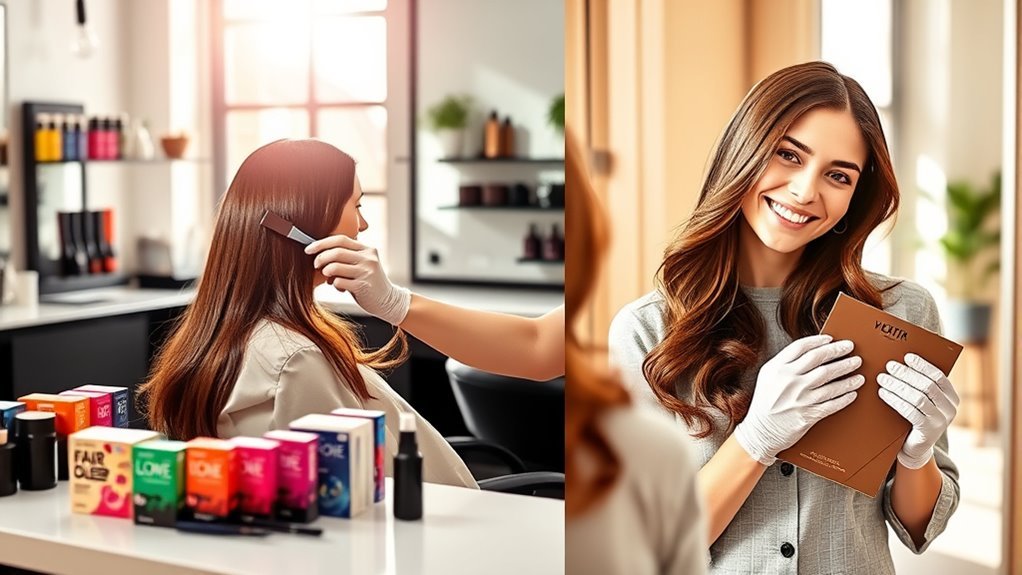
How do you decide between salon and at-home hair color? It often comes down to weighing the salon experience against the convenience and cost of doing it yourself.
When you opt for a salon, you get expert colorists who tailor the shade precisely to your needs, offering professional results you might struggle to achieve alone. Plus, the salon experience includes pampering and personalized care, making it more than just a color application.
However, salons can be pricey, so a cost comparison is essential. At-home kits are budget-friendly and let you color your hair on your schedule, but they require careful application to avoid mistakes. You also miss out on the professional touch and advice.
If you want precision and a stress-free process, the salon is your best bet. If you’re comfortable with DIY and want to save money, at-home kits are worth considering. Your choice depends on your priorities and budget.
How to Pick the Best Hair Color for Your Skin Tone
Choosing between salon and at-home hair color sets the stage for finding a shade that truly complements you. To pick the best hair color for your skin tone, start by identifying your undertones: warm, cool, or neutral. Use the color wheel to find shades that harmonize with your undertone.
For example, cool undertones pair well with ashy or platinum hues, while warm undertones shine with golden or copper tones. Matching your undertone guarantees your hair color improves your natural complexion instead of clashing with it.
Here’s a quick guide to help:
| Skin Tone | Undertone | Recommended Hair Colors |
|---|---|---|
| Fair | Cool | Ash blonde, platinum, cool brown |
| Fair | Warm | Golden blonde, honey, caramel |
| Medium | Cool | Chestnut, espresso, burgundy |
| Medium | Warm | Copper, warm brown, auburn |
| Olive/Dark | Neutral/Warm | Chocolate, mahogany, caramel |
Match your hair color with your undertones for a flattering, natural look.
Understanding Permanent, Semi-Permanent, and Temporary Hair Dyes
Three main types of hair dyes—permanent, semi-permanent, and temporary—offer different levels of commitment and results. Permanent dyes penetrate your hair shaft using strong dye ingredients like ammonia and peroxide. This provides long-lasting color longevity that can only be removed as your hair grows out. If you want a bold, lasting change, this option works best.
Semi-permanent dyes coat the hair surface without harsh chemicals, making them less damaging. They gradually fade over several weeks since their color longevity is shorter. This is perfect if you want to experiment without a long-term commitment.
Temporary dyes sit on the hair’s outer layer and wash out after one or two shampoos. These are ideal for special occasions or trying a new look without any dye ingredients that alter your natural hair structure. Understanding these differences helps you pick the right dye based on how long you want your color to last and the level of hair care you prefer.
Choosing Popular Hair Color Shades That Suit You
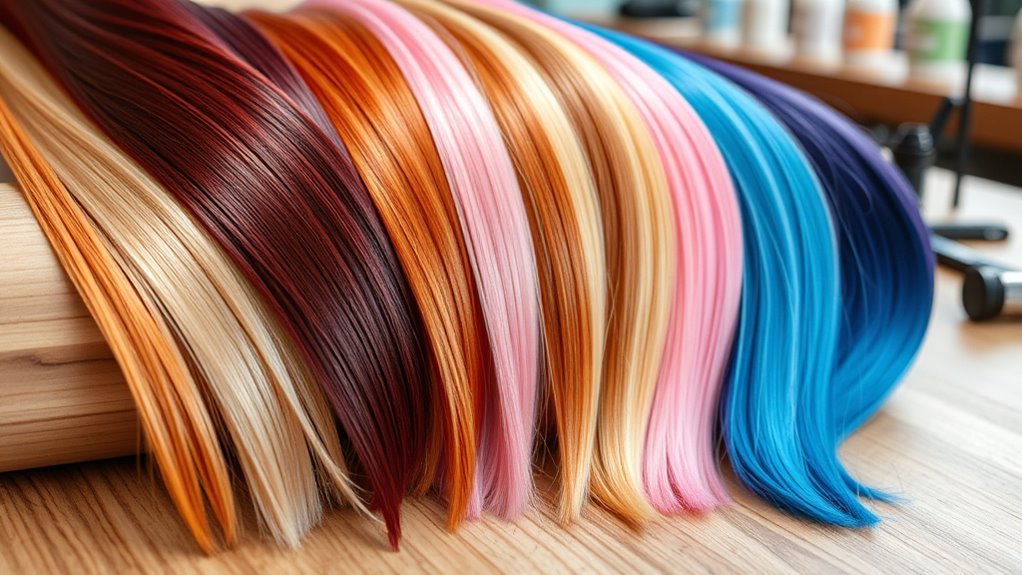
Once you decide on the type of dye that fits your lifestyle, the next step is to pick a shade that complements your natural features. Start by considering your skin tone. Warm tones often look great with golden, caramel, or copper shades, while cool tones pair well with ash blondes or rich brunettes.
Don’t forget your eye color; certain hues can make your eyes pop. Keep an eye on current color trends to find shades that are both fashionable and flattering. However, don’t sacrifice what suits you for trendiness.
Shade matching is essential. Test colors near your face before committing to guarantee harmony with your complexion. If you’re unsure, consult a professional or use online tools designed for virtual try-ons.
Preparing Your Hair for a Perfect Color Result
Before you start coloring, make sure to check your hair’s health. You want it to be strong enough to handle the process. It’s a good idea to use deep conditioning treatments—they really help boost moisture and repair any damage. Also, try to avoid any chemical treatments beforehand since they can interfere with your new color.
Assess Hair Health
Your hair’s condition plays an essential role in achieving the perfect color result. Before you start, perform a thorough scalp assessment to confirm there are no irritations or sensitivities that could affect the dyeing process. Healthy skin supports better color absorption and minimizes risks.
Next, evaluate your hair texture, whether it’s fine, coarse, straight, or curly, as this affects how the color penetrates and holds. Damaged or brittle hair might absorb color unevenly, so identifying weak spots helps you adjust your approach.
Deep Conditioning Treatments
Healthy hair sets the foundation for vibrant color, but adding a deep conditioning treatment can take your results to the next level. When you focus on moisture retention, your hair becomes more receptive to color, improving color longevity.
Choose products with nourishing ingredients like argan oil, keratin, and shea butter to strengthen hair texture and boost scalp health. Use deep conditioning techniques such as applying treatments to damp hair, covering with a warm towel, and leaving them on for 15–30 minutes.
This process repairs damage and seals moisture, so your color adheres better and lasts longer. Regularly incorporating these treatments guarantees your hair is soft, resilient, and ready to showcase your new shade perfectly every time.
Avoid Chemical Interference
Even if your hair feels in great condition, you’ll want to steer clear of chemical products that can interfere with your color results. Harsh chemicals can strip your hair, causing uneven color absorption and fading.
Instead, choose chemical-free options like natural shampoos and conditioners to maintain your hair’s integrity before coloring. Look for color-safe products specifically designed to protect your new hue and keep it vibrant longer.
Avoid sulfates, parabens, and alcohol-based styling products, as they can weaken your hair and dull your color. By prepping your hair with gentle, color-safe products, you create the perfect canvas for your dye, ensuring richer, longer-lasting results.
Prioritize your hair’s health to enjoy flawless, radiant color every time.
How to Apply Hair Dye at Home for Even, Lasting Color
Start by preparing your workspace with all the tools you’ll need: gloves, a tint brush, a bowl, and clips to section your hair. Proper organization helps you follow color application techniques smoothly and avoid uneven patches.
Begin by mixing your hair dye according to the package instructions, paying close attention to color mixing tips for a consistent shade.
Next, divide your hair into manageable sections using clips. This guarantees that the dye reaches every strand evenly. Use the tint brush to apply dye starting from the roots, working your way to the ends. Apply the color thoroughly in each section before moving on.
Mix color thoroughly to avoid streaks or inconsistent tones. Apply dye on dry, unwashed hair for better absorption. Use a mirror or ask for help to cover hard-to-see areas.
Following these steps helps you achieve even, lasting color without salon visits.
Tips to Keep Your Hair Color Vibrant Between Treatments
Although you’ve just achieved a fresh hair color, maintaining its vibrancy between treatments requires intentional care. You’ll want to use color enhancing shampoos that gently cleanse without stripping your hair. Also, applying UV protection sprays shields your hair from sun damage, which can fade color quickly.
Avoid excessive heat styling, and always use a heat protectant. Regular deep conditioning keeps your hair healthy, helping color last longer.
Here’s a quick guide to keep your color vibrant:
| Tip | Why It Helps | How to Apply |
|---|---|---|
| Color Enhancing Shampoos | Boosts color retention | Use 2-3 times a week |
| UV Protection Sprays | Shields from sun damage | Spray before going outdoors |
| Avoid Hot Water | Prevents color fading | Wash hair with lukewarm/cool water |
| Heat Protectant | Protects from styling heat | Apply before blow-drying or curling |
| Deep Conditioning | Maintains hair health | Use weekly for moisture renewal |
Stick to these tips, and your hair color will stay vibrant longer!
How to Cover Gray Hair Safely and Effectively
When you’re covering gray hair, it’s a good idea to choose gentle dyes that protect both your scalp and your strands. Natural options can be a great choice because they blend grays without using harsh chemicals. And don’t forget, taking care of your hair after coloring is just as important—it helps keep your hair healthy and your color looking fresh for longer.
Choosing Gentle Hair Dyes
If you want to cover gray hair without causing damage, choosing gentle hair dyes is essential. Look for products with gentle ingredients that minimize scalp irritation while providing vibrant color longevity.
Before applying, always perform allergy testing to avoid adverse reactions. Checking product reviews and user experiences can help you find trustworthy brands and effective application techniques.
Consider these tips when selecting your dye:
- Compare brands focusing on environmental impact and ingredient safety.
- Read user experiences to understand real-life results and ease of use.
- Follow recommended application techniques for consistent, long-lasting coverage.
Natural Gray Coverage Options
Choosing gentle hair dyes sets a solid foundation for covering gray hair without damage, but you might also want to examine natural options that offer safe and effective coverage.
Natural dye options like henna, indigo, and chamomile work gently on gray strands, preserving hair health while providing subtle color. You can also investigate gray blending techniques, which soften the contrast between gray and pigmented hair for a more natural look without full coverage.
| Natural Dye Options | Benefits |
|---|---|
| Henna | Adds reddish tint, conditions hair |
| Indigo | Provides dark tones, complements henna |
| Chamomile | Lightens gray subtly, brightens hair |
These methods let you cover gray hair safely while enhancing shine and texture.
Post-Color Hair Care
Proper post-color hair care plays an essential role in maintaining your gray coverage and keeping your hair healthy. After coloring, you’ll want to focus on post color maintenance to extend your color’s vibrancy and protect your strands from damage.
Using color enhancing products designed for color-treated hair helps refresh your shade and prevent dullness.
To care for your colored hair effectively:
- Use sulfate-free shampoos and conditioners to avoid stripping color.
- Apply deep conditioning treatments weekly to nourish and repair hair.
- Limit heat styling to reduce fading and breakage.
Top Hair Coloring Mistakes and How to Avoid Them
Though coloring your hair can be exciting, many people make common mistakes that lead to disappointing results. Avoiding these errors starts with smart color selection tips. Choose shades that complement your skin tone and natural hair color. Also, be mindful of common application errors like uneven coverage or leaving the dye on too long.
Here’s a quick guide to help you dodge these pitfalls:
| Mistake | How to Avoid It |
|---|---|
| Wrong color choice | Test with color swatches first |
| Uneven application | Section hair and apply dye evenly |
| Skipping strand test | Always perform a patch test |
| Over-processing | Follow timing instructions strictly |
| Ignoring hair health | Condition regularly before coloring |
Best Hair Color Products and Brands for Every Budget
Finding the right hair color product doesn’t have to break the bank. Whether you’re chasing the latest color trends or sticking to classic shades, there are excellent budget options that deliver quality results. Before buying, check product reviews and brand comparisons to understand how each performs with DIY techniques or professional recommendations.
Prioritize brands that emphasize ingredient safety and hair care to keep your locks healthy.
Here are three top picks for every budget:
- Affordable: L’Oréal Excellence Creme offers vibrant color and nourishing ingredients for a wallet-friendly price.
- Mid-range: Clairol Natural Instincts provides ammonia-free formulas, perfect for gentle, trendy color updates.
- Premium: Olaplex Hair Perfector pairs with color treatments to protect and strengthen hair during coloring.
Frequently Asked Questions
How Does Hair Coloring Affect Hair Health Long-Term?
Hair coloring can weaken your hair over time, especially with harsh coloring techniques like bleaching. It strips natural oils and moisture, leading to dryness and breakage.
However, if you choose gentler methods and stick to a solid hair maintenance routine, you can minimize damage. Regular conditioning, using sulfate-free shampoos, and avoiding excessive heat styling help keep your colored hair healthy long-term.
Can Hair Dye Cause Allergic Reactions?
Imagine your scalp suddenly itching like a swarm of tiny fire ants. Yes, hair dye can cause allergic reactions.
If you notice allergy symptoms like redness, swelling, or hives, don’t ignore them.
To keep your experience safe, always do a patch test 48 hours before coloring. This safe testing helps you spot sensitivity early, protecting your skin from unpleasant surprises and letting you enjoy your new look worry-free.
What Ingredients Should I Avoid in Hair Color Products?
You should avoid ingredients like ammonia, parabens, PPD (para-phenylenediamine), and resorcinol in hair color products, as they can irritate your skin or cause allergies. Instead, look for natural alternatives with plant-based dyes and fewer harsh chemicals.
Choosing safe brands that prioritize gentle, non-toxic formulas helps protect your scalp and hair health. Always patch-test new products to confirm they’re right for you.
How Often Can I Safely Color My Hair?
You can safely color your hair every 4 to 6 weeks, but your coloring frequency really depends on your hair type. If you have fine or damaged hair, it’s best to wait longer between sessions to avoid breakage.
For thicker, healthier hair, you might manage more frequent coloring. Always listen to your hair’s condition and give it time to recover. Using nourishing treatments can help maintain your hair’s health between colorings.
Does Hair Color Fade Faster With Frequent Washing?
Yes, hair color does fade faster with frequent washing. Every time you wash your hair, especially with hot water or harsh shampoos, you strip away oils and pigments, reducing color retention.
To keep your color vibrant longer, try to decrease your washing frequency and use color-safe, sulfate-free shampoos. This helps maintain moisture and locks in the dye, so your hair stays bright and healthy for a longer time.
Conclusion
Now that you’ve got the lowdown on hair color, you’re ready to make choices that suit your style and skin tone, no need to rely on a medieval potion! Whether you go to a salon or color at home, prepping right and avoiding common mistakes will keep your locks vibrant and healthy.
Remember, great hair color is all about confidence and care. So, go ahead, transform your look and let your true colors shine every day with the perfect hair color for you!