Wigs for Hair Loss: A Complete Buying Guide
Dealing with hair loss can be tough, and if you’re searching for the right wig, you’re not alone. Many people struggle to find options that feel comfortable, look natural, and fit their lifestyle.
Whether it’s due to medical reasons or personal choice, finding a wig that restores your confidence is a journey worth taking.
If you’re looking for wigs for hair loss, consider synthetic options for low maintenance and affordability, or human hair for natural styling and versatility.
Choose a breathable, adjustable wig cap for comfort and fit, and pick a style that complements your face shape.
Remember to budget for both purchase and upkeep, and buy from reliable sources offering support.
Understanding these basics helps you confidently restore your look and feel great; there’s plenty more to investigate to find your perfect wig.
Key Takeaways
- Choose between synthetic wigs for affordability and low maintenance or human hair wigs for a natural look and styling versatility.
- Select wig caps with breathable materials, adjustable straps, and accurate sizing for comfort and a secure fit.
- Match wig styles to your face shape: oval suits all, round benefits from volume, square from waves, heart from side parts, and diamond softens angles.
- Maintain wigs by washing every 10-15 wears with gentle shampoo, air drying on stands, and avoiding heat unless the wig is heat-friendly.
- Budget wisely by considering initial cost and upkeep. Buy from reliable online retailers, local boutiques, or specialty wig salons.
Types of Wigs for Hair Loss
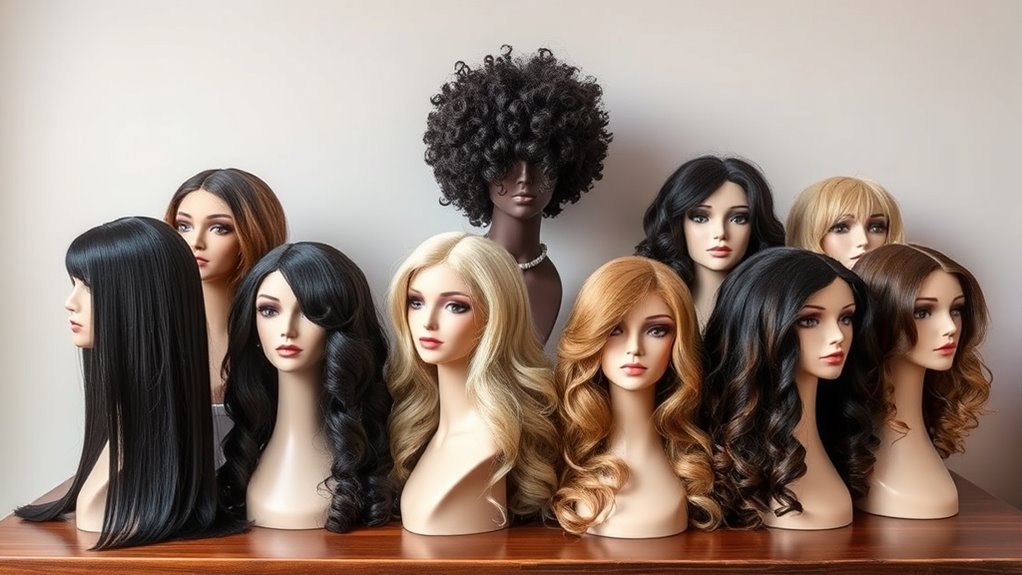
When you’re choosing a wig for hair loss, understanding the different types is essential. Wigs primarily come in two main categories based on wig materials: synthetic and human hair. Each offers distinct benefits, but focusing on the material helps determine the wig’s feel, durability, and how it will respond to wig styling.
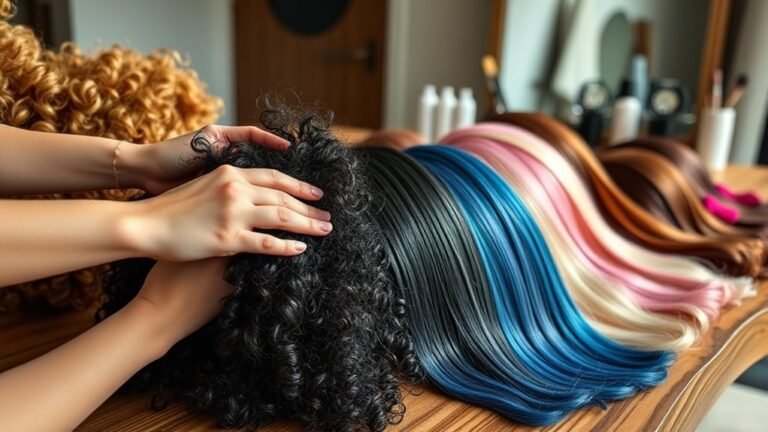
Synthetic wigs often hold their style even after washing, making them low-maintenance and perfect if you want a ready-to-wear look. On the other hand, wigs made from human hair give you more flexibility, allowing you to style your wig just like natural hair, whether that means curling, straightening, or cutting.
Furthermore, consider the wig’s construction, such as lace front, monofilament, or capless options, since these affect comfort and natural appearance. By knowing the types of wigs and their materials, you can select one that fits your lifestyle and wig styling preferences, ensuring you feel confident every day.
Synthetic vs. Human Hair Wigs: Pros and Cons
Although both synthetic and human hair wigs can improve your appearance, each type comes with unique advantages and drawbacks that you should weigh carefully. Synthetic wigs offer consistent hair texture right out of the box and are usually more affordable. However, their wig durability tends to be lower since they can’t handle heat styling and may wear out faster.
Synthetic wigs provide consistent texture and affordability but lack durability due to heat styling limitations.
Human hair wigs provide a natural look and feel, giving you the freedom to style and treat the hair as your own. The trade-off is a higher price and the need for more maintenance.
Consider these points to help your decision:
- Synthetic wigs suit you if you want low maintenance and vibrant, lasting styles.
- Human hair wigs fit if you crave versatility and a lifelike hair texture.
- Think about how often you’ll wear the wig, as wig durability varies greatly between types.
Choosing the Right Wig Cap for Comfort
Because your wig cap sits directly on your scalp, choosing the right one is crucial for all-day comfort and a secure fit. You’ll want to evaluate wig cap materials that offer breathable fabrics to prevent overheating, especially if you wear your wig for long hours.
Adjustable straps and various cap size options help guarantee a snug fit without pressure. Some caps include comfort padding or wig liners to reduce irritation and improve heat resistance, keeping you cool and comfortable.
Here’s a quick comparison to guide your choice:
| Feature | Benefit |
|---|---|
| Wig Cap Materials | Breathability & durability |
| Cap Size Options | Custom fit |
| Adjustable Straps | Secure fit without tightness |
| Comfort Padding | Reduced irritation |
| Wig Liners | Added comfort & heat resistance |
Select a cap combining these features to enjoy both comfort and security throughout your day.
Selecting the Best Wig Style for Your Face Shape
To find the perfect wig, begin by figuring out your face shape. Once you know that, you can pick wig styles that really complement your features.
Also, think about the wig length that will create the best balance for your look. Taking these steps makes it easier to choose a wig that feels natural and flattering.
Identify Your Face Shape
How do you know which wig will suit you best? Start with a face shape analysis to understand your unique features. Recognizing your face shape helps you feel confident and guides your wig style choices effortlessly.
Here’s how to identify your face shape:
- Measure your forehead, cheekbones, and jawline to spot your dominant features.
- Compare these measurements to common face shapes: oval, round, square, heart, or diamond.
- Visualize how different wig styles complement your face, enhancing your natural beauty.
Knowing your face shape lets you focus on wig style recommendations that highlight your best angles. This thoughtful approach guarantees you pick a wig that feels like it was made just for you, boosting your confidence every time you wear it.
Match Wig Styles
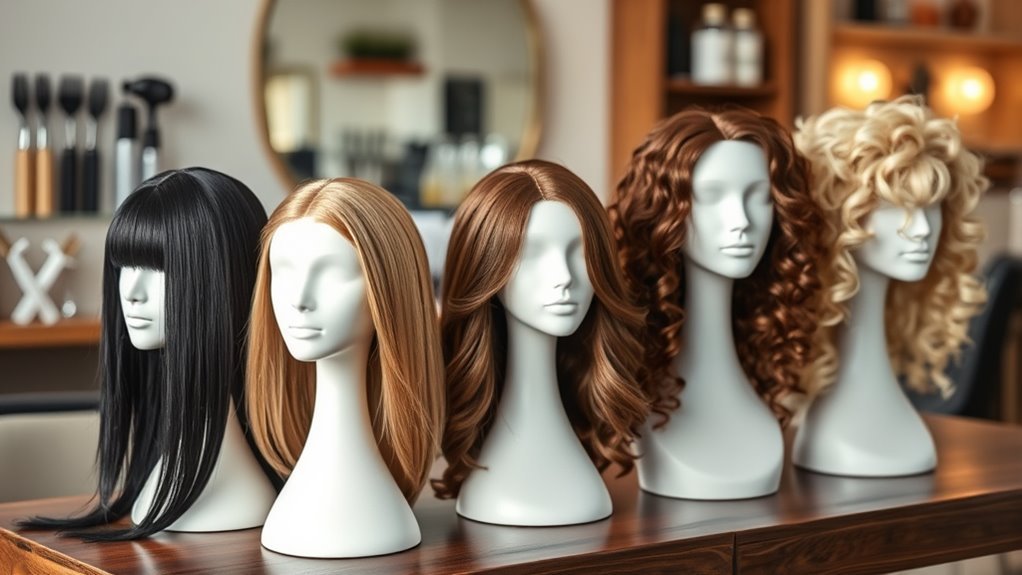
Once you know your face shape, you can start matching wig styles that highlight your best features. For round faces, go for wigs with height and volume on top to elongate your silhouette.
If you have a square face, soft waves or curls can soften your jawline beautifully. Oval faces are lucky; they suit almost any wig style, so feel free to investigate wig trends freely.
Heart-shaped faces benefit from side-parted styles that balance a wider forehead. Keep style versatility in mind; choosing wigs that allow you to change partings or add accessories lets you adapt your look easily.
Consider Wig Length
Wig length plays an essential role in balancing your facial features and enhancing your overall look. Choosing between short vs. long wigs depends on your face shape and personal style. Short wigs can highlight your jawline and provide a fresh, youthful vibe, while long wigs offer elegance and softness.
Don’t forget to take into account seasonal styles. Lighter, shorter wigs suit warm months, and longer, fuller wigs add warmth in cooler seasons.
Here’s how to decide:
- Oval faces can pull off both short vs. long with ease, letting you experiment freely.
- Round faces benefit from longer styles that elongate your features.
- Square faces often look best with layered short wigs that soften angles.
Pick wig length that makes you feel confident and comfortable every day.
Ensuring Wig Comfort and Fit for Hair Loss
To make sure your wig feels comfortable all day, start by measuring your head accurately. It really helps to get the right fit from the beginning. Then, look for lightweight materials—these won’t weigh you down or make you feel uncomfortable after a few hours.
Also, try to choose wigs with adjustable features. They’re great because you can tweak the fit until it feels just right. Taking these steps will make wearing your wig a lot easier, so you can feel confident and at ease all day long.
Measuring Your Head
Taking accurate measurements of your head is essential for guaranteeing your wig fits comfortably and stays secure throughout the day. Getting the right head circumference guarantees your wig won’t slip or feel too tight. Use simple measuring techniques with a soft tape measure to capture your head’s exact dimensions.
Follow these steps to measure your head correctly:
- Measure your head circumference just above your ears and across the middle of your forehead.
- Note the distance from your front hairline to the nape of your neck.
- Measure from temple to temple across the back of your head.
These measurements help you find a wig that feels like it was made just for you, boosting your confidence and comfort every time you wear it.
Choosing Lightweight Materials
Although comfort is key when selecting hairpieces, choosing lightweight materials plays an essential role in making sure your wig feels natural and breathable throughout the day. Opt for lightweight options made from breathable fabrics to avoid discomfort and overheating.
These materials help your scalp stay cool and reduce irritation, making your wig-wearing experience much more enjoyable.
| Material | Benefits |
|---|---|
| Lace Front | Lightweight, breathable |
| Monofilament | Natural scalp look, airy |
| Synthetic Fiber | Lightweight, low maintenance |
| Human Hair | Breathable, natural feel |
| Mesh Cap | Highly breathable, light |
Choosing the right lightweight materials guarantees your wig fits comfortably without sacrificing style or durability.
Adjustable Wig Features
Several adjustable features can make your wig fit more securely and comfortably, guaranteeing it stays in place throughout the day. When dealing with hair loss, a secure fit is essential to boost your confidence and prevent discomfort.
Here are three key adjustable features to look for:
1. Adjustable Straps
These allow you to tighten or loosen the wig cap, giving you a custom fit that feels natural and secure.
2. Elastic Bands
They provide extra stretch and flexibility, adapting to your head shape for all-day comfort.
3. Hook-and-Loop Closures
Easy to use and reliable, these closures help keep your wig firmly in place without slipping.
Choosing wigs with these adjustable features guarantees you feel confident and comfortable every time you wear them.
Caring for Your Wig: Cleaning and Maintenance Tips
Properly cleaning and maintaining your wig can greatly extend its lifespan and keep it looking fresh. Start by washing your wig every 10-15 wears with a gentle shampoo designed for synthetic or human hair, depending on your wig type. Always rinse thoroughly and let it air dry on a wig stand to preserve its shape.
Avoid heat unless your wig is heat-friendly. When storing your wig, invest in quality wig storage solutions like a stand or breathable bag to prevent tangling and dust buildup. This also helps maintain the wig’s style and volume.
For daily upkeep, use appropriate wig styling techniques, such as gentle brushing with a wide-tooth comb and using styling products made specifically for wigs. Avoid excessive manipulation to keep fibers intact. By following these simple care steps, you’ll enjoy a natural look and longer-lasting wig that supports your confidence every day.
Matching Your Wig Color Naturally
To match your wig color naturally, first figure out your skin’s undertone—that way, you can pick shades that really complement you. Then, take a look at your natural hair color and compare it to the wig options. Pay close attention to those subtle differences, because they can make a big impact.
Also, don’t forget to check out the wig colors in different lighting. Sometimes what looks great in one light might not be the same in another, so testing them out will help you find the best match.
Identifying Your Undertone
How can you guarantee your wig color looks natural and complements your complexion? Start with an undertone analysis to verify perfect color matching. Your undertone is the subtle hue beneath your skin’s surface, guiding you to the right wig shade. Here’s how to identify it:
- Check your veins: If they appear blue or purple, you likely have cool undertones; greenish veins suggest warm undertones.
- Consider jewelry: Silver tends to flatter cool undertones, while gold suits warm ones.
- Observe your skin’s reaction to sun: If you tan easily, you probably have warm undertones; if you burn, cool undertones are likely.
Comparing Natural Hair Shades
Once you’ve pinpointed your undertone, the next step is to compare natural hair shades to find a wig color that blends seamlessly with your complexion. Focus on colors that complement your undertone. Warm undertones match well with golden or honey hues, while cool undertones suit ash or neutral browns.
When selecting natural shades, consider the depth of your original hair color, whether light, medium, or dark. Color matching means looking beyond just the base color. Subtle highlights or lowlights can make a big difference in achieving a natural look.
Don’t forget to view colors in natural light to see how they truly appear. By carefully comparing natural shades, you’ll guarantee your wig looks authentic and improves your overall appearance.
Testing Wig Colors
Where should you start when testing wig colors to confirm a natural match? Begin by comparing color swatches against your skin tone in various lighting effects. Natural light reveals true hues, while indoor lighting may alter perception.
To guarantee your wig color blends seamlessly, test color swatches in daylight and artificial light to catch subtle differences. Hold swatches near your face to see how they complement your complexion. Take photos under different lighting conditions to review and compare later.
Budgeting for Your Hair Loss Wig
Setting a clear budget for your hair loss wig helps you focus on options that suit both your style and finances. When establishing your wig budget, consider not only the initial cost but also ongoing expenses like maintenance and accessories. Good financial planning guarantees you get the best value without overspending.
Here’s a quick look at how different wig types fit various budgets:
| Wig Type | Price Range | Maintenance Cost |
|---|---|---|
| Synthetic | $50 – $200 | Low |
| Human Hair | $200 – $1,000+ | Moderate to High |
| Custom-Made | $500 – $3,000+ | High |
Where to Buy Quality Hair Loss Wigs
Knowing your budget helps narrow down your options, but finding quality hair loss wigs also means choosing the right place to shop. You want a source that offers reliability, variety, and support. Here’s where to start exploring:
- Online retailers: They provide vast selections and user reviews, helping you compare styles and quality easily. Plus, many offer custom options to fit your unique needs.
- Local boutiques: Visiting in person lets you feel the wig’s texture and try on different styles. Staff can offer personalized advice, making your purchase more confident.
- Specialty wig salons: These often focus on hair loss solutions, providing expert fittings and custom options tailored to your scalp and style preferences.
Wearing and Styling Your Wig With Confidence
Once you put on your wig, confidence becomes your best accessory. To truly own your look, adopt wig confidence tips like practicing at home to get comfortable with your wig’s fit and feel. Make sure to secure it properly using wig caps, clips, or adhesive, so it stays put all day.
Experiment with styling techniques to personalize your wig. Try gentle curls, sleek straightening, or parting it differently to match your style. Use heat tools cautiously if your wig is heat-resistant, and always apply wig-friendly products for a natural shine without damage.
Don’t hesitate to trim or layer your wig for a more natural appearance, either by yourself or a professional. Remember, confidence grows as you become familiar with your wig’s unique qualities. By combining proper care and styling, you’ll not only look great but also feel empowered every time you wear your wig.
Frequently Asked Questions
Can Wigs Cause Scalp Irritation or Allergic Reactions?
Yes, wigs can cause scalp irritation or allergic reactions, especially if you have scalp sensitivity. Certain wig materials like synthetic fibers or adhesives might trigger itching, redness, or discomfort.
To avoid this, you’ll want to choose wigs made from hypoallergenic materials and make sure your scalp stays clean and moisturized. Testing a small patch before full use can also help you spot any reactions early and keep your scalp healthy.
How Long Do Hair Loss Wigs Typically Last?
Hair loss wigs typically last between 6 months to a year, but wig longevity factors like material quality, how often you wear it, and your care routine play a big role. You’ll want to follow maintenance tips like gentle washing, proper storage, and avoiding heat styling to extend your wig’s life.
Taking good care guarantees your wig stays comfortable and looks great longer, saving you money and hassle.
Are There Special Wigs for Sensitive Scalps or Medical Conditions?
Yes, special wigs for sensitive scalps or medical conditions exist, like a gentle hug for your head. You’ll find wigs made from sensitive materials designed to minimize irritation and maximize scalp protection.
These wigs often have soft linings, breathable caps, and hypoallergenic fabrics, so you won’t feel discomfort or itching. When choosing, focus on comfort and protection to keep your scalp healthy while looking great.
Can I Sleep or Swim While Wearing My Wig?
You shouldn’t sleep or swim while wearing your wig, as both can damage it. Sleeping in a wig can cause tangling and wear. Swimming exposes it to chlorine or saltwater, which can weaken fibers.
Follow wig care tips by removing your wig before these activities. If you want to swim, consider wearing a swim cap and choose a wig designed for water use. Always take swimming precautions to extend your wig’s life.
How Do I Handle Wig Odor or Buildup Over Time?
You know what they say: “An ounce of prevention is worth a pound of cure.” For wig odor and buildup, stick to regular wig maintenance tips like gently washing your wig with mild shampoo and conditioner designed for wigs.
Odor removal techniques include airing your wig out and using wig-friendly sprays or baking soda to absorb smells. Avoid heavy products that cause buildup, and always store your wig properly to keep it fresh and odor-free.
Conclusion
Choosing the perfect wig for hair loss might feel overwhelming, but it doesn’t have to be. You might worry wigs look unnatural or uncomfortable, but with the right type, cap, and style, you’ll find one that feels like a natural part of you.
Remember, investing a little time and budget now means gaining confidence and comfort every day. You deserve to look and feel your best, so go ahead, find your ideal wig for hair loss and wear it with pride!