Your Guide to Face Moisturizer: Choosing With Confidence
Finding the perfect face moisturizer can feel overwhelming—you’re not alone if you’ve ever struggled to choose one that truly suits your skin. Many people want a product that hydrates without feeling heavy or greasy, and that also protects against sun damage.
The good news is, with a little guidance, you can find a moisturizer that works beautifully for your unique skin type.
You’ll want to start by identifying your skin type: dry, oily, normal, or sensitive to pick the best moisturizer. Look for hydrating ingredients like hyaluronic acid and ceramides if your skin is dry or sensitive, while niacinamide helps control oil and shine.
Don’t forget to choose a moisturizer with SPF for sun protection. Apply twice daily on clean skin, layering lighter products first.
Keep an eye out for signs your moisturizer isn’t working, and you’ll uncover how to switch smoothly for the best results.
Key Takeaways
- Identify your skin type by observing dryness, oiliness, sensitivity, or balance throughout the day.
- Choose moisturizers with hydrating ingredients like hyaluronic acid, glycerin, and ceramides. These help keep your skin soft and supple.
- Select anti-aging components such as retinol, peptides, antioxidants, vitamin C, and niacinamide. They boost collagen and protect your skin.
- Match moisturizer texture (cream, gel, lotion) to your skin type. Apply twice daily after cleansing for the best hydration.
- Use moisturizers with SPF 30 broad-spectrum protection for sun defense. This is especially important if you want to control oil and prevent premature aging.
How to Identify Your Skin Type Before Choosing a Face Moisturizer

How can you tell what skin type you have before choosing a face moisturizer? Start by observing how your skin feels throughout the day. If it feels tight or flaky, you likely have dry skin.
If it’s shiny and oily, especially in the T-zone, you probably have oily skin. Normal skin feels balanced, neither too dry nor too oily.
Pay close attention to skin sensitivity. If your skin frequently reacts with redness or irritation, you may have sensitive skin and need gentler care.
What Ingredients to Look For in Face Moisturizers
You’ll want to look for key hydrating ingredients that keep your skin soft and smooth. It’s all about giving your skin the moisture it needs to stay healthy.
And when it comes to anti-aging components, understanding what they do can really help you pick products that reduce fine lines and boost elasticity.
Plus, you’ll want to decide between natural and synthetic options so you can find what suits your skin and preferences best. It’s all about what feels right for you!
Hydrating Ingredients Benefits
Although many face moisturizers promise hydration, the key lies in their ingredients. To truly elevate your skin’s hydration levels, look for components that work in synergy, locking in moisture and soothing dryness.
Here are some hydrating ingredients you’ll want to spot:
- Hyaluronic Acid: Holds up to 1,000 times its weight in water, instantly plumping and hydrating your skin.
- Glycerin: Draws moisture from the air to keep your skin continuously hydrated.
- Ceramides: Strengthen your skin barrier, preventing water loss and maintaining long-term hydration.
When these ingredients combine, they improve ingredient synergy, increasing your moisturizer’s effectiveness. Choosing a product with these elements guarantees your skin stays soft, supple, and well-hydrated throughout the day.
Anti-Aging Components Explained
Why should you pay attention to the anti-aging ingredients in your face moisturizer? Because these components directly impact skin elasticity, moisture retention, and overall youthful appearance. Knowing what to look for helps you choose a product that truly works.
| Ingredient | Benefits | Key Effects |
|---|---|---|
| Retinol | Boosts collagen production | Improves skin elasticity |
| Peptides | Stimulate growth factors | Repair and firm skin |
| Antioxidants | Protect from free radicals | Prevent premature aging |
| Hyaluronic Acid | Deep hydration | Elevates moisture retention |
| Vitamin C & Niacinamide | Brighten and even tone | Promote collagen synthesis |
Look for these ingredients to enjoy retinol benefits, peptides explained, antioxidants role, collagen boosters, hyaluronic acid hydration, vitamin C, niacinamide effects, and growth factors for healthier skin.
Natural Vs. Synthetic Options
Understanding the ingredients in anti-aging moisturizers sets the stage for deciding between natural and synthetic options. You’ll notice natural benefits like gentle nourishment and eco-friendly choices often come from carefully chosen ingredient sourcing.
On the other hand, synthetic concerns might include potential irritants or less skin compatibility. But they can offer advanced formulation differences and consistent results.
When weighing your choices, consider:
- Natural benefits such as antioxidants and plant-based oils
- Synthetic concerns related to preservatives and chemicals
- Price comparison and brand reputation reflecting quality and ethics
How to Choose Moisturizers for Dry and Sensitive Skin
When you have dry, sensitive skin, it’s really important to choose moisturizers that have hydrating ingredients like hyaluronic acid and ceramides. These ingredients help to lock in moisture and keep your skin feeling soft. At the same time, you’ll want to steer clear of irritants like fragrances and alcohol because they can actually make dryness and sensitivity worse. Picking the right formula makes a big difference in keeping your skin calm and well-moisturized.
Hydrating Ingredients to Seek
Moisturizers designed for dry and sensitive skin rely on key hydrating ingredients that lock in moisture and soothe irritation. When choosing your moisturizer, focus on formulation types that improve hydration levels while supporting the skin barrier. Look for:
- Hydrating oils like jojoba or squalane, which provide nourishment and aid moisture retention without clogging pores.
- Humectant agents such as hyaluronic acid and glycerin, drawing water into your skin to boost hydration instantly.
- Occlusive layers like ceramides or shea butter that form a protective barrier, sealing in moisture and preventing water loss.
Bonus points if the formula includes soothing botanical extracts, calming your skin while improving hydration. Selecting these ingredients helps maintain a healthy skin barrier and keeps dryness and sensitivity at bay.
Avoiding Irritants Effectively
Because dry and sensitive skin is more prone to irritation, you’ll want to steer clear of ingredients that can trigger redness, itching, or breakouts. Look for product labeling that highlights fragrance-free formulas, as fragrance sensitivity is a common culprit.
Check ingredient sourcing carefully to avoid harsh chemicals or allergens. Before fully committing, do patch testing to observe how your skin reacts. Allergy testing can also help identify specific irritants.
Remember, your skin barrier is delicate, so choose moisturizers designed to support and restore it. Keep in mind environmental factors and seasonal changes can affect your skin’s hydration levels, so adjust your moisturizer accordingly.
Formulation differences matter. Lighter creams may suit humid months, while richer ones work better in dry seasons. This approach helps you avoid irritants effectively and maintain healthy skin.
How to Find Face Moisturizers That Control Oil and Shine
How can you keep your skin hydrated without adding unwanted shine? Start by choosing face moisturizers designed with oil control formulas that balance your skin’s natural oils. Look for shine-reducing ingredients like niacinamide or salicylic acid. These help minimize excess oil while maintaining moisture. Lightweight textures are key because they hydrate without feeling heavy or greasy.
Consider these tips when selecting your moisturizer:
- Opt for matte finish options to keep your skin looking fresh and shine-free throughout the day.
- Pick non-comedogenic choices to prevent clogged pores and breakouts, especially if you’re prone to acne.
- Make seasonal adjustments, using lighter formulas in summer and richer ones in winter to maintain balanced hydration.
How to Pick a Moisturizer With Sun Protection
You want a moisturizer that not only hydrates your skin but also protects it from harmful UV rays. So, look for products that have broad-spectrum SPF. This way, you’re shielding your skin against both UVA and UVB damage. Picking the right type of sun protection can really help keep your skin healthy and prevent premature aging.
Importance Of SPF
When choosing a face moisturizer, incorporating SPF is essential to protect your skin from harmful UV rays. These rays accelerate aging and increase the risk of skin cancer. Understanding SPF benefits helps you make informed decisions, cutting through common myths like “I don’t need SPF indoors” or “Higher SPF means double protection.”
Including SPF in your moisturizer offers daily defense without extra steps.
Imagine your moisturizer as a shield blocking damaging UVA and UVB rays, a barrier preventing premature wrinkles and sunspots, and a guard reducing skin cancer risks over time.
Types Of Sun Protection
Three main types of sun protection ingredients appear in moisturizers: chemical filters, physical blockers, and a combination of both. Chemical filters absorb UV rays, while physical blockers like zinc oxide reflect them. Choosing a product labeled broad spectrum guarantees protection against both UVA and UVB rays.
When picking a moisturizer for daily wear, consider SPF ratings. SPF 30 is typically sufficient. Pay attention to application methods; apply generously and reapply if you’re outdoors for extended periods. If you need extra durability, look for water resistance.
Also, keep an eye on product expiration dates, as expired sunscreens lose effectiveness. By understanding these types and factors, you can confidently select a moisturizer that protects your skin while providing hydration throughout the day.
Understanding Face Moisturizer Textures: Creams, Gels, and Lotions
Although face moisturizers may seem similar at first glance, their textures, like creams, gels, and lotions, serve different skin needs and preferences. Understanding cream vs gel, for example, helps you pick the right match.
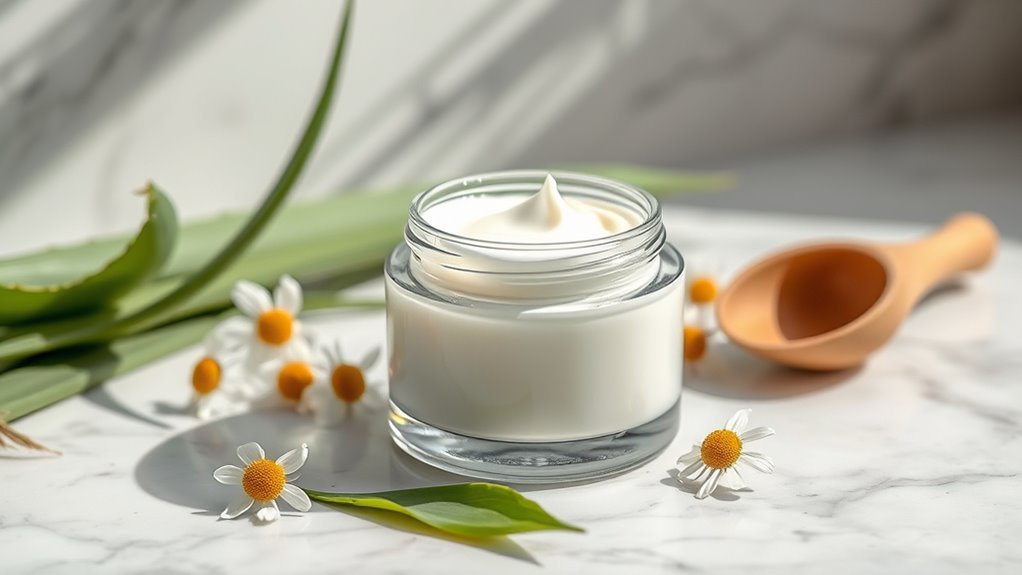
Creams are rich and thick, perfect if your skin feels dry or needs extra nourishment. Gels, on the other hand, are lightweight and absorb quickly, making them ideal for oily or acne-prone skin.
Lotions offer a middle ground with balanced hydration and are often praised for their versatility. Here’s a quick visual to help you decide:
- Creams: Thick, buttery texture that melts into dry skin
- Gels: Clear, light, and invigorating, often cooling upon application
- Lotions: Smooth and fluid, providing moderate moisture without heaviness
When and How Often to Apply Your Face Moisturizer
How often you apply your face moisturizer can make a big difference in your skin’s health and appearance. Ideally, you should moisturize twice daily, once in the morning and once before bed. The application timing is key; applying moisturizer right after cleansing helps lock in hydration while your skin is still slightly damp.
Seasonal adjustments are important, too. During colder months, your skin may need more frequent moisturizing to combat dryness, so consider adding a mid-day application. In warmer seasons, lighter moisturizers used once or twice daily usually suffice as your skin produces more natural oils.
How to Layer Your Moisturizer With Other Skincare Products
Applying your moisturizer at the right times sets a solid foundation for your skincare routine, but knowing how to layer it with other products can improve its benefits even more. Mastering layering techniques guarantees product compatibility and maximizes moisture retention without compromising your skin barrier.
Start by understanding the layering order: apply lighter serums first, followed by your moisturizer, then heavier oils or creams.
Keep these application methods and timing strategies in mind: apply each product on slightly damp skin to lock in hydration. Allow each layer to absorb fully before adding the next to avoid ingredient interaction.
Also, adjust your routine seasonally. Use lighter layers in summer and richer creams in winter.
Signs Your Face Moisturizer Isn’t Working for You
You might notice several clear signs when your face moisturizer isn’t working for you. If your skin feels greasy soon after application or your moisturizer consistency feels too heavy, it might be clogging your pores. On the other hand, if your skin still feels dry or tight, your moisturizer might not be hydrating enough.
Pay attention to any new breakouts, redness, or irritation. These can indicate your skin is reacting poorly to the product.
Watch for new breakouts, redness, or irritation as signs your skin may be reacting badly to your moisturizer.
Seasonal changes also play a big role. What works in winter might feel too thick in summer, or a summer moisturizer might leave your skin parched in colder months. If your moisturizer isn’t adapting to these shifts, your skin will show it.
Finally, if your skin texture looks uneven or dull despite regular moisturizing, it’s time to reconsider your choice. Recognizing these signs helps you switch to a product that truly supports your skin’s needs.
Tips for Switching Face Moisturizers Without Irritating Skin
Although switching to a new face moisturizer can refresh your skincare routine, it’s important to introduce it gradually to prevent irritation. Your skin’s sensitivity might react unexpectedly, especially if the new product contains unfamiliar ingredients or if it doesn’t align with your current hydration levels and seasonal changes. Start by doing a patch test on a small area to check for adverse reactions before applying it all over your face.
To switch moisturizers without irritating your skin, keep these tips in mind:
- Patch testing: Apply the new moisturizer on your jawline or behind your ear for 24-48 hours to monitor reactions.
- Ingredient awareness: Compare ingredients to guarantee product compatibility and avoid irritants that could trigger sensitivity.
- Transition gradually: Mix the new moisturizer with your old one, slowly increasing the new product’s ratio over 1-2 weeks.
This approach helps your skin adjust smoothly, maintaining its balance and comfort.
Frequently Asked Questions
Can Face Moisturizers Help Reduce Wrinkles Over Time?
Yes, face moisturizers can help reduce wrinkles over time by providing essential hydration benefits that keep your skin plump and smooth. When you consistently use a moisturizer with ingredients targeting wrinkle prevention, you support your skin’s elasticity and minimize fine lines.
Hydrated skin is less prone to damage, so incorporating a good moisturizer into your routine plays a key role in maintaining a youthful, wrinkle-free complexion.
Are Natural or Organic Face Moisturizers More Effective?
Sure, because slathering leaves on your face is the secret to eternal youth, right? In reality, natural ingredients and organic benefits can be great, but they’re not magic.
You’ll find some natural products hydrate well and soothe skin, while others might irritate. Effectiveness depends on your skin type and the formula, not just “organic” labels.
How Should I Store My Face Moisturizer to Keep It Fresh?
You should store your face moisturizer in a cool, dry place away from direct sunlight to keep it fresh. Pay attention to expiration dates and avoid using it past that time to prevent irritation.
Keep storage temperatures consistent, ideally below 77°F (25°C), since heat can break down active ingredients. Avoid humid areas like the bathroom, as moisture can spoil the formula faster.
Proper storage guarantees your moisturizer stays effective and safe to use.
Is It Safe to Share My Face Moisturizer With Others?
Imagine your friend borrows your moisturizer and later develops a rash. That’s a real hygiene concern. Sharing face moisturizer isn’t safe because bacteria can transfer and increase infection risk.
Plus, your skin might react differently to the product than theirs because of skin compatibility issues. To avoid problems, it’s best to keep your moisturizer personal. This way, you protect both your skin health and hygiene effectively.
Can Face Moisturizer Cause Acne Breakouts?
Yes, face moisturizer can cause acne breakouts if it contains ingredients that act as acne triggers for your skin type. If you have oily or acne-prone skin, you’ll want to avoid heavy, pore-clogging formulas.
Instead, choose non-comedogenic, oil-free moisturizers designed for your skin type. Paying attention to ingredient lists and how your skin reacts will help you prevent breakouts while keeping your skin hydrated and healthy.
Conclusion
Choosing a face moisturizer might seem like a simple step, but as you’ve learned, it’s anything but basic. You’d think every moisturizer would just work, right? Nope. Your skin has its own picky personality, and finding the perfect match takes some trial and error.
But don’t worry. Armed with this guide, you’re now ready to navigate the moisturizing maze with confidence. Who knew hydration could be such a dramatic adventure? Now, go ahead and choose your face moisturizer with confidence!