
How to Make Wig Lace Invisible: Essential Tips for a Natural Look
Making wig lace invisible is key to achieving a natural hairline and flawless look. This involves techniques such as properly trimming the lace, blending it with your skin tone, and using appropriate adhesives or gels to secure the lace without noticeable edges. These methods visually soften the boundary between your scalp and the wig.
The importance of an invisible lace cannot be overstated for anyone wearing wigs regularly, whether for fashion, convenience, or medical reasons. When the lace is undetectable, a wig looks more realistic, boosting confidence and allowing greater styling flexibility without the worry of revealing the wig base.
This article covers a variety of strategies to make wig lace invisible. From choosing the right lace material, preparing your skin, trimming the lace correctly, to selecting adhesives and blending techniques, you will find detailed, practical advice for a professional and natural finish.
Understanding Different Types of Wig Lace

Swiss vs. French Lace: Which Is Best for Invisiblity?
Swiss lace is finer and more delicate, making it easier to blend seamlessly into the scalp for an invisible look. French lace, while sturdier, is thicker and more visible if not carefully concealed.
Choosing the lace depends on your skill level and need for durability. Swiss lace suits those prioritizing realism, although it requires gentle handling, whereas French lace offers longer wear but needs more blending effort.
- Swiss lace is ultra-thin and soft
- French lace is thicker and more durable
- Swiss lace ideal for sensitive skin
- French lace better for beginners due to durability
Color Matching Your Lace to Skin Tone
Lace color selection impacts how invisible the wig line appears. Laces come in shades like light brown, medium beige, and dark brown to suit various skin tones. Matching lace to skin tone reduces the contrast and makes the lace less noticeable.
If an exact match is unavailable, you can customize lace color using foundation sprays, markers, or lace tinting products. This step is critical to eliminate the white or obvious base that reveals wig lace.
- Use lace tint sprays for customization
- Test lace colors in natural light
- Adjust lace with makeup or foundation for better blending
Prepping Your Skin and Hair for Wig Application

Cleaning and Protecting the Skin
Start with a clean, oil-free scalp to maximize adhesive grip and comfort. Using an alcohol-based cleanser removes oils and residue, preventing lifting or slipping. Skin protector sprays or barrier sprays create a protective layer that minimizes irritation from adhesives.
Proper skin preparation also helps the lace lay flat against the scalp, reducing visible edges and shadows that can betray the lace line.
- Clean skin with alcohol wipes
- Apply skin protector sprays
- Avoid heavy moisturizers before installation
For more on this, see our related guide: Transparent Lace Closure Guide: What to Know Before You Buy.
Securing Baby Hairs and Pre-plucking Hairline
Pre-plucking the wig's hairline mimics natural hair growth density, softening the lace front’s appearance. Trimming shorter baby hairs allows these strands to blend seamlessly with your natural hair or edges.
Creating baby hairs also gives you styling options that mask the lace edge, featuring wispy, irregular strands that replicate a real hairline.
- Use tweezers to thin the hairline
- Trim baby hairs to varying lengths
- Style baby hairs to cover the lace edge
Trimming and Shaping the Wig Lace for a Natural Fit
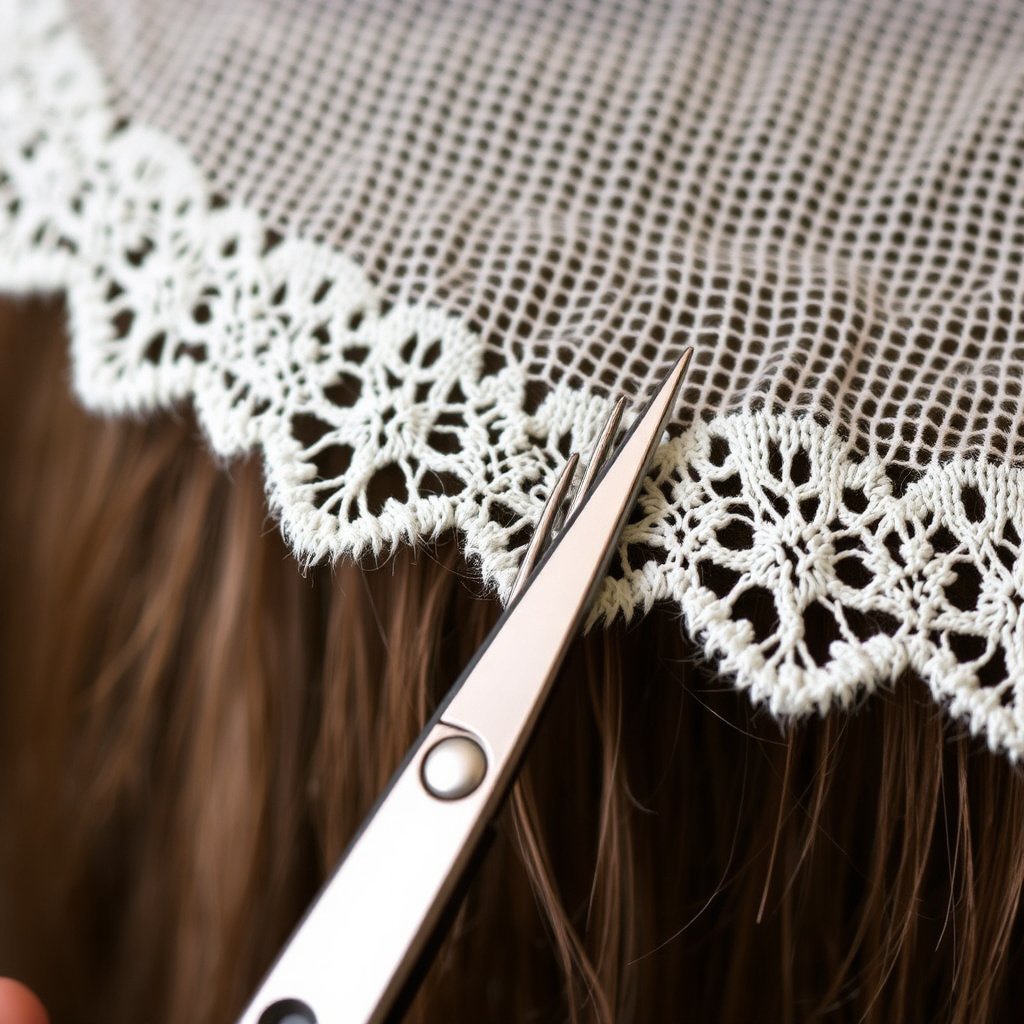
How to Trim Lace Without Damaging Your Wig
Trim lace carefully about ¼ inch from the hairline using sharp scissors. Cutting too close risks shedding, while leaving too much lace creates an obvious edge. Cut slowly in small sections for precision.
Avoid pulling or stretching the lace when trimming to preserve its shape and strength. After trimming, inspect the lace edge to ensure it follows your natural hairline contours.
- Use small, sharp scissors
- Trim just outside the hairline
- Work section by section
Shaping the Lace to Match Your Hairline
After trimming, customize the lace by creating slight irregularities along the edge to mimic natural hairline curves and peaks. Straight lines look artificial and make lace visible.
Blending these nuanced curves makes the lace edge dissolve into the skin, especially when combined with baby hairs styled along the perimeter.
- Create gentle peaks and valleys in lace edge
- Avoid perfectly straight cuts
- Utilize baby hairs to mask edges
Applying Adhesives and Blending Products for Seamless Lace

Choosing the Right Adhesive for your Skin Type
Glue and tape are common adhesives for wig lace. Choose based on skin sensitivity and desired hold duration. Medical-grade adhesive is recommended for sensitive or allergy-prone skin.
Water-based adhesives offer easier removal but shorter wear. Solvent-based adhesives provide a stronger, longer hold but require careful removal to avoid irritation.
- Water-based glue for short wear and ease
- Solvent-based glue for long-lasting hold
- Medical grade for sensitive skin
For more on this, see our related guide: HD Lace Frontal: A Complete Buying Guide.
Blending Lace with Foundations and Powders
Once the lace is secured, applying foundation or translucent powder matching your skin tone along the lace edge minimizes shine and creates uniformity with your scalp color.
Products specifically designed for lace blending avoid patchiness and help the lace disappear visually, even under bright lighting or close inspection.
- Use lace-friendly foundations
- Apply translucent powder to seal
- Avoid heavy or cakey makeup on lace
Maintenance Tips for Keeping Wig Lace Invisible Long-Term

Daily Care to Prevent Lace Lifting
Maintaining invisible lace requires avoiding excessive moisture and oils on the lace edge, which can weaken adhesives. Use gentle cleansers and avoid touching the lace frequently.
Sleeping with a satin scarf or bonnet preserves adhesive and protects lace from friction, preventing early lifting or discoloration.
- Wear satin bonnet during sleep
- Avoid excessive sweating near lace
- Use oil-free skin products
For additional practical steps on achieving a natural lace wig look, this lace wig wikihow guide offers detailed visual instructions. Lace Wig wikihow guide.
How to Safely Remove and Reapply Laces
Use proper adhesive removers to gently loosen lace without tearing. Rushing removal can damage delicate lace fibers, making the edge visible.
Clean the lace thoroughly before reapplication to remove glue residue, ensuring better adhesion and invisibility for the next wear.
- Use adhesive remover sprays
- Peel lace slowly and gently
- Clean lace with recommended solutions
Wig Lace Materials Comparison
This table compares popular lace types by durability, invisibility, comfort, and suitability for different needs.
| Lace Type | Durability | Invisibility | Comfort | Best For |
|---|---|---|---|---|
| Swiss Lace | Low | High | High | Natural look, sensitive skin |
| French Lace | Medium | Medium | Medium | Durability, beginners |
| HD Lace | Low | Very High | High | Ultra-natural and thin lace lovers |
| Korean Lace | High | Medium | Medium | Long wear and durability |
Frequently Asked Questions
How do I know if my wig lace matches my skin tone?
Test the lace under natural light against your scalp before installation. If the lace stands out or looks too stark, try tinting it or selecting a different shade to better blend with your skin.
Can I reuse wig lace after removing glue?
Yes, but only with careful cleaning to remove all adhesive residue. Proper maintenance extends lace life, but over time repeated glue applications can weaken and damage the lace.
What’s the best adhesive for sensitive skin?
Medical-grade, latex-free adhesives are ideal for sensitive skin. Water-based adhesives usually cause fewer reactions and are easier to remove, reducing irritation risk.
How often should I trim baby hairs for natural appearance?
Trim baby hairs every few wears or when they become too long to maintain a wispy, natural look without appearing artificial or overly styled.
Can makeup on lace cause damage to the wig?
Excessive makeup buildup on lace can clog the mesh and cause discoloration. Use makeup sparingly and clean processed lace regularly to prevent damage.
Key Takeaways
- Choose lace type and color carefully to blend with your skin tone
- Prepare skin and pre-pluck hairline for a natural fit
- Trim and shape lace precisely for invisibility
- Use appropriate adhesives and blending products for secure, seamless application
Conclusion
Making wig lace invisible relies on a combination of material choice, precise trimming, proper skin preparation, and careful adhesive application. The ultimate goal is to remove any visual boundary between the lace and your scalp, creating the illusion of real hair growth along the hairline. Attention to detail in every step ensures that your wig looks natural, boosting your confidence in appearance and wearability.
For those seeking the most natural look, choosing ultra-thin lace materials such as Swiss or HD lace combined with custom tinting is the ideal path. Pre-plucking and shaping the hairline further softens the lace edge, while selecting the right adhesive—especially water-based or medical grade—protects sensitive skin without compromising hold. Maintenance practices like gentle washing and careful removal extend lace life and invisibility.
As you develop your technique, start with simple methods such as well-matched lace color and clean skin for initial improvement. Gradually incorporate advanced steps like shaping baby hairs and foundation blending for a seamless finish. With patience and practice, making wig lace invisible will transform your wig-wearing experience into one that feels effortless and authentically beautiful.