
Best Relaxer for Black Hair: Top Picks and Buying Tips
Finding the best relaxer for black hair can feel overwhelming. You want something that smooths your hair without causing damage, but many people struggle with dryness, breakage, or scalp irritation. You’re not alone in this—choosing the right product is key to healthy, beautiful hair.
You want a relaxer that strengthens your hair with proteins like keratin and soothes your scalp using nourishing oils such as jojoba or coconut oil.
Choose mild formulas for fine hair, regular strength for typical textures, and super strength for coarse hair but always follow timing instructions carefully.
Look for low-lye options if your scalp is sensitive, and be sure to protect and moisturize before and after.
Keep going to uncover expert tips on application, care, and damage prevention.
Key Takeaways
- Choose relaxers with nourishing oils and keratin to strengthen and moisturize Black hair while preventing breakage.
- Select relaxer strength based on hair texture: mild for fine, regular for typical, and super strength for coarse hair.
- Opt for gentle, low-lye formulas with soothing ingredients like aloe vera and shea butter for sensitive scalps.
- Follow proper application techniques including patch testing, sectioning hair, and timing to avoid damage and scalp burns.
- Prioritize post-relaxer care with deep conditioning, moisturizing treatments, and gentle shampoos to maintain hair health.
Key Ingredients and Features to Look for in a Black Hair Relaxer
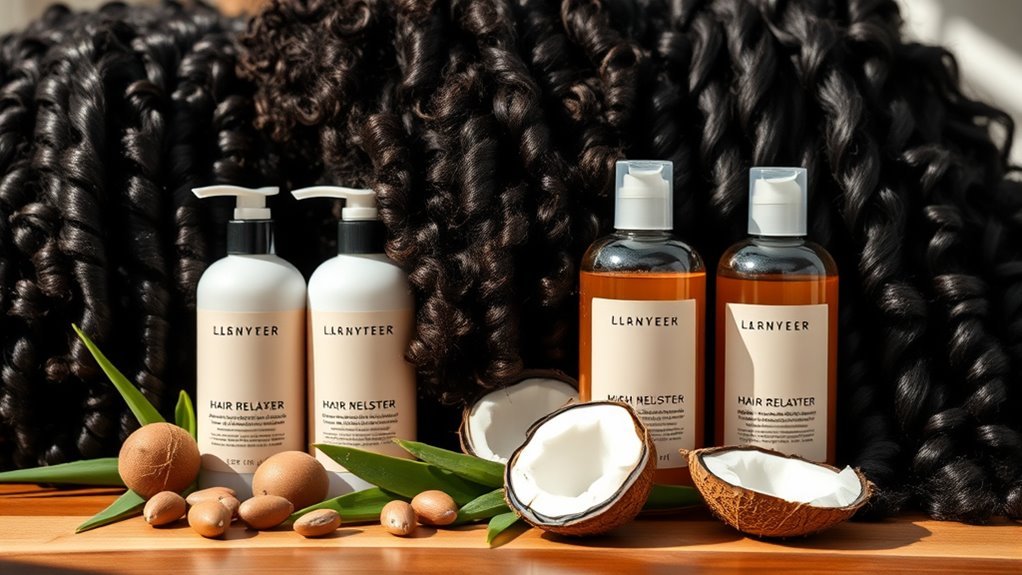
Although choosing the right relaxer can feel overwhelming, knowing the key ingredients and features to look for will make the process easier. When selecting a relaxer for black hair, focus on formulas that include nourishing oils like jojoba or castor oil. These provide key ingredient benefits such as moisture retention and scalp soothing, which help protect your hair during the relaxing process.
You’ll also want to look for proteins like keratin to strengthen hair strands and prevent breakage. Relaxer safety is vital, so pick products with a balanced pH and free from harsh chemicals like lye or excessive sodium hydroxide levels. These features reduce scalp irritation and minimize damage over time.
Moreover, a good relaxer should offer clear application instructions and consistent results. By paying attention to these key ingredients and safety features, you can confidently choose a relaxer that keeps your hair healthy, manageable, and looking its best.
Choosing Between Mild, Regular, and Super Strength Relaxers
Once you understand the key ingredients and safety features to look for, the next step is deciding which relaxer strength suits your hair type and condition. When making a strength comparison, mild relaxers are best for fine or lightly textured hair, offering gentle straightening with minimal damage risk.
Regular strength relaxers work well for typical Black hair textures, balancing effective straightening with scalp safety. Super strength relaxers are designed for very coarse or resistant hair but require careful application timing to avoid scalp irritation and over-processing.
You’ll want to follow the recommended application timing closely for each strength to achieve the desired straightness without compromising hair health. Mild relaxers usually need a longer application time, while super strength ones act faster but demand more precision.
Choosing the right relaxer strength guarantees you get smooth, manageable hair while minimizing damage. So always assess your hair’s texture and history before deciding.
Top Relaxers for Sensitive Scalps and Low Damage
If you have a sensitive scalp, you’ll want a relaxer with gentle ingredients that help reduce irritation. It’s all about finding formulas that not only straighten your hair but also protect your scalp. Plus, choosing products designed to minimize hair breakage can keep your strands strong and healthy. So, let’s dive into the best options that balance effective straightening with scalp care.
Gentle Ingredients Overview
When choosing a relaxer for sensitive scalps, you want formulas that minimize irritation while still delivering effective results. Many top relaxers now include gentle, natural alternatives like aloe vera, coconut oil, and shea butter.
These ingredients soothe your scalp, reduce redness, and provide essential moisture. The ingredient benefits don’t stop there. Natural oils strengthen strands, improving hair health without harsh chemicals.
You’ll also find relaxers with lower concentrations of lye or alternative alkaline agents, which help reduce scalp discomfort and damage. By opting for products rich in gentle, nourishing components, you protect your scalp’s delicate balance and maintain your hair’s integrity.
Choosing relaxers with these gentle ingredients guarantees you get the straightening results you want without sacrificing scalp comfort or overall hair health.
Minimizing Hair Breakage
Choosing relaxers with gentle ingredients not only soothes your scalp but also plays a key role in protecting your hair from damage. When you prioritize scalp health, you reduce irritation and create the perfect environment for hair restoration.
To minimize hair breakage, focus on these essentials:
- Use relaxers specially formulated for sensitive scalps to avoid harsh chemicals.
- Opt for products enriched with moisturizing agents to keep hair hydrated.
- Follow up with deep conditioning treatments to strengthen strands.
- Avoid overlapping applications to prevent unnecessary damage.
Best Relaxers for Different Black Hair Textures
You’ll want to pick relaxers based on your hair texture to get the best results. For example, coarse hair usually needs stronger formulas that provide deep smoothing. On the other hand, fine hair benefits from gentler products to avoid damage. So, let’s take a closer look at which relaxers work best for each texture.
Relaxers for Coarse Hair
How do you find the best relaxer for coarse black hair that delivers smooth, manageable results without causing damage? Coarse hair challenges require a strong yet gentle formula that softens thick strands without excessive breakage. When choosing a relaxer, focus on those designed specifically for your hair texture to guarantee effective relaxer application and lasting results.
Look for these qualities in a relaxer:
- Deep conditioning agents to combat dryness
- Strengthening ingredients to reduce breakage
- pH-balanced formula for scalp protection
- Easy, even application for consistent texture
Products for Fine Hair
When dealing with fine black hair, which relaxers work best without weighing your strands down or causing damage? You’ll want to focus on mild relaxer types specifically formulated for fine hair care. These relaxers are usually cream-based with a lower alkaline content, reducing the risk of breakage and scalp irritation.
Look for products labeled “sensitive” or “regular” strength rather than “super” or “extra” strength, as these can be too harsh. Applying a protein-rich pre-treatment can also help protect your delicate strands during the relaxing process.
Remember to follow instructions carefully and avoid overlapping applications to maintain hair integrity. Choosing the right relaxer type tailored for fine textures guarantees smoother, safer results while preserving your hair’s natural health and shine.
Signs You Should Switch to a Different Relaxer Formula
Although relaxers are designed to smooth and strengthen your hair, certain signs indicate it’s time to try a different formula. If you notice your hair feels brittle or breaks easily after relaxing, it’s a red flag that your current product isn’t supporting your hair health.
You might also experience excessive scalp irritation or burning. This means the formula could be too harsh for your skin. Uneven texture or patchy straightening suggests the formula doesn’t suit your hair type.
Finally, if your hair lacks bounce or feels weighed down, it’s a sign to consider relaxer alternatives.
Watch for these signals:
- Frequent breakage or split ends
- Persistent scalp discomfort or redness
- Inconsistent straightening results
- Hair feels heavy or lifeless
Switching to a gentler or more suitable relaxer formula can protect your hair’s integrity and keep it looking its best.
Relaxers That Protect Hair Moisture and Enhance Shine
Three key qualities set the best relaxers apart: moisture retention, shine improvement, and gentle formulation. When you choose a relaxer that prioritizes moisture retention, your hair stays hydrated and less prone to breakage.
Look for products enriched with natural oils or conditioners that lock in moisture during the relaxing process. These ingredients work hard to maintain your hair’s softness and manageability.
Shine enhancers are similarly significant. Relaxers infused with shine-boosting elements like silk proteins or botanical extracts help your hair reflect light, giving it a healthy, glossy finish.
You want a formula that not only straightens but also revitalizes your hair’s natural luster.
How to Safely Apply a Relaxer at Home
Before you start applying a relaxer at home, it’s essential to prepare your hair and scalp properly to minimize damage and achieve the best results. Practicing relaxer safety during home application guarantees your hair remains healthy and looks its best.
Begin by performing a patch test to avoid allergic reactions. Use petroleum jelly along your hairline to protect your skin from irritation. Section your hair to apply the relaxer evenly and avoid overlapping on previously relaxed strands, which can cause breakage. Always follow the timing instructions carefully; leaving the relaxer on too long can cause scalp burns and hair damage.
Remember to work in a well-ventilated space to avoid inhaling strong chemicals. Also, wear gloves to protect your hands during application. Rinse thoroughly with cool water to stop the relaxing process. And don’t forget to use a neutralizing shampoo to restore your hair’s pH balance.
Following these steps will help you safely relax your hair at home with confidence.
How to Minimize Relaxer Damage and Breakage on Black Hair
To minimize relaxer damage and breakage, you’ve got to focus on proper care before, during, and after the process. First off, start with a strong pre-relaxer hair care routine. This really sets the foundation for healthy hair.
When it’s time to apply the relaxer, be careful and take your time. Rushing can lead to damage, so go slow and make sure you’re following the instructions closely.
Afterwards, don’t forget to keep up with consistent moisturizing. This helps your hair stay healthy and resilient. Stick with these steps, and you’ll notice your hair feeling stronger and looking better overall.
Pre-Relaxer Hair Care
Taking care of your hair before applying a relaxer is essential to preventing damage and breakage. Start with a thorough pre-relaxer assessment to check for dryness, split ends, or scalp issues. This helps you decide if your hair is ready for relaxing.
Incorporate protective styling to shield your strands and reduce manipulation. Prioritize deep conditioning treatments to restore moisture and strengthen your hair. Also, avoid washing your hair right before applying the relaxer to maintain natural oils that protect your scalp.
Here’s how to prepare:
- Assess hair health carefully to avoid unnecessary damage
- Use protective styling to minimize stress and breakage
- Deep condition to boost moisture and resilience
- Keep natural oils intact by spacing out washes before relaxing
These steps set a strong foundation for a safer relaxer experience.
Proper Application Techniques
Once your hair is well-prepared, applying the relaxer correctly becomes key to preventing damage and breakage. Avoid common application mistakes like overlapping on previously relaxed hair or leaving the product on too long.
You’ll want to use precise technique variations based on your hair’s texture and condition. Section your hair into small, manageable parts for even coverage, applying relaxer from scalp to ends carefully.
| Step | Common Mistake | Correction Tip |
|---|---|---|
| Sectioning | Large sections | Use smaller, even sections |
| Application speed | Rushing | Apply slowly, evenly |
| Timing | Over-processing | Follow recommended timing |
These steps help minimize damage, ensuring your hair stays strong and healthy through the relaxing process.
Post-Relaxer Moisturizing Routine
Although the relaxing process helps straighten your hair, it also strips away essential moisture. This makes a consistent post-relaxer moisturizing routine crucial for preventing damage and breakage. You need to prioritize post-relaxer hydration and scalp care to restore your hair’s health and strength.
Start by gently cleansing your scalp to avoid irritation. Follow with deep conditioning treatments that replenish moisture and rebuild your hair’s structure. Finally, seal in hydration using natural oils or leave-in conditioners designed for relaxed hair. Remember, your hair deserves tender loving care to bounce back.
Nourish your scalp daily to promote healthy growth
Use hydrating conditioners to combat dryness
Avoid harsh shampoos that strip natural oils
Protect ends with moisture-sealing products to reduce split ends and breakage
Recommended Products to Use Before and After Relaxer Treatments
Before applying a relaxer, you should prepare your hair with nourishing products that strengthen and protect your strands from damage. Using pre-relaxer treatments like deep conditioning masks or protein treatments can boost your hair’s resilience and reduce breakage. Look for products rich in moisture and proteins. These help fortify your hair’s structure and create a protective barrier during the chemical process.
After the relaxer, post-relaxer care is essential to maintain healthy, smooth hair. Use gentle shampoos designed for chemically treated hair to cleanse without stripping moisture. Follow up with hydrating conditioners and leave-in treatments to restore softness and prevent dryness. Incorporate oils such as jojoba or argan to lock in moisture and add shine. By choosing the right products before and after your relaxer, you protect your hair’s integrity and keep it looking and feeling its best throughout the process.
Tips for Maintaining Relaxed Black Hair Between Treatments
To keep your relaxed hair strong and healthy between treatments, you need to establish a consistent care routine. Prioritizing scalp health and moisture retention will prevent dryness and damage. This helps keep your hair vibrant and resilient. Here are some essential tips to maintain your relaxed hair:
Moisturize daily with leave-in conditioners or natural oils to lock in moisture and prevent brittleness.
Protect your hair at night by using a satin or silk scarf or pillowcase to reduce friction and breakage.
Avoid excessive heat styling to minimize damage and maintain your hair’s natural strength.
Massage your scalp regularly to boost circulation, encouraging healthy hair growth and maintaining scalp health.
Frequently Asked Questions
Can Relaxers Cause Hair Loss or Scalp Burns?
Yes, relaxers can cause hair loss or scalp burns if you’re not careful. Harsh relaxer ingredients like sodium hydroxide or potassium hydroxide can irritate your scalp, leading to burns or damage.
To protect your scalp health, always follow instructions closely and avoid leaving the relaxer on too long. Doing a patch test beforehand also helps prevent adverse reactions, keeping your hair and scalp safer during the process.
How Often Should I Relax My Hair Safely?
You should space out your relaxer frequency to every 8 to 12 weeks to maintain hair health. Relaxing too often can weaken your hair, causing breakage and scalp irritation.
Always listen to your hair’s condition; if it feels brittle or damaged, give it more time to recover. Properly timing your relaxer sessions helps keep your hair strong and your scalp safe, ensuring your hair looks its best without compromising health.
Are There Natural Alternatives to Chemical Relaxers?
Think of your hair as a garden, thriving best when nurtured gently. Yes, you can find natural alternatives to chemical relaxers.
Natural remedies like aloe vera, coconut milk, and herbal treatments such as hibiscus or chamomile can help loosen curls and soften your hair. They work gradually, promoting health without harsh chemicals.
You’ll need patience, but these options protect your strands while giving you a more natural, relaxed look.
Can Men Use the Same Relaxers as Women?
Yes, men can use the same relaxers as women since relaxer ingredients generally target hair texture regardless of gender. When choosing a product, focus on men’s haircare needs like scalp sensitivity and hair thickness.
Make certain you check the relaxer ingredients to avoid harsh chemicals that could damage your hair or scalp. Always follow instructions carefully and consider a patch test to guarantee you don’t react negatively before applying the relaxer fully.
What Should I Do if My Scalp Feels Irritated After Relaxing?
If your scalp feels irritated after relaxing, you should immediately rinse your hair thoroughly with cool water to remove any leftover product. Use gentle scalp care methods, like applying a soothing aloe vera gel or a mild, fragrance-free moisturizer to calm irritation.
Avoid scratching or using harsh chemicals. If the irritation persists or worsens, consider consulting a dermatologist for irritation remedies and avoid relaxing your hair until your scalp fully heals.
Conclusion
Choosing the best relaxer for your black hair can truly transform your hair care routine. Did you know that about 65% of black women use relaxers to manage their hair texture?
With the right product and proper care, you can enjoy smooth, healthy hair without damage. Remember to pick a formula that matches your scalp sensitivity and hair texture. Follow safe application steps and maintain your hair well between treatments for the best results.
In the end, finding the best relaxer for black hair is all about matching your unique needs and caring for your hair properly to keep it looking its best.