Your Guide to Black Hair Dye: Choosing With Confidence
Choosing the right black hair dye can feel overwhelming. You want a shade that complements your skin and a formula that suits your lifestyle, but with so many options, it’s easy to get stuck. You’re not alone—many people struggle to find the perfect black dye that looks natural and lasts.
You can confidently choose black hair dye by matching the shade to your skin undertone. Cool tones suit blue-black, while warm tones prefer soft black.
Pick a dye type that fits your hair texture and lifestyle, whether permanent for long-lasting color or temporary for quick changes.
Prepare your hair with conditioning and patch tests, then apply with care for even results. Follow with color-safe care to keep your shade vibrant.
Keep exploring to master perfect dyeing and upkeep techniques.
Key Takeaways
- Choose a black shade that complements your skin tone and undertone, like blue-black for cool tones and soft black for warm undertones.
- Pick your dye type based on how long you want the color to last. Permanent dyes last the longest, semi-permanent fade gently, and temporary ones are great for short-term changes.
- Get your hair ready by deep conditioning a few days before dyeing. Also, avoid washing your hair 24-48 hours before to protect your scalp and help the dye absorb better.
- Apply the dye evenly by sectioning your hair. Use techniques that suit your hair type and the dye you’re using to get consistent color throughout.
- Keep your color vibrant with sulfate-free products, limit heat styling, and protect your hair from sun and chlorine. Don’t forget to schedule regular touch-ups to maintain the look.
Choosing the Right Black Hair Dye Shade for You
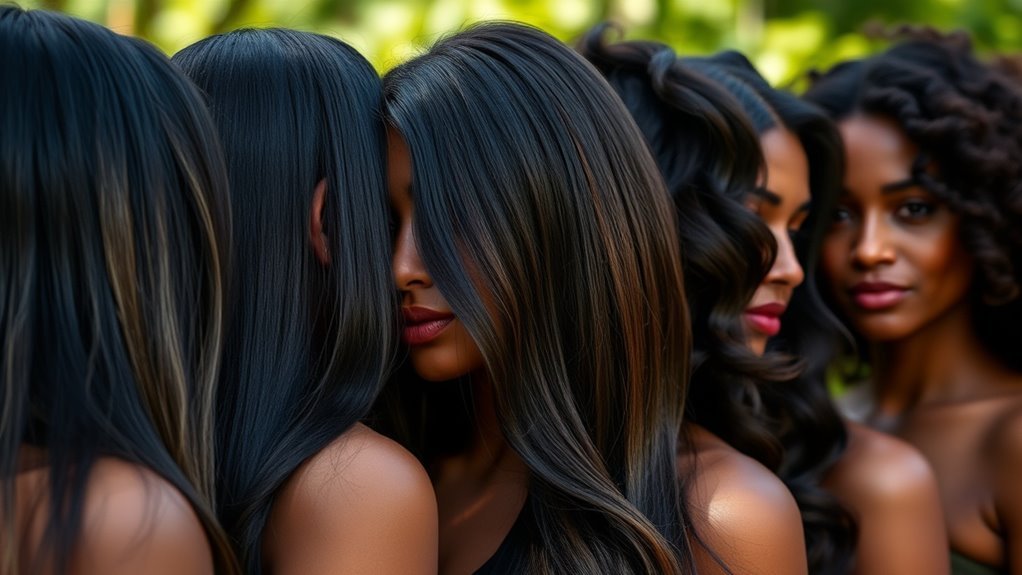
How do you pick the perfect black hair dye shade that complements your skin tone and style? Start with shade matching by identifying your skin tone and undertone consideration. Cool undertones pair well with blue-black shades, while warm undertones shine with softer, warmer blacks.
Choosing the perfect black hair dye starts with matching your skin tone and undertone for a flawless look.
Factor in personal style; are you bold or subtle? Use celebrity inspiration to see how different blacks suit various looks. Seasonal trends can guide you. Deeper, richer blacks work in winter, while softer blacks fit spring and summer.
Understand dyeing techniques like balayage or full dye to match your desired effect. Color mixing can help customize your shade by blending blue or brown tones for a unique finish. Don’t forget your maintenance routine since some blacks fade faster, so plan accordingly.
Finally, consider fashion coordination. Your hair color should harmonize with your wardrobe, making your overall look cohesive and striking.
Selecting the Best Black Hair Dye for Your Hair Type
Since different hair types absorb dye distinctly, selecting the best black hair dye depends on your hair’s texture and condition. If you have fine hair, opt for a gentle dye formulation with nourishing product ingredients to prevent damage.
For coarse or curly hair, choose moisturizing dyes that improve shine and minimize dryness. Consider your skin tone when selecting the dye shade to guarantee a flattering look. Don’t skip allergy testing before applying any product.
Use application techniques suited to your hair type. Thicker strands may require sectioning for even coverage. Keep seasonal changes in mind; colder months might demand richer dyes to combat color fading caused by dryness and sun exposure.
Follow maintenance routines recommended by stylists to prolong vibrancy and health. If unsure, consult stylist recommendations to find products tailored to your specific hair texture and lifestyle. This thoughtful approach helps you achieve the best results with minimal damage.
Permanent vs. Semi-Permanent vs. Temporary Black Hair Dyes
When you’re picking out black hair dye, it’s good to think about how long you want the color to last and how each type might affect your hair’s health. Permanent dyes give you results that really stick around, but they do take a bit more effort to apply. On the other hand, semi-permanent and temporary dyes are usually gentler on your hair and much easier to put in. Knowing these differences can help you choose the best option for your style and the condition of your hair.
Color Longevity Differences
Why does the longevity of black hair dye matter so much? Because it affects how often you need to touch up your color and how much effort you’ll spend on dye maintenance.
Permanent dyes penetrate the hair shaft, offering rich, long-lasting color that resists color fading for weeks. Semi-permanent dyes coat the hair’s surface, providing a gentler option but fading after several washes. So, you’ll need more frequent applications.
Temporary dyes sit on the hair’s surface and wash out after one or two shampoos, making them ideal for short-term changes but requiring constant reapplication. Understanding these differences helps you pick a dye that fits your lifestyle and patience for upkeep, ensuring your black hair stays vibrant without unexpected fading or excessive maintenance.
Application Process Overview
Although each type of black hair dye serves a different purpose, the way you apply them varies considerably. For permanent dyes, you’ll typically mix the color with a developer and apply it evenly from roots to ends, guaranteeing thorough saturation.
Semi-permanent dyes don’t require mixing; you apply them directly, focusing on even color application to avoid patchiness. Temporary dyes often come in sprays or gels, so your application techniques might include sectioning hair and applying product precisely where you want the color.
No matter the type, prepping your hair and using tools like brushes and gloves can help you achieve a smooth, consistent finish. Understanding these application techniques guarantees you get the best results from your chosen black hair dye.
Hair Health Impact
Since black hair dyes differ in chemical composition and application methods, they also vary in how they affect your hair’s health. Permanent dyes involve more chemical exposure, which can irritate scalp sensitivity and increase the risk of dye allergies.
Semi-permanent dyes offer better ingredient transparency and are gentler on hair porosity, helping maintain moisture balance. Temporary dyes minimize chemical impact but may require frequent application, affecting your maintenance routine and color fading.
UV protection and proper color treatment are essential across all types to preserve hair health.
| Dye Type | Hair Impact | Maintenance Tips |
|---|---|---|
| Permanent | High chemical exposure | Use UV protection, deep condition |
| Semi-Permanent | Moderate, gentle on porosity | Check ingredients, hydrate well |
| Temporary | Minimal, frequent reapplication | Refresh often, avoid buildup |
Getting Your Hair Ready for Black Dye
Before you apply black dye, it’s important to check your hair’s condition to make sure it’s healthy enough for coloring. Taking good care of your hair with the right pre-dye treatments can really protect it and help improve how the color turns out. You’ll also want to pick products that match your hair type and what you want to achieve with the dye for the best results.
Hair Condition Assessment
Evaluating your hair’s current condition is an essential step when preparing to dye it black. Start by examining your hair texture, whether it’s fine, coarse, curly, or straight. This will influence how the dye absorbs and how long the color lasts.
Pay close attention to any damage, like split ends or dryness, as these can affect the final result. Next, assess your scalp sensitivity. If your scalp tends to react to products or feels irritated easily, you might want to do a patch test before applying dye all over.
Understanding these factors helps you choose a product that’s gentle yet effective. This way, your hair remains healthy throughout the dyeing process. Taking this step saves you from potential discomfort and uneven color.
Pre-Dye Hair Care
Although dyeing your hair black can create a striking change, preparing your hair properly guarantees the best results. Start by focusing on scalp health. You want a clean, hydrated scalp to help the dye take evenly and avoid irritation.
Avoid washing your hair right before dyeing; instead, wash it 24 to 48 hours prior using gentle, color safe treatments to maintain your hair’s natural oils. These treatments protect your strands and create a smooth base for the dye.
Moreover, deep condition your hair a few days before dyeing to strengthen and moisturize it, preventing damage from the coloring process. By taking these pre-dye steps, you’ll ensure your black hair color looks vibrant and lasts longer while keeping your hair and scalp healthy.
Choosing The Right Products
Taking care of your scalp and hair sets the foundation, but selecting the right products will make all the difference in achieving a rich, even black color. Start by choosing dye formulations suited to your hair type. Creams work well for dry hair, while liquids are ideal for fine strands.
Pay close attention to product ingredients. Opt for dyes free from harsh chemicals like ammonia or parabens to minimize damage. Look for added conditioners or nourishing oils that protect your hair during the coloring process.
Also, pick products that promise long-lasting results and vibrant color payoff. By carefully selecting the right dye formulations and ingredients, you’ll prepare your hair to absorb color evenly and maintain its shine and health after dyeing.
Tips for Applying Black Hair Dye at Home Like a Pro
Applying black hair dye at home can seem challenging, but with the right techniques, you can achieve a salon-quality result. Start by selecting a shade that perfectly suits your skin tone, focusing on accurate color matching to avoid unexpected outcomes. Before applying, do a strand test to see how the dye reacts with your natural hair color.
When you’re ready, section your hair into four parts to guarantee even application. Use gloves and a brush to apply the dye from roots to tips, working methodically through each section. These application techniques help distribute color evenly and prevent patchiness. Be sure to follow the timing instructions closely and avoid overlapping dye on previously colored hair to maintain a vibrant, consistent look.
Finally, rinse with cool water and use a color-safe conditioner to lock in the shade. With these tips, you’ll confidently dye your hair black at home like a pro.
Avoid Common Mistakes When Dyeing Black Hair
Before you start dyeing, make sure your hair is properly prepped to avoid uneven color. It’s super important to get that step right so your dye goes on smoothly. Picking the right black shade is key to getting the look you want without any surprises. Not all blacks are the same, so take your time choosing the perfect one. And once you’ve dyed your hair, don’t forget to follow a solid care routine. That way, your hair stays healthy and vibrant for longer.
Pre-Dye Hair Preparation
Although it might seem simple, preparing your hair properly before dyeing black hair can prevent common mistakes like uneven color or damage. Start by evaluating your hair type considerations. Fine, thick, curly, or straight hair all absorb dye differently. Knowing this helps you adjust application techniques and timing.
Next, check your scalp health. Avoid dyeing if you have irritation, cuts, or dryness, as this can cause discomfort or uneven coloring. Wash your hair 24 to 48 hours before dyeing to allow natural oils to protect your scalp.
Avoid heavy conditioners or styling products right before dyeing, as they can block the dye. Taking these steps guarantees a smooth, even application and healthier results when you’re ready to color your black hair.
Choosing The Right Shade
How do you pick the perfect black hair dye shade without ending up with an unwanted tone? Start by exploring shade variations. Black isn’t just one color. You’ll find blue-black, jet black, soft black, and natural black, each delivering a distinct look.
Next, focus on undertone considerations. Your skin’s undertone—cool, warm, or neutral—affects how the dye appears once applied. Cooler undertones pair well with blue-black, while warmer undertones suit soft or natural black shades.
Avoid choosing a shade based solely on pictures because lighting can mislead you. Also, don’t overlook your hair’s current color and condition, as these influence the final result.
Post-Dye Hair Care
Picking the right black hair dye shade sets the foundation, but maintaining that rich color requires proper care afterward. Post dye maintenance is essential to keep your hair looking vibrant and healthy.
Avoid washing your hair too often; frequent shampooing strips away the color and natural oils. Use sulfate-free shampoos and conditioners designed for color protection to extend your dye’s life. Always rinse with cool water to seal the hair cuticle and lock in color.
Limit heat styling and apply heat protectants when you do use tools, as excessive heat can fade your black dye. Finally, deep condition regularly to restore moisture and prevent damage.
Following these steps helps you avoid common mistakes when dyeing black hair and guarantees your color stays bold longer.
How to Maintain and Care for Black-Dyed Hair
Maintaining black-dyed hair requires a consistent routine that keeps your color vibrant and your strands healthy. You’ll need to focus on protecting your hair from damage while enhancing its natural shine. Start by keeping your scalp nourished and your hair moisturized to prevent dryness.
Use products with pH balance to avoid stripping the color. Apply heat protection before styling to minimize damage. Regular trims help eliminate split ends, maintaining a polished look.
Don’t forget color sealing treatments to lock in that rich black shade and deep conditioning masks to restore moisture. Finally, protect your hair from UV exposure to prevent fading and manage product buildup by cleansing gently but thoroughly.
- Prioritize hair moisturizing and scalp nourishment
- Use heat protection before styling
- Apply color sealing treatments regularly
- Schedule regular trims for healthy ends
- Shield your hair from UV damage and product buildup
These steps guarantee your black-dyed hair stays radiant and resilient.
Tips for Refreshing and Touching Up Black Hair Color
Revitalizing and touching up your black hair color can be quick and effective with the right techniques. To combat color fading, start by using color-depositing shampoos or conditioners designed for black hair. These products help maintain depth and shine between dye sessions.
When it’s time for root touch ups, choose a dye that matches your current shade closely to guarantee seamless blending. Apply the dye only to the regrowth area to avoid over-processing previously colored hair. For a smooth application, section your hair and work from roots to mid-lengths.
Avoid washing your hair immediately after coloring; waiting at least 48 hours helps the color set better. If you notice dullness on the lengths, a gloss treatment or a semi-permanent dye can refresh your color without full re-dyeing.
Best Black Hair Dye Brands for Quality and Longevity
When you want black hair dye that lasts and looks vibrant, choosing reputable brands makes all the difference. To avoid color fading and guarantee a rich natural black tone, you need to focus on brands known for ingredient safety and positive user reviews.
Checking brand comparisons helps you pick dyes that match your hair type and style goals, especially if you follow seasonal trends or celebrity styles for inspiration. Here are five top black hair dye brands praised for quality and longevity:
- L’Oréal Paris Excellence Creme Known for rich pigment and conditioning ingredients.
- Clairol Natural Instincts Offers gentle formulas with natural black shades.
- Garnier Nutrisse Combines vibrant color with nourishing oils.
- Schwarzkopf Keratin Color Provides long-lasting color with repair benefits.
- Revlon Colorsilk Affordable and delivers consistent natural black results.
Follow application tips for best results and maintain your color’s vibrancy longer.
Safely Transitioning From Black Hair Dye to Other Colors
Choosing a high-quality black hair dye sets a strong foundation, but switching to a new color requires extra care to protect your hair’s health. Since black dye is deeply pigmented, you’ll need effective color removal techniques to lift the dark shade without causing excessive damage. Opt for gentle, professional-grade removers or consult a stylist to avoid harsh bleaching that can weaken your hair.
Once you’ve lightened your hair, establish maintenance routines that nourish and protect it. Use sulfate-free shampoos, hydrating conditioners, and regular deep treatments to restore moisture and strength. Avoid frequent heat styling and exposure to harsh chemicals, which can further stress your hair during the changeover.
Patience is key. Gradual color changes reduce damage and help maintain vibrancy. By combining smart color removal techniques with consistent maintenance routines, you’ll confidently shift from black to your desired shade while keeping your hair healthy and vibrant.
Frequently Asked Questions
How Does Black Hair Dye Affect Scalp Health?
Black hair dye can impact your scalp health, especially if you have scalp sensitivity. The dye ingredients, like ammonia and peroxide, might cause irritation or allergic reactions.
To protect your scalp, you should do a patch test before dyeing and choose products with gentler formulas. If you notice itching, redness, or discomfort during or after application, rinse immediately and avoid using that dye again.
Taking these steps helps keep your scalp healthy while enjoying your new color.
Can Black Hair Dye Cause Allergic Reactions?
Yes, black hair dye can cause allergic reactions, especially if you have sensitive skin or allergies to certain ingredients like PPD. You might experience allergic symptoms such as itching, redness, swelling, or even blisters.
To avoid this, you should always do patch testing 48 hours before applying the dye fully. This simple step helps you spot any adverse reactions early, keeping your scalp safe and healthy while enjoying your new look.
How Long Does It Take for Black Hair Dye to Fade?
Black hair dye typically takes about 4 to 6 weeks to start fading, but color retention depends on your hair type and care routine. If you use sulfate-free shampoos and avoid excessive washing, you’ll boost dye longevity.
Factors like sun exposure and heat styling can speed up fading, so protecting your hair helps keep the color vibrant longer. You can expect gradual fading rather than a sudden loss of color.
Is It Safe to Dye Black Hair During Pregnancy?
You might wonder if coloring your hair during pregnancy puts you or your baby at risk. The good news? Most experts say it’s generally safe after the first trimester.
But if you’re cautious, you could investigate natural alternatives like henna or herbal rinses to protect your scalp and maintain gentle hair care. Remember, your body’s sensitivity changes, so patch-test and keep your salon visits well-ventilated for peace of mind.
Can Black Hair Dye Stain Clothes or Bedding?
Yes, black hair dye can stain your clothes or bedding if you’re not careful during application. To avoid stains, wear old clothes and use a protective cape or towel around your shoulders.
When applying dye, be precise and wipe off any spills immediately. If you do get stains, act fast using stain removal products like rubbing alcohol or specialized stain removers. Prompt treatment makes it easier to keep your fabrics looking clean.
Conclusion
Choosing the perfect black hair dye is like painting on a midnight canvas, bold yet subtle, fierce yet elegant. As you prep, apply, and care for your hair, you transform strands into a story of depth and shine.
Whether you crave a jet-black shine or a soft raven hue, your confidence will glow brighter than any color. Welcome the contrast of darkness and light, knowing your black hair dye is your ultimate statement.