Best Braiding Hair: Top Picks and Buying Tips
Finding the best braiding hair can feel overwhelming, especially when you want your style to look flawless and last long. You’re not alone—many people struggle with choosing the right texture, length, and color that truly match their natural hair.
But don’t worry, we’ve got you covered with top picks and expert tips to make your braid game strong.
To find the best braiding hair, focus on matching texture and length to your desired style for a natural look. Choose between Kanekalon for durability and Toyokalon for shine, or opt for natural hair for realism.
Make sure to pick colors that blend well with your undertones and buy extra to avoid running out mid-style. Proper care like gentle washing and light products will keep your braids fresh.
Keep exploring to uncover more expert tips on perfecting your braids.
Key Takeaways
- Choose braiding hair texture and length that match your desired style and natural hair for a seamless, natural look.
- Kanekalon offers durability and heat resistance. Toyokalon provides a silky finish with less tangling.
- Consider natural hair options like Remy or virgin hair for realism, softness, and scalp comfort.
- Match braiding hair color by identifying your undertones and blending to avoid harsh contrasts.
- Buy extra hair to ensure style completion, avoid shortages, and provide flexibility for future adjustments.
Choosing the Right Braiding Hair for Your Style
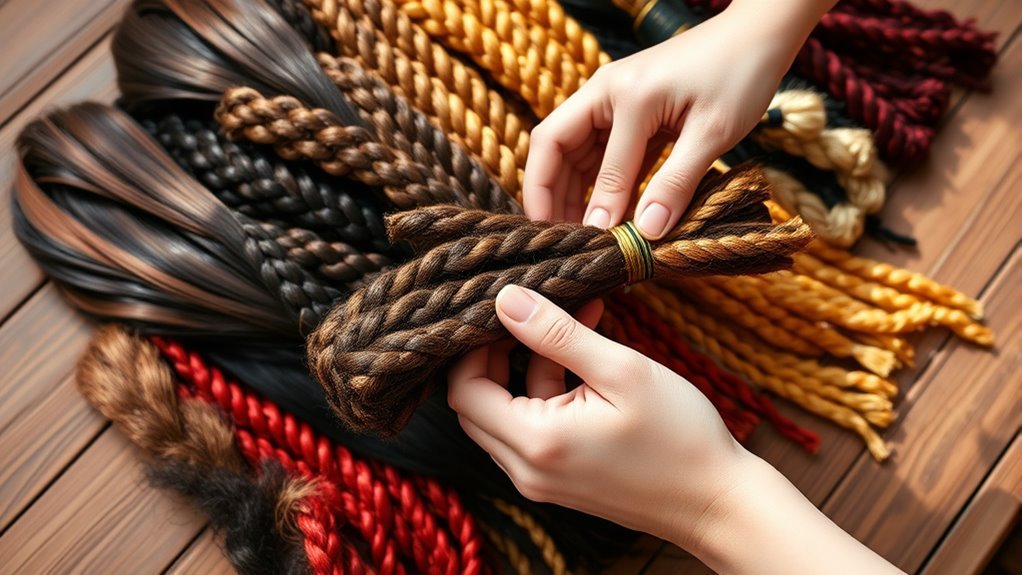
When you choose braiding hair, consider the style you want to achieve because different textures and lengths suit different looks. If you’re aiming for sleek, tight braids, shorter hair length may work better to keep the style neat.
For long, flowing braids or box braids, longer hair length helps you achieve fullness and volume. Different styles often require specific hair types. Some look best with smooth, silky hair, while others benefit from thick, coarse strands for better grip.
Think about whether you want a natural look or something bold and vibrant. Your braiding hair choice will reflect that. Don’t forget to match the hair length with your natural hair to blend seamlessly.
How Hair Texture Affects Your Braiding Hair Choice
Your choice in braiding hair isn’t just about length and style. It also depends heavily on texture. Matching your natural hair texture with the right braiding hair can make a huge difference in the final look and ease of styling.
Selecting braiding hair that matches your natural texture enhances both appearance and manageability.
Whether you have curly textures, wavy styles, or straight strands, selecting complementary braiding hair guarantees a seamless blend and lasting hold.
Consider these factors:
- Curly Textures: Choose braiding hair with similar curl patterns to avoid awkward contrasts and improve volume naturally.
- Wavy Styles: Opt for hair that mimics gentle waves. This blends well with fine hair and creates a soft, natural finish.
- Straight Strands: Pick smooth braiding hair made from fine fibers if your hair is fine. For thicker hair, choose coarse fibers to ensure durability and a sleek appearance.
Comparing Kanekalon and Toyokalon Braiding Hair Fibers
Although both Kanekalon and Toyokalon fibers are popular choices for braiding hair, they offer distinct qualities that affect texture, durability, and overall appearance. Kanekalon benefits include a natural feel and excellent heat resistance, making it ideal if you want a realistic look and versatile styling options.
It comes in a broad texture variety that blends well with many hair types. Toyokalon differences lie in its silky, softer finish and improved shine, which some prefer for a sleek, polished braid.
Its synthetic versatility allows for smooth color matching and less tangling. When considering durability factors, Kanekalon tends to last longer under daily wear, while Toyokalon may require gentler care.
Price comparison shows Kanekalon often sits at a lower price point, offering budget-friendly choices without sacrificing quality. Ultimately, your choice depends on your texture preference, styling needs, and how much you want to invest.
Natural Hair Options for Braiding
If you prefer a more authentic look and feel, natural hair options for braiding provide unmatched texture and versatility. Choosing natural hair benefits your scalp and strands by minimizing irritation and allowing your hair to breathe. Plus, natural hair blends seamlessly, enhancing the beauty of your protective styles.
Here are three natural hair options to evaluate:
- Human Hair Extensions These offer the most realistic appearance and can be styled with heat tools, giving you flexibility in your look.
- Shedding-Free Remy Hair Known for retaining the cuticle, this type reduces tangling and maintains softness.
- Virgin Hair Bundles Completely unprocessed, these give you a pure, natural finish that’s ideal for long-lasting protective styles.
Top Synthetic Braiding Hair Brands
While natural hair options offer authenticity and versatility, synthetic braiding hair provides a budget-friendly and low-maintenance alternative that many people love. When exploring top synthetic braiding hair brands, you’ll notice each offers unique strengths.
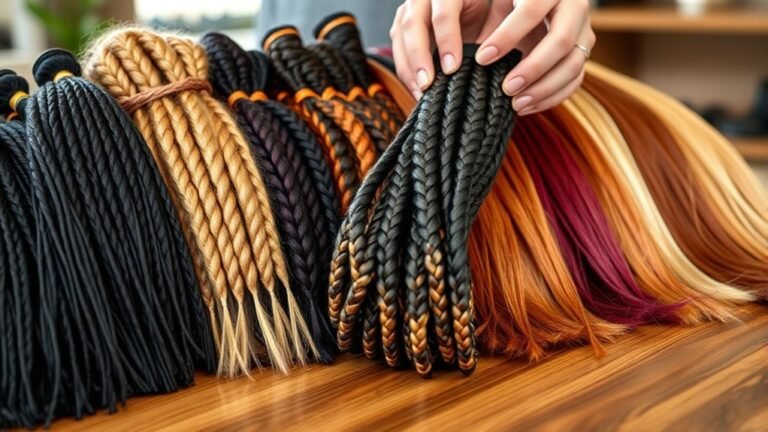
Brands like Kanekalon and X-Pression are favorites for their durability and realistic texture. They come in a wide range of popular colors, from classic black to vibrant reds and pastels, giving you plenty of style options.
Kanekalon and X-Pression stand out for durability, realistic texture, and a vibrant color selection.
Comparing brands, Kanekalon tends to be softer and more flexible, making it easier to braid, while X-Pression holds up better for longer wear. Other brands like Marley and Freetress specialize in specific textures, catering to different styling needs.
When choosing, consider factors like fiber quality, color variety, and how the hair feels on your hands. By reviewing brand comparisons, you can pick synthetic braiding hair that fits your style and budget perfectly.
How to Match Braiding Hair Color to Your Natural Hair
To match braiding hair color to your natural hair, start by figuring out your undertone—it really helps you choose shades that complement your skin. Once you know that, you can pick colors that blend well with your natural hair.
Then, try some blending tips like mixing different shades or adding highlights. This makes everything look seamless and natural. Following these steps will give your braids a flawless, natural appearance.
Identifying Your Undertone
How do you guarantee your braiding hair looks natural and seamless? Start with undertone analysis. Understanding your undertone helps you match braiding hair color perfectly to your natural shade.
Color theory teaches us that undertones fall into three categories: warm, cool, and neutral. Here’s how to identify yours:
- Check your veins: Blue or purple veins indicate cool undertones; greenish veins suggest warm undertones; a mix means neutral.
- Consider jewelry: Silver looks best on cool tones, gold on warm, and both suit neutral.
- Observe your skin’s reaction to sun: If you tan easily, you likely have warm undertones; if you burn, cool undertones.
Knowing your undertone guarantees you pick braiding hair that blends effortlessly with your natural hair color.
Blending Tips for Seamlessness
Once you know your undertone, you can blend braiding hair colors that create a natural, seamless look. Use blending techniques like layering shades or mixing two colors before installation to mimic your hair’s depth.
Color mixing helps you avoid harsh contrasts, making the braids look more authentic. Pay attention to light and dark tones for dimension.
| Natural Hair Color | Suggested Blend | Blending Technique |
|---|---|---|
| Warm Brown | Chestnut + Honey | Mix for a sun-kissed glow |
| Cool Black | Jet Black + Blue | Layer for a subtle shine |
| Blonde | Ash + Golden | Alternate strands |
Experiment with these tips so your braids flow naturally with your hair, enhancing your overall look effortlessly.
How Much Braiding Hair You Need for Different Styles
Choosing the right amount of braiding hair can make all the difference in achieving your desired look. To get it right, consider your braiding hair lengths and style specific requirements carefully. Different styles demand varying amounts of hair, so plan accordingly.
Selecting the right quantity of braiding hair ensures your style looks flawless and meets your length needs.
Here’s a quick guide to help you figure out how much braiding hair you need:
- Box Braids (Medium Length): Usually, 3-4 packs of hair suffice for shoulder-length braids. Longer braids need extra packs.
- Cornrows or Feed-in Braids: These styles require less volume, about 2-3 packs depending on your head size and braid thickness.
- Crochet Braids: Depending on the fullness and length you want, 3-6 packs are typical. Thicker or longer crochet braids need more.
Always check the braiding hair lengths on the packaging to match your style specific requirements. Buying a bit extra guarantees you won’t run short mid-style and can comfortably finish your look.
Caring for Braiding Hair to Make It Last Longer
Getting the right amount of braiding hair is just the start. Taking care of it properly will keep your style looking fresh and lasting longer.
To maintain your braids, focus on simple maintenance techniques like gently washing your scalp every one to two weeks with a sulfate-free shampoo. Avoid heavy products that can weigh down the hair or cause buildup.
Instead, use lightweight leave-in conditioners or natural oils such as jojoba or argan oil to keep the braiding hair moisturized without making it greasy. When sleeping, wrap your hair in a silk or satin scarf to prevent frizz and breakage.
Avoid excessive manipulation and tight styling to reduce stress on the hair fibers. Product recommendations like detangling sprays and braid sprays specifically designed for synthetic hair can also extend your style’s lifespan.
Where to Buy Quality Braiding Hair Online and In-Store
Wondering where to find quality braiding hair that suits your style and budget? You’ve got plenty of options both online and in-store. Here are three great places to check out:
- Online Retailers: These offer a vast selection of braiding hair types, colors, and brands. You can easily compare prices and read customer reviews to make informed choices. Plus, many sites provide free shipping or deals.
- Local Salons: Visiting a local salon lets you feel the hair texture firsthand and get expert recommendations. Salons often carry professional-grade hair, ensuring better quality.
- Beauty Supply Stores: These stores stock a variety of braiding hair and let you physically inspect the product before buying. Staff can also guide you based on your styling needs.
Avoid These Common Braiding Hair Buying Mistakes
Although finding the right braiding hair can seem straightforward, many buyers make avoidable mistakes that affect the final look and durability. One common misconception is assuming all synthetic hair is the same. In reality, braiding hair quality varies widely. Cheap options can tangle, shed, or fade quickly. Don’t just pick based on price; consider texture, softness, and how well it blends with your natural hair.
Another mistake is ignoring the hair length and quantity needed. Buying too little means you’ll run out mid-style, while too much leads to waste. Also, avoid skipping product reviews and ingredient checks. Some hair contains harsh chemicals that can irritate your scalp or damage your natural hair.
Frequently Asked Questions
Can Braiding Hair Cause Scalp Irritation or Allergies?
Yes, braiding hair can cause scalp irritation or allergies, especially if you’re sensitive to synthetic fibers or certain dyes. You might notice allergy symptoms like itching, redness, or bumps.
To protect your scalp, focus on proper scalp care by washing and moisturizing regularly. Choose hypoallergenic, high-quality braiding hair, and avoid tight braids that strain your scalp.
If irritation persists, remove the braids and consult a dermatologist for treatment.
How Do I Safely Remove Synthetic Braiding Hair?
To safely remove synthetic braiding hair, start by gently detangling with your fingers or a wide-tooth comb. Use hair care products like conditioner or detangler to soften the synthetic fibers, making removal easier.
Avoid pulling harshly to prevent scalp irritation. Carefully unravel the braids strand by strand, applying patience and gentle removal techniques.
Taking your time guarantees your natural hair stays healthy and damage-free during the process.
What Tools Are Best for Installing Braiding Hair?
Think of your tools as the paintbrushes to your masterpiece when installing braiding hair. You’ll want to use a rat-tail comb for precise parting and sectioning, hair clips to keep strands organized, and crochet needles if you’re using crochet braiding techniques.
These tools help you work efficiently and protect your scalp, which is key for hair longevity. Don’t forget to have moisturizing products handy to keep your scalp healthy throughout the process.
Can I Dye or Bleach Synthetic Braiding Hair?
You generally can’t dye or bleach synthetic braiding hair because most synthetic fibers don’t absorb color like natural hair. Traditional dye methods won’t work well, and using bleach can damage the fibers.
If you want to change colors, you’re better off buying pre-colored synthetic hair. Also, synthetic hair tends to experience color fading faster, so even if you manage to dye it, the color won’t last long.
How Long Does Braiding Hair Typically Last Once Installed?
Braiding hair typically lasts 4 to 8 weeks once installed, depending on how well you care for it. Longevity factors include hair quality, installation method, and your daily routine.
To extend its life, follow maintenance tips like keeping your scalp clean, moisturizing your natural hair, and avoiding heavy styling products. You should also sleep with a satin scarf to reduce friction and prevent frizz, helping your braids look fresh longer.
Conclusion
Choosing the right braiding hair means knowing your texture, picking quality fibers, and understanding your style’s needs. It means comparing brands, caring for your hair properly, and buying from trusted sources. It means avoiding common mistakes and embracing options that suit you best.
By following these steps, you’ll achieve flawless braids, lasting beauty, and confident style every time you braid. Make smart choices, stay informed, and enjoy the process of finding the best braiding hair.