Braiding Hair for Kids Guide: What to Know Before You Buy
Finding the perfect braiding hair for kids can feel overwhelming, especially when you want to keep their delicate scalps safe and their styles looking great. You’re not alone—many parents struggle with choosing the right products that are both gentle and fun for their little ones. That’s why we’ve put together this guide to help you pick the best braiding hair for kids, so you can feel confident and make the process easier.
When buying braiding hair for kids, choose soft, lightweight, and hypoallergenic options to protect their sensitive scalps. Avoid coarse textures and accessories with metal or rubber parts that can cause hair breakage or irritation.
Use gentle hair products to maintain moisture and prep hair with care to prevent discomfort.
Pick kid-friendly styles that are simple and fun to keep them engaged without pulling.
Keep comfort your top priority to guarantee healthy hair. There’s plenty more to learn about caring for your child’s braids and scalp.
Key Takeaways
- Choose soft, lightweight, and hypoallergenic synthetic or natural braiding hair to prevent scalp pain and allergic reactions in kids. This helps keep their scalp comfortable and healthy.
- Opt for gentle, fabric-covered elastics and smooth-edged clips to avoid hair breakage and scalp irritation. These small details make a big difference in protecting delicate hair.
- Select kid-friendly, sulfate-free, and moisturizing hair products to maintain softness and scalp health during braiding. Keeping hair nourished means it stays strong and shiny.
- Avoid excessively tight braiding and check regularly for scalp redness or soreness to ensure comfort and scalp protection. Braids shouldn’t cause discomfort or damage.
- Refrain from braiding if the child has scalp irritation, sores, itching, or recent scalp infections to prevent further damage. It’s best to let the scalp heal before styling again.
Choosing the Right Braiding Hair for Kids’ Sensitive Scalps
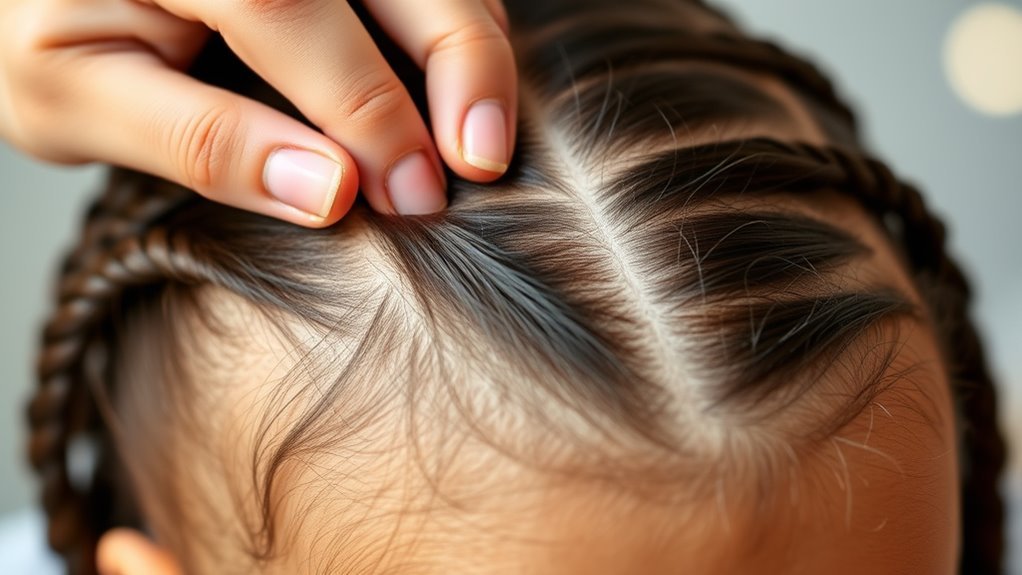
When choosing braiding hair for kids, you need to prioritize their sensitive scalps. Selecting soft, lightweight synthetic hair or natural hair extensions can prevent irritation and discomfort during and after braiding. Avoid coarse or overly stiff hair, as it can tug and cause scalp pain.
Consider braiding techniques that reduce tension, such as loose braids and protective styles, to protect their delicate skin. You’ll also want hair that’s easy to manage and gentle on the scalp, which helps maintain comfort throughout wear.
Look for hypoallergenic options and smooth textures to minimize allergic reactions or itching. Remember, the right braiding hair complements gentle braiding techniques, ensuring your child’s scalp stays healthy and pain-free.
How to Prepare Kids’ Hair for Braiding With Kid-Friendly Hair
Before you start braiding, take some time to gently detangle your child’s hair. Use kid-friendly techniques so it doesn’t hurt or cause any discomfort. It’s best to pick gentle, sulfate-free products that keep their hair soft and easy to manage. Doing this prep not only protects their delicate scalp but also makes braiding way easier.
Detangling Techniques For Kids
Detangling your child’s hair gently sets the foundation for a smooth braiding experience. Start by choosing the right detangling tools, like a wide-tooth comb or a soft-bristle brush designed for kids. These tools help prevent breakage and discomfort.
Before you begin, apply a small amount of water or a detangling spray to make the hair more manageable. Use gentle techniques. Work from the ends upward, slowly easing out knots instead of pulling harshly.
Take your time, and if you hit a stubborn tangle, use your fingers to loosen it first. Keeping the process gentle not only protects your child’s hair but also makes them more cooperative, turning detangling into a stress-free step before braiding.
Choosing Gentle Hair Products
Taking care while detangling sets the stage for using the right hair products that keep your child’s hair healthy and easy to manage. When choosing products, look for those with gentle ingredients that won’t irritate your child’s sensitive scalp.
Hypoallergenic options are a smart pick. They reduce the risk of allergic reactions and keep hair soft without harsh chemicals. Avoid anything with sulfates or parabens, as these can dry out hair and cause discomfort.
Instead, opt for moisturizing shampoos and conditioners designed specifically for kids. Using a lightweight leave-in conditioner can also help protect hair during braiding, making strands more pliable and less prone to breakage.
What Braid Styles Work Best for Kids’ Hair?
You’ll want to pick braid styles that are easy to manage and stay put all day long. Simple options, like classic three-strand braids or French braids, work really well for kids’ hair. These styles keep hair neat and don’t need constant touch-ups, which is a big plus.
Easy-to-Manage Styles
Three braid styles stand out as the easiest to manage for kids’ hair: the classic three-strand braid, the French braid, and the fishtail braid. These styles offer playful patterns that keep your child’s look fun without being complicated.
The classic three-strand braid is perfect if you want a quick, neat style that holds well throughout the day. French braids work great for keeping hair secure and tidy, ideal for active kids. Fishtail braids add a unique texture but remain simple enough for daily wear.
When choosing, focus on age-appropriate styles that suit your child’s hair type and activity level. These easy-to-manage braids help you create charming looks that stay neat and comfortable all day long.
Durable Braid Options
A durable braid can keep your child’s hair secure and looking great through playtime and school activities. To achieve braid longevity, choose styles like French braids, Dutch braids, or cornrows. These hold hair tightly and resist unraveling.
When selecting braiding hair, opt for durable materials such as synthetic fibers designed for strength and flexibility. These materials withstand daily wear and maintain their shape longer, reducing the need for frequent touch-ups.
Avoid loose or overly intricate styles that may not hold up well during active days. By focusing on sturdy braid styles combined with high-quality braiding hair made from durable materials, you’ll guarantee your child’s hairstyle stays neat, comfortable, and lasts throughout their busy routine.
Best Braiding Hair Materials That Are Gentle on Kids
Choosing the right braiding hair materials makes all the difference when styling your child’s hair. You want something gentle that won’t irritate their sensitive scalp. Natural fibers like cotton or wool blends are excellent choices because they’re soft and breathable. These materials reduce friction and help prevent discomfort during and after braiding.
Hypoallergenic options are especially important if your child has allergies or sensitive skin. Look for braiding hair labeled as hypoallergenic to minimize the risk of itching or redness. Synthetic fibers can sometimes cause reactions, so opting for hypoallergenic natural fibers gives you peace of mind.
Additionally, natural fibers tend to be lightweight, so your child won’t feel weighed down by their braided hairstyle. By selecting gentle, hypoallergenic materials, you guarantee the braiding process is comfortable and safe, making it easier for both you and your child to enjoy the experience.
Essential Tools and Accessories for Easier Kids’ Braiding
Having the right tools and accessories can make braiding your child’s hair much smoother and more enjoyable. Start with a good set of detangling brushes and wide-tooth combs to gently prep the hair without causing discomfort.
You’ll also want plenty of hair elastics and clips to section hair neatly. This helps you create clean braid patterns and experiment with various styling techniques. Using a spray bottle filled with water or a leave-in conditioner can keep the hair manageable and reduce frizz during braiding.
For more intricate braid patterns, try using rat-tail combs for precise parting. Don’t forget soft headbands or decorative accessories to finish the look and keep hair tidy.
Having these essentials on hand saves time and frustration, allowing you to focus on mastering different styles and making the experience fun for both you and your child.
How to Braid Kids’ Hair: Simple Steps for Beginners
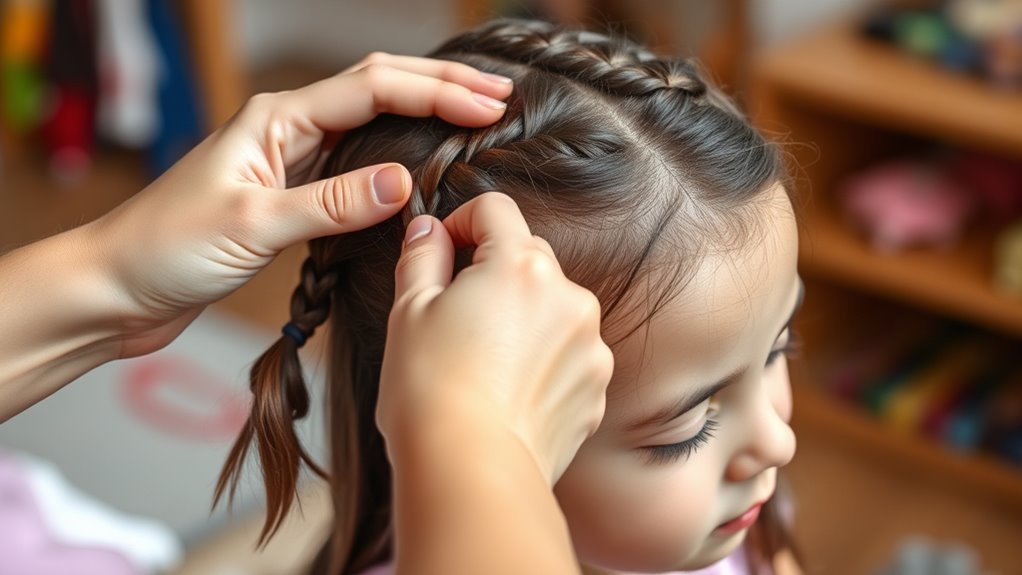
Once you’ve gathered your tools and prepped the hair, you’re ready to start braiding. Begin with simple braiding techniques that suit kid-friendly styles, like a basic three-strand braid. Start by dividing the hair into three equal sections. Cross the right section over the middle, then the left section over the new middle section.
Repeat this pattern, keeping the strands tight but gentle.
To help you master braiding, remember these key tips:
- Work on small sections for neat, manageable braids
- Use a light detangler to prevent tangles
- Keep the braid close to the scalp but not too tight
- Secure the ends with soft elastics or hair ties
How to Keep Braided Hair Comfortable and Prevent Damage
To keep your child’s braided hair comfortable, try using gentle accessories that won’t pull or break their strands. It really makes a difference! Also, remember to keep their hair moisturized by regularly applying a light leave-in conditioner. This helps prevent dryness and keeps the braids looking fresh. And one more thing—avoid braiding too tightly because that can cause discomfort and even damage their scalp over time.
Choose Gentle Hair Accessories
Although braiding hair can be fun and stylish, choosing gentle hair accessories is essential to keep your child’s hair comfortable and prevent damage. Harsh clips or tight bands can cause breakage and discomfort, so opt for items designed with care.
Look for gentle clips that hold hair securely without pulling and soft elastics that won’t snag or tangle strands. Here are some tips to guide your choice:
- Use soft elastics made from fabric to avoid hair breakage
- Pick gentle clips with smooth edges to protect the scalp
- Avoid rubber bands or accessories with metal parts that catch hair
- Choose accessories that fit loosely enough to prevent tension but tight enough to hold braids
Selecting the right accessories helps maintain healthy hair and keeps your child happy.
Maintain Moisture Levels
Keeping your child’s braided hair moisturized is key to preventing dryness and breakage. Focus on moisture retention by using hydration techniques like light sprays, leave-in conditioners, and natural oils. Avoid heavy products that can weigh down the braids.
Regularly mist the hair and scalp to keep the strands supple and comfortable. Here’s a simple guide to maintain moisture levels:
| Method | Product Type | Frequency |
|---|---|---|
| Light Spray | Water + Conditioner | Daily |
| Leave-in Conditioner | Cream or Lotion | 2-3 times a week |
| Natural Oils | Coconut, Jojoba | Weekly |
| Scalp Massage | Essential Oils | Weekly |
| Protective Styles | Silk/Satin Scarves | Nightly |
Use these hydration techniques consistently to keep braided hair healthy and damage-free.
Avoid Excessive Tightness
If you want your child’s braids to stay comfortable and healthy, you’ll need to avoid making them too tight. Excessive tightness can cause discomfort, increase scalp sensitivity, and even lead to hair damage or loss.
To keep braid comfort high and protect your child’s scalp, follow these tips:
Use gentle tension when braiding to prevent pulling on the scalp. Regularly check for signs of redness or soreness, indicating tightness.
Choose softer braiding hair that won’t irritate sensitive scalps. Avoid styles that require extremely tight braiding near the hairline.
Tips to Make Braiding Hair Fun and Stress-Free for Kids
When you make braiding a playful activity, kids are more likely to enjoy the process and sit still. Use creative techniques like colorful beads or ribbons to keep their attention.
Turn braiding sessions into engaging activities by telling stories or playing their favorite music. You can even let them try simple braids on themselves to boost confidence and make it interactive.
Here’s a quick guide to keep braiding fun and stress-free:
| Tip | Description | Benefit |
|---|---|---|
| Use colorful tools | Incorporate beads, ribbons | Keeps kids visually engaged |
| Tell stories | Share fun tales during braiding | Distracts and entertains |
| Play music | Use upbeat or relaxing tunes | Sets a calm or joyful mood |
| Let kids try | Encourage self-braiding | Builds skills and interest |
| Take breaks | Pause if kids get restless | Prevents frustration |
When to Avoid Braiding to Protect Kids’ Scalp Health
Although braiding can be a fun and creative way to style your child’s hair, you should avoid it during certain scalp conditions to prevent irritation or damage. Braiding when the scalp is already compromised can lead to scalp irritation and increase the risk of hair breakage.
Pay close attention to your child’s scalp and hair health before starting any braiding.
Always check your child’s scalp and hair condition before beginning any braiding style.
Avoid braiding if your child:
- Has visible scalp irritation, redness, or sores
- Experiences excessive itching or flaking
- Shows signs of hair breakage or thinning
- Recently had a scalp infection or allergic reaction
Waiting until your child’s scalp heals fully helps prevent further damage and discomfort. Always prioritize scalp health over style to keep your child’s hair strong and healthy.
If you’re unsure, consult a pediatric dermatologist or hair care professional before braiding.
Where to Buy Safe and Affordable Braiding Hair for Kids
Taking care of your child’s scalp health sets the foundation for choosing the right braiding hair. To find safe and affordable options, start by exploring online retailers known for offering natural fibers that are gentle on sensitive scalps. These platforms often provide detailed product descriptions and safety standards to help you make informed decisions.
Don’t overlook local boutiques. They may carry high-quality braiding hair vetted by community parents and offer personalized advice. If you braid frequently, consider bulk purchases to save money without compromising quality.
Always check parental reviews before buying. They reveal real experiences about hair texture, durability, and scalp comfort. By focusing on trusted sources that prioritize safety standards and natural materials, you guarantee your child’s hair stays healthy while enjoying stylish braids.
Frequently Asked Questions
How Long Do Braids Typically Last on Kids’ Hair?
Braids on kids’ hair typically last about 1 to 3 weeks, depending on how well you follow braid maintenance tips. To keep braids looking fresh longer, you’ll want to use braid protection methods like covering the hair with a satin scarf at night and moisturizing the scalp regularly.
Avoiding excessive pulling or rough play also helps. With these steps, you can extend the life of braids and keep your child’s hair healthy.
Can Braiding Hair Cause Allergic Reactions in Children?
Braiding hair can sometimes be a ticking time bomb for allergy symptoms if you’re not careful. You might notice itching, redness, or bumps if your child reacts to certain hair products or synthetic fibers.
Always check ingredient lists and do a patch test before braiding. If your child shows signs of discomfort, wash the hair gently and avoid the product causing the reaction.
Staying vigilant helps keep your little one safe and happy.
What Are Common Mistakes to Avoid When Braiding Kids’ Hair?
When braiding kids’ hair, you’ll want to avoid common pitfalls like pulling too tightly. This can cause discomfort or damage. Using the wrong braiding techniques, such as skipping detangling or not sectioning hair properly, can make the braid messy and hard to manage.
Don’t forget to use gentle products and take breaks if your child feels uncomfortable. These steps help keep braids neat and your child happy throughout the process.
How Often Should Kids’ Braids Be Washed?
You might think washing braids daily keeps them fresh, but too much water can cause frizz and weaken braid maintenance. Instead, wash your kid’s braids every one to two weeks to balance cleanliness and scalp care.
Between washes, use a gentle spray or dry shampoo to keep the scalp fresh without disrupting the braids. This routine helps maintain neat braids while protecting their delicate scalp from dryness or buildup.
Are There Specific Braiding Hairstyles That Suit Different Hair Textures?
Yes, you’ll find that certain braiding techniques work better with specific hair textures. For example, tighter curls might hold cornrows or box braids well, while straighter hair suits styles like fishtail or French braids.
When choosing, consider your child’s hair care needs. Some styles protect delicate strands better and reduce breakage. Tailoring braiding techniques to texture guarantees their hair stays healthy and looks great.
Conclusion
Now that you know how to choose gentle braiding hair and prepare your little one’s scalp, imagine the joy in their eyes as you create fun, comfy styles together. But before you plunge in, remember there’s one vital step that can make or break the entire experience.
Ready to uncover the secret to keeping those braids perfect and your child smiling? Keep these tips close, and you’ll transform every braid into a happy memory with the right braiding hair for kids.