Your Guide to Deep Conditioner for Dry Hair: Choosing With Confidence
Dealing with dry hair can be frustrating, and if you’re tired of dull, brittle strands that just won’t cooperate, you’re not alone. Many people struggle to find the right solution that truly nourishes and restores moisture without weighing hair down or causing buildup.
That’s why choosing the best deep conditioner for dry hair can make all the difference in your hair care routine.
You can revitalize dry hair by choosing a deep conditioner rich in moisturizing oils, proteins, and humectants tailored to your hair type.
Apply it to clean hair once a week or biweekly, avoiding the scalp, and rinse with cool water to lock in moisture.
Watch for softer, shinier strands and less frizz as signs it’s working.
Adjust frequency seasonally and avoid over-conditioning to keep your hair healthy and resilient.
Keep exploring to find the perfect routine that suits your needs.
Key Takeaways
- Choose deep conditioners with moisturizing oils like argan or coconut to restore hydration and natural oils in dry hair. These oils help bring your hair back to life.
- Select protein-rich formulas with keratin or collagen to rebuild and strengthen damaged hair strands. It’s like giving your hair a little extra support.
- Apply deep conditioner to clean hair once a week for very dry hair. You can adjust how often you use it depending on the season to avoid over-conditioning.
- Avoid applying conditioner directly on the scalp to prevent clogged pores. Also, make sure you rinse thoroughly to reduce product buildup.
- Look for visible improvements like softer texture, reduced frizz, enhanced shine, and longer-lasting moisture retention after treatment. These signs show your deep conditioner is working.
Deep Conditioning: Why Dry Hair Needs It

Because dry hair lacks moisture and natural oils, it needs deep conditioning to restore hydration and strength. You might think your hair type doesn’t need extra care, but even oily or fine hair benefits from occasional deep conditioning to maintain scalp health and prevent dryness.
Dry hair craves deep conditioning, but even oily or fine hair benefits from it to stay healthy and hydrated.
When you use a deep conditioner, you’re targeting the root causes of dryness, lack of moisture and damage, helping your hair become more resilient and manageable.
Different hair types require tailored deep conditioning routines. For example, curly or coarse hair often needs richer formulas to combat breakage and frizz, while fine hair benefits from lighter conditioners that won’t weigh it down.
Paying attention to your scalp health is essential too, as a dry, flaky scalp can worsen hair dryness.
How Deep Conditioning Restores Moisture and Shine
When you apply a deep conditioner, it penetrates your hair shaft to replenish lost moisture and repair damage from within. This process delivers hydration benefits that dry hair desperately needs, restoring softness and flexibility.
As your strands absorb the rich formula, the conditioner smooths the cuticle layer, which results in noticeable shine improvement. You’ll find your hair looks healthier and feels silkier after each treatment.
Here’s a quick look at how deep conditioning works:
| Step | Effect | Result |
|---|---|---|
| Penetrates shaft | Rehydrates hair fibers | Moisture restored |
| Repairs damage | Strengthens weak spots | Reduced breakage |
| Smooths cuticle | Seals moisture in | Improved shine |
| Nourishes ends | Prevents split ends | Healthier appearance |
Using deep conditioner regularly guarantees your hair stays hydrated and glistening, giving you confidence in your shine and softness.
Key Ingredients in Deep Conditioners for Dry Hair
Several key ingredients work together in deep conditioners to revive dry hair, each targeting specific needs like moisture, strength, and protection. You’ll often find moisturizing oils like argan, jojoba, or coconut oil, which penetrate the hair shaft to lock in hydration and add softness.
These oils help smooth frizz and create a barrier against environmental damage. Protein treatments are another essential component; they rebuild the hair’s structure by filling in gaps caused by dryness and breakage, improving elasticity and resilience.
Ingredients like keratin, collagen, or silk protein restore strength without weighing your hair down. Moreover, humectants such as glycerin draw moisture into your strands, keeping them hydrated longer. Antioxidants and vitamins, like vitamin E and panthenol, also protect your hair from oxidative stress and boost overall health.
How to Choose the Right Deep Conditioner for Your Hair
Choosing the right deep conditioner for your hair starts with understanding your hair’s unique needs and texture. Not all conditioners work the same for every hair type, so you’ll want to focus on product formulation that suits you.
Here’s how to choose effectively:
- Identify Your Hair Type: Whether your hair is curly, straight, fine, or coarse impacts which deep conditioner will be most effective. For instance, coarse hair often needs richer, oil-based formulas.
- Check the Product Formulation: Look for ingredients that target dryness and damage, like shea butter or argan oil. Avoid heavy silicones if your hair is fine and prone to buildup.
- Consider Specific Needs: If your scalp is sensitive or you have color-treated hair, pick conditioners formulated to address those concerns without causing irritation or fading.
When and How Often to Use Deep Conditioner
Understanding how to pick the right deep conditioner sets you up for success, but knowing how often to use it is just as important. Frequency recommendations typically suggest using a deep conditioner once a week if your hair is very dry or damaged. If your hair is only mildly dry, every two weeks might suffice. Pay attention to how your hair responds and adjust accordingly.
Seasonal adjustments also play an essential role. During colder months, your hair tends to lose moisture faster, so increasing use to twice a week can help maintain hydration. In warmer seasons, once a week or less may be enough as humidity can aid moisture retention.
Step-by-Step Guide to Applying Deep Conditioner
Applying deep conditioner properly can make all the difference in how well it nourishes your hair. To get the best results, follow these steps carefully:
- Start with clean hair: Wash your hair with a gentle shampoo to remove product buildup. This helps the deep conditioner penetrate better and supports scalp health.
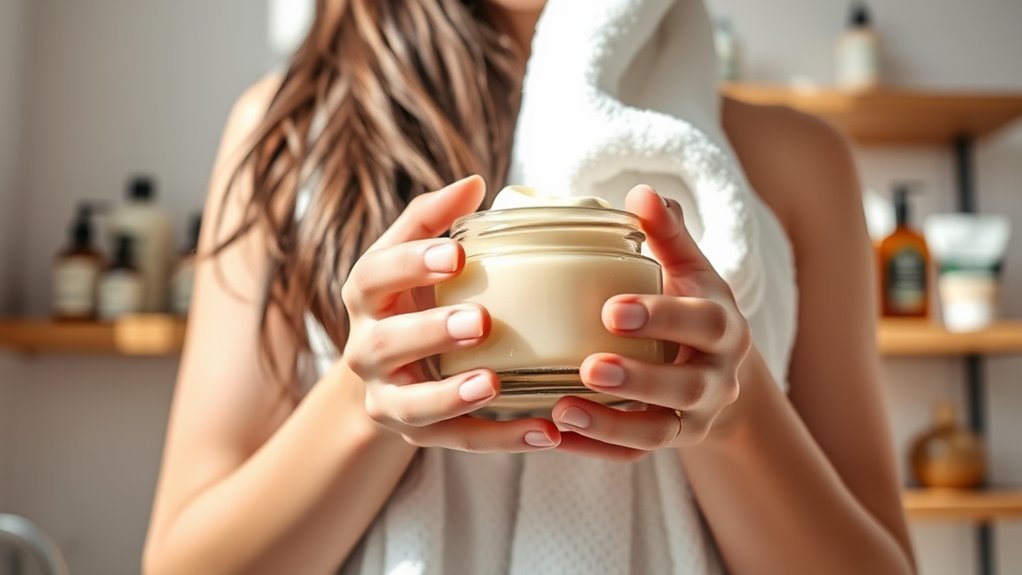
- Apply generously: Section your hair and apply the deep conditioner from mid-length to the ends. Avoid the scalp to prevent clogging pores and disrupting scalp health.
- Let it sit and rinse: Cover your hair with a shower cap and leave the conditioner on for the recommended time, usually 10-30 minutes. Then, rinse thoroughly with cool water to seal the cuticles and lock in moisture.
DIY Deep Conditioning Treatments for Extra Nourishment
If you want to give your hair an extra boost of moisture and repair, making your own deep conditioning treatments can be a great option. Using natural ingredients like coconut oil, honey, avocado, and yogurt provides nourishing vitamins and proteins that help restore dry, damaged strands. To create a treatment, simply mix these ingredients into a smooth paste tailored to your hair’s needs.
When applying your DIY deep conditioner, focus on proper application techniques to maximize absorption. Section your hair and work the mixture from roots to ends, ensuring even coverage. Use a wide-tooth comb to distribute the treatment thoroughly.
Then cover your hair with a shower cap or warm towel to lock in heat and boost penetration. Leave it on for at least 20-30 minutes before rinsing with cool water to seal the cuticles. With these natural remedies and careful application, you’ll enjoy softer, healthier hair that feels deeply nourished.
Combining Deep Conditioning With Washing, Styling, and Moisturizing
When you combine deep conditioning with your regular washing, styling, and moisturizing routine, you create a powerful system that keeps your hair hydrated and resilient. Combining techniques like deep conditioning after washing helps your hair absorb moisture better. Layering products correctly guarantees each step complements the next without weighing your hair down.
To get the most from your routine:
- Wash gently: Use a sulfate-free shampoo to avoid stripping natural oils, preparing your hair for deep conditioning.
- Deep condition: Apply a rich treatment, focusing on dry ends, and let it penetrate thoroughly before rinsing.
- Style and moisturize: Use lightweight leave-in conditioners or oils to lock in moisture and protect your hair throughout the day.
Common Deep Conditioning Mistakes That Worsen Dry Hair
Although deep conditioning can greatly improve dry hair, certain mistakes can actually make dryness worse. One common error is over conditioning. You might think more is better, but over conditioning issues can leave your hair feeling heavy, greasy, or limp. This happens because the hair cuticles get overloaded with moisture and oils, disrupting your hair’s natural balance.
Another frequent problem is product build up. If you don’t rinse out your deep conditioner thoroughly or use too much product, residue can accumulate on your scalp and strands. This build up blocks moisture absorption, leaving your hair dry and brittle despite conditioning.
To avoid these pitfalls, stick to the recommended frequency, usually once a week or as advised for your hair type, and apply just the right amount of product. Rinse well to prevent residue, and give your hair time to breathe between treatments. By steering clear of these mistakes, you’ll help your dry hair truly benefit from deep conditioning.
Signs Your Deep Conditioner Is Actually Working
You’ll know your deep conditioner is working when your hair feels noticeably softer and looks smoother. It’s like your strands are thanking you! Plus, your hair should hold moisture longer, which means less dryness as the day goes on. So, keep an eye out for these clear signs—they’re the best way to tell if your treatment is doing its job.
Visible Hair Texture Improvement
If your hair feels softer and looks shinier after using a deep conditioner, that’s a clear sign it’s doing its job. You’ll notice visible hair texture improvement, which directly reflects the product’s effectiveness. Here are three signs to watch for:
- Smoother Strands Your hair feels less rough and more uniform when you run your fingers through it.
- Reduced Frizz The deep conditioner helps tame flyaways, giving your hair a sleeker appearance.
- Defined Natural Texture Whether your hair is curly, wavy, or straight, the natural pattern becomes more pronounced and healthy-looking.
Paying attention to these changes in hair texture confirms that your deep conditioner is working effectively to restore and improve your hair’s appearance.
Enhanced Moisture Retention
When your hair holds moisture longer after applying a deep conditioner, it shows the product is truly nourishing your strands. You’ll notice your hair feels softer and looks less brittle throughout the day.
This improved moisture retention happens because effective deep conditioners focus on moisture locking, sealing hydration within each strand. You don’t just get temporary softness; instead, your hair stays hydrated and resilient against dryness.
A hydration boosting formula replenishes lost water and strengthens your hair’s natural barrier, preventing future moisture loss. If your hair retains that fresh, moisturized feel even after washing or exposure to dry environments, it’s a clear sign your deep conditioner is working well.
Frequently Asked Questions
Can Deep Conditioners Cause Scalp Irritation?
Yes, deep conditioners can cause scalp irritation if you have scalp sensitivity or react to certain ingredients. You might experience itching, redness, or burning due to ingredient reactions like fragrances or preservatives.
To avoid this, you should patch test new products and choose formulas designed for sensitive skin. If irritation happens, stop using the product immediately and consult a dermatologist to find safer options tailored to your scalp’s needs.
Are Deep Conditioners Safe for Color-Treated Hair?
Deep conditioners are generally a friendly companion for your color-treated hair, helping maintain color longevity when you pick formulas with ingredient safety in mind. You’ll want to avoid harsh chemicals that might dull your vibrant hues.
Instead, look for nourishing ingredients that gently hydrate without stripping color. Using the right deep conditioner regularly supports your hair’s health and keeps your shade looking fresh and lively, so you can enjoy your color longer.
How Do Deep Conditioners Differ From Regular Conditioners?
Deep conditioners differ from regular conditioners mainly in their formulation types and moisture retention abilities. You’ll find deep conditioners have richer, thicker formulas designed to penetrate your hair shaft deeply, locking in moisture for longer.
Regular conditioners provide surface-level hydration and make your hair easier to detangle, but they don’t offer the intense nourishment deep conditioners do. Using a deep conditioner occasionally helps restore and maintain your hair’s health, especially if it’s dry or damaged.
Can Men Benefit From Deep Conditioning Treatments?
Yes, you can definitely benefit from deep conditioning treatments, even if you focus on men’s haircare. Deep conditioning benefits include intense hydration, repair of damaged strands, and improved hair softness and manageability.
Whether you have dry, coarse, or chemically treated hair, these treatments help restore moisture and strength. Adding deep conditioning to your routine boosts overall hair health, making your hair look healthier and feel smoother without extra effort.
Is It Necessary to Use a Heat Cap With Deep Conditioners?
You don’t have to use a heat cap with deep conditioners, but it definitely boosts their effectiveness. Heat cap benefits include opening your hair cuticles, allowing the conditioner to penetrate deeper and work faster.
When applying, spread the product evenly and cover your hair with the heat cap for 15-30 minutes. This simple application technique helps lock in moisture, leaving your hair softer and more nourished. Give it a try for better results!
Conclusion
If you skip deep conditioning for your dry hair, it might as well turn into a desert, cracked, brittle, and lifeless. But with the right treatment, your strands can bounce back like they’re starring in a shampoo commercial, dripping with moisture and shine.
So don’t just guess—choose wisely, treat regularly, and watch your hair transform from Sahara-dry to silky-smooth. Your hair’s future depends on it, and trust me, using a deep conditioner for dry hair is worth every drop!