
How to Cut Wig Lace Cleanly and Safely for a Natural Look
To cut wig lace properly, start by placing the wig on your head or a mannequin to ensure the lace is aligned with your natural hairline. Using small, sharp scissors, carefully trim the excess lace about 1/8 inch from the hairline, following the natural curves and avoiding cutting too close to the hair strands.
Cutting wig lace correctly is essential for a realistic appearance and prevents damage to the lace or hair. A clean-cut lace blends seamlessly with your skin, preventing obvious edges that can betray wearing a wig. How you trim it can also affect comfort and how securely the wig fits.
This article explains the best approach to cutting wig lace, including preparation steps, tools needed, different types of lace wigs, tips for safety, and how to style your wig post-cutting for the most natural result.
Understanding Wig Lace Types and Their Impact on Cutting

Common Wig Lace Materials
Wig lace comes mainly in three materials: Swiss lace, French lace, and HD lace. Swiss lace is the most delicate, ideal for natural looks but requires gentle handling. French lace is thicker and more durable but less invisible on certain skin tones. HD lace is sheer and blends well with most complexions but can be trickier to cut due to its thinness.
Knowing the lace type helps decide the trimming technique and how close you cut to the hairline. Delicate lace demands precision to avoid tearing; sturdier lace offers more room for adjustment but may need extra blending.
How Lace Type Influences Cutting Approach
For Swiss or HD lace wigs, trim slowly and avoid pulling or tugging as these laces can easily rip. Cutting in gentle, short snips maintains control. French lace allows slightly more freedom, but still trim carefully to keep the wig’s edge intact.
The lace’s elasticity, thickness, and color affect how visible the edges are post-cut. Using the right method for your lace type improves both comfort and longevity of the wig.
Preparing Your Wig and Workspace for Cutting Wig Lace

Securing the Wig for Accuracy
Before cutting wig lace, secure the wig firmly on a mannequin head or your own head using clips or adjustable straps. This stability helps maintain the lace’s natural curve corresponding to your hairline, preventing uneven cuts.
Adjust the wig so the lace aligns with your actual scalp edge or just beyond it. Mark the desired lace edge gently with a washable marker or use small clips as guides for the cutting line.
- Use a mannequin or yourself to test fit
- Secure the wig tightly with clips
- Mark the cutting line lightly
Tools You Will Need for Precise Wig Lace Cutting
Sharp haircutting scissors or small embroidery scissors are ideal. Avoid dull or large scissors which can tug or tear the lace. Tweezers might be handy for lifting lace delicately during trimming, and a fine-tooth comb helps position the hair and lace.
Lighting is very important—natural daylight or a bright white lamp ensures you see the lace edge clearly to trim accurately without unintended snips.
- Sharp small scissors
- Tweezers for delicate handling
- Bright lighting
- Fine-tooth comb
Step-by-Step Process to Cut Wig Lace
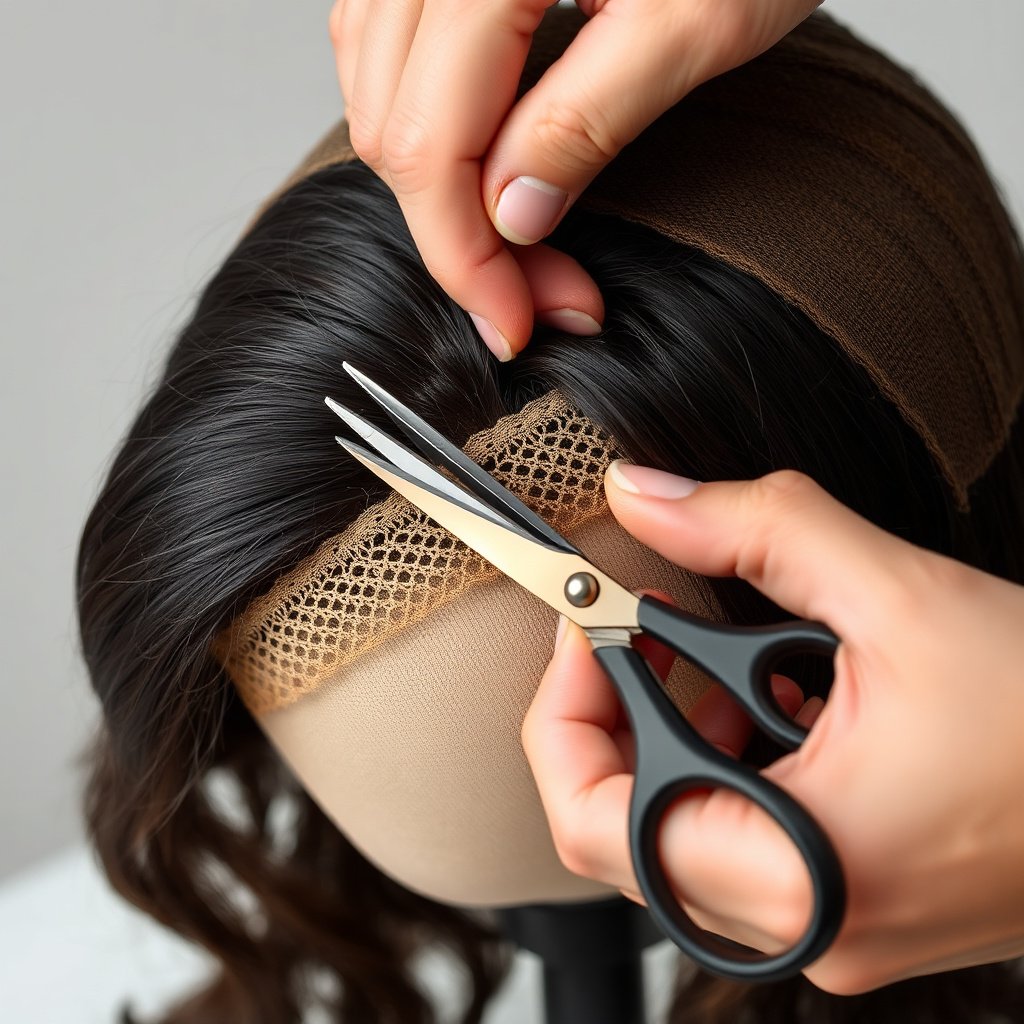
Marking and Initial Cut
Once the wig is secure, carefully trace or visualize the intended lace edge matching your natural hairline. Leave approximately 1/8 to 1/4 inch of lace beyond the hairline to avoid cutting too close to the hair knots.
Begin making small, gentle snips following the marked line, cutting slowly and avoiding wide, straight cuts. This helps the lace edge look more natural and prevents a blunt edge.
- Leave extra lace beyond hairline
- Avoid aggressive cutting
- Follow curves of your hairline
For more on this, see our related guide: Pre Cut Lace Wigs: A Complete Buying Guide.
Refining the Cut for Natural Appearance
After the initial cut, examine the wig in natural light and test the fit. Use micro-snipping to create irregular edges, mimicking natural hairlines and softening the look.
If excess lace remains, continue trimming tiny amounts carefully rather than cutting large chunks. Tweezing some lace fibers may also help in blending lace translucency.
- Use micro-snipping for irregular edges
- Trim only small amounts at a time
- Consider tweezing for lace blending
Common Mistakes to Avoid When Cutting Wig Lace

Cutting Too Close to the Hairline
One frequent error is cutting the lace too close to the hairline. This risks cutting the knots securing hair strands, causing shedding and damaging the wig.
Leaving a small border of lace intact prevents damage and allows for adhesive application to secure the wig comfortably.
- Avoid cutting beyond the knot base
- Maintain lace border for knot protection
Using Improper Tools or Rushing
Using large scissors or dull blades can cause jagged edges and tear the lace. Cutting hastily often leads to uneven lines or accidental hair cuts.
Opt for precision tools and take your time to achieve a neat, natural lace edge.
- Use sharp, precise scissors
- Cut slowly and deliberately
Post-Cutting Care and Styling for a Natural Finish

Blending the Lace Edge with Makeup
After trimming, applying a small amount of foundation or lace tint along the lace edge can help it blend with your scalp color better, making the lace virtually invisible.
Use a sponge or small brush and gently tap the color onto the lace for a seamless transition without clumping.
- Apply matching foundation or lace tint
- Tap gently to blend
For more on this, see our related guide: Where to Buy Wigs Near Me: Your Local Shopping Guide.
Securing and Styling the Wig After Cutting
Use wig adhesive, tape, or gel-based glue along the trimmed lace to secure the wig. Styling baby hairs around the edges can also camouflage the lace and contribute to a natural hairline look.
Regular maintenance through gentle washing and avoiding harsh heat aids in preserving the lace and hair longevity.
- Use appropriate adhesive
- Style baby hairs to conceal lace
- Maintain wig carefully
Additional Tips for Safe and Effective Wig Lace Trimming

Practice on Spare Lace or Less Visible Areas
If you are new to trimming wig lace, practice on an extra lace piece or a less noticeable part of the wig first. This helps build confidence and reduces mistakes on your main wig.
Watching tutorials or consulting with wig professionals can provide useful insights tailored to your specific wig type.
- Practice before cutting main wig
- Seek professional advice if unsure
For a thorough understanding of wig and lace types, consult this detailed lace wig information page. lace wig information.
Storage and Handling After Cutting
Store your wig on a mannequin or wig stand after cutting to keep the lace shape intact. Avoid folding or crushing the trimmed edges as this can cause deformation or damage.
Handle the lace with care during styling to avoid unnecessary stress and prolong your wig’s lifespan.
- Use wig stands for storage
- Handle lace gently when styling
Types of Wig Lace and Their Cutting Characteristics Compared
This table compares key features of popular wig lace materials to help you decide how to cut each type safely and effectively.
| Lace Type | Durability | Visibility | Cutting Difficulty | Best For |
|---|---|---|---|---|
| Swiss Lace | Low – delicate | Very low – blends naturally | High – requires careful cutting | Natural look wigs |
| French Lace | High – sturdy | Medium – slightly visible | Medium – forgiving but still careful | Everyday wear wigs |
| HD Lace | Medium – thin | Very low – nearly invisible | High – fragile, tricky to cut | Special occasion, high realism |
| Polyester Lace | High – strong | High – visible | Low – easy to cut | Practice or budget wigs |
Frequently Asked Questions
Can I cut the lace myself or should I see a professional?
Many people successfully cut their own wig lace with the right tools and patience. However, if you're nervous or want a flawless finish, visiting a wig specialist might be a good choice.
How close to the hairline should I cut the lace?
Leave about 1/8 inch of lace beyond the hairline to avoid cutting knots. This also helps with applying adhesive securely.
What scissors are best for cutting wig lace?
Small, sharp haircutting or embroidery scissors are ideal because they allow precise, controlled snips without damaging the lace.
How can I make the lace less visible after cutting?
Use foundation or lace tint matching your skin tone along the edge, and style baby hairs to camouflage the border naturally.
Is trimming lace necessary for all wigs?
Most lace front and full lace wigs come with excess lace to trim for a custom fit, so yes, cutting lace is typically necessary.
Key Takeaways
- Trim wig lace slowly with sharp scissors, leaving a small margin to protect hair knots.
- Different lace types require different cutting techniques for best results.
- Securing the wig and marking the cutting line improves accuracy.
- Blend trimmed lace edges with makeup and baby hairs for a natural look.
Conclusion
Cutting wig lace is an essential skill to create a natural-looking hairline and secure fit for lace wigs. The process involves assessing the wig's lace type, preparing your tools and workspace, and carefully trimming the lace with precision. Protecting the hair strands and maintaining the integrity of the lace while shaping it accurately are the core factors in achieving good results. Taking your time and respecting the delicate nature of the lace will help avoid accidental damage and ensure a long-lasting wig.
Depending on the lace material, such as Swiss or HD lace, you should adjust your cutting approach to be gentler and more precise. If your wig uses French lace, you might find it easier to work with, but careful snipping is still required. For beginners, practicing on spare lace or less visible sections is wise. After cutting, blending the lace edge with foundation and styling baby hairs enhances the illusion of a natural scalp. Choosing the right tools and setups, including using small, sharp scissors and bright lighting, also makes a significant difference.
If you're new to wig lace trimming or want the absolute best finish, consider consulting professional wig stylists for guidance or services. Practicing these techniques will build your confidence and help you manage your wig's appearance independently. Ultimately, the right combination of soft trimming, blending, and secure application leads to a realistic, comfortable wig that feels and looks like a natural part of you. Try these steps on your next wig to experience improved styling and wear.