
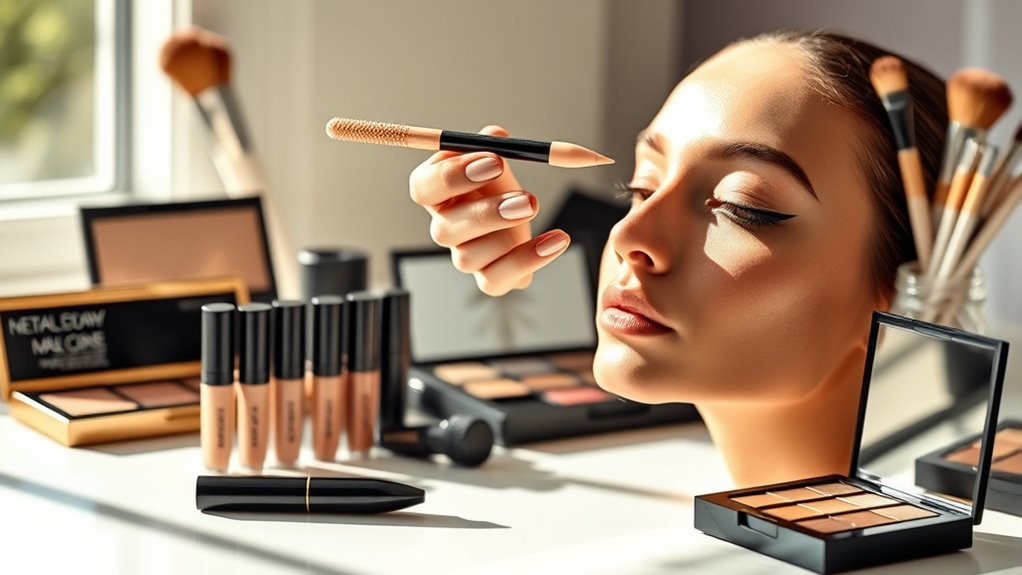
Your Guide to Concealer: Choosing With Confidence
Finding the perfect concealer can feel like an endless challenge. You want something that blends seamlessly, hides imperfections, and lasts all day without feeling heavy or cakey.
If you’ve struggled to find your ideal match or application technique, you’re not alone—many people face the same frustrations.
You can confidently choose concealer by understanding your skin type, undertones, and coverage needs. Match shades in natural light, picking formulas that suit dry, oily, or sensitive skin.
Use lightweight layers and gentle tapping to avoid cakiness, and finish with setting powder to lock it all in. Knowing when to switch between cream and liquid concealers or picking the right finish helps you improve your natural beauty effortlessly.
Keep exploring to master flawless application and lasting wear.
Key Takeaways
- Choose concealer types based on skin concerns: creams offer full coverage and work well for dry skin, while liquids feel lightweight and suit oily skin.
- Match concealer shades by identifying your undertones and testing swatches in natural light on your jawline.
- Select concealer formulas that fit your skin type, like moisturizing formulas for dry skin and matte ones for oily skin.
- Apply concealer in thin layers using blending tools such as damp sponges, then finish with gentle tapping motions.
- Use color-correcting concealers strategically to neutralize discoloration—for example, peach tones for dark circles and green for redness.
What Is Concealer and Why You Need It
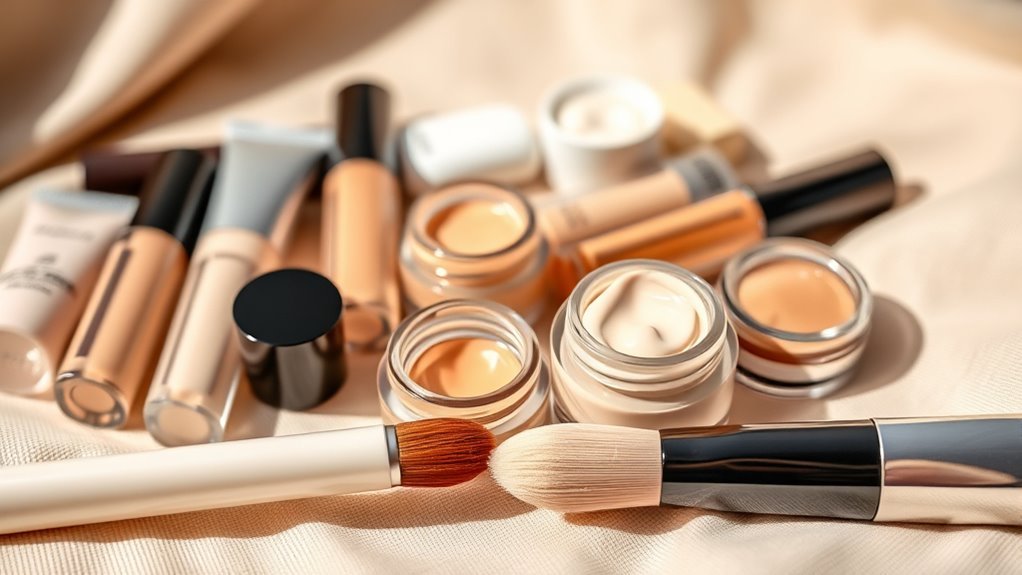
Concealer is a makeup product designed to cover imperfections like dark circles, blemishes, and redness. Its concealer history dates back decades, evolving from simple formulations to today’s versatile options.
You might’ve heard concealer myths claiming it clogs pores or looks cakey. Don’t buy into those. With the right application techniques, like dabbing and blending with a brush or fingertip, you’ll get seamless coverage.
Celebrity favorites often highlight lightweight, buildable concealers that suit various skin types. Seasonal trends influence shades and finishes, so you can switch from matte in summer to dewy in winter.
Whether you’re shopping budget options or high-end brands, there’s something perfect for your needs. As travel essentials, concealers fit right into your makeup bag without bulk.
Integrating your concealer with skincare, like moisturizing first, guarantees smooth application. And don’t forget to use gentle makeup removers to keep your skin healthy after wearing concealer all day.
How to Find Your Perfect Concealer Shade
How do you choose a shade that complements your skin tone without standing out? Start with shade matching by identifying your undertone awareness, whether cool, warm, or neutral. This helps you find shades that blend seamlessly.
Next, swatch testing is essential. Apply a small amount of concealer on your jawline in natural light to see how it truly looks. Keep lighting considerations in mind because artificial light can distort colors.
Swatch test concealer on your jawline in natural light to ensure true color match and avoid distortion.
Remember, seasonal adjustments matter too. Your perfect shade in winter might differ in summer as your skin tone changes. Don’t hesitate to do brand comparisons since formulation differences affect how shades appear on your skin.
Also, consider application techniques. Some concealers may look different depending on whether you use fingers, brushes, or sponges. By following these steps, you’ll confidently find a concealer shade that improves your complexion naturally and flawlessly.
Choosing the Right Concealer Formula for Your Skin Type
Now that you’ve found your perfect shade, the next step is picking a concealer formula that suits your skin type. Whether your skin is dry, oily, or combination, matching the right texture can really make all the difference.
You’ll want to understand the benefits of creams, liquids, and sticks so you can get flawless coverage without sacrificing comfort. It’s all about choosing what feels right and works best for you!
Understanding Skin Type Needs
Since your skin type affects how makeup behaves, picking the right concealer formula is vital for a flawless finish. Pay attention to hydration levels. Dry skin benefits from creamy, moisturizing formulas while oily skin needs lightweight, matte options.
Consider any skin sensitivities or conditions like eczema, which call for gentle, fragrance-free products. Seasonal changes also impact your skin’s needs. You might switch to richer concealers in winter and lighter ones in summer.
Age considerations matter too, as mature skin often requires formulas that won’t settle into fine lines. Don’t forget undertone awareness to guarantee your concealer blends seamlessly. Finally, environmental factors like pollution and humidity can affect wear time. So choose a formula that suits your lifestyle and keeps you comfortable throughout the day.
Matching Concealer Texture
Your skin type plays a big role in determining which concealer texture will work best for you. When matching concealer texture, consider these essential points for ideal skin compatibility and finish options:
Texture tips: Choose creamy formulas for dry skin and lightweight, matte options for oily skin.
Application techniques: Use a damp sponge for a natural finish or a brush for precise coverage levels.
Formula comparisons: Test liquid, stick, and powder concealers to find your ideal formula.
Seasonal adjustments: Opt for hydrating textures in winter and oil-control formulas in summer.
Ingredient awareness: Look for nourishing ingredients if you have sensitive skin.
Follow brand recommendations and practice product layering to improve lasting wear while keeping your skin balanced and flawless.
Benefits of Different Formulas
Although choosing the right concealer formula depends on your skin type, understanding the benefits of each option can help you make a smarter choice. Cream formulas offer full coverage with blendable textures, ideal for dry or mature skin needing hydration.
Liquid formulas provide lightweight options and sheer coverage, perfect if you want a natural look or have oily skin. Stick formulas deliver long wear formulas with matte finishes, great for combination skin or on-the-go touch-ups.
Hydrating concealers keep dry skin comfortable without creasing, while matte finishes control shine for oily skin. By selecting a formula that matches your skin’s needs, whether you prioritize coverage, wear time, or texture, you’ll achieve a flawless, confident look every time.
Concealer Types Explained: Best Options for Skin Concerns
When you’re picking out a concealer, it really helps to think about whether a cream or liquid formula suits your skin concerns better. Cream concealers give you fuller coverage, which is great if you want to hide blemishes or redness. On the other hand, liquid concealers feel lighter on the skin and are perfect for brightening up under your eyes or covering those minor imperfections. So, it all comes down to what you need and how you want your skin to look!
Cream vs. Liquid
Since every skin type has unique needs, choosing between cream and liquid concealers can make a big difference in your coverage and comfort. Cream formulations often provide richer coverage and are great if you want something that stays put. Liquid formulas tend to be lighter, offering buildable coverage and better skin hydration.
When deciding, consider your blending techniques, as creams may require more effort to blend seamlessly, while liquids glide on easily.
Here’s a quick coverage comparison:
- Creams suit dry or mature skin due to moisturizing properties
- Liquids work well for oily or combination skin types
- Cream formulations can cover blemishes effectively
- Liquid formulas offer a natural, dewy finish
- Both types vary in longevity depending on ingredients
Choose based on your skin’s needs and how you like your concealer to wear.
Coverage for Skin Concerns
Because different skin concerns require targeted solutions, choosing the right concealer can transform your makeup routine. For blemish coverage and acne scars, opt for a thick, full-coverage formula that stays put without caking.
To tackle dark circles and under-eye bags, pick a lightweight, hydrating concealer that brightens while addressing sensitivity issues. If redness reduction is your goal, a green-tinted concealer helps neutralize uneven skin tone effectively.
For hyperpigmentation solutions and age spots, choose a creamy concealer with buildable coverage that blends seamlessly. Pay attention to skin texture. Matte finishes work well for oily skin, while dewy formulas suit dry or sensitive areas.
Matching your concealer to your specific concern guarantees flawless, natural-looking results every time.
Matching Concealer Finish to Your Desired Look
Although choosing the right concealer shade is crucial, matching the finish to your desired look can make all the difference in achieving a flawless appearance. Different finish types affect how your makeup interacts with light and complements your skin tones, so thoughtful finish matching is key. Consider your makeup styles and occasion choices to pick the best option. Here’s what to keep in mind:
Choosing the right concealer finish is essential for enhancing your look and complementing your skin tone beautifully.
- Matte finishes offer full coverage and reduce shine, perfect for oily skin or long-lasting wear.
- Dewy finishes add light reflection, ideal for dry skin or a fresh, radiant look.
- Satin finishes balance between matte and dewy, great for natural, everyday makeup.
- Sheer finishes provide subtle coverage, improving your skin’s natural undertone balance.
- Cream finishes work well with various application techniques, allowing you to build coverage as needed.
Aligning your personal preferences with these factors guarantees your concealer finish improves your overall appearance beautifully.
Color-Correcting Concealers: When and Which Shades to Use
You’ll want to get a handle on basic color theory to pick the right color-correcting concealer for your skin concerns. Different shades work to neutralize specific issues like redness, dark circles, or dullness. So, let’s dive into when to use each shade for the best results.
Understanding Color Theory
When you choose a concealer, understanding color theory can transform how you cover imperfections. The color wheel helps you identify complementary shades that neutralize unwanted tones effectively. Matching your undertone is essential, so your concealer blends naturally with your skin tone.
Consider seasonal adjustments since your skin’s hue variations and saturation levels shift with light reflection and weather changes. Keep these tips in mind:
- Use peach or orange shades to counteract dark circles on lighter skin.
- Green tones neutralize redness from blemishes.
- Lavender brightens dull, yellowish areas.
- Yellow concealers cancel out purple or blue veins.
- Always test how the concealer reflects light on your skin.
Mastering these basics guarantees your concealer looks seamless and amplifies your natural glow.
Targeting Specific Skin Concerns
Since every skin concern demands a unique approach, using color-correcting concealers can make a huge difference in how effectively you neutralize imperfections. For targeted coverage, choose shades that cancel out specific issues: use green for redness reduction and spot treatment on acne scars, and peach or orange tones for hyperpigmentation correction and dark circle concealment.
Make sure to match the concealer with your skin tone to avoid unnatural patches. Beyond blemish concealment, color-correcting concealers can help with texture smoothing by evening out tone variations and providing a brightness boost where needed.
Apply sparingly and blend well to maintain a natural look. When you pick the right color for each concern, your overall complexion appears flawless and balanced without heavy coverage.
How to Apply Concealer Without Looking Cakey
Although concealer can instantly brighten your complexion, applying too much or using the wrong technique can make it look cakey. To avoid this, focus on proper skin prep and precise application techniques. Start with a well-moisturized base to help the concealer glide on smoothly.
Use small amounts and build coverage gradually with layering methods rather than one thick layer. Choose the right shade adjustments to match your skin tone for a natural finish.
Here are key tips to keep your concealer flawless:
- Prep your skin with a lightweight moisturizer or primer to prevent dryness.
- Use a damp blending tool like a sponge for seamless application.
- Avoid common pitfalls like over-applying or skipping setting powder.
- Apply setting tips such as a light dusting of translucent powder to lock concealer in place.
- Finish with gentle tapping motions for flawless finishing touches that prevent caking.
These steps guarantee your concealer improves, not masks, your natural beauty.
How to Blend Concealer Seamlessly
Mastering the art of blending concealer seamlessly guarantees a natural, flawless finish that improves your features without obvious lines or patches. Start with proper skin prep. Moisturize well to create a smooth canvas.
Choose the right application tools. Blending sponges offer a soft, airbrushed effect, while certain brush choices provide precision for targeted areas. Use gentle blending techniques, tapping or stippling rather than rubbing, to avoid disturbing foundation underneath.
Layering methods work wonders. Apply concealer in thin layers to build coverage gradually, preventing cakiness. Pay attention to texture tips. Avoid overly thick formulas that resist blending.
Once you’re satisfied with the coverage, lock it in using setting sprays to meld the concealer with your skin for long-lasting wear. By combining these blending techniques with the right tools and preparation, you’ll achieve a seamless, natural look every time without patchiness or harsh edges.
Common Concealer Mistakes and How to Fix Them
Why do some concealer applications look cakey or disappear by midday? It often boils down to common misconceptions and missteps in application techniques. To avoid these mistake examples, focus on skin prep and formula selection before you even dab the product on.
Choose shades carefully. Shade matching is vital for a natural finish. Here are everyday essentials to keep in mind:
Skip applying too much product. Thin layers blend better and prevent cakiness.
Use proper blending tips, like tapping motions with a sponge or brush, for seamless coverage.
Prep your skin with moisturizer or primer to create a smooth base that supports product layering.
Match your concealer formula to your skin type to avoid creasing or fading.
Finish with light setting powder or spray as finishing touches to lock it in place without heaviness.
Master these, and your concealer will look flawless all day without disappearing or clumping.
Tips to Make Your Concealer Last All Day
Getting your concealer to stay put throughout the day takes more than just picking the right shade and formula. You need to focus on setting concealer intentions and mastering layering techniques to guarantee it lasts. Start by prepping your skin with a lightweight moisturizer and primer to create a smooth base.
Use a thin layer of concealer, then gently pat it in rather than rubbing. Layering small amounts builds coverage without caking. Finally, set your concealer with a translucent powder to lock it in place.
| Tip | Benefit |
|---|---|
| Prep with moisturizer | Smooths skin for better grip |
| Use primer | Controls oil and extends wear |
| Apply thin layers | Avoids cakiness |
| Pat, don’t rub | Prevents product movement |
| Set with translucent powder | Locks concealer all day |
Frequently Asked Questions
Can Concealer Be Used on Other Body Parts Besides the Face?
Yes, you can use concealer on other body parts besides your face. Body concealer applications work great for covering scars, blemishes, or uneven skin tones on areas like your hands, chest, or legs.
Just keep skin type considerations in mind. Choose formulas that suit your skin’s texture and sensitivity to avoid irritation.
Whether you need extra coverage or want to even out imperfections, a good concealer can boost your confidence all over.
How Should Men Choose and Apply Concealer Differently?
When choosing concealer, you should focus on color matching to your natural skin tone, avoiding shades that look too light or heavy. For a masculine application, opt for a lightweight formula that blends seamlessly without looking cakey.
Apply sparingly to areas like under-eye circles or blemishes, using your fingers or a brush for precision. Keep the finish natural to maintain a subtle, confident look that complements your overall style.
Are There Any Concealers Suitable for Sensitive Eyes?
If your eyes are a delicate garden, you’ll want to choose concealers with sensitive formulations that won’t irritate. Hypoallergenic options are your best friends here because they minimize the risk of redness or itching.
Look for products labeled fragrance-free and dermatologist-tested to keep your skin calm and comfortable. These gentle concealers blend smoothly, letting you cover imperfections without worrying about discomfort or flare-ups.
Your eyes will thank you for the care!
Can Concealer Help With Acne Scars or Only Dark Circles?
Yes, concealer can definitely help with acne scars, not just dark circles. When tackling acne coverage, you should focus on acne coverage techniques like using a color corrector first. Green or peach tones work well. Then apply a high-coverage concealer.
For scar blending, use your fingertips or a damp makeup sponge to gently blend the edges. This ensures a natural finish while avoiding irritation. This approach helps you cover imperfections effectively.
How to Remove Concealer Effectively Without Irritating Skin?
Think of removing concealer like gently unwrapping a delicate gift. You don’t want to tear the paper. To avoid irritating your skin, use gentle makeup removers made for sensitive skin, like micellar water or oil-based cleansers.
Apply with a soft cotton pad and don’t scrub. Then, follow with your regular skin care routine to soothe and hydrate. This careful approach keeps your skin happy while effectively removing every trace of concealer.
Conclusion
Now that you know how to pick and apply concealer like a pro, it’s clear the theory that “one size fits all” simply doesn’t hold up. Your unique skin tone, type, and concerns mean choosing the right shade and formula is key.
With the right techniques, you won’t just cover imperfections, you’ll elevate your natural beauty effortlessly. So, trust your instincts, experiment, and watch how the perfect concealer boosts your confidence every day with your guide to concealer.