Conditioner for Natural Hair: A Complete Buying Guide
Finding the perfect conditioner for natural hair can feel like a never-ending quest. You’re not alone if you’ve struggled with products that leave your curls weighed down, dry, or full of buildup. Many people with natural hair want a conditioner that truly nourishes without compromising their curl pattern or health.
You need a conditioner that nourishes your natural hair without weighing down curls or causing buildup. Look for lightweight, nutrient-rich formulas with moisturizing ingredients like shea butter, glycerin, and natural oils, while avoiding heavy silicones and harsh sulfates.
Protein-enriched conditioners help strengthen and improve curl elasticity, but balance moisture to prevent brittleness. Match your conditioner to your curl type and porosity for best results.
Keep these tips in mind, and you’ll uncover how to keep your curls healthy and vibrant.
Key Takeaways
- Prioritize scalp health and lightweight, nutrient-rich conditioners that enhance curl definition without causing buildup or weighing down natural hair.
- Choose conditioners with moisturizing humectants like glycerin and emollients such as shea butter. Avoid silicones and drying alcohols.
- Include protein-enriched conditioners to strengthen and repair hair while balancing moisture for elasticity and reduced shedding.
- Match conditioner ingredients to hair texture and porosity, focusing on hydration needs for Type 3 and Type 4 curl patterns.
- Use leave-in conditioners for daily moisture and detangling, and rinse-out conditioners for intensive hydration in very dry or damaged natural hair.
Key Criteria That Make a Conditioner Ideal for Natural Hair
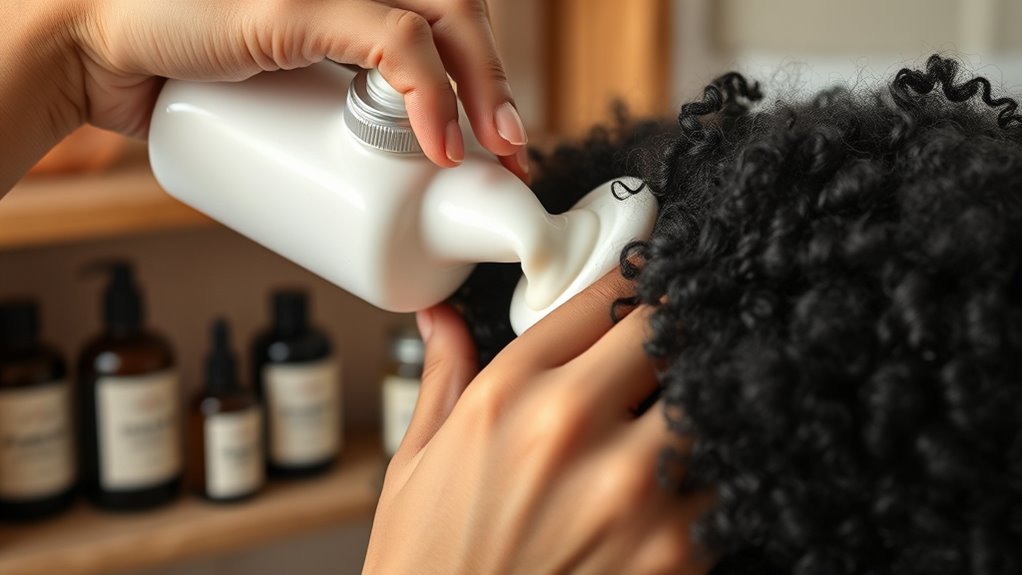
Although choosing the right conditioner for natural hair can seem overwhelming, focusing on key criteria will help you find one that truly nourishes and protects your curls. First, prioritize products that support scalp health, since a healthy scalp lays the foundation for strong, vibrant hair growth.
Look for conditioners that soothe and hydrate your scalp without causing buildup or irritation. Next, consider how the conditioner improves curl definition. You want a formula that strengthens each strand while maintaining elasticity and bounce, preventing frizz and breakage.
Avoid heavy silicones or harsh sulfates that can weigh your curls down or strip natural oils. Instead, seek lightweight, nutrient-rich conditioners that penetrate deeply, delivering moisture and reinforcing your hair’s natural pattern. By focusing on these factors, scalp health and curl definition, you’ll choose a conditioner that not only feels great but also boosts your hair’s overall appearance and resilience.
This approach saves you time and guarantees your curls always look their best.
How to Identify Moisturizing Ingredients in Conditioners
How can you quickly spot moisturizing ingredients in conditioners designed for natural hair? Start by scanning the label for humectants like glycerin and honey, which pull moisture into your hair. Look for emollients such as shea butter, coconut oil, and jojoba oil. They smooth and seal moisture, aiding moisture retention. Also, check if the product lists natural oils or butters early in the ingredient list, indicating higher concentration.
Pay attention to ingredient sourcing, too. Conditioners that highlight responsibly sourced plant oils often provide better hydration without harsh chemicals. Avoid products heavy on silicones or alcohols that can dry out natural hair over time. Instead, prioritize ingredients derived from nature, which help maintain your hair’s moisture balance.
Why Protein Matters for Your Natural Hair Conditioner
You need protein in your conditioner to help strengthen and repair your natural hair. Different types of protein work in their own unique ways, so it’s important to know which one suits your hair best. Just be careful not to overdo it—too much protein can make your hair feel stiff and brittle.
Protein Benefits Explained
Because natural hair is made of keratin, a type of protein, it relies on protein to stay strong, healthy, and resilient. When you use conditioners with quality protein sources, you help rebuild your hair’s structure, improving its overall strength.
Protein fills in weak spots and repairs damage, which boosts hair elasticity. This means your strands can stretch and return without breaking. This is especially important if your hair feels brittle or prone to breakage.
By regularly incorporating protein-enriched conditioners, you maintain your hair’s natural bounce and reduce shedding. However, balance is key; too much protein can make hair stiff, so pairing protein with moisture keeps your hair flexible and nourished.
Understanding these benefits helps you choose the right conditioner to support your natural hair’s health.
Protein Types For Hair
While many conditioners claim to strengthen hair, the type of protein they contain makes all the difference in how well they work for your natural hair. Different protein sources target various hair needs, so achieving the right protein balance is key to maintaining strength without stiffness or dryness.
Here’s a quick guide to common protein types in conditioners:
| Protein Type | Source | Benefit |
|---|---|---|
| Hydrolyzed Keratin | Wool, feathers | Repairs and rebuilds hair |
| Silk Protein | Silk fibers | Adds shine and smoothness |
| Wheat Protein | Wheat gluten | Improves moisture retention |
Understanding these proteins helps you choose a conditioner suited to your natural hair’s unique needs, ensuring the best strength and health.
Protein Overload Signs
Although protein is essential for strengthening natural hair, too much can cause more harm than good. You might experience protein overload if your hair feels stiff, brittle, or overly dry despite using conditioner regularly.
This happens because excess protein creates a hard coating around your strands, restricting moisture absorption and disrupting hair health. You may also notice increased breakage or unusual dullness.
To avoid protein overload, pay close attention to how your hair responds to protein-enriched products. If you detect these signs, switch to moisturizing conditioners without added protein to restore balance.
How to Choose the Right Conditioner for Your Hair Texture
To pick the right conditioner, start by figuring out your hair type. That way, you’ll know exactly what your hair needs. Next, look for ingredients that match those needs—whether it’s moisture, protein, or a bit of both. Paying attention to this balance really helps keep your natural hair healthy and strong.
Identify Your Hair Type
How do you figure out which conditioner suits your natural hair best? Start by identifying your hair type, focusing on curl patterns and hair porosity. Knowing these helps you pick a conditioner that nourishes without weighing your hair down.
| Hair Type | Description |
|---|---|
| Type 3 (Curly) | Loose to tight curls, prone to dryness |
| Type 4 (Coily) | Very tight curls or zigzag patterns |
| Low Porosity | Hair resists moisture, products sit on top |
| Medium Porosity | Balanced moisture absorption |
| High Porosity | Easily absorbs moisture, dries quickly |
This quick guide helps you match your hair’s natural needs with the right conditioner. That way, you get better hydration and easier manageability.
Match Ingredients To Needs
Once you’ve identified your hair type and porosity, the next step is to focus on the ingredients that best support your hair’s unique texture and needs. Choosing conditioners with the right ingredient compatibility guarantees you boost your hair health without causing buildup or irritation.
Pay attention to how ingredients interact with your natural hair to get the best results.
Look for:
- Lightweight oils like argan or jojoba for fine or low-porosity hair
- Rich butters such as shea or mango for thick, coarse textures
- Humectants like glycerin or aloe vera to maintain moisture balance
- Natural proteins that strengthen without weighing hair down
Matching ingredients to your hair’s needs will keep your curls, coils, or waves nourished and vibrant.
Consider Moisture And Protein
Everyone benefits from balancing moisture and protein in their hair care routine, but your hair texture determines the right mix. Understanding moisture balance is key to maintaining hydration levels and hair elasticity.
If your curls feel dry or brittle, boost protein sources like keratin or silk amino acids, but avoid overloading to prevent stiffness. Ingredient synergy matters. Choose conditioners that combine humectants and proteins for ideal results.
Deep conditioning treatments can restore both moisture and protein, especially during seasonal adjustments when scalp health fluctuates. Pay attention to product layering and pH levels to maximize absorption without buildup.
Tailoring your conditioner choice to your hair’s unique needs guarantees stronger, healthier strands with the perfect moisture-protein harmony.
When to Use Leave-In vs. Rinse-Out Conditioners?
Wondering whether to reach for a leave-in or rinse-out conditioner? Knowing when to use each can make a huge difference in your natural hair care routine. Leave-in benefits include prolonged moisture and easier detangling since you don’t rinse it out. On the other hand, rinse-out timing is key during your wash day when you want to deeply condition and restore your hair.
Choosing between leave-in and rinse-out conditioner can transform your natural hair care routine with moisture and manageability.
Here’s how to decide:
- Use rinse-out conditioners right after shampooing to nourish and soften your hair, then rinse thoroughly.
- Apply leave-in conditioners on damp hair to lock in moisture throughout the day.
- Opt for leave-in if your hair feels dry or brittle between washes.
- Choose rinse-out for intensive hydration, especially if your hair is very dry or damaged.
How to Apply Conditioner for Maximum Hydration
Knowing when to use leave-in or rinse-out conditioner sets the foundation, but how you apply your conditioner can make all the difference in maximizing hydration.
Start by detangling your hair with your fingers or a wide-tooth comb while the conditioner is still in. This helps distribute the product evenly, ensuring every strand absorbs moisture.
Focus on your hair’s mid-lengths and ends, where dryness is most common, rather than the roots. For deeper moisture, try applying conditioner on damp, not soaking wet, hair to prevent dilution.
Using a shower cap during deep conditioning sessions traps heat, allowing the product to penetrate better. After the recommended time, rinse with cool water to seal the cuticle and lock in moisture.
Common Conditioner Mistakes for Natural Hair to Avoid
While conditioner is essential for keeping your natural hair hydrated and healthy, using it incorrectly can do more harm than good. Avoid these common conditioner mistakes to get the best results for your hair type and needs.
Ignoring hair porosity: Picking a product formulation that doesn’t match your hair’s porosity can lead to buildup or dryness. Low porosity hair often prefers lightweight ingredients, while high porosity benefits from richer formulations.
Misunderstanding texture compatibility: Not all conditioners work for every curl pattern or texture. Choose products designed for your specific texture to avoid weighing hair down or missing moisture.
Overlooking fragrance sensitivity: Some common ingredients can irritate sensitive scalps, especially with seasonal changes or environmental factors. Check for allergens or strong fragrances.
Improper application techniques: Applying conditioner only at the roots or skipping detangling can cause uneven hydration and breakage.
Being mindful of these mistakes helps you maintain healthy, vibrant natural hair year-round.
How to Read Conditioner Labels for Natural Hair Needs
Avoiding common conditioner mistakes sets a solid foundation, but understanding the label can take your hair care routine even further. When you start decoding labels, focus on ingredient transparency. Brands that clearly list all components let you know exactly what you’re applying to your natural hair.
Look for moisturizing agents like shea butter or glycerin, which help maintain hydration. Avoid harsh sulfates and silicones that can weigh down or dry out curls.
Pay attention to the order of ingredients. The first few are the most concentrated. If water tops the list, that’s typical, but make sure nourishing oils and proteins follow. Also, watch for additives like parabens or artificial fragrances that might irritate your scalp.
Budget-Friendly Conditioners for Natural Hair That Work
Even if you’re on a tight budget, you don’t have to compromise on quality when choosing a conditioner for your natural hair. Affordable options with effective formulas are out there. You just need to know where to look. Start with user reviews and product comparisons to find budget brands that deliver real hair benefits. Always do an ingredient check to avoid harmful additives and focus on nourishing components.
Here are some tips to guide your purchase:
- Investigate brand recommendations known for affordable, quality conditioners.
- Use shopping tips like signing up for newsletters to access online discounts.
- Compare products based on hair benefits and price per ounce.
- Read user reviews to gauge real-life effectiveness and satisfaction.
With these strategies, you can find budget-friendly conditioners that work well without breaking the bank.
Tips for Switching Conditioners Without Damaging Your Hair
When you’re switching conditioners, a good way to start is by gradually mixing the new product with your current one. This helps avoid shocking your hair.
Keep an eye on how your hair reacts during this time. If you notice any changes, you can adjust how often or how much of the new conditioner you use to prevent damage.
And don’t forget—keeping your hair consistently moisturized is key to staying healthy throughout the changeover. Just a little extra care goes a long way!
Gradual Product Transition
Although switching conditioners can be exciting, you should ease into the alteration to protect your natural hair’s health. Gradual changes help your hair adjust without causing stress or damage. Jumping straight into a new product might shock your strands, leading to dryness or breakage.
To adapt smoothly, try these tips:
- Mix your old and new conditioners during washes to blend benefits.
- Use the new conditioner every other wash before fully switching.
- Pay attention to how your hair feels and adjust usage accordingly.
- Keep up with your regular deep conditioning treatments to maintain hair health.
Monitor Hair Reaction
Tracking your hair’s reaction during the first few washes with a new conditioner is essential to prevent damage. Pay close attention to how your scalp health responds. Any signs of irritation or excessive dryness mean the product might not be right for you.
Also, observe how your hair porosity reacts. If your strands feel weighed down or remain dry, the conditioner may not match your hair’s absorption needs.
Keep a simple journal to note changes in texture, shine, and manageability after each wash. This helps you quickly identify if the new conditioner supports your natural hair’s unique requirements.
If you notice negative effects, pause use and reassess your choice before continuing. Monitoring these reactions guarantees your hair stays healthy and resilient during the shift.
Maintain Consistent Moisturizing
Since switching conditioners can temporarily disrupt your hair’s moisture balance, you’ll want to maintain consistent hydration throughout the shift. Sticking to effective hydration techniques and moisture routines helps prevent dryness and breakage during this change.
Here’s how you can keep your natural hair nourished:
- Use a leave-in conditioner daily to lock in moisture.
- Incorporate deep conditioning treatments weekly to restore hydration.
- Apply natural oils like coconut or jojoba oil to seal moisture.
- Avoid overwashing to prevent stripping your hair’s natural oils.
Frequently Asked Questions
Can Conditioner Help Reduce Scalp Dandruff in Natural Hair?
Yes, conditioner can help reduce scalp dandruff in natural hair by improving scalp health. Dandruff causes often include dryness and irritation, which conditioners can alleviate by providing moisture and soothing your scalp.
When you choose a conditioner with ingredients like tea tree oil or aloe vera, it can balance your scalp’s natural oils and reduce flakiness. Just make sure to rinse thoroughly to avoid buildup, which might worsen dandruff.
How Often Should I Deep Condition Natural Hair?
Think of your hair as a garden needing regular rain. Deep condition every one to two weeks to keep it thriving.
When you DIY deep conditioning, you nourish your strands deeply, replenishing moisture and strength. The benefits of protein in your treatment act like sturdy roots, repairing damage and boosting resilience.
This ritual prevents dryness and breakage, helping your natural hair flourish with every session.
Are Silicone-Free Conditioners Better for Natural Hair?
Silicone-free conditioners can be better for your natural hair because they avoid buildup that blocks moisture. While silicone benefits include smoothness and shine, they can weigh your hair down over time.
You might find natural alternatives like aloe vera or shea butter provide hydration without residue. These options keep your hair breathable and healthy, so switching to silicone-free conditioners could improve your hair’s overall texture and manageability.
Can Conditioner Protect Natural Hair From Heat Damage?
Think of conditioner as a shield, like sunscreen for your hair. Yes, conditioner can offer some heat protection by locking in moisture and reducing dryness caused by heat styling.
When you use a good conditioner, it helps with moisture retention, making your strands less prone to breakage. Just remember, while conditioner helps, pairing it with a dedicated heat protectant spray gives your natural hair the best defense against heat damage.
How Does Water Quality Affect Conditioner Performance on Natural Hair?
Water quality plays a big role in how your conditioner works on natural hair. Hard water effects, caused by minerals like calcium and magnesium, can lead to mineral buildup on your strands.
This buildup makes your hair feel dry and rough, preventing your conditioner from fully penetrating and moisturizing. To combat this, you might need a chelating shampoo or filtered water to guarantee your conditioner performs its best and keeps your hair soft and manageable.
Conclusion
Choosing the right conditioner for your natural hair is like finding the perfect pair of shoes. It should fit your unique texture and needs comfortably. Remember, one in three natural hair users report improved moisture with protein-rich conditioners.
By understanding ingredients and avoiding common mistakes, you’ll keep your hair healthy and thriving. So treat your curls like you would your favorite sneakers. Give them the care they deserve, and they’ll carry you beautifully every day.
When it comes down to it, choosing the best conditioner for natural hair makes all the difference in how your curls look and feel.