Weaving Thread: A Complete Buying Guide
Finding the perfect weaving thread can feel overwhelming, right? You’re not alone—many people struggle with choosing the right thread that balances strength, texture, and durability for their projects.
Whether you’re a beginner or a seasoned weaver, picking the ideal thread can make all the difference in how your work turns out.
You need the right weaving thread to guarantee your project’s strength, texture, and durability. Choose between natural fibers like cotton or silk for softness, or synthetic ones like polyester for toughness and budget-friendliness.
Pay attention to thread weight and twist type to match your fabric and design needs. Proper color coordination and maintenance keep your work looking great longer.
Keep exploring to find out how to pick the perfect thread and care for it effectively.
Key Takeaways
- Choose thread fiber based on your project needs. Natural fibers offer softness and breathability, while synthetics provide durability and are budget-friendly.
- Understand thread weight and twist types. This helps you balance texture, strength, and durability in your woven fabric.
- Match thread color and durability to your fabric and project use. This ensures the best appearance and longevity.
- Buy quality thread by comparing brands, buying in bulk, and checking for durability certifications. Doing this helps you get the most value for your budget.
- Store and maintain threads properly by keeping them dry, adjusting tension, and protecting them from sunlight. These steps prevent damage and extend thread life.
What Is Weaving Thread and Why It Matters for Your Project
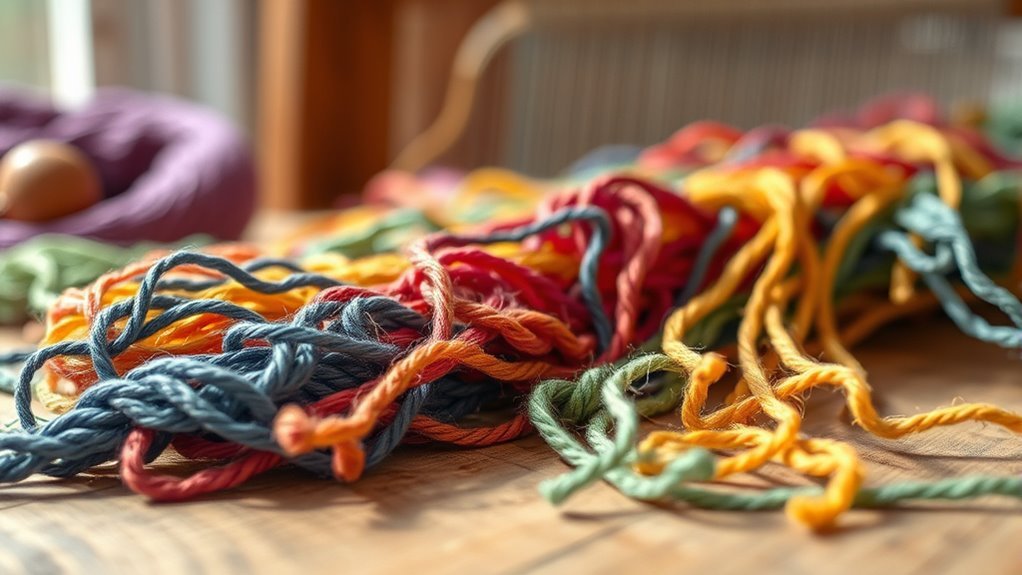
Weaving thread is the foundation of any textile project, and choosing the right type directly affects your final piece’s strength, texture, and appearance. When you select your thread, you’re not just picking a color or thickness. You’re influencing how your fabric behaves.
Different weaving techniques demand specific thread qualities, so understanding thread durability is key. For instance, if you want a sturdy, long-lasting fabric, you’ll need a thread that can withstand tension and wear without breaking. On the other hand, delicate patterns may require finer threads that offer flexibility without compromising the weave.
Different Types of Weaving Thread: Natural vs. Synthetic Fibers-Which One to Choose?
Choosing between natural and synthetic fibers can greatly shape the outcome of your textile project. Natural fibers like cotton, wool, and silk offer unique texture differences that appeal to many for their softness and breathability. Synthetic fibers, such as polyester and nylon, tend to excel in durability comparison, resisting wear and tear better.
Natural fibers provide softness and breathability, while synthetics offer superior durability and resistance to wear.
When deciding, consider cost considerations. Natural fibers often cost more but may provide a premium feel, while synthetics are usually budget-friendly. Project suitability is key: natural fibers suit breathable, eco-conscious creations, while synthetic fibers handle high-stress uses well.
Environmental impact also matters. Natural fibers are biodegradable, whereas synthetic ones can contribute to microplastic pollution. Thread brands now offer a wide range of color options in both fiber types, letting you match your vision precisely.
Ultimately, you should weigh user preferences, balancing texture, durability, and sustainability to choose the best weaving thread for your needs.
Choosing the Right Weaving Thread Weight: A Practical Guide
You’ll want to understand thread weight because it directly impacts your project’s outcome. Picking the right weight is key—it helps you match the thread to your fabric and design needs. And on top of that, thread weight really influences the texture and feel of your finished piece.
Understanding Thread Weight
Thread weight plays an essential role in determining the texture, strength, and overall appearance of your woven project. When you understand thread weight, you can select yarns that match your desired outcome.
Lighter threads often create delicate, fine textures, while heavier threads give your fabric more body and durability. Keep in mind that thread composition affects thread durability. Natural fibers like cotton may differ in strength from synthetic blends.
It’s important to take into account both weight and composition because heavier threads made from weaker fibers might not offer the durability you need. By grasping how thread weight interacts with composition, you gain better control over your weaving.
This knowledge helps you anticipate how your project will wear and feel, ensuring your final piece meets your expectations.
Matching Thread To Project
Now that you understand how thread weight and composition affect your fabric’s texture and durability, it’s time to match the right thread to your specific project. First, consider color coordination carefully. Your thread should complement or contrast your fabric to improve the design.
Next, think about thread durability. Choose stronger threads for heavy-use items like upholstery, and lighter ones for delicate garments. The thread weight must align with your fabric’s thickness to guarantee smooth weaving without puckering or breakage.
Don’t overlook the project’s purpose, as this affects the needed strength and appearance. By balancing color coordination and thread durability, you’ll create a finished piece that’s both beautiful and built to last. Matching thread to your project this way assures ideal results every time.
Effects On Fabric Texture
Although selecting the right thread weight might seem subtle, it dramatically influences your fabric’s texture and overall feel. When you choose a heavier thread, you improve the fabric structure, adding firmness and altering the drape quality.
Conversely, finer threads create a softer tactile experience with more fluid movement. Understanding textile properties helps you balance visual appeal and durability factors. For example, heavier threads increase durability but may stiffen the fabric.
Weaving techniques also interact with thread weight to affect texture, making your choice essential. Don’t overlook thread finishes; they impact how the fabric feels to the touch and its resistance to wear. By carefully selecting thread weight, you control both the functional and aesthetic outcomes of your weaving project.
Weaving Thread Twist: What It Is and Why It Matters
You’ll notice that thread twist comes in different types, and each one affects your fabric’s texture in its own unique way. Knowing how the direction and tightness of the twist influence your project can really help you pick the perfect thread. So, let’s dive in and explore how to choose the right twist to get the look and feel you want.
Types Of Thread Twist
How does the twist of a weaving thread affect your final fabric? The twist influences the thread durability and overall twist effects on your project. Understanding the types of thread twist helps you choose the right thread for your weaving needs.
Here are the four main types of thread twist you should know:
- S-Twist: Twists clockwise, offering balanced strength and smoothness.
- Z-Twist: Twists counterclockwise, providing slightly more durability and resistance to abrasion.
- High Twist: Creates a firmer, more elastic thread with improved durability.
- Low Twist: Produces a softer thread, but with less durability and weaker twist effects.
Selecting the right twist type guarantees your fabric holds up well and performs as intended.
Impact On Fabric Texture
The twist you choose doesn’t just affect thread strength; it also shapes the texture of your finished fabric. Different thread twists influence fabric characteristics by altering thread behavior during weaving techniques, which creates distinct texture variations.
High twist threads tend to produce fabrics with a crisp feel and improved thread density, while lower twists offer softer, more pliable textures. When combined with various fiber blends, these twists further diversify the tactile experience and visual appeal of the final product.
Your chosen twist interacts with weave patterns and finishing processes, impacting how smooth or textured the fabric feels to the touch. Understanding this relationship helps you predict fabric behavior, ensuring your project achieves the desired texture and durability without compromising style or function.
Choosing Twist For Projects
Why does thread twist matter so much when choosing materials for your weaving projects? The twist impact directly influences your fabric’s strength, texture, and appearance. Understanding twist techniques helps you select the right thread to match your project’s needs.
Here’s what you need to take into account:
- Twist Direction: Choose S-twist or Z-twist based on how your loom and pattern interact.
- Twist Tightness: Tight twists offer durability; loose twists provide softness and flexibility.
- Fiber Compatibility: Different fibers respond distinctly to twist techniques, affecting fabric behavior.
- End Use: For sturdy items, a high twist is ideal; for drapey fabrics, a lower twist suits better.
Best Weaving Threads for Common Techniques
Although choosing the right thread can feel overwhelming, selecting the best weaving threads for your specific technique will make a huge difference in your project’s outcome. Start by considering the fabric types you’re working with. Cotton suits delicate patterns, while wool handles heavier weaves.
Different weaving techniques demand distinct thread qualities. For instance, plain weave prefers smooth, strong threads, while tapestry benefits from textured ones. Check thread lengths to guarantee they fit your project’s scale without frequent joins.
Look into trusted thread brands known for consistent quality indicators like strength and colorfastness. While exploring budget options, balance cost with durability to avoid compromising your project. Also, match thread choices to your project styles. Fine threads work well for detailed work, thicker ones for rustic looks.
How Color and Texture Impact Your Weaving Thread Choice
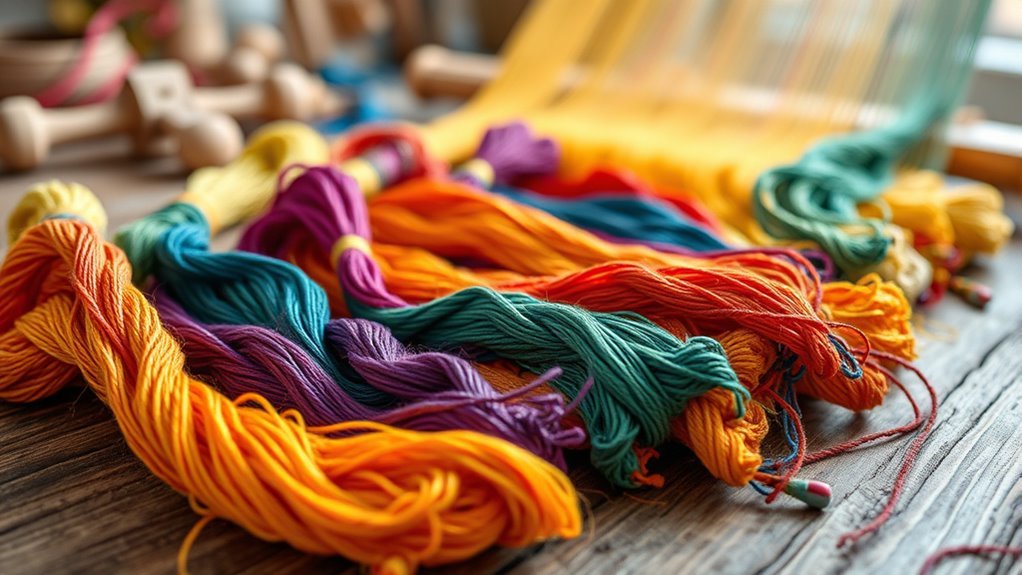
When you choose weaving threads, color and texture play essential roles in shaping your final piece’s appearance and feel. Understanding color psychology helps you select hues that evoke specific emotions or moods, making your creation more impactful. Texture perception influences how your work feels to the touch and how light interacts with it, adding depth and interest.
Consider these factors to make informed choices:
- Emotional impact: Use color psychology to convey warmth, calm, or energy through your thread colors.
- Visual depth: Combine smooth and rough textures to create contrast and dimension.
- Light interaction: Shiny or matte threads change how colors appear under lighting.
- Tactile experience: Choose textures that match the intended use and feel of your finished textile.
Tips for Buying Quality Weaving Thread on a Budget
You’ll want to focus on durable thread types that last without breaking the bank. It’s all about finding that balance between quality and price. Comparing prices carefully really helps you spot the best deals without sacrificing quality. Plus, getting a feel for which brands offer the most bang for your buck can make a big difference. Also, learning how to maximize your thread usage is key—it lets you stretch every spool further and get more out of your purchase.
Choosing Durable Thread Types
Since durability is key to creating long-lasting woven pieces, choosing the right thread type is essential. You’ll want to evaluate durability factors that directly affect the thread lifespan and overall quality. Here are four tips to guide your choice:
- Fiber Content: Opt for natural fibers like cotton or linen for breathability, or synthetic fibers like polyester for strength and resistance.
- Thread Thickness: Thicker threads usually last longer but may affect the weave’s texture.
- Twist Tightness: Threads with a tighter twist resist fraying and breakage better.
- Finish Treatment: Some threads come with protective coatings to improve durability.
Comparing Prices Effectively
Understanding how thread qualities affect durability helps you recognize where to invest your money wisely. When comparing prices effectively, focus on the balance between quality and cost.
Don’t just go for the cheapest option. Instead, perform a thorough price comparison across brands and suppliers to spot the best deals. Use budget strategies like buying in bulk or during sales to stretch your funds without sacrificing thread quality.
Keep an eye out for certifications or reviews that confirm durability so you avoid wasting money on inferior threads. By combining careful price comparison with smart budget strategies, you’ll guarantee you get high-quality weaving thread that lasts, all while staying within your budget.
This approach helps you buy smart and weave with confidence.
Maximizing Thread Usage
When aiming to stretch your budget without sacrificing quality, focus on maximizing thread usage through smart purchasing and efficient handling. By adopting effective thread usage strategies, you can get the most from every spool while maintaining the integrity of your weaving projects. Efficient thread management helps reduce waste and save money.
Here are four tips to maximize thread usage:
- Buy thread in bulk or multi-packs to lower cost per unit.
- Store thread properly to prevent tangling and damage.
- Use leftover thread scraps creatively to avoid waste.
- Choose thread weights and types that suit your project for minimal excess.
Implement these thread usage strategies to balance quality and cost effectively.
Storing and Caring for Weaving Threads to Maintain Quality
Although weaving threads come in various fibers and colors, they all need proper storage and care to keep their strength and vibrancy. To guarantee thread preservation, store your threads in a cool, dry place away from direct sunlight, which can fade colors and weaken fibers.
Use airtight containers or sealed plastic bags to protect threads from dust and moisture. Maintaining good thread organization not only saves time but also prevents tangling and damage.
Consider using thread racks, bobbin boxes, or labeled compartments to keep each type and color separate. Avoid storing threads near chemicals or in overly humid spaces, as these conditions can degrade their quality.
Regularly inspect your threads for signs of wear or pests, and rotate your stock to use older threads first. By following these simple steps, you’ll maintain your weaving threads’ durability and color integrity, guaranteeing your projects turn out just as vibrant and strong as you intended.
Fixing Common Weaving Thread Issues: Troubleshooting Tips
If your weaving threads start to fray, tangle, or break, don’t worry. These issues are common and often easy to fix. Adjusting your thread tension is the first step. Too tight or too loose tension can cause fraying edges or thread breakage.
Make certain your threads are compatible with your weaving tools to avoid unnecessary stress on the fibers. Color fading often results from exposure to sunlight or harsh washing, so protect your threads accordingly.
Here are four troubleshooting tips to keep your weaving smooth:
- Check and adjust thread tension regularly to prevent breakage and fraying.
- Untangle common knots gently using a needle or tweezers to avoid damaging threads.
- Store threads away from direct light to minimize color fading.
- Use compatible threads with your weaving tools to guarantee longevity and ease of weaving.
Additional Resources for Weaving Thread Selection and Use
Since choosing the right weaving thread can feel overwhelming, having access to reliable resources makes a big difference. You’ll find plenty of online forums and weaving communities where experienced weavers share advice on thread types, including alternative materials that might suit your project better.
Books and magazines dedicated to textile arts often provide detailed information on thread properties and best uses. Don’t overlook local craft stores or weaving workshops, where hands-on guidance can help you understand different threads’ qualities and eco-friendly options.
Websites from reputable thread manufacturers also offer technical specifications and care instructions, helping you make informed choices. By tapping into these varied resources, you can confidently select threads that match your weaving style and sustainability values.
Keep exploring to uncover innovative eco-friendly options and alternative materials that improve your weaving projects without compromising quality or the environment.
Frequently Asked Questions
Can Weaving Thread Be Used for Embroidery Projects?
Yes, you can use weaving thread for embroidery projects, but you’ll want to take into account the embroidery techniques and thread types involved. Weaving thread is usually stronger and thicker than typical embroidery thread, so it might not work well for delicate stitches.
However, for bold, textured embroidery or mixed-media projects, it can add interesting effects. Just make sure your needle and fabric can handle the thread’s thickness to avoid damage or puckering.
How Do Weather Conditions Affect Weaving Thread Durability?
In terms of thread durability, don’t count your chickens before they hatch. Weather conditions play a big role. High thread moisture can weaken fibers, causing them to stretch or rot over time.
Temperature impact also matters. Extreme heat can make threads brittle, while cold might stiffen them. To keep your weaving thread strong, store it in a stable environment with low humidity and moderate temperatures.
That way, your threads stay in tip-top shape.
Are There Eco-Friendly Brands Specializing in Weaving Threads?
Yes, you’ll find eco-friendly brands specializing in weaving threads that use sustainable materials like organic cotton, bamboo, and recycled fibers. These companies focus on ethical production, ensuring fair wages and environmentally responsible processes.
When you choose their threads, you support reducing environmental impact without sacrificing quality. Look for certifications like GOTS or OEKO-TEX to confirm their commitment. This way, your weaving projects can be both beautiful and kind to the planet.
Can Weaving Thread Be Recycled or Repurposed After Use?
Think of your used weaving thread as a hidden treasure chest waiting to be opened. Yes, you can recycle and repurpose it! By using smart recycling techniques, you can transform old threads into new yarn or craft supplies, giving them a second life.
Thread repurposing lets you create unique textures and projects, reducing waste and sparking creativity. So, don’t toss those scraps. Turn them into something beautiful and sustainable instead!
What Equipment Is Best for Weaving With Specialty Threads?
You’ll want a loom that allows precise control over thread tension when working with specialty fibers, as they can be delicate or uneven. A rigid heddle loom or a floor loom with adjustable tension settings works best for specialty threads, ensuring smooth weaving without breakage.
Also, using quality shuttles and tensioning devices helps maintain consistent thread tension, giving you beautiful, even fabric with those unique specialty fibers you’re excited to weave.
Conclusion
Now that you know weaving thread inside and out, you’re ready to pick the perfect one for your project. Did you know that over 60% of weavers say choosing the right thread weight drastically improves their finished piece’s look and durability?
Keep your threads well cared for, and don’t hesitate to experiment with different types. With these tips, you’ll weave beautifully every time. Happy crafting with your weaving thread!